
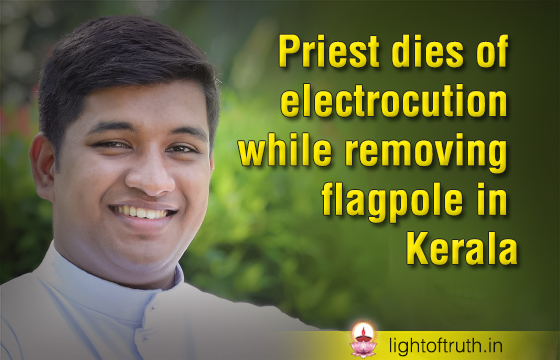
Gloom has spread over the archdiocese of Tellicherry in Kerala after one of its young priests died of electrocution on August 15. Father Mathew (Shince) Kudilil was dismantling a pole erected to hoist the national flag in the morning as part of the Independence Day celebration in the premises of Infant Jesus Church at Mulleria in Kerala’s Kasaragod district. After the mandatory lowering of the flag at sunset, the 29-year-old priest was removing the pole when it accidentally touched a high-tension electrical line passing near the church premises. He was declared brought dead at a hospital in Mulleria, a village on the Kerala-Karnataka border and some 70 km south of Mangalore. Father Kudilil was ordained a priest three years ago. He came to Mulleria on May 14, 2023. He had earlier served as the assistant vicar at St George Church, Chempanthotty in Kannur district from February 6, 2021, to January 25, 2022. He was the assistant vicar of St Sebastian’s Church Nellickampoil, also in Kannur, until February 3, 2023. He was in Fathima Matha Church, Kudiyanmala, Kannur, for three months.
Daily Archives: August 29, 2024
Kannur diocese gets auxiliary bishop
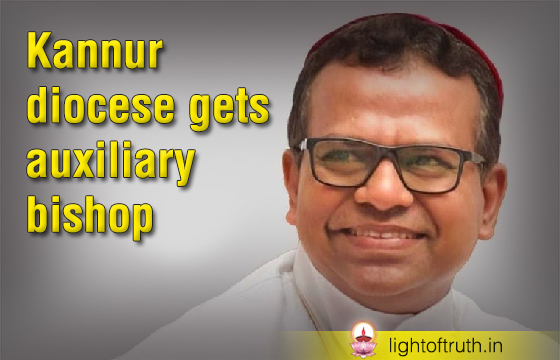
Pope Francis on August 15 appointed Monsignor Dennis Kuruppassery as the auxiliary bishop of Kannur that covers Kerala’s northern districts of Kannur and Kasaragod. The 57-year-old priest is currently the counsellor at the Nunciature in Malta. Monsignor Kuruppassery was born on August 4, 1967, in Palliport in the Kottapuram diocese. He studied philosophy and theology at the St. Joseph Pontifical Seminary in Alwaye, Kerala. He has a degree in canon law. He was ordained a priest on December 23, 1991, for the Kottapuram diocese. He has held the following positions: Assistant Parish Priest of St Francis of Assisi, Thuruthipuram (1991-1993) and of St Sebastian’s, Gothuruth (1994-1995), and Parish Priest of St Anthony’s, Pullot (1996-1997) in the Diocese of Kottapuram. He entered the Diplomatic Service of the Holy See on July 1, 2001, and worked in the Papal Representations in Burundi (2001-2004), Egypt (2004-2007), Thailand (2007-2010), Czech Republic (2010-2013 ), Gabon (2013-2016) and United States of America (2016-2021).
Prison Ministry, Mangaluru, provides scholarships to mark silver jubilee
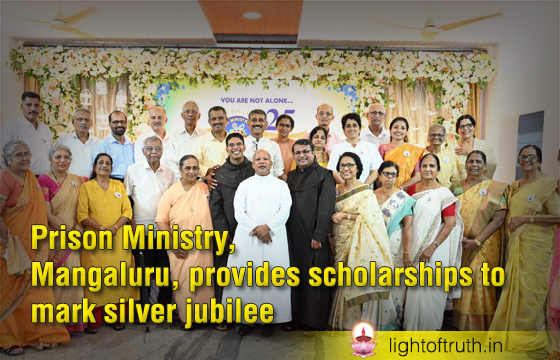
The Mangaluru unit of the Prison Ministry India celebrated its silver jubilee by providing scholarships to children of prisoners. As many as 25 students from Mangaluru, Bengaluru, Shivamogga, Ballari and Kalaburagi were given a cheque for 10,000 rupees each to support their studies. “A large number of people are suffering in prison due to lack of money or influence to get even a bail,” said Bishop Peter Paul Saldanha of Mangalore, who lauded the ministry’s volunteers for instilling hope among prisoners and their families. Elaborating the silver jubilee theme “You are not alone,” the bishop said the prison ministry has been a ray of hope for many prisoners. He also highlighted that the prison can be a place where people can hope for a new vision of life. The celebrations began with Mass presided by Bishop Saldanha and assisted by Bishop Francis Serrao of Shimoga and co-celebrated by Father Francis Kodiyan, the founder of the ministry and past directors. Tressie Menezes, coordinator of PMI Mangaluru, presented an audio-visual report on the movement’s journey in Mangaluru starting in September 1999. She said the PMI Mangaluru unit could rehabilitate several prisoners after their release. Sister Therese Mascarenhas, PMI coordinator for Karnataka, spoke about the challenges faced by the team as several prisons put restrictions on prison ministry.In his speech, Father Kodiyan compared the PMI Mangaluru unit volunteers to Irish Catholics, who excelled in all the fields they encountered. Terming the Mangalureans as intelligent and resourceful, he called upon the volunteers not to limit their potential to Mangaluru alone, but to reach out the PMI community all over the nation. Mangaluru prison superintendent B T Obaleshappa and donor Pascal Monteiro were felicitated on the occasion.
Indian bishop, priest get bail in high tuition fee case
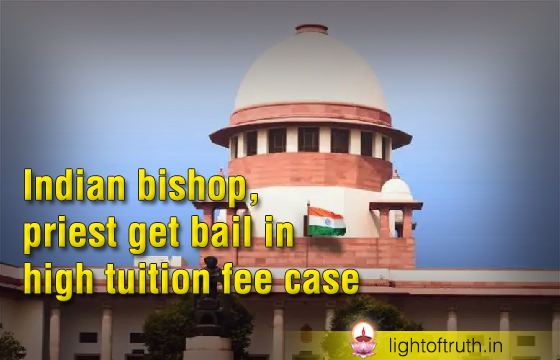
A Protestant bishop, a Catholic priest and 10 other management members of seven Christian-run schools in a central Indian state have secured bail after spending close to three months in jail for allegedly charging excessive tuition fees. India’s top court granted bail to Father Abraham Thazhathedathu of the Jabalpur diocese, Bishop Ajay Umesh Kumar James of the Church of North India (CNI), and others on Aug. 20. They appealed to the Supreme Court after the Madhya Pradesh High Court in central India turned down their pleas. “We are happy that the top court has granted bail to our priest and others who are accused in a fabricated case,” vicar-general of Jabalpur diocese Father Davis George said. The attorney for the state government vehemently opposed their bail pleas before a division bench of Justices B V Nagarathna and N Kotiswar Singh, saying they might tamper with evidence. The lawyers for the applicants, however, countered by saying, the accused were engaged in educational activities and did nothing illegal. Police in Madhya Pradesh arrested 22 people on May 27, including 13 management members and staff from seven Christian-run schools in Jabalpur in Madhya Pradesh state, ruled by the pro-Hindu Bharatiya Janata Party.
They were accused of charging students excessive fees and selling textbooks at exorbitant prices. Cases have been registered against 51 people from 11 private schools and book publishers. A female principal from a Christian school secured bail earlier while other Christian-run school staff members were detained. “We are relieved,” George told UCA News on Aug. 20. The police action against the Christian schools was “totally illegal” with “malicious intent,” he added. The Jabalpur bench of the Madhya Pradesh High Court on Aug. 13 suspended an education department order on July 9 telling the Christian schools to reimburse nearly US$5 million they allegedly collected in excessive fees from students in the past six years. The court will hear the case on Aug. 25 after the education department filed its reply. Schools in Madhya Pradesh are allowed an annual fee hike of up to 10 percent. Beyond that, the district collector’s nod is required, while a fee hike exceeding 15 percent has to be sanctioned by a state-level panel. “We never charged exorbitant fees,” said George. “The schools were ordered to reimburse tuition fees even for the Covid-19 period when we did not charge any fees,” the priest said. Madhya Pradesh has the highest number of tribal people in India. Christian schools are the most sought-after in Jabalpur, known as the cultural capital of Madhya Pradesh. The ruling Bharatiya Janata Party is against missionary activities that benefit tribal people and other poor sections of society, said a Church official. Church leaders have accused the right-wing state government of unleashing targeted attacks on Church-run institutions, including schools, hostels, and orphanages. Cases are registered against Church officials, including a retired Catholic bishop, priests, and nuns, under a stringent anti-conversion law in the state that bans religious conversion. The Church runs many educational institutions that benefit tribal people in the state, who constitute more than 21 percent of Madhya Pradesh’s 72 million people, and Christians make up a mere 0.27 percent.
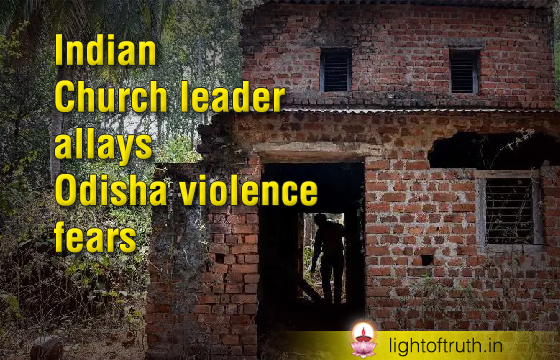
Indian Church leader allays Odisha violence fears
A leading Church official in the eastern Indian state of Odisha has dismissed rumors that there might be communal violence in the state’s Kandhamal district as Hindus gear up to celebrate Janmashtami, or the birth of the Hindu Lord Krishna, on Aug. 26.
Kandhamal district witnessed the worst ever anti-Christian violence in the South Asian nation on this day 16 years ago. “Just as the Hindu festival is approaching, vested interest people are spreading false messages that Kandhamal might witness more communal violence,” said Father Dibakar Porichha, chancellor of Cuttack-Bhubaneswar archdiocese that covers Kandhamal. “It is false news and people should not believe it,” Porichha told. We have met Chief Minister Mohan Charan Majhi, local politicians, and police officials and have alerted them to the rumor, he added. Since July, Odisha (formerly Orissa) has been headed by a government from the pro-Hindu Bharatiya Janata Party (BJP). The BJP and its sister organizations like the Vishwa Hindu Parishad (world Hindu council) are against missionary activities of the Church among India’s indigenous people, according to Church leaders. “They [the government] have assured us help,” Porichha said. Kandhamal witnessed anti-Christian riots on Aug. 26, 2008, as Hindus celebrated Janmashtami (the birthday of Lord Ram), after a Hindu leader Swami Laxmanananda Saraswati was shot dead on Aug. 23 of that year allegedly by outlawed Maoists who have a strong following among tribal people in the mineral-rich Indian state. Soon after the murder, four ethnic Christians, including an illiterate 13-year-old boy, were picked up by Hindu activists and were accused of killing the Hindu monk. They termed the murder a “Christian conspiracy.” The riots that lasted for seven weeks killed some 100 people, rendered 56,000 homeless, and destroyed 6,000 houses and 300 churches. “There is some kind of uneasiness among Christians in the region whenever Janmashtami approaches,” said Christian leader Pratima Minj, who hails from a tribal community in Odisha. This time, they are worried as the state is headed by the pro-Hindu party, she noted. Cuttack-Bhubaneswar archdiocese in a statement on Aug. 20 asked people to desist from spreading rumors. “We commend the proactive steps taken by the district administration of Kandhamal and the government of Odisha,” it said. As part of this, peace-building meetings have been held across Kandhamal district with the participation of religious leaders, including priests and pastors. On Oct. 2 last year, the Vatican Dicastery for the Causes of Saints issued “no objection” to initiate the beatification process for the Servant of God Kanteeswar Digal and companions who are called the Martyrs of Kandhamal. They were killed during the riots. The total population of Odisha is 41 million and tribal people constitute its 22.85 percent.
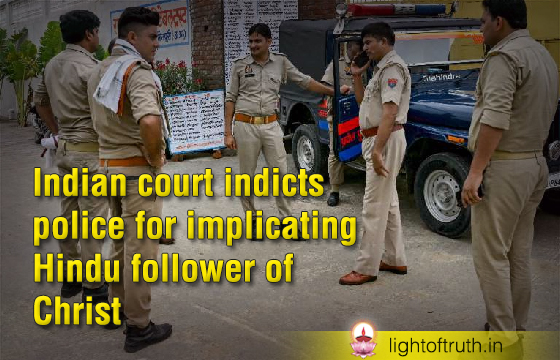
Indian court indicts police for implicating Hindu follower of Christ
A Hindu follower of Christ in a northern Indian state has hailed a court ruling that indicted police for filing a false case against him under the sweeping anti-conversion law. “I lost my job and reputation because of the false case,” Abhishek Gupta, a resident of northern Uttar Pradesh, said. The court has ordered action against the police to prevent the recurrence of such illegal actions in the future. “It is a welcome step,” he added. The 41-year-old lab technician with a private hospital in Uttar Pradesh lost his job after police filed charges against him under the draconian anti-conversion law, enacted by the Bharatiya Janata Party government in India’s most populous state in 2021. The case was filed on May 29, 2022, when Himanshu Patel, a resident of Bareilly and district president of the right-wing Hindu group Hindu Jagran Manch, accused Gupta of leading a religious conversion program with an eight-team. The “police acted under pressure on the complaints made by persons like the plaintiff for their desire for publicity and took action in a futile attempt to give legal form to a baseless, fabricated and imaginary story which wasted valuable time, labor and money of not only the police but also the court,” said the trial court Judge Gyanendra Tripathi. The judge said their collective efforts had caused irreparable loss to the two accused and directed the senior superintendent of police, Bareilly, “to take appropriate legal action against the complainant, Himanshu Patel, as well as three people listed as key witnesses.”
The July 30 order, published in the media few days ago, acquitted the accused men. It sought action against the former police station in charge, “the investigating officer, and the jurisdictional officer who approved the charge sheet.” Gupta was arrested under the Uttar Pradesh Prohibition of Unlawful Conversion of Religion Act. Later, Kundan Lal, whose house Gupta used to visit, was also arrested. After he lost his job, he was forced to transfer his nine-year-old daughter and seven-year-old son from a reputed private school to another school as he was “unable to afford monthly fees.” The court has directed the victims to approach an appropriate court for compensation. “We are yet to decide on the compensation,” said Gupta. Though, not converted to Christianity, “I follow the teachings of Jesus Christ,” Gupta said. The court has sought action against police officials, the complainant and the witnesses for implicating Gupta and his friend in a false case in Uttar Pradesh, which occupies the second slot in anti-Christian violence in the country, according to Church leaders. The July 30 order was released to the media a few days ago. Gupta’s case is an exception where the court took a strong stand in favor of truth and justice, said a Church leader who assists Christians in fighting their cases in the court. “Several similar cases are pending in different courts,” the Church leader told on condition of anonymity. I realized the “helping hand of God during the 40-day stay” in jail, Gupta recalled. “God protected us even when our family members discarded us,” he added.
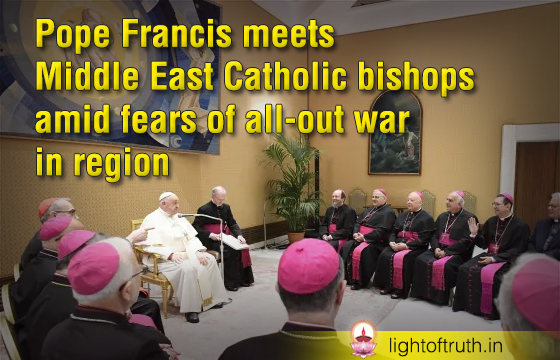
Pope Francis meets Middle East Catholic bishops amid fears of all-out war in region
Pope Francis met with the Latin-rite Catholic leaders of some of the Middle Eastern and Arabic-speaking countries amid fears of an escalation of the Israel-Hamas war. He encouraged the bishops to “bear witness to faith in [the Lord], also through respectful and sincere dialogue with everyone.”
The Aug. 28 meeting took place as part of the plenary assembly of the Conference of the Latin Bishops of the Arab Regions (CELRA), which covers Israel, Palestine, Jordan, Lebanon, Iraq, Syria, Egypt, Cyprus, Djibouti, Somalia, and the countries of the Arabian Peninsula.
CELRA is headed by Cardinal Pierbattista Pizzaballa, OFM, the Latin patriarch of Jerusalem, responsible for Latin Catholics in Israel, Palestine, Jordan, and Cyprus. The vice president is Bishop Cesar Essayan, OFM Conv, apostolic vicar for Latin Catholics in Beirut, Lebanon.
The bishops’ meeting with Pope Francis took place amid growing worries in the region about a broader war as the Lebanese militia Hezbollah and Iran, its regional patron, appeared to escalate hostilities over the past weekend.
During the meeting at the Vatican, the pope noted the “very strong tension” in the Middle East region, “which in some contexts lead to open clashes and outbursts of war.”
“The conflict, instead of finding an equitable solution, seems to be becoming chronic, with the risk that it will spread to ignite the entire region,” he said.
“This situation has caused thousands and thousands of deaths, enormous destruction, immense suffering, and the spread of feelings of hatred and resentment, which prepare the ground for new tragedies.”
Francis in his address conveyed his closeness to the prelates and to the Catholics in their flocks.
“May you keep hope alight,” he added. “Be yourselves, for everyone, signs of hope, a presence that fosters words and gestures of peace, brotherhood, and respect. A presence that, in itself, invites reason, reconciliation, overcoming with goodwill the divisions and enmities stratified and hardened over time, which are becoming increasingly inextricable.”
The pontiff also asked the Latin-rite Catholic leaders to ensure students in public schools receive a good Christian formation, especially where Christians are a minority.
“This formation is of great importance, so that the content of faith may be known and accompanied by reflection and so that faith, in confrontation with culture, may thus be strengthened and have the means to give reasons for Christian hope,” he said.

Pope Francis sells out Belgium stadium for Sept. 29 beatification Mass in just 90 minutes
Tickets for Pope Francis’ Mass in King Baudouin Stadium in Brussels at the end of September sold out in record time on 26 August.
After becoming available for free online, 32,000 tickets for the Sept. 29 Mass were snatched up in just 90 minutes, surprising local organizers of the pope’s three-day trip to Belgium.
“This pleasantly surprised us; it’s very positive to see such a high demand,” the spokesman for the Belgian bishops’ conference, Tommy Scholtes, told French Catholic newspaper La Croix.
During the Mass, Pope Francis will beatify Carmelite Sister Ana de Jesús, a spiritual daughter of St. Teresa of Ávila and a friend to St. John of the Cross. Born Ana de Lobera y Torres, the religious helped expand the Discalced Carmelites to France and Belgium at the turn of the 17th century.
The Brussels soccer stadium is Belgium’s largest, with a seating capacity of almost 50,000 people. Besides hosting the matches of the national soccer team, it has also been the venue for concerts by world-class music artists, such as Madonna, U2, and the Rolling Stones.
Organizers explained that the approximately 18,000 remaining seats in the city-owned stadium are being reserved for groups from parishes, dioceses, and movements. After group registration closes, they may be able to release a few hundred more individual tickets for those who missed out on August 26th morning.
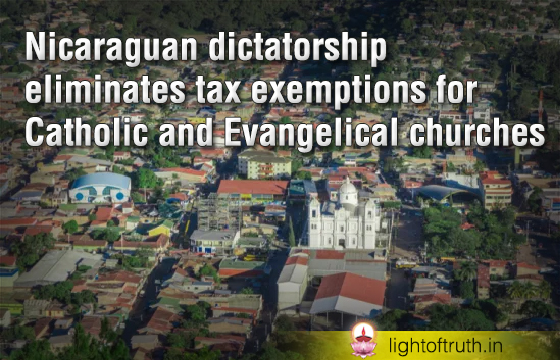
Nicaraguan dictatorship eliminates tax exemptions for Catholic and Evangelical churches
One day after cancelling the legal status of 1,500 NGOs in Nicaragua, the dictatorship of President Daniel Ortega and his wife, Vice President Rosario Murillo, eliminated the income tax exemption for churches.
Lawyer and researcher Martha Patricia Molina considers the measure a “fiscal blow” that will end up “financially suffocating the (Catholic) Church so that it falls under its own weight.”
The official government newspaper La Gaceta published Law 1212 on Aug. 22, which modifies three other laws: the law on regulation and control of non-profit organizations, the law on regulation of foreign agents, and Law 822 on tax coordination. The newspaper reported that this decision comes from the country’s legislature at Ortega’s initiative.
Article 5 of Law 1212 orders: “Repeal section 3 of article 32 of the Tax Coordination Law” of 2012, as well as its reforms.
Section 3 of article 32 stated that “Churches, denominations, confessions and religious foundations that have legal personhood, in terms of their income coming from activities and assets exclusively destined for religious purposes” were exempt from income tax.
An expert quoted but not identified by the newspaper La Prensa explains that with this decision by the dictatorship “all churches of any denomination will be subject to the fiscal terrorism to which the dictatorship has subjected the private sector and now religious institutions,” and they will have to pay between 10 and 30% in income tax.
Regarding this decision, Molina, author of the report “Nicaragua: A Persecuted Church?” which cited 870 attacks by the dictatorship against the Catholic Church since 2018, claimed that government authorities have already been to parishes asking for documents related to their accounts.
In “previous weeks, the regime’s authorities had visited parishes to request information on how they keep their accounts, they asked to see the general and minor ledgers, income and expenses, which is obviously not done this way in parish administration,” Molina wrote on X. “Now the priests will have to hire a CPA [certified public accountant] to keep all these accounts and also say who their main donors are,” she added.
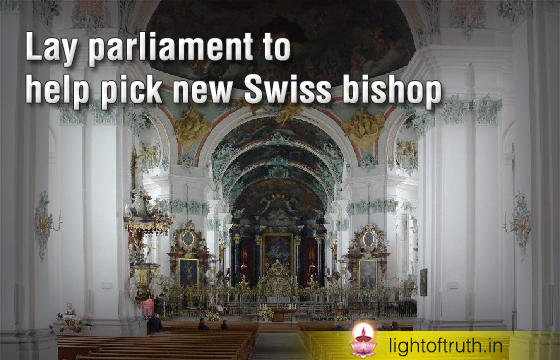
Lay parliament to help pick new Swiss bishop
One of the Catholic world’s most unusual episcopal selection processes is underway in the Swiss Diocese of St. Gallen, involving cathedral canons and a lay parliament, as well as the Pope, of course.
The St. Gallen diocese, in northeastern Switzerland, announced Aug. 15 that Pope Francis had approved the start of the process to find a new bishop after incumbent Bishop Markus Büchel submitted his resignation upon turning 75.
St. Gallen, which serves roughly 250,000 Catholics, is one of several dioceses in the German-speaking Catholic world where the cathedral chapter plays an important role in selecting new bishops.
Under the terms of an 1845 concordat and the 1847 bull Instabilis rerum humanarum natura, the Bishop of St. Gallen is appointed after a free election by the cathedral chapter within three months of a vacancy.
Candidates must be diocesan priests over the age of 35 with more than five years of priestly service. They must also have experience of administration or pastoral care in the diocese. Around 60 priests are currently eligible, with local attention focused largely on the 13 members of St. Gallen’s cathedral chapter.
Following the pope’s signal, the 13 canons have three months to prepare for the election of Büchel’s successor.
The process will begin with a three-week survey of Church groups, led by the Swiss Institute of Pastoral Sociology (SPI) in St. Gallen. Groups will be asked to identify the qualities needed in a new bishop. Consultations were also held during the last two changes of episcopal leadership.
After reviewing survey responses, the cathedral chapter will create a shortlist of six priests, which will be sent to Rome via the nuncio. The Vatican will scrutinize the list, vetting the candidates individually, before returning it to the cathedral chapter through the nuncio when they have finished.
The chapter will then schedule an election day in collaboration with the Catholic College (Katholische Kollegium), a lay parliament covering the Canton of St. Gallen, one of the 26 member states of the country officially known as the Swiss Confederation.
The lay parliament could play a significant role in the election of St. Gallen’s new bishop because it can declare that three of the six candidates identified by the cathedral chapter and scrutinized by Rome are “less favourable,” resulting in their elimination from the list.
The cathedral chapter then holds a ballot. After the chapter selects a new bishop, the candidate has a week to accept or decline. If he agrees, Pope Francis is expected to formally appoint the candidate as the new Bishop of St. Gallen.