
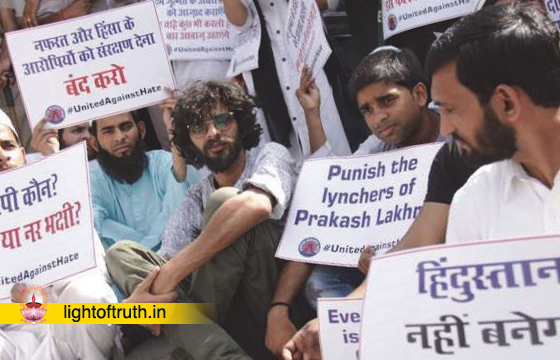
Social activists in India have filed a plea before the Supreme Court seeking the prevention of hate speech in public places.
The move comes in the wake of reported hate speeches made against Muslims by Hindu Rakshak Dal (Save Hindu Forum) at a rally in capital Delhi on Aug.8.
Syeda Hameed, a former member of the Planning Commission of India, and Professor Alok Rai, a former faculty member of Delhi University, filed the public interest litigation on Aug. 16, urging the apex court to recognize that public authorities have a “duty of care” to prevent such speeches.
he petitioners asked the court to define the contours of liability when authorities willfully allow hate speech in contravention of constitutional and statutory laws.
Pointing out that it was the fifth such rally to be held in three months across the national capital region and neighboring Haryana state, the petition underlined how “speeches calling for direct action against Muslims were made.”
Video footage of the Aug. 8 rally circulating on television and social media showed mobs openly calling for the killing of Muslims. Delhi police later made some arrests after failing to take preventive action, which was against the guidelines issued by the Supreme Court, the petitioners pointed out.
Daily Archives: August 31, 2021
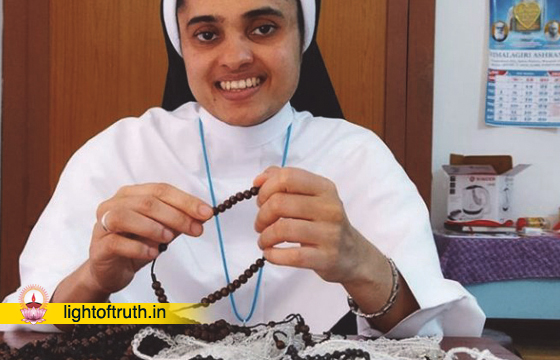
Nun braves debilitating disease to manage “rosary bank”
Sister Rini Rose was diagnosed with multiple sclerosis when she was 26. As a result, she has become physically weak, which limits and slows down her movements.
Rose made her first profession at the age of 20 as a member of the Sisters of the Adoration of the Blessed Sacrament, a congregation based in the southern Indian state of Kerala. The debilitating disease hit her as she was completing a three-year nursing course in Andhra Pradesh, another southern Indian state.
Now, after 15 years, Rose spends most of her time inside a convent in Ambalavayal, a village in Wayanad, a district in northern Kerala. She prays for others and receives prayer requests from people both known and unknown to her. She also makes rosaries and deposits them into the rosary bank she created until she gives them to people who need them.
“ I was diagnosed with multiple sclerosis in 2005, just before I could start working as a nurse. Since then, I have been on medication.
I was sad and distressed when I was told I was suffering from MS. But my strong faith in God helped me overcome my sorrows and lead a fulfilling life.
According to my doctors, MS affects the central nervous system, especially the brain, spinal cord and optic nerves. This can lead to a wide range of symptoms in the body.
After my diagnosis, I began to feel my health deteriorating. I also began to experience more limited physical movements. Now, I need double the time and effort to do my daily regular activities. I also need to use extra energy to move around that causes physical strain and tiredness. Even to move around within the convent, I need help from others. My sisters always lend me a hand.” “Praying for others and surrendering my suffering to the Lord gives me great joy.”
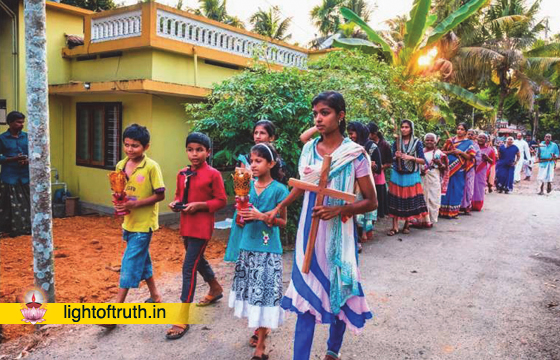
Extinction rebellion: Indian Catholics urged to have bigger families
Catholic bishops want Christian families in Kerala to have more children after the national census recorded a drastic decline in the community’s population in the southern Indian state.
The Christian population in the state declined from 24.06% in the 1950s to 18.33% in 2011, according to the census report.
“Fifty years ago Christians in the state accounted for one-fourth of the total population but now we are on a drastic decline,” Father Jacob G. Palackappilly, deputy secretary-general of Kerala Catholic Bishops’ Council (KCBC), told.
“If this trend continues, the day is not far off when the Christian community will face a threat of extinction in the state.”
The KCBC at an online meeting last week emphasized the need for promoting large Catholic families and asserted the pro-life stand of the Church.
However, they agreed with the government’s policy to control the population in the country.
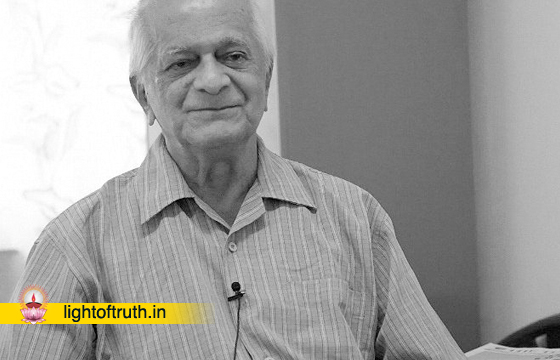
Catholic press body mourns death of last surviving founder
The Indian Catholic Press Association (ICPA) on August 26 mourned the death of its last survivor earlier in the day.
Monsignor Benedict Aguiar had led the organisation as its president from 1969 to 1978.
“In his death the ICPA has lost a father-figure. His long and illustrious life and legacy as priest, communicator, historian, author and organizer will continue to inspire us and the posterity for sure. The zeal and consistency he maintained in his convictions and actions make him an all-time role-model for everyone.”
India’s Eastern Church moves for uniform liturgy ignoring opposition
Synod of the Eastern rite Syro-Malabar Church has decided to implement a uniform mode of celebrating mass in all its 35 dioceses from Nov. 28, ignoring the opposition from a section of priests and laity. All dioceses will celebrate the liturgy in a uniform way by next April 17, Easter Sunday of 2022, said the synod in an Aug. 27 statement, issued at the end of its week-long online gathering.
The synod decision follows Pope Francis’ letter on July 6, which asked the Church to implement a standardized form of liturgy, as agreed by the synod of Bishops in 1999. The Church has been divided over the liturgical celebration for more than four decades with some priests celebrating the Mass facing the congregation, while some faced the altar against the congregation.
The synod two decades ago agreed that all its priests will face the congregation during the Mass until the Eucharistic prayer, and then again from Communion to the end of the Mass. During the Eucharistic prayer, they will face the altar against the congregation.
However, a section of priests and laity opposed it and sought papal intervention. They did not want priests to stand facing the altar, against the congregation during the Mass.
The latest papal letter asked to implement the 1999 synod decision as “an important step towards increasing stability and ecclesial communion” in the Church, based in southern Indian Kerala state.
The synod “unanimously welcomed” the papal letter and thanked “his intervention for the unity and growth” of the Church, the synod statement said.
As a first step of implementing the decision, all cathedral churches, pilgrim centres, religious houses and minor seminaries will implement the decision on Novem. 18, the beginning of the Church’s liturgical year.
Some bishops, who expressed difficulties in implementing the decision in their whole diocese, can introduce the uniform mode of celebration starting with all possible parishes on Nov. 18.
“By effective catechesis, the uniform mode shall be gradually introduced in the whole eparchy as early as possible, not later than Easter 2022,” the statement said.
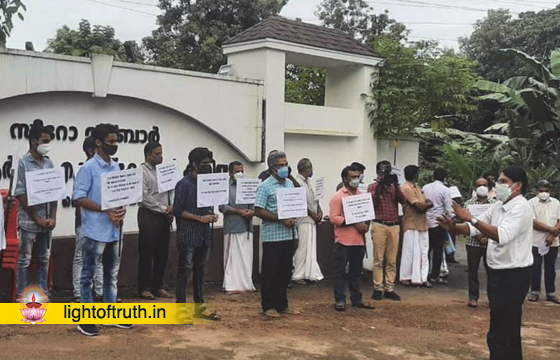
However, soon after the decision was announced, a group of people under the banner of the Archdiocesan Movement for Transparency (AMT) protested in front of Mount St Thomas, the headquarters of the Church in Kerala’s Ernakulum district.
India seeks to curtail privileges of minority schools
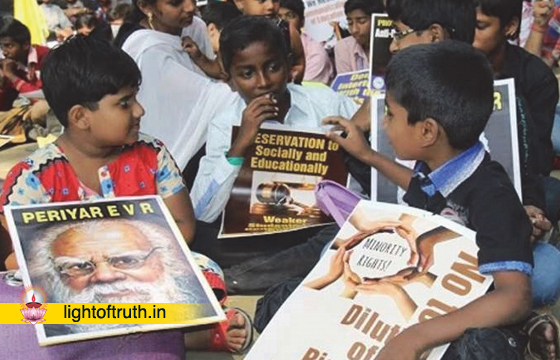
A Catholic official in India has criticized as “politically motivated” a federal commission’s recommendations to curtail the rights of schools run by religious minorities such as Christians.
The National Commission for Protection of Child Rights (NCPCR), in a study released last week, sought to bring minority schools, most of them run by Christian institutions, under its right to education and universal elementary education policies.
The federal government makes it mandatory to include underprivileged children in schools under its Right to Education (RTE) Act and provides elementary education to all children aged 6-14 under a universal education scheme.
However, the Supreme Court of India declared the RTE Act inapplicable to schools with minority status while upholding their right to establish and administer institutions of their choice.
“This study, which targets Christians and Muslims, may be politically motivated,” Fr Maria Charles, secretary of the Indian Catholic bishops’ commission for education and culture, told.
He said minority-run institutions share the responsibility of offering good education to the poor and marginalized while reminding the government of its responsibility to provide good education to children who are deprived of it.
Skewed sex ratio leads to dubious marriages in India
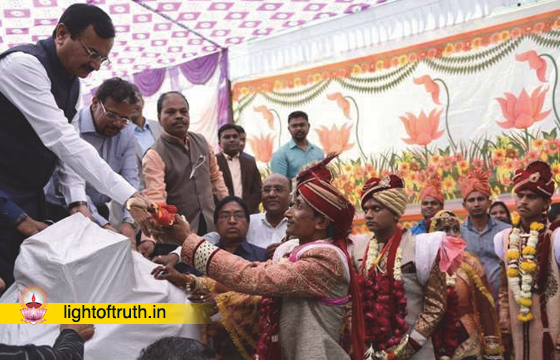
They say marriages are made in heaven but in the western Indian state of Gujarat, a dubious syndicate of paid agents is playing matchmaker for the mostly jobless boys from the prosperous Patel community and young girls from the indigenous Adivasi communities. The consequences are evidently disturbing and causing much pain and loss to the poor tribal people, who are highly protective of their girls like any class or caste community in India.
Bharatiya Tribal Party leader Raj Vasava says this has been a common practice among the Hindu Patel men to buy tribal women for marriage. But now it is being resented by the tribal communities. “It is a cultural assault and cannot be allowed,” he said.
The Patels, who are socially, economically and politically the most influential community in Gujarat, have no other way to deal with their skewed sex ratio of 700 girls for every 1,000 boys.
The state has some 10 million tribal people among its 62 million population. The state also has some 350,000 Christians, an estimated half of them are tribal people. While selecting brides, the Patels do not distinguish between Christian and Hindu tribal people, a Petel leader said.
Chinese abp: Three stages to ‘drama’ involving church, communists
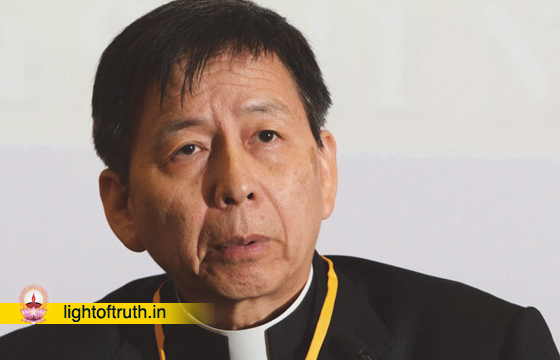
The ongoing “drama” between Chinese Catholics and the nation’s communist leaders has three stages, said Chinese Archbishop Savio Hon Tai-Fai, the Vatican’s nuncio to Greece.
The current stage in the drama, in effect since 2013, is one of “shrinking and getting confused,” Hon said.
“As a result of the drama, people feel so disoriented, disconnected,” Hon said in his recent keynote address to the 28th international conference of the U.S.-China Catholic Association, held at Jesuit-run Santa Clara University.
Hon cited three major players in each stage of the drama: the communist regime, the church in China and the Vatican. At this time, the Vatican was “trying to normalize the diplomatic relationship” with China, he noted. “The Holy See encouraged the Catholics to remain faithful, stating that an ‘independent church’ cannot be the ‘Catholic Church,’” Hon added.
Roots of Peace founder fears for her nearly 400 employees in Afghanistan
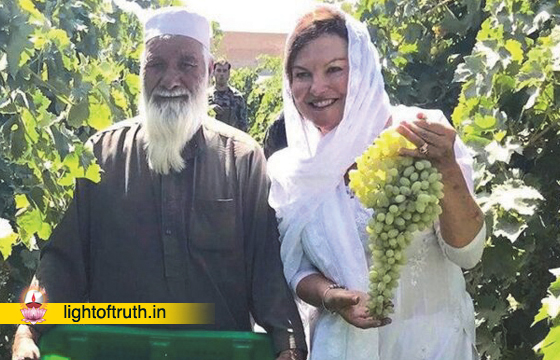
Roots of Peace founder Heidi Kuhn is on a dead-line-driven, life-or-death mission to get her nearly 400 employees out of Afghanistan by Aug. 31.
The Taliban took over the organization’s com-pound in Kabul Aug. 15.
President Joe Biden vowed Aug. 24 in a statement with G7 leaders to stick to the end-of-the-month deadline he set to complete evacuation of “Americans, third-country nationals and Afghans who were allies in the war.”
In an Aug. 25 news conference, the Taliban announced that Afghans will no longer be able to leave the country.
Kuhn, a Catholic mother of four from San Rafael, California, launched rootsofpeace.org in 1997 to clear war-scarred fields in Afghani-stan and other countries of land mines and convert them into life-sustaining farmland.
In Afghanistan alone, Roots of Peace has helped plant over 5 million trees, created over 100,000 full-time jobs and facilitated exports of fruits, nuts and spices to new markets that by 2020 valued $1.4 billion. The Taliban’s attack on the Roots of Peace compound in mid-August occurred as local workers began the year’s harvest of grapes and other fruits of the vine.
In addition to working to secure the safety of her Afghan workers in Kabul, Kuhn and her organization are helping rural farmers throughout the country bring the harvest to market without interruption. The loss of the ready crops and resulting income would further devastate the country and its people, Kuhn said.
Priests appeal Pope against uniform mode of Mass celebration
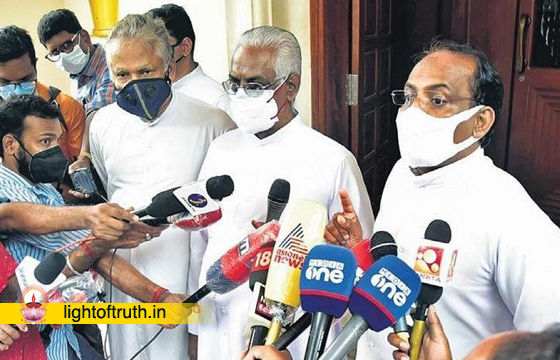
All the 456 priests of the Arch-diocese of Ernakulam-Angamaly have written to Pope Francis saying they want to continue to offer Mass facing people, a practice that the Syro-Malabar eparchy has followed for the past 50 years. The memorandum was sent to the prefect of the Oriental Congregation in Rome and the apostolic nuncio in India on August 10, as the Syro-Malabar Synod prepared to discuss Pope Francis’ letter on the controversial issue of liturgy.
The memorandum was also signed by some priests of religious congregations working in the Syro-Malabar archdiocese.