
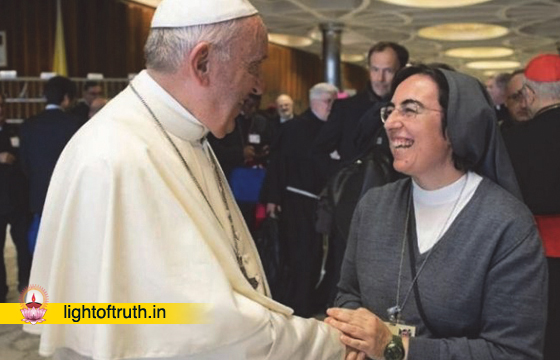
Pope Francis has appointed a Salesian nun as interim secretary of the Dicastery for Promoting Integral Human Development, the Vatican announced. Sister Alessandra Smerilli replaces Monsignor Bruno Marie Duffé and Father Augusto Zampini, respectively secretary and assistant secretary of the Dicastery, both of whom have returned to their dioceses.” In an August 26 statement, the Vatican said Sister Smerilli will also be a part of the management team of the Vatican’s Covid-19 Commission together with Cardinal Peter Turkson.
Daily Archives: August 31, 2021
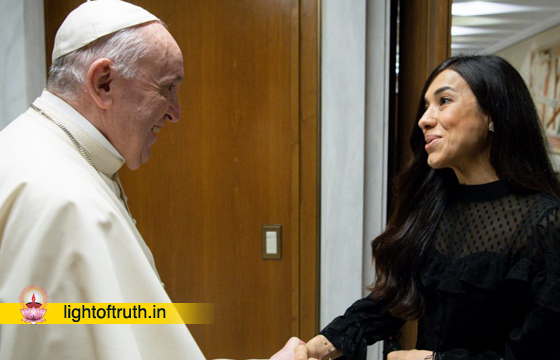
Pope Meets With Genocide Survivor Who Inspired His Iraq Trip
Pope Francis held a private audience with Nadia Murad, a Nobel Peace Prize laureate and survivor of the Islamic State-led genocide in Iraq, Aug. 26 at the Vatican.
While the Vatican did not release any details about the visit, Ms. Murad tweeted Aug. 27, “We discussed the importance of support for #Yazidis & other minority communities in Iraq. In light of the heart-wrenching events in #Afghanistan, we exchanged ideas on championing women & survivors of sexual violence.”
“I thank @Pontifex for welcoming me to the Vatican once again,” she tweeted, along with a photo of the pope looking through a book and Ms. Murad holding a copy of the document on “Human Fraternity for World Peace and Living Together,” which Pope Francis and Egyptian Sheikh Ahmad el-Tayeb, the grand imam of Al-Azhar, signed in 2019.
The pope met her previously at the Vatican at the end of a general audience in St. Peter’s Square in May 2017 and privately in December 2018, after she and Denis Mukwege were jointly awarded the Nobel Prize for “their efforts to end the use of sexual violence as a weapon of war and armed conflict.” She is the first Iraqi and Yazidi to be awarded a Nobel Prize.
She survived a genocidal campaign against the Yazidis by Islamic State militants in Iraq in 2014. The militants kidnapped her, and she escaped captivity after three months. In an Aug. 16 tweet commenting on recent events in Afghanistan, she wrote: “My heart breaks for the next generation of girls & women whose nation has been overtaken by the Taliban. Kabul fell on the same day my village fell to ISIS 7 years ago. The international community must address the repercussions before tragedy is repeated.”
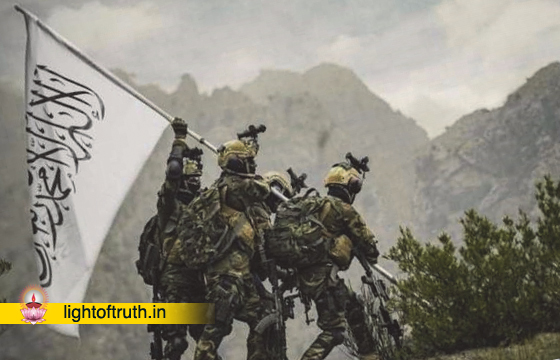
Afghan Christian vows to continue God’s work under Taliban rule
An Afghan Christian has tearfully pleaded with Christians across the globe to not forget the underground church following the Taliban takeover of his country. In a four-minute video, the man says he feels abandoned under Taliban rule but pledges to “continue God’s work” in the conflict-torn country.
Global Catalyst Ministries, a Christian group, published the footage on Aug. 19, several days after the Taliban captured Afghan capital Kabul and established control over the Central Asian country.
In the video, the face of the man is blurred and his voice changed, presumably to protect his identity. He speaks in his native language but the video has English subtitles.
Despite the tears and fears that have gripped the small Christian community, the man declares: “We are not leaving the field.”
The man begins the video with greetings — “Hello, dear sisters and brothers” — on the first day under Taliban rule in Afghanistan.
“I don’t know what the future of this country will be. We are not able to control our emotions because we’ve worked so hard for 20 years. All of our work over the past 20 years has been lost overnight,” he says
“Only God understands how much pain we have and how broken our hearts are.” As his voice chokes in emotion, he says it was not the fear but the collapse of the country that had brought tears to Christians’ eyes.
“We are crying not out of fear but because our hearts ache for our beautiful country. It has now been destroyed by this savage and extremist group. Every precious thing of value in our nation is now destroyed,” he says.
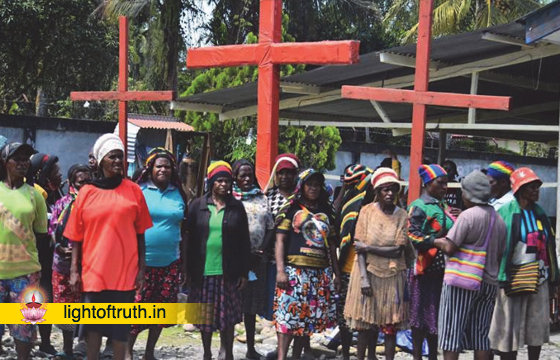
Scars of Papua conflict weigh on Indonesia’s vaccine drive
“William” is refusing to take a coronavirus vaccine because he fears Indonesia’s military will use the country’s inoculation programme to poison him and wipe out his fellow Papuans.
Decades of conflict, racism and human rights abuses are fuelling Covid conspiracy theories among his neighbours at a time when their breakaway region is facing a renewed threat from the pandemic.
“I won’t take a vaccine if it’s brought here by Indonesia,” William, who asked not to use his real name, told AFP.
He said he would gladly sign up for any dose administered directly by the World Health Organization.
“But [many people] here are worried that if the jabs come through Indonesia they will be replaced with some other chemical substance that will kill us,” he added.
There is no evidence of a genocidal plan by Indonesia, which has drafted the armed forces to help run a nationwide vaccination drive, including in Papua. But a widespread hatred of the military runs deep in the region, located on the eastern edge of the Southeast Asian archipelago nation and just north of Australia.
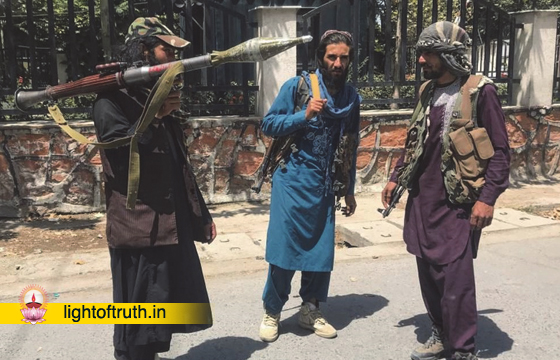
Papal foundation warns of ‘bleak future’ for religious freedom in Afghanistan
There’s an estimated 200 Catholics in Afghanistan – a tiny minority within the minority of around 7,000 Christians – and days after the Taliban took control of the country following the withdrawal of U.S. troops, a papal charity is sounding the alarm over their situation.
Aid to the Church in Need said it sees “a black future for religious freedom” in Afghanistan. Zabihullah Mujahid, spokesman of the Taliban, declared on Twitter that it’s now officially the “Islamic Emirate of Afghanistan.”
Thomas Heine-Geldern, executive president of the pontifical foundation, expressed profound concerns about the seizure of power in the Central Asian nation.
“During the rule of the previous Emirate of Afghanistan, the Taliban imposed a strict version of sharia law nationwide,” he said. “We can expect that Sunni Islam will be the official religion, Sharia law will be re-imposed, and hard-won freedoms for human rights, including a relative measure of religious freedom, over the last 20 years will be revoked.”
The Taliban ruled Afghanistan between 1996 to 2001.
This concern is shared by the Vatican, that ran a cover story in its newspaper asking about the future of the women in Afghanistan.
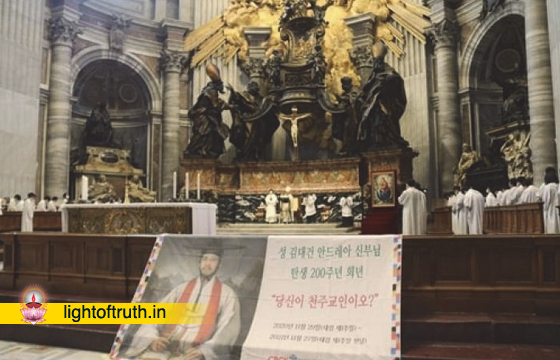
Marking the bicentenary of Saint Andrew Kim by praying for Korean unity
Korea’s Catholic community on Saturday marked 200 years since the birth of Saint Andrew Kim Tae-gon, the first Korean-born priest who was killed in hatred of the faith in 1846 at the age of 25.
Eucharistic liturgies were held in South Korea’s 1,750 churches to commemorate the anniversary, along with the first solemn Mass celebrated in Korean in Rome’s St Peter’s Basilica.
Last Saturday afternoon, Archbishop Lazzaro You Heung-sik led the service in the presence of representatives of Rome’s Korean community. A few weeks ago, the former head of the Diocese of Daejeon was appointed the new prefect of the Congregation for the clergy in the Vatican.
On the occasion of Saint Andrew Kim’s birth, Pope Francis released his own message to Korean Catholics, which Archbishop You read during Mass.
in addition to praising the heroic testimony of the martyr Andrea Kim, the pontiff publicly thanked Korean Catholics for donating anti-COVID-19 vaccine doses to the poorest countries through the Vatican. “This is a strong invitation for a greater commitment to the cause of the least of the world,” Francis said.
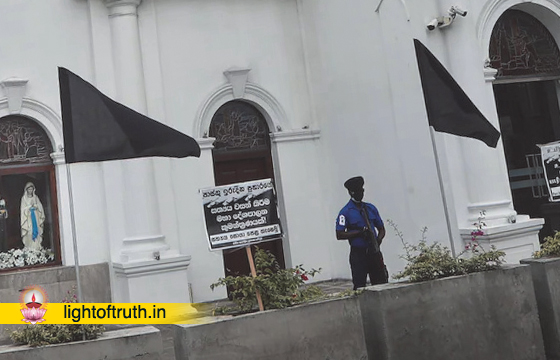
With black flags, Sri Lanka Christians protest bombing probe
Sri Lanka’s Christian community hoisted black flags at churches and homes on August 21 to express anger over the government’s investigation into the 2019 Easter Sunday bomb attacks, which killed 269 people.
Twenty-five people were charged last week in connection with the bombings. But the country’s Catholic Church says these could be “smaller fish,” and accuses the government of still not taking steps to identify the true conspirators. The head of the archdiocese of Colombo, Cardinal Malcolm Ranjith, has raised questions over allegations that state intelligence personnel knew and met with the attackers. Two local Muslim groups that had pledged allegiance to the Islamic State group were blamed for the six near-simultaneous suicide bomb attacks, which hit three churches and three luxury hotels on April 21, 2019. It is not known if the groups had actual links to the Islamic State.
Under cloudy skies, a row of large black flags billowed in the wind Saturday in front of St Anthony’s Church, which was targeted in the 2019 attacks. Behind a concrete barrier, religious statues overlooked armed police and signs that read: “Hiding the truth is a grand political conspiracy.”
In some areas, Muslim residents hoisted black flags in a show of solidarity. Church bells tolled at 8:45 a.m., the time the first blast occurred. Prayer services were held inside St. Anthony’s, but with empty pews because of a 10-day coronavirus lockdown that began late Friday.
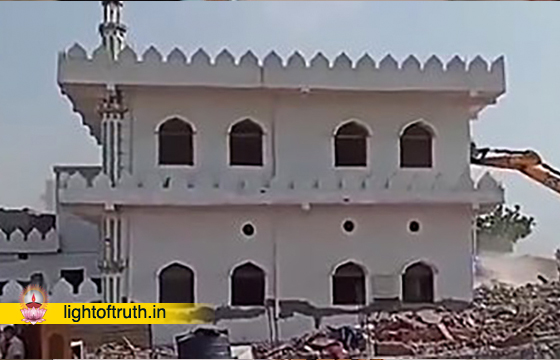
Pakistan province demolishes Catholic church, despite protests
A Catholic church serving more than 300 Christian families in Pakistan’s commercial capital of Karachi was demolished Aug. 24 despite resistance from a civil society group and warnings from U.N. human rights experts.
The Save Karachi Movement, a group of lawyers, human rights defenders, journalists and minority activists, confirmed the demolition of St. Joseph Church on its Twitter account. It was part of a larger demolition plan to prevent flooding, government officials said.
It is reported that Save Karachi Movement said the anti-encroachment squad of the Sindh provincial government tore down the building, despite protests from the Christian community.
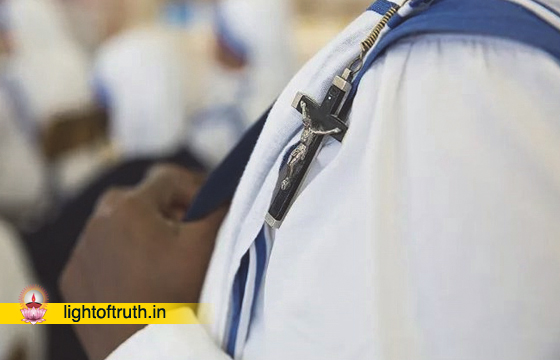
Missionaries of Charity and 14 disabled children from Kabul arrive at Rome airport
Religious sisters from the Missionaries of Charity and 14 disabled children from an orphanage in Afghanistan arrived safely on Aug. 25 at Rome’s international airport.
A Catholic priest and five sisters from the order founded by Mother Teresa arrived on one of two evacuation flights from Kabul that landed in Rome on Aug. 25 carrying a total of 277 people.
Fr Giovanni Scalese, the ecclesiastical superior of the Catholic mission in Afghanistan, also arrived on the flight. He spent eight years in Kabul, offering daily Mass for foreign residents in the city at the only Catholic church in Afghanistan, located inside of the Italian embassy.
“I would never have returned to Italy without these children,” Fr. Scalese told the Italian newspaper La Repubblica. We could not leave them there.”
The children, aged between six to 20 years old, were residents of an orphanage founded in 2006 by the Missionaries of Charity in Kabul, which has now been forced to close due to the Taliban’s takeover of the city.
Sr Bhatti Shahnaz, another Catholic religious sister who arrived in Rome on the evacuation flight, also worked with disabled children in Afghanistan with her community, the Sisters of Charity of St. Jeanne Antide.
“The 50 intellectually disabled children we looked after are still there,” she said with tears in her eyes.
Fr Matteo Sanavio, the president of the NGO For the Children of Kabul, was at the airport to welcome the Catholic arrivals from Afghanistan.
“The first moments we shared were smiles under our masks,” Sanavio told Vatican News.
“We were able to embrace, and the first words we said to each other were: ‘We praise the Lord because He has done great things.’”
Italy has welcomed 2,659 evacuated Afghans, about a third of them children, according to the Italian Defense Minister Lorenzo Guerini.
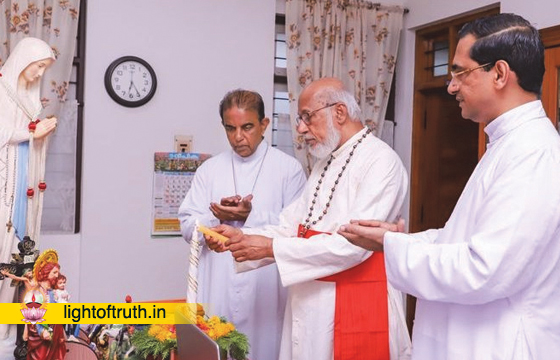
Syro-Malabar synod alters order of Mass
Priests, who lead the Mass, will face the congregation for the introductory session and delivering the sermon, but for the rest the of worship, will face the tabernacle, beginning November 28, it was decided at the 29th Synod of the Syro-Malabar Church that was held online and concluded on Aug. 27 evening.
This change in the order of worship must be implemented in all parishes, latest by April 17 next, Easter Sunday, the Synod said.
The Bishops, who constitute the Synod, expressed concern at what they termed as attempts being made to overlook the contributions that Christians had done for nation building. While stressing the need to uphold freedom of expression, they condemned repeated attempts by persons in the socio-cultural spheres and the film sector to portray Christianity in bad light. Social issues affecting Christians had been taken up with members of the ruling front and that of the Opposition, they said.