
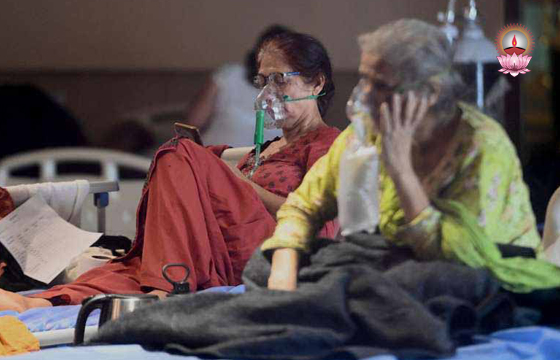
As Covid-19 continues to claim thousands of lives daily in India, Catholic leaders have called on the federal government to deploy the military to deal with the crisis before it worsens.
“The second wave of Covid-19 is surely a national calamity and the entire nation is struggling as thousands are dying and hundreds of thousands are getting infected daily,” said Bishop Theodore Mascarenhas, former secretary-general of the Catholic Bishops’ Conference of India (CBCI).
“The federal government should consider deploying military personnel to assist the civil administration to effectively deal with this alarming situation of people living in fear,” he told UCA News on April 27.
Since mid-April, India has been reporting more than 300,000 new Covid-19 cases and 2,000 deaths daily.
Several states and cities have resorted to lockdowns and night curfews and several other restrictions on socio-religious gatherings to break the chain of the pandemic’s spread.
Daily Archives: May 16, 2021
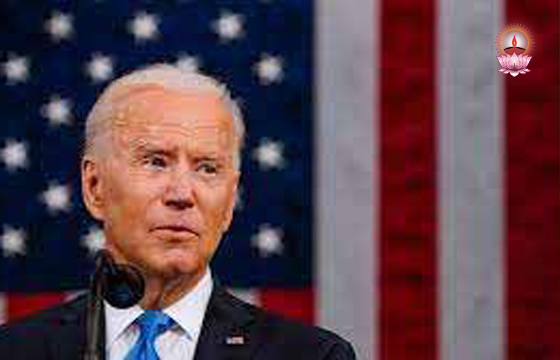
Release vaccines for India: Indian American doctors urge Biden
A prominent group of Indian-American doctors on May 7 urged the US government to release at least 30 million AstraZeneca vaccine doses to India to help meet its “acute and severe” shortage in the country, which is experiencing one of the worst outbreaks of COVID-19 in the world.
The American Association of Physicians of Indian-Origin (AAPI), the largest representative body of Indian-American doctors in the United States, has also written letters to all the 100 senators, seeking their support in increased assistance to India.
AAPI said it has been working with the White House officials and urging the administration the importance and the need to send the much-needed vaccines to India to prevent and contain the spread of the virus.
At present, India is experiencing acute and severe shortages of the COVID-19 vaccines. AstraZeneca is releasing 60 million vaccines after due FDA approval this month. We urge the US government to release at least 30 million doses of the vaccine to India, said Dr. Sampat Shivangi, member National Advisory Council, SAMHSA, Center for National Mental Health Services, and currently serving as AAPI’s Legislative Wing chairman.
While providing all possible help and support that is essential at this critical period, AAPI recognises that in the long term, vaccination is still the best therapy and hope, he said.
Dalits refuse to carry bodies, huts torched in Odisha
As many as 30 Dalit houses were set on fire in a village under the Puri district of Odisha, eastern India.
According to Bada Khabar, an Odiya news channel, the houses in Brahmapur village were burnt on May 9 as the Dalit families refused to carry dead bodies to the crematoria.
A few months ago, the Dalit families unanimously decided not to pick up dead bodies, incurring the wrath of other villagers. First, the villagers denied the Dalits access to the village pond and tube well. The villagers also didn’t allow them to walk on the village road. No one talked to them, according to the report.
Later, the village ‘Kangaroo court’ decided to chase away all Dalit families from the village.
The 30 Dalit families of 100 people left the village and settled in Nathupur village and stayed under a plastic tent for three months.
According to “Bada Khabar” reporter, Tapan Lenka, the concerned police officers or district administration took no action during the three months. No one visited the families either, he added.
However, on May 10, Brahmagiri Tahasildar reached Nathupur and forced the Dalit families to vacate the place right away.
The Dalits’ refusal to carry their traditionally expected duty of carrying dead bodies was influenced by their school going children. The children requested them not to perform such jobs any more as they faced ridicule and discrimination from other students.
The Dalit students wanted to study and make different careers.
Social activists say India has seen many such cases. Dalits are attacked and murdered for eating beef, marrying their choice, wearing wrong shoes, going to church, entering temple, doing the job of their ability, giving speeches, singing songs, writing books and so on.
In India, 40,801 atrocities against Dalits were reported in 2016, up from 38,670 in 2015, according to the National Crime Record Bureau data.
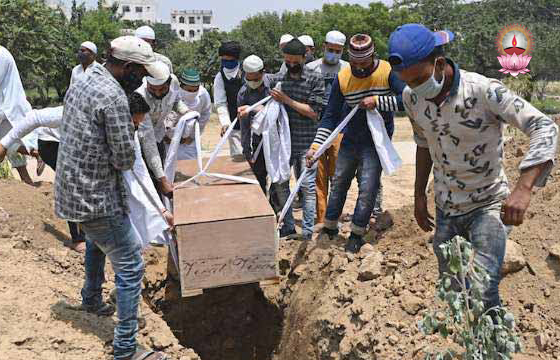
Mercy Angels give dignified burials to Indian Covid-19 victims
The Mercy Angels, a 65-member team of volunteers in the Archdiocese of Banga-lore in Karnataka state, help to bury Christians in the Indian Christian Cemetery, a common cemetery for all denominations in Bengaluru (formerly Bangalore).
“We have buried more than 250 bodies of Covid-19 patients in less than 15 days in our archdiocese,” said Father Santosh Royan.
On each day over the past fortnight, they have buried an average of 15 bodies.
“Just now we have done a burial,” volunteer Yohan Joe told UCA News on April 28. “Another 11 more bodies are waiting for burial. We will not leave this place until we bury them all.”
Father Royan said they do not discriminate against “anyone based on their denomination or anything like that. We bury each body with respect.”
“Our mission is to accord a dignified Christian burial to all those who die of Covid-19 infections as they cannot afford to get a dignified burial because of restri-ctions,” the priest told UCA News on April 28.
The government has imposed strict protocols for burials such as trained personnel to handle bodies, protective gear for workers and sanitization of ambulances before and after carrying bodies.
Church officials say the poor cannot arrange money for the sudden expenses and may leave bodies in hospitals to be cremated in government facilities without any funeral prayers. “We seek out those who cannot bury their dead. On average we get 15 and we bury them all before 11 at night,” Father Royan said. Joe, a psycho-logy graduate student, said the gravediggers start work as early as 4am and burials start around 10am as bodies arrive from 9.30am.
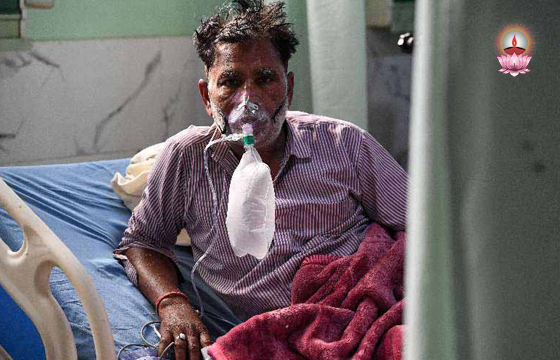
Pope prays for India’s emergency workers as pandemic surges
As India faces a massive surge in new infections and deaths caused by Covid-19, Pope Francis said he was praying for all those affected by the huge health emergency.
With so many in India suffering, “I am writing to convey my heartfelt solidarity and spiritual closeness to all the Indian people, together with the assurance of my prayers that God will grant healing and consolation to everyone affected by this grave pandemic,” he wrote.
Smashing global records, on May 5 more than 412,000 new cases and 3,980 deaths were registered in India in just 24 hours; however, health experts estimate the actual numbers are much higher due to unrecorded deaths and infections. The World Health Organization said India has accounted for 46 percent of global cases and 25 percent of global deaths reported in the past week.
Goa archdiocese opens renewal centre for people’s self-quarantine
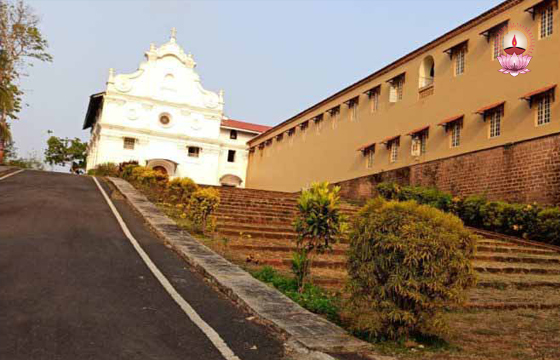
The archdiocese of Goa-Daman plans to open one of its spiritual renewal centers for people who require self-quarantine during this coronavirus pandemic time.
Father Savio Fernandes, assistant director Caritas-Goa, says they have sent five nurses to undergo training in Heath-way Hospital to take charge of the service in St Joseph Vaz Spiritual Renewal Centre in Old Goa.
“We are beginning with 40 beds, including 10 with oxygen facility,” the priest told Matters India. According to him, many religious responded to Arch-bishop Filippe Neri Ferrao’s request.
“We require nurses who have completed two doses of vaccination. We need many nurses to work in shifts. Our service may go on for a month or more as per the need. Required equipment are also on the way,” Father Fernandes added.
Devasahayam, six others approved for canonization
Pope Francis presided at an Ordinary Public Consistory for the Canonization of Ble-sseds on May 3 morning, in the Consistory Hall of the Apostolic Palace in the Vatican.
During a Consistory, the Cardinals “assist the Supreme Pastor of the Church through collegial action” by offering their counsel on matters of particular importance to the whole Church.
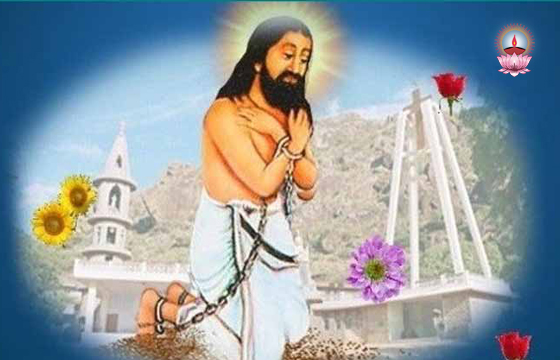
At Monday’s Consistory, Pope Francis confirmed the vote of the Cardinals to proceed with the canonization of seven Blesseds, who will be raised to the altars in the coming weeks and months, according to a schedule to be set at a later time. Once canonized, the holy men and women will be recog-nised as Saints throughout the universal Church. Blessed Lazarus (Devasahayam)
One martyr is numbered among the Blesseds who will are set to be canonized.
Blessed Lazarus, known as Devasahayam, was a Nair caste in India. Converted to Catho-licism by a Jesuit priest in 1745, Devasahayam Pillai took the name Lazarus when he became a Christian.
Pope extends jurisdiction of Melbourne Syro-Malabar eparchy
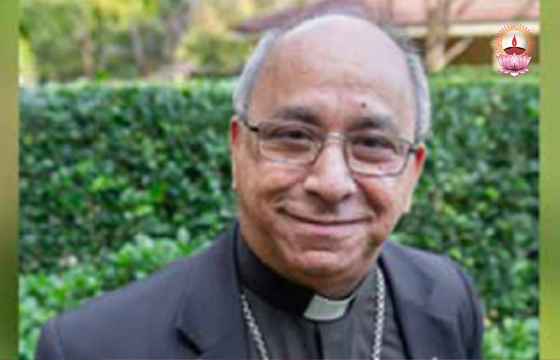
Pope Francis has brought New Zealand and the countries of Oceania under the jurisdiction of the Melbourne Syro-Malabar eparchy, says a statement from vicar general Monsignor Francis Kolencherry. The decree to expand the eparchy’s boundary was signed on March 29 by Cardinal Leonardo Sandri, Prefect of the Congregation for the Oriental Churches.
The eparchy created Pope Francis on January 11, 2014, currently covers Australia. The decision to include Oceania aims to reach pastoral and spirituals needs of the increasing number of Syro-Malabar Catholics in New Zealand and the Oceania region, adds the statement from the vicar general of the Syro-Malabar Eparchy of Saint Thomas the Apostle, Melbourne.
Indian political leaders mourn senior Mar Thoma bishop
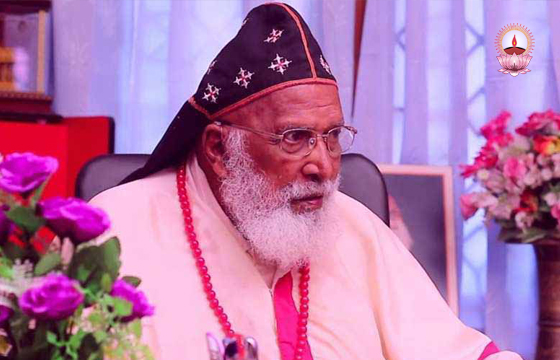
India’s political leaders have joined Christians to express condolences over the death of the popular former head of the Kerala-based Mar Thoma Church. Bishop Philipose Mar Chrysostom was buried in compliance with Covid-19 protocols at his church’s headquarters in Thiruvalla on May 6, a day after his death at the age of 104.
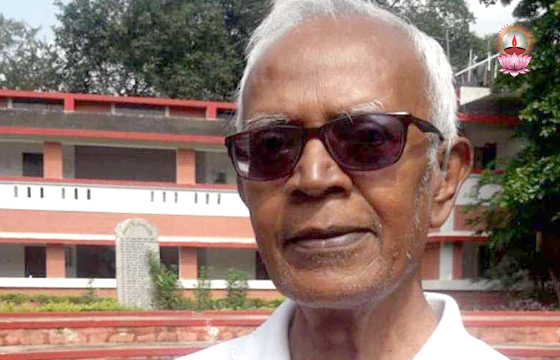
Jailed Indian Jesuit moves high court seeking bail
An elderly Indian Jesuit priest has approached Bombay High Court seeking his release on bail a month after a special court twice turned down his bail plea. Father Stan Swamy’s legal team on April 26 filed a bail application in the high court of Maharashtra state in western India, said Father A. Santhanam, a Jesuit who is monitoring the case.