
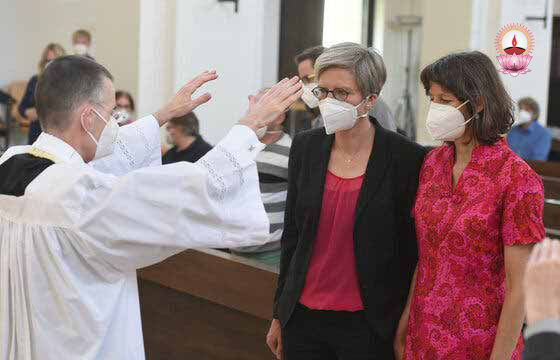
More than 100 Roman Catholic parishes in Germany offered blessings to gay couples on May 10 in defiance of church teaching and their own bishops.
The call for nationwide blessings came in response to a decree issued by the Vatican on March 15, reinforcing the church’s prohibition of priests asking for God’s benevolence for gay couples, stating that God “does not and cannot bless sin.”
A group of 16 German priests and volunteers organized a petition that within days collected more than 2,000 signatures. Encouraged by the response, they decided to take their action one step further and declare May 10 — chosen because of its association with Noah, who in the Bible is recognized by God with a rainbow, a symbol that has more recently been adopted by the L.G.B.T.Q. community — as a day to hold blessing ceremonies for any and all couples, but especially those in same-sex unions.
“In view of the refusal of the Congregation for the Doctrine of the Faith to bless homosexual partnerships, we raise our voices and say: We will continue to accompany people who enter into a binding partnership in the future and bless their relationship,” the group said in a state-ment. “We will not refuse a blessing ceremony.”
The Vatican had no comment on Monday, but the head of the conference of Roman Catholic bishops in Germany, Georg Bätzing, who is also the bishop of Limburg, rejected using public blessing ceremonies as what he called “instruments for symbolic actions on church policy or for protests.”
“It is part of the pastoral ministry of the church to treat all of these people fairly in their respective concrete situations on their life’s journey and to accompany them pastorally,” Bishop Bätzing said in a statement, speaking for the country’s bishops. “In this context, however, I do not consider public actions such as those planned for 10 May to be helpful or a way forward.”
Daily Archives: May 16, 2021
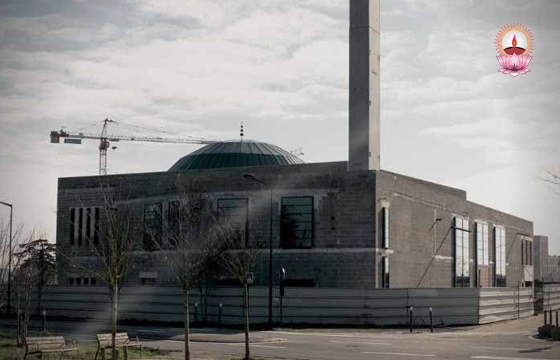
French Bishops Fund New Mosque
Debate has emerged in France due to news about the diocese of Tours helping fund a new Muslim worship center. According to La Nouvelle République, Salah Merabti, president of the Muslim community of Indreet-Loire — which is about 150 miles southwest of Paris — recently thanked the local Catholic diocese for its contribution to the mosque, which is just a part of a brand new community center.
He told the paper that his co-religionists received 150,000 euros from Coca-Cola Algeria, as well as funding from local elected officials, the Jewish community and the Catholic diocese. “This is comforting,” he said. In 2019, as many as 9,000 Muslims showed up at the construction site to celebrate the end of the Ramadan fasting period. In 2020, COVID restrictions kept them away.
Following the revelation, Abp. Vincent Jordy justified the contribution by saying that it was merely a symbolic gesture in gratitude for a contribution Muslims allegedly made towards the visit of St John Paul II in 1996. In a signed statement on the archdiocesan website, Abp. Jordy dodged some of the blame. He declared:
An article published on April 13 in La Nouvelle République, titled “The mosque of Tours awaits its roof, its dome and its donations,” evokes the financial situation of this site. In this regard, it is emphasized that various contributors are participating in this project, including the diocese of Tours. Questions that have reached us about this article lead us to provide the following clarifications.

German Catholic group calls on bishops to unite with Rome
A German Catholic group appealed on May 8 to the country’s bishops to unite with Rome amid a day of protest at the Vatican’s “no” to same-sex blessings. The initiative “Maria 1.0” called on the bishops to stop the blessing celebrations for same-sex partnerships planned by some priests for May 10.
In a May 8 statement, Clara Steinbrecher, leader of the group, said: “The planned blessing celebrations are a targeted pro-vocation in the direction of Pope Francis and should therefore be omitted by the priests.”
CNA Deutsch, CNA’s German-language news partner, said that she urged priests and bishops to “accompany people in all life situations pastorally and compassionately” while preserving unity with Rome.
Maria 1.0 is inviting “all Catholics and people of good-will” to say a decade of the rosary on May 10, thus expressing their bond with the Virgin Mary and the whole Church. “We call on people to ask the Blessed Mother Mary to intercede with Jesus Christ so that he may keep the bishops and priests in unity with the pope and the whole Church,” Steinbrecher said.
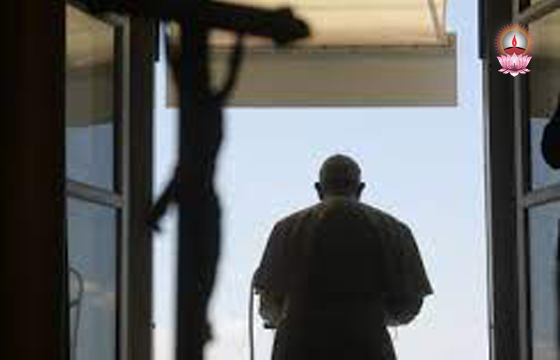
New Vatican anti-corruption law prohibits employees from using tax havens
Pope Francis has signed a new anti-corruption law for the Vatican, which prohibits employees from using tax havens investing in companies that go against Church teaching.
“Faithfulness in things of little account is related, according to Scripture, to faithfulness in the important ones,” begins the motu proprio on anti-corruption for members of Vatican management signed by Francis April 26. “Just as being dishonest in things of little importance is related to being dishonest in important matters.”
The Holy See adheres to the United Nations Merida Convention against Corruption, and is therefore compelled to conform to the best practices for preventing and combating corruption. To that end, employees at all managerial levels of the Vatican – from cardinals to lay executive personnel – will be obliged to sign, every two years, a declaration in which they attest that they have not benefitted from any special amnesty or pardon, nor received convictions for crimes, either in the Vatican City State or abroad.
The declaration also demands the employees not to be shareholders or have interests in companies that operate for purposes or in sectors contrary to the Catholic Church’s social teaching. This includes the weapons industry, pornography, or pharmaceutical companies that produce products related to artificial contraception and abortion.
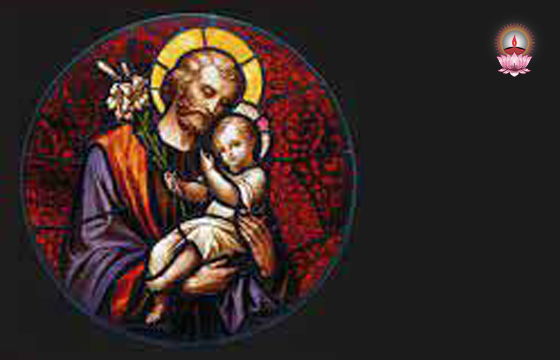
Vatican adds seven invocations to Litany of St. Joseph
The Vatican’s divine worship office announced May 1 the addition of seven new invocations to the Litany of St Joseph. The seven invocations, in Latin, are Custos Redemptoris, Serve Christi, Minister salutis, Fulcimen in difficultatibus, Patrone exsulum, Patrone affli-ctorum, and Patrone pauperum. The Congregation for Divine Worship and the Discipline of the Sacraments wrote a letter to the presidents of bishops’ conferences May 1, the feast of St Joseph the Worker, explaining the inclusion of the new invocations.
Pope to institute formal ‘ministry of catechist’
While millions of laypeople around the world are recognized as catechists in their parish or diocese, Pope Francis is preparing to formally institute the “ministry of catechist.”
Pope Francis often has spoken of the importance of selecting, training and supporting catechists, who are called to lead people to a deeper relationship with Jesus, prepare them to receive the sacraments and educate them in the teachings of the church.
In many parts of the world, especially in communities with-out a resident priest, catechists are the leaders of the local Catholic community, evangelizing, convoking and guiding their fellow Catholics in prayer and works of charity. And, in missionary territories under the guidance of the Congregation for the Evangelization of Peoples, they already serve with a specific mandate from their bishop.
The congregation’s 1997 Guide for Catechists noted that “the Code of Canon Law has a canon on catechists involved in strictly missionary activity and describes them as ‘lay members of Christ’s faithful who have received proper formation and are outstanding in their living of the Christian life. Under the direction of missionaries, they are to present the Gospel teaching and engage in liturgical worship and in works of charity.’”
The Vatican press office said May 5 that Pope Francis’ apostolic letter “Antiquum Ministerium” (“Ancient Ministry”), instituting the ministry, would be released May 11.
Pope warns against arrogant pride and despising spontaneous prayer
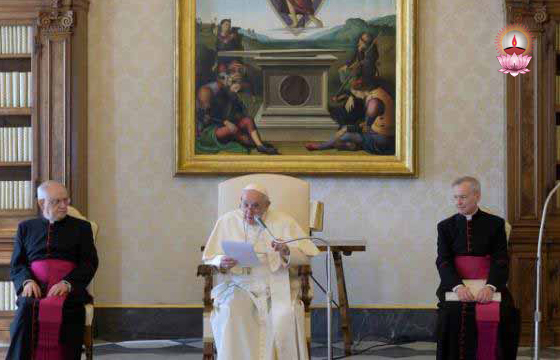
Prayer is “dialogue with God” and spontaneous spoken prayer is an “anchor” to cling to, remembering that when the apostles who saw Jesus in silent prayer asked him how they should pray, he taught them to recite the Our Father, in which “there is everything”. Therefore “do not fall into arrogant pride and do not despise spoken prayer, the prayer of the simple”.
Spontaneous vocal prayer was the subject of Pope Francis general audience continuing his series of catechesis on prayer.
Speaking again from his private library he said: “Prayer is dialogue with God; and every creature, in a certain sense, ‘dialogues’ with God. In the human being, prayer becomes word, invocation, song, poetry … The divine Word became flesh, and in the flesh of every man the word returns to God in prayer”.
In the Bible we learn to ensure that “everything comes to the light of the word, that nothing human is excluded, censored. Above all, pain is dangerous if it remains covered, closed inside us…. A pain closed within us, which cannot express itself, simmers, it can poison the soul: it is fatal”.
“The first human prayer – Francis later said – is always a vocal recitation. Lips always move first. Although we all know that praying does not mean repeating words, yet vocal prayer is the safest and it is always possible to practice it. Feelings, however noble, are always uncertain: they come and go, abandon us and return. Not only that, even the graces of prayer are unpredictable: at some moment consolations abound, but on the darkest days they seem to evaporate completely. Prayer of the heart is mysterious and at times hidden. The prayer of the lips, the one that is whispered or recited in a choir, is always available, and necessary like manual labour.”
Pope allows Cardinals, Bishops to be tried by Vatican tribunals
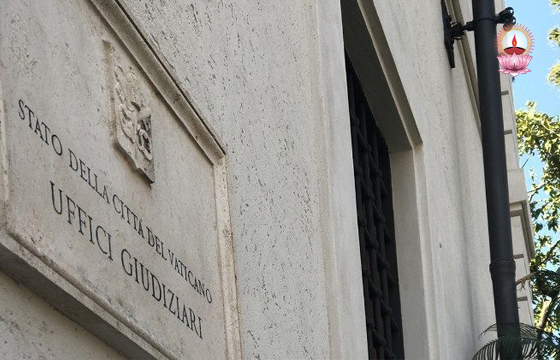
Cardinals and Bishops accused of criminal offences by Vatican magistrates, can now be tried by the Tribunal of the Vatican City State instead of the Court of Cassation presided over by a cardinal, as had been the case until now. Pope Francis made the change in an Apostolic Letter issued motu proprio, which amends the judicial system of the Vatican State promulgated in March 2020. However, trials will still require the Pope’s prior authorization before they can proceed.
The change in legislation comes after Francis himself had addressed the issue at the inauguration of the judicial year in the Vatican on 27 March. In Friday’s motu proprio, Pope Francis, citing his own words on that occasion, recalls “the overriding need for the current procedural system — also by means of appropriate changes in the law — to ensure the equality of all members of the Church and their equal dignity and position, without privileges that date back to earlier times and are no longer in keeping with the responsibilities that each person has in building up the Church.”
Pope Francis’ decision to abolish Article 24 of the law “on the judicial order of the Vatican City State,” — which provided for Cardinals and Bishops accused of criminal offences within Vatican City State to have recourse to the Court of Cassation — is therefore based on the principle of the equality of all members of the Church. The Court of Cassation is the Vatican’s Supreme Court, and in such cases would consist of three Cardinals and two or more associate judges.
German legislators consider ending state payments to churches
Germany’s lower house of Parliament is considering re-placing state payments to the nation’s two largest churches. The Catholic and Protestant churches received combined state benefits of more than $650 million in 2020.
At a hearing in the interior affairs committee of the Bundestag, or lower house of parliament, they welcomed in principle the intention of legislation by the opposition liberal Free Democratic Party, the Greens and the Left Party and pointed out that it was in line with a constitutional mandate to abolish the payments, which date back to a 19th-century provision. By contrast, a number of legal experts said an alternative bill by the Alternative for Germa-ny party to simply phase out the benefits was unconstitutional, reported the German Catholic news agency KNA.
The bill by the three parties aims to create the necessary framework for agreements between the federal states, which currently make the payments, and the Catholic dioceses and Protestant regional churches.
Most of the state payments date back to 1803, when German imperial princes received expropriated church property as compensation for a loss of territory. In return, the princes paid the churches money on a regular basis.
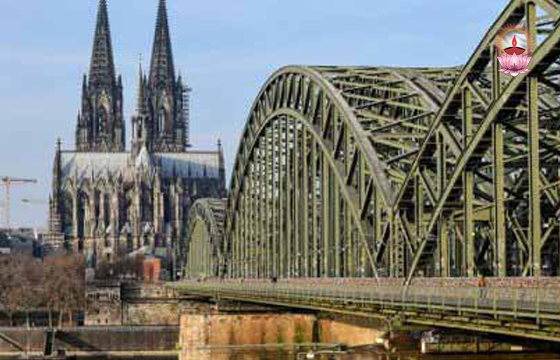
Laypeople in Cologne Archdiocese demand local synod
Catholic laypeople in the Archdiocese of Cologne have called for a local synod to address the ongoing crisis in Germany’s most populous diocese.
“We must make every effort to reestablish a genuine dialogue between the cardinal, senior members of the diocesan leader-ship and the grassroots of the church,” said Tim-O. Kurzbach, president of the Cologne arch-diocesan council of Catholics.