
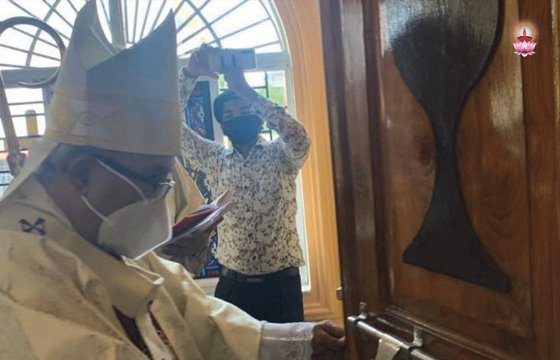
A church dedicated to Saint Teresa of Calcutta was blessed on April 10 at the outskirts of north Kolkata amid pandemic restrictions. Archbishop Thomas D’Souza of Calcutta, who blessed the church, expressed his joy at the completion of the church building. Vicar general Father Dominic Gomes and Father Anthony Rodricks, dean of North 24 Parganas were among the priests who concelebrated.
Daily Archives: April 17, 2021

Educationist arrested for blog on ideals of Vedas, Jesus
The Madhya Pradesh police have arrested an educationist for writing a blog on the ideals of secularism with a blend of spirituality in context of Vedas and Lord Jesus.
The FIR was registered at Narayangarh Police station against Rajendra Prasad Dwi-vedi, a resident of Bhopal and a former District Education Officer, in November 2020 on the complaint of Suresh Sahu, a lawyer and Rashtriya Swaya-msevak Sangh (RSS) activist.
Sahu, a resident of Nara-yangarh of Mandsaur district in his police complaint alleged that Dwivedi has outraged his religious feelings by showing Hinduism in poor light in his blog. Police on April 4 booked Dwivedi under several sections of the Indian Penal Code and sent him to judicial custody.
Sahu further alleged that Dwivedi’s blog ‘Pragyapra-vaah.in’ is in resemblance of RSS’s Prajnapravah.com, a portal that propagates the ideas of Hinduism and nationalism, and he has been publishing articles that propagates the ideas of Christianity.
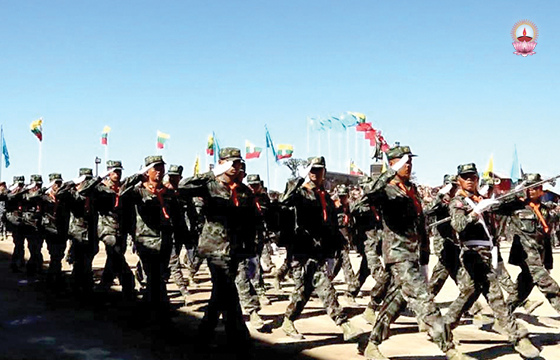
Myanmar’s military is waging war on its citizens. Some say it’s time to fight back
From a fenced-off compound close to the Myanmar border in northern Thailand, a rebel leader offers a bleak view of Myanmar’s future, as the country is cleaved apart by a military coup.
The possibility of a deepening civil war in Myanmar is “high,” Gen. Yawd Serk said from his administrative base in Chiang Mai province. “The world has changed. I see people in the cities won’t give up. And I see (coup leader) Min Aung Hlaing won’t give up. I think there is possibility that civil war might happen.”
Yawd Serk is an old hand at confronting military rulers. He is chairman of the ethnic minority political organization Restoration Council of Shan State (RCSS) and founder of its armed wing, the Shan State Army (SSA), which controls large pockets of land in Myanmar’s east. His is one of more than two dozen ethnic armed groups that have been fighting against the Myanmar military — know as the Tatmadaw — and each other in the country’s borderlands for greater rights and autonomy, on and off for 70 years.
Since the military seized power on February 1, deposing the elected government of Aung San Suu Kyi, many of these rebel groups — including the RCSS — have expressed support for non-violent nationwide protests against junta rule, and condemned the indiscriminate brutality and deadly use of force inflicted on Burmese civilians by junta-controlled soldiers and police.
But as security forces continue their deadly campaign, there are signs the country is reaching a turning point where rebel groups could engage in renewed conflict, while some in the protest movement start to push for armed resistance in a bid to defend themselves.
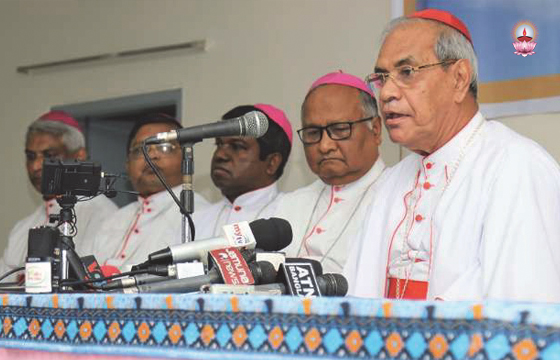
Bangladesh bishops urge dialogue to solve Myanmar crisis
Catholic bishops in Bangla-desh have denounced deadly violence in Myanmar as scores of people continue to be killed in the crackdown on nationwide anti-coup protests.
In a statement issued by the Justice and Peace Commission of the Catholic Bishops’ Con-ference of Bangladesh (CBCB), the prelates expressed solidarity with the Myanmar people’s aspirations for an end to military rule and the restoration of democracy through dialogue.
“We call on the military junta of Myanmar to be sensible and to sit with the relevant people for dialogue in order to solve this political crisis of the country, instead of shooting their own fellow citizens. We join the Church in Myanmar in prayers and adorations seeking God’s love and mercy on the people and nation of Myanmar,” said the statement released on April 6 and signed by Bishop Gervas Rozario, chairman of the commi-ssion.
“We the Catholic Church in Bangladesh are the close neigh-bours of the Church in Myanmar, express our support and solidarity with the people and the Church in that country. We too share the pain and suffering of the peace-loving people of Myanmar who only want the democracy back, nothing more.”
The protests over the coup have been the largest since the so-called Saffron Revolution in 2007. The protesters include teachers, students, lawyers, bank officials and government work-ers. Christians of all denomina-tions have taken to the streets with their fellow citizens.
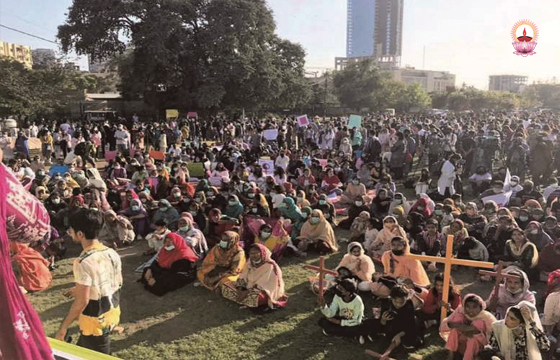
Anger over ‘sexist’ reporting of women in Pakistan
Rights groups and journalist bodies in Pakistan have conde-mned a daily newspaper for pub-lishing an abusive commentary about participants in an annual women’s march.
“Fourteen countries have the highest rape cases of women. The randies [whores] of Aurat March can’t see these non-Muslim countries,” stated the front-page article in Ummat, an Urdu-language newspaper in Karachi.
“Why don’t they abuse re-ligions like Christianity, Hindui-sm and Buddhism of the majority populations of these countries? Why does their voice rip apart while criticizing their teachings?”
Father Nasir William, dire-ctor of the Commission for Social Communications in Islamabad-Rawalpindi Diocese, slammed the controversial commentary.
“It is unethical to use such words in media. They reflect personal enmity, ignorance and stupidity. There are other ways for criticism,” he told.
“However, the women are risking their dignity by protesting on roads and going against the male-dominant culture. Rights cannot be achieved on such plat-forms. We discourage nuns from protesting on roads. They are different from other women.”
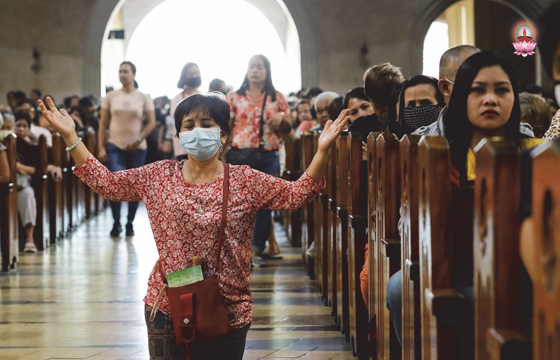
Celebrating 500 years of Christianity in the Philippines
As the pandemic roars on in the Philippines and the world, church organi-zers continue with co-mmemorations marking the 500th year of Chri-stianity in the Southeast Asian country.
“It caught us by sur-prise, really,” said Mark Purugganan, a liturgist at Parish of the Holy Sacri-fice in Quezon City just north of the capital Manila. “We already had … started in November 2019 … 500 Holy Hours leading up to March 31. This is the anniversary of the first Easter Mass celebrated in the Philippines.”
Purugganan explained that, during lockdown, time spent with Jesus in the Eucharist became a virtual exercise with a camera focused on the host and projected on big screens outdoors. Instead of silence, vespers prayers were added because “people don’t like dead air,” which he said becomes too stark in a virtual setting.
In a country that loves a celebration, physical participation is much preferred over virtual attendance.
But one piece on social media is taking hold across the country where more than 75 percent of the population has a Facebook account. Father Kali Llamado of the Archdiocese of Manila said Filipinos are learning the anniversary theme song “We Give our Yes!” and posting versions online. The 500th anniversary theme is “Missio ad Gentes” or “mission to the people.”
“We are looking at highlighting certain as-pects where we need to incorporate faith in our daily life,” Father Lla-mado told CNS.
He said in addition to activities on faith formation and the legacy of Christianity, the Manila Archdiocese also has social programs such as hosting pandemic vaccination centers and holding a voter registration drive for the election year 2022. Organizers said the Philippine bishops designated hundreds of “jubilee churches” across the country to hold special commemorations on the mission theme to be rolled out over the next year, culminating in a pushed-back April 2022 celebration.
The actual year that Christianity came to the shores of the Philippine Islands was 1521, when the Portuguese explorer Ferdinand Magellan, in an attempt to circumnavigate the globe from Spain to India, landed on tiny island of Limasawain the central Philippines and started to convert the natives to Christianity. More than 2,200 converted, but those on nearby Mactan island resisted and killed Magellan.
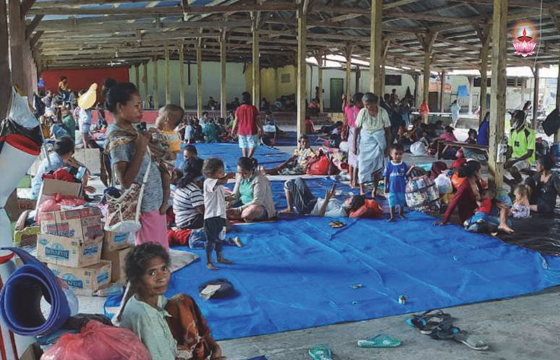
Indonesian cardinal calls for compassion for flood victims
Cardinal Ignatius Suharyo Hardjoatmodjo of Jakarta has called on Catholics to show compassion to victims of deadly flash floods and landslides that hit the country’s predominantly Catholic province of East Nusa Tenggara last weekend.
The disasters, caused by two days of heavy rain due to the Seroja tropical cyclone, hit 12 cities and districts in the province on Easter Sunday, killing at least 128 people, according to the National Disaster Mitigation Agency.
About 72 people are re-portedly missing, while 271 homes and 99 public facilities were damaged. More than 8,000 people were evacuated to shelters including ones belonging to the Catholic Church.
He said such compassion “is a materialization of our faith” and “can be blessings for our brothers and sisters.”
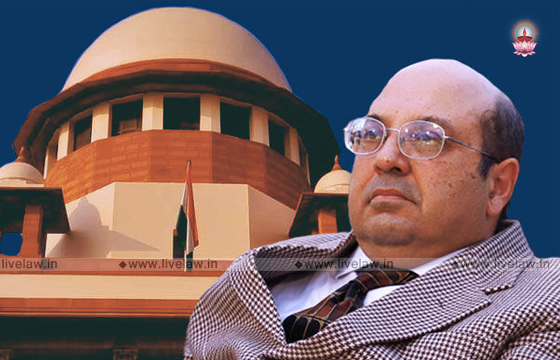
Supreme Court refuses to entertain petition on religious conversions
The Supreme Court on April 9 said people are free to choose their own religion, even as it lashed out at a “very, very harmful kind” of “public interest” petition claiming there is mass religious conversion happening “by hook or by crook” across the country.
Instead, a Bench led by Justice Rohinton F. Nariman said people have a right under the Constitution to profess, practice and propagate religion.
“Why should a person above 18 years not choose his religion? What kind of a writ petition is this? We will impose heavy costs on you… Withdraw it or argue and risk the consequences,” Justice Nariman asked petitioner – advocate Ashwini Kumar Upa-dhyay.
Justice Nariman reminded Upadhyay of the fundamental right under Article 25 of the Constitution to freely profess, practice and propagate religion, subject to public order, morality and health. “Why do you think there is the word ‘propagate’?’” Justice Nariman asked the petitioner.
Religious conversion is being done through a “carrot-and-stick” approach, Upadhyay had claimed in his petition.
Justice Nariman said every person is the final judge of their own choice of religion or who their life partner should be. Courts cannot sit in judgment of a person’s choice of religion or life partner.
Religious faith is a part of the fundamental right to privacy. Justice Nariman reminded Upadhyay of the Constitution Bench judgment which upheld inviolability of the right to privacy, equating it with the rights to life, of dignity and liberty.
Upadhyay’s petition was dismissed as withdrawn. His plea to approach the Law Commission or the High Court with the plea was not expressly allowed by the Bench.
The petition alleged that the court should direct the federal and the state governments to control black magic, superstition and religious conversion being done through threats, intimidation or bribes.
“There is not even one district which is free of black magic, superstition and religious conversion… Incidents are reported every week throughout the country where conversion is done by intimidating, threatening, luring through gifts and monetary benefits,” the petition had alleged.
Further, the petition said the federal and state governments were obligated under Article 46 to protect the SC/ST community from social injustice and other forms of exploitation.
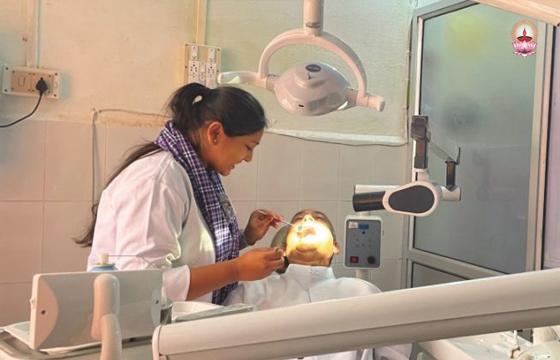
Miao diocese marks World Health Day
The diocese of Miao marked the World Health Day with the inauguration of a modern dental care unit at the only Catholic hospital in the northeastern Indian state of Arunachal.
“Proper health care is big concern in Arunachal Pradesh, particularly in Changlang district,” said Somlung Mossang, who represents the Borduma-Diyun constituency in the state legislative assembly.
Inaugurating the clinic in Krick and Bourry Memorial Hospital at Injan in Changalang district on April 7, he said people of Arunachal Pradesh often are compelled to travel to neighbouring Assam for their basic medical treatments. “Due to the long journey undertaken many have lost their lives on the way to the hospital. It also results in huge expense of money,” he added.
The dental care wing will cater to agrarian people of nearby areas such as Miao, Jairampur, Nampong, Manmao, Bordumsa, Diyun, Nampahi, Balinong and Kharsang. They can now avail hassle-free and affordable round the clock dental treatment, saving both money and time, Mossang said.
The diocese of Miao set up the hospital in 2016 as a response to the people’s request for a better health care facility within Arunachal Pradesh.
Speaking on the occasion, Bishop George Pallipparambil of Miao congratulated the doctors and the Sacred Heart Sisters of Pala province in Kerala and the nurses for their dedicated healthcare service to the people. Echoing the theme of World Health Day 2021, the Salesian prelate said, the dental care unit will now help the hospital serve the people and build a ‘fairer and healthier world.’
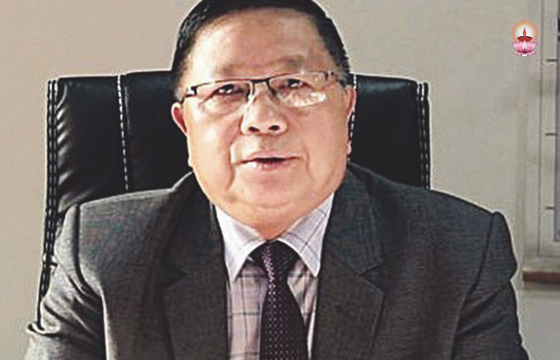
Mizoram urges Churches, NGOs to help contain Covid-19 cases
Mizoram Health Minister Dr Lalthangliana on April 7 urged churches, NGOs and local volunteers to revive efforts to contain the spread of Covid-19 as the state has registered a spike in coronavirus cases since March last week, an official statement said.
The health minister held interaction with representatives of churches, NGOs, Mizoram Village Council Association and Aizawl City Local Council Association in view of spike in Covid-19 cases.
Christians form 87% of the state’s 1.12 million people.
The minister urged the leaders to make collective efforts and take immediate preventive measures to avoid the situation from going from bad to worse, the statement said.
The health minister said that the state has registered a spike in Covid-19 cases since late March following the relaxation of COVID-19 protocols.
He said that at least 32 Covid-19 cases were reported in the first week of April and most of the patients came from other states. “With the rising Covid-19 cases, our present situation is hard to explain,” he told the meeting. The meeting discussed the need to review night curfew, church service, sports activities, screening of Myanmar nationals, who sneak into the state and stepping up vigil at various entry points along international and inter-state borders.