
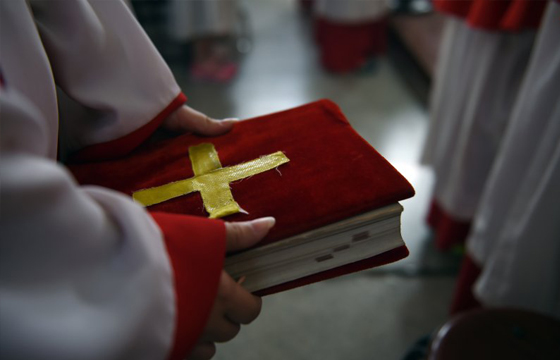
Chinese Communist Party (CCP) police and state security officers have prohibited a pastor from having Christian books.
According to religious freedom charity China Aid, police turned up at the home of a rural minister in Linyi, Shandong Province. They demanded that he allow them to check his mobile phone. After learning that the pastor had joined a WeChat group, “Help rural ministers read books,” they showed him a document that required him to leave the group and refuse any books the group might mail him.
The charity said officers probably thought some members of the group lived abroad and belonged to the overseas force and violated the 15th decree the National Reli-gious Affairs Administration issued on 9th February.
The law, which includes Article 12 in the Measures for Administration of Religious Staff, effective 1st May, pertains to what religious staff are forbidden to do and includes two clauses about overseas forces:
religious staff are dominated by overseas forces, accept religious positions offered by overseas religious groups or institutions without authorization, and violate the principles of independence, self run;
Religious staff violate related national rules and accept overseas donation….
The “Help rural ministers read books” started in 2019 and asks Christians to donate money to purchase books for ministers who cannot afford legal copies of books. It sends theology books to those pastors each month.
The rural minister CCP security officers and police interrogated about books the group gifted him serves at a historic 100-year-old church. Authorities have demolished the church building several times, but members have rebuilt it.
Daily Archives: April 17, 2021
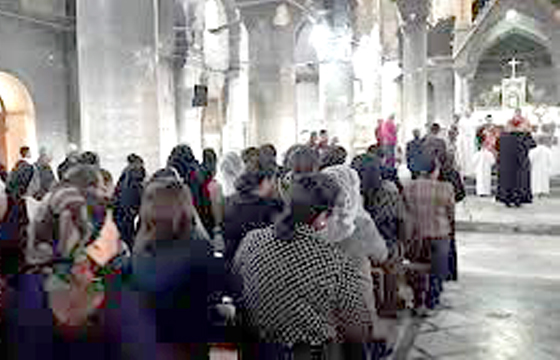
23,000 Christians reported returning to Iraq after Pope’s visit
Thousands of families are said to be returning to Iraq, just a few years after the towns were taken over by ISIS and Christians killed.
Pope Francis’ visit to Iraq has apparently given hope to Iraqi Christians returning to their homeland after fleeing years of violence. Qaraqosh, in the Nineveh Plains, is Iraq’s largest Catholic town, 20 minutes from Mosul, and it had a population of 55,000 before it was occupied by ISIS for two years.
According to priest Father Ammar Yako, who runs a centre for displaced families, 23,000 Christians have already returned.
Fionn Shiner, parliamentary and press officer for religious freedom charity Aid to the Church in Need told Premier the fleeing goes back further for some: “In Saddam Hussein’s time, he did a census and there was 1.4 million Christians there’s now thought to be less than 250,000. This movement away from Iraq really picked up during the Iraq War in 2003 and then with ISIS’ invasion of the Nineveh plains, that really sent it into turbo drive.”
However, exactly one month on from the papal visit, which took place in Baghdad, Mosul, Ur and Erbil, other people in the mainly Syriac Catholic town of Qaraqosh have reported that the Pope’s visit has caused people to consider a return.
Speaking to ACN, Revan Possa from the Qaraqosh reconstruction board, said: “We have heard about families from Qaraqosh who cried when they saw photos of the trip and are thinking about returning home.
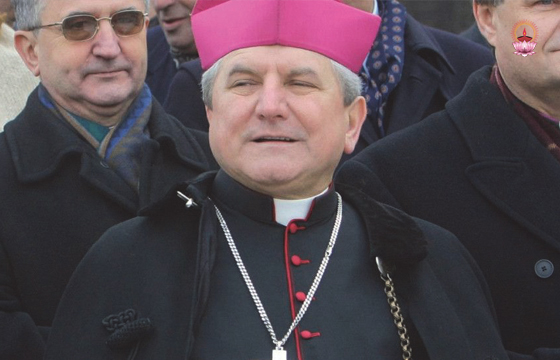
Vatican punishes Polish churchmen for alleged abuse cover-up
The Vatican said March 29 that it is punishing a retired Polish archbishop and a bishop for their alleged roles in covering up sexual abuse committed by other clergymen.
Former Gdansk Archbishop Slawoj Leszek Glodz and former Bishop Edward Janiak of Kalisz have also been forbidden from living in their former dioceses or participating in any public religious celebrations there.
The Vatican Embassy in pre-dominantly Roman Catholic Poland also said each of the two is being required to contribute personal money into a fund helping victims of clerical abuse.
The embassy cited “omissions” by Glodz “in cases of sexual abuse committed by some clergy against minors, and other issues related to the administration of the archdiocese.”
In a separate statement, the embassy said the Holy See was acting on the basis of “reported negligence of Bishop Edward Janiak in cases of sexual abuse committed by some clergy against minors, and other issues related to the management of the diocese.”
Both Glodz and Janiak retired in 2020 as their cases were being investigated. Glodz was featured in a 2019 documentary about priestly sex abuse and cover-up in Poland that sparked a reckoning in the country.
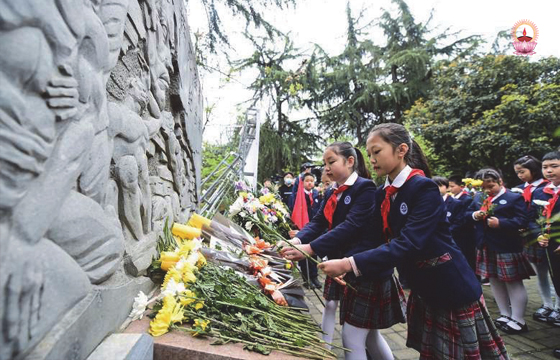
Chinese Christians honour ancestors at Easter
As the Easter Vigil on Holy Saturday approached, parishioners of Holy Trinity Catholic Church in Xiantao city in China’s Hebei province were alarmed by the sounds of fireworks and firecrackers.
Xiantao, some 100 kilometres from provincial capital Wuhan, where the first human infections from the deadly novel coronavirus were detected in late 2019, was mostly lifeless at Easter last year due to a strict lockdown to stem the invisible enemy that has claimed some three million lives globally. Authorities gradually lifted restrictions following the decline of new cases and deaths across China, while nations in most parts of the world continue to grapple with the contagion.

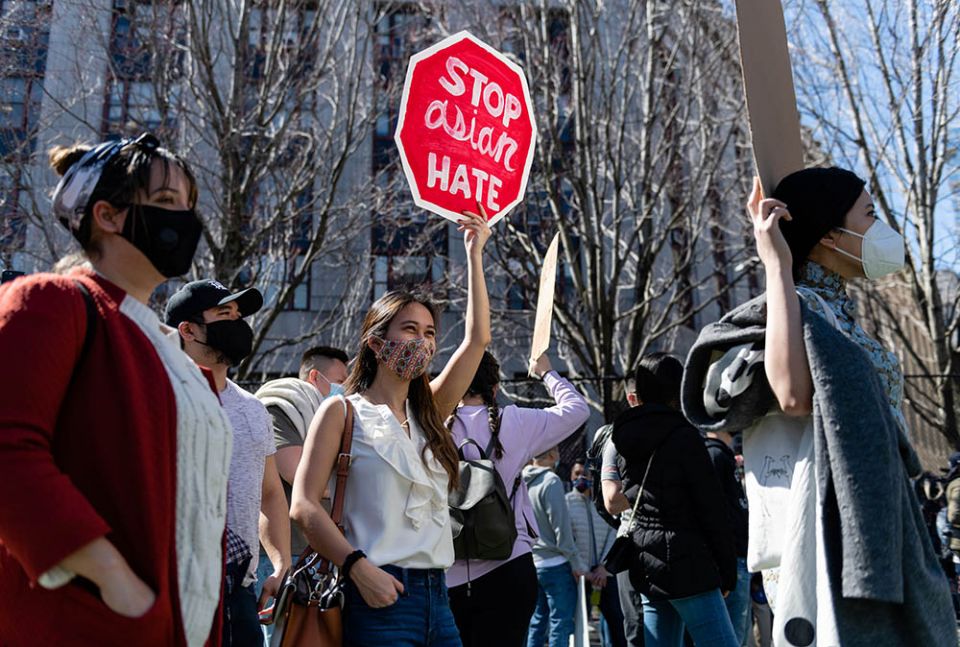
US Catholics must do more to reject anti-Asian discrimination
In 2018, the U.S. Conference of Catholic Bishops published “Open Wide Our Hearts: An Enduring Call to Love.” The pastoral letter was the first collective bishops’ statement on racism in almost 40 years and describes the discrimination against Latinos, African Americans and Native Americans. It makes no mention of Asian Americans and Pacific Islanders.
Since Asian immigration to the United States began in the 19th century, Asians have been targets of white supremacist violence. Yet this history is, at best, ignored or revised, at worst, altogether erased.
In 1871, a mob killed 19 Chinese residents during a racial massacre in Los Angeles. Four years later, the United States passed the Page Act of 1875 that prohibited Chinese women from entering the country. It was the country’s first restrictive immigration policy. During World War II, the U.S. government incarcerated more than 100,000 Japanese Americans in U.S. internment camps. Despite this violence, the Asian community has continued to thrive in our nation and church.
67% “religious” in UK have questioned beliefs: Survey
After just over a year of lockdown, a new study has found the coronavirus pandemic has raised a host of questions – particularly around belief in God, religious practice and death.
To mark the launch of Season 3 of The Big Conversation – a series of video debates featuring some of the biggest intellectual thinkers across the religious and atheistic spectrum – Savanta Com Res has released a new survey, commissioned by Premier Christian Radio, that shines a light on the impact the pandemic has had on people’s spiritual beliefs and behaviours.
It found 67% of those who call themselves religious have questioned their belief during the pandemic. Meanwhile, 24% are more fearful towards dying because of the pandemic, with the figure rising slightly among the religious at 27%.
The survey of 2,092 UK adults also showed that a third of people say that the pandemic has had an effect on their prayer life. However, there is no consensus on whether it’s made us more or less likely to pray. Sixteen percent have increased their prayer and 15% have decreased.
Unbelievable? presenter, Justin Brierley, who hosts The Big Conversation said the pandemic has raised major issues for those with spiritual leanings and none:
“A year of living in the pandemic has caused many of us to re-evaluate life. The survey shows that whether we are religious or non-religious, we are all more aware of our own mortality. However, it was interesting to see just how many people of faith have been led to doubt the existence of a loving God. I believe that our opening Big Conversation on God, suffering and the pandemic will help people to find answers to their questions.”
In the first of the six-episode Big Conversation series Brierley welcomes Los Angeles-based Bishop Robert Barron, founder of Word on Fire, along with Alex O’Connor who is a Philosophy & Theology student at Oxford University.
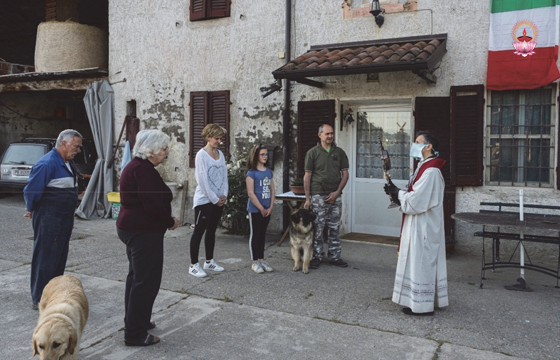
Italy sees worst gap between births, deaths since 1918 Spanish Flu
With Italy already facing a diminishing population, low birth rates and fewer religious and civil marriages, the COVID-19 pandemic severely impacted those numbers for 2020, according to the Italian National Institute of Statistics.
In fact, it said, Italy set new records in 2020 with the lowest number of births since its unification in 1871, the highest number of deaths since the end of World War II and the largest gap between the number of deaths and births since the Spanish flu pandemic of 1918.
The statistics were released March 26 in a report on Italian demographics during the COVID-19 pandemic for 2020.
The first COVID-19 cases in Europe were registered in late January in Italy, and the country’s northern regions, especially Lombardy, were hit the hardest by the contagion until nationwide lockdowns and restrictions slowed the surge.
According to the Italian National Institute of Statistics, commonly referred to as ISTAT, more than 746,000 deaths were registered in 2020, almost 112,000 more than 2019 — an increase of 17.6% — and the highest number recorded since the end of World War II.
There were 7,600 fewer deaths recorded in January and February 2020 — the pre-pandemic phase — than the average for those two months in each of the preceding five years, it said.
But starting in March, when the epidemic exploded in Italy, until the end of 2020, the number of deaths nationwide went up 21 percent compared to the same period in the previous five years, the report said. The number of deaths registered as being due to COVID-19 were 10% of all deaths in 2020 with nearly 76,000 lives lost; ISTAT estimated that those deaths accounted for 70 percent of the increase over a normal year.
However, the highest numbers were during the worst phase of the crisis, from March to May 2020 when the number of deaths was 31.7 percent higher than the national average with almost 51,000 additional deaths than those recorded in the same period over the preceding five years, ISTAT said.
Northern Italy saw the highest concentration of deaths with the number of deaths being 61% higher than its norm from March to May; the number of deaths were 95% higher than the norm in March and 75% higher in April, it said.
The northern region of Lombardy — the epicentre of the pandemic — saw a 111.8 percent increase in the number of dead in that first phase, it said.
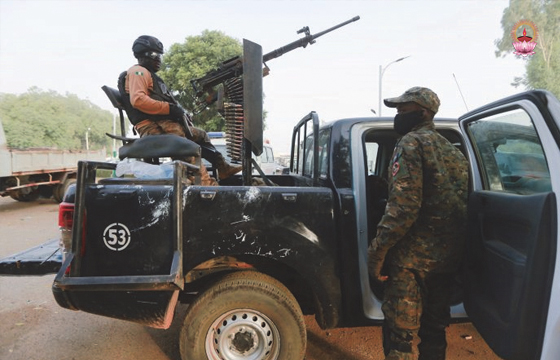
Priest, six others killed by armed gunmen at Nigerian parish
Father Ferdinand Fanen Ngugban and six others died of gunshot wounds after armed gunmen invaded the grounds of St. Paul Parish in Ayetwar March 30, said the Diocese of Katsina-Ala.
“After celebrating Mass and while he prepared to leave for the chrism Mass at St Gerald Majella Catholic Cathedral, Katsina-Ala, to renew his priestly vows alongside his brother priests, there was pandemonium among the internally displaced persons who took refuge in the parish premises,” said a state-ment from the diocese.
“Father Ferdinand went out to find out the cause of the confusion. He was shot in the head as he tried to take cover after sighting some armed gun-men,” the diocese said. It said burial arrangements for all the deceased would be announced.
Ngugban, who served as assistant pastor at St. Paul Parish, was ordained a priest in 2015.
The attack took place in Benue state. The gunmen reportedly raided the village and set houses on fire before attack-ing the parish.

Lebanese cardinal criticizes Hezbollah in leaked video
At the risk of compromising the appeasement efforts aimed at facilitating the formation of a new government, Lebanese media on Thursday broadcast a leaked video in which the top Christian leader openly criticizes the Shia Hezbollah movement, accusing it of harming the country by dragging it into regional conflicts.
“Why are you standing against neutrality? Do you want to force me to go to war? Do you want to keep Lebanon in a state of war?” Maronite Patriarch Bechara Boutros Rai asks Hezbollah in the video. “Would you ask for my opinion when you do go to war? Did you ask for my approval to go to Syria, Iraq and Yemen? Would you ask for the government’s opinion when declaring war and peace with Israel? The constitution says that declaring war and peace is upon the decision of two-thirds of the government’s votes.”
“Why do you decide to drag the Lebanese into a war you have decided to wage without asking their opinion?” Rai said. “You’re not looking out for (our) interests, nor the interests of your people,” he said, apparently addressing Hezbollah, a heavily-armed movement allied to Iran.
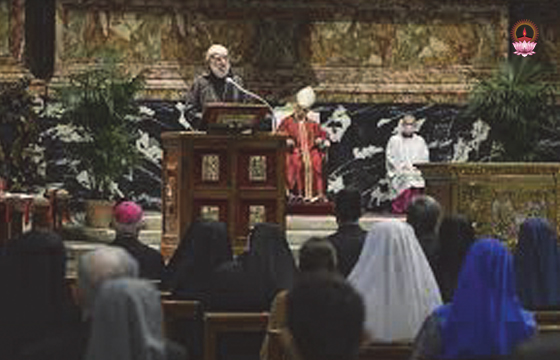
Papal Preacher says divisions have ‘wounded’ Catholic Church
After reflecting on the biblical meaning of fraternity during the Vatican’s Passion of the Lord, the papal preacher on Good Friday lamented the disunity existing among Catholics. “Fraternity among Catholics is wounded,” said Cardinal Raniero Cantala-messa. “Divisions between Churches have torn Christ’s tunic to shreds, and worse still, each shredded strip has been cut up into even smaller snippets. I speak of course of the human element of it, because no one will ever be able to tear the true tunic of Christ, his mystical body animated by the Holy Spirit.” “In God’s eyes, the Church is ‘one, holy, catholic and apostolic’, and will remain so until the end of the world,” he said. “This, however, does not excuse our divisions, but makes them more guilty and must push us more forcefully to heal them.”
The “Passion of the Lord” service is the only liturgy presided over by the pope in which he’s not the homilist. Instead, the task falls on Cardinal Raniero Cantalamessa – elevated to the Church’s most exclusive club last year, after four decades serving as the preacher of the papal household.
As has been the case since the beginning of the COVID-19 pandemic, the liturgy was almost devoid of the presence of faithful, with less than 200 participants, including cardinals, acolytes and Vatican’s gendarmes and Swiss Guards, present in St. Peter’s Basilica guarding the pope.
After processing to the Altar of the Chair in St. Peter’s Basilica in eerie silence, the 84-year-old Pope Francis prostrated himself before the altar. During the service, the Gospel recounted the last hours in Jesus’ life, from his arrest to his burial.
Leading by example, in a country currently in full lockdown due to the pandemic, the veneration of the cross, when each faithful goes in procession kiss a statue of Christ crucified, was omitted.