
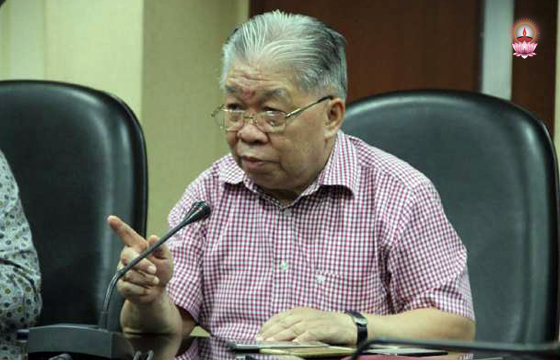
Pope Francis has appointed Bishop Petrus Canisius Mandagi of Amboina as archbishop of Merauke in Papua.
The appointment was announced by the archdiocese’s secretary-general, Fr Hendrikus Kari-wop, on Nov. 11 during a Mass at St Francis Xavier Cathedral Church that was broadcast online. Abp. designate Mandagi of the Congregation for Missionaries of the Sacred Heart has been the archdiocese’s apostolic administrator since August last year following the death of its previous administrator, Bishop John Philip Saklil of Timika. “Because I believe it is God’s will. I must not reject God’s will,” he said on Nov. 12.
Daily Archives: November 17, 2020
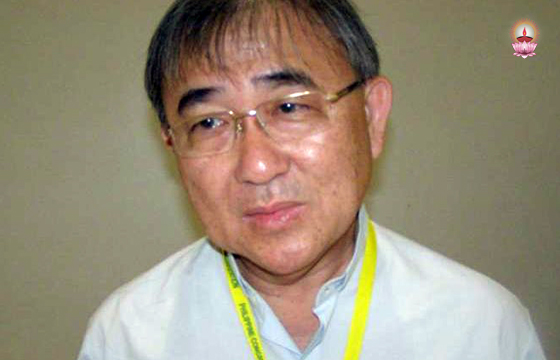
Catholic Church no ‘little bubble:’ Brunei’s cardinal-designate
Cardinal-designate Cornelius Sim certainly was surprised to learn Pope Francis had chosen him to be one of 13 new cardinals.
“For me, it was a bit of a shock and unexpected,” Cardinal-designate Sim told Vatican News.
Sim, 69, is Vicar Apostolic of Brunei. His 1989 ordination marked the first time a native Bruneian was ordained a Catholic priest for the country, which shares the island of Borneo with Malaysia and Indonesia.
He was appointed Prefect of Brunei in 1999, then Vicar Apostolic in 2004, and he was consecrated a bishop in January 2005. Besides Sim, the vicariate has three Catholic priests. Sim said he wanted to thank the Pope for “choosing someone from the peripheries.” He described the Church in Brunei as a “periphery within a periphery.”
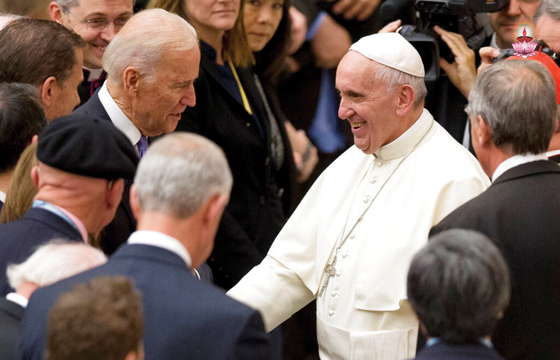
Joe Biden will be the second Catholic president Here’s what you need to know about his faith
The morning of Election Day, Joseph R. Biden Jr. prayed during Mass at the Catholic parish near his home in Delaware. Late that night, when it became clear that no winner would be determined, Mr Biden spoke to supporters. He urged patience, told them that he believed he would be elected president and asked them to “keep the faith.” The president-elect kept the faith, and major news outlets have projected Mr. Biden has captured enough electoral votes to win the presidency. He will be just the second Catholic to hold the office.
In a 2015 interview with America’s editor in chief, Matt Malone, S.J., Mr Biden called his faith a “gift,” saying his parents inculcated in him Catholic values.
“Jesus Christ is the human embodiment of what God wanted us to do,” Mr Biden said. “Everything Jesus did was sort of consistent with what generically we were supposed to do: treat people with dignity.”
In that interview, Mr Biden spoke about his meeting with Pope Francis in 2013. “He’s the embodiment of Catholic social doctrine that I was raised with,” the former vice president said. “The idea that everyone’s entitled to dignity, that the poor should be given special preference, that you have an obligation to reach out and be inclusive.” Mr. Biden traces his Catholic faith back to Catholic schools in Delaware and Pennsylvania. He wrote in his memoir, Promises to Keep, that during a visit to a Catholic grade school, a child asked Mr Biden if he wanted to be president, and he replied that he was happy being a senator. But a Catholic sister corrected Mr Biden. “You know that’s not true, Joey Biden,” she said, before showing him an essay he had written as a child saying he wanted to be president. He wears a rosary around his wrist, a gift his son, Hunter, gave to Mr Biden’s late son, Beau. Mr Biden has said his faith has helped him cope with personal tragedy, including the death of his wife and daughter in a 1972 car crash and then again in 2015, when his son Beau died from cancer. Mr Biden had a health scare himself in 1988, shortly after he dropped out of the presidential race. He was admitted to Saint Francis Hospital in Wilmington. With his family gathered around, a priest visited to administer the sacrament of anointing. Mr Biden healed following surgery, and for the next two decades, he returned to work in the Senate.
“He’s the embodiment of Catholic social doctrine that I was raised with,” the former vice president said. “The idea that everyone’s entitled to dignity.” Later, in 2008, Mr Biden’s political fortunes changed when then-Senator Barack Obama chose him as his running mate. According to Mr Obama’s chief strategist, David Axelrod, Mr Obama chose Mr Biden, in part, because “he came from a working-class Catholic family in a pivotal part of the country and still spoke of that experience.”
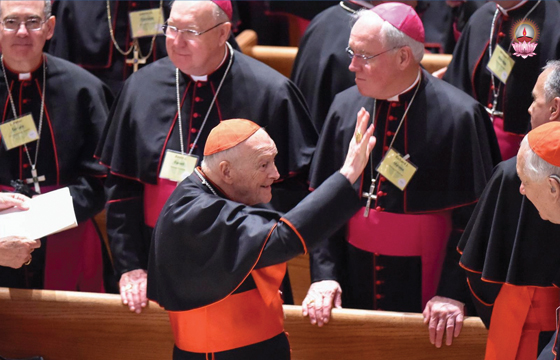
Victims in McCarrick report show fear, courage, anger, need for action
The Vatican Secretariat of State’s report on Theodore E. McCarrick provides a glimpse into how a number of witnesses and victims of the former cardinal’s abuse sought numerous ways to alert church officials and were disturbingly aware their allegations might trigger repercussions.
Over its 460 pages, the report also reveals how much difference 30 years can make when it comes to flagging misconduct and abuse. The report begins with a New York mother’s account of writing to every U.S. cardinal and the papal representative in the mid-1980s detailing McCarrick’s “dangerous” behaviour toward her underage sons. Having left no address or legible name, her red-flag warnings went unheeded.
Decades later, in 2017, when the Archdiocese of New York received an allegation of the sexual abuse of minor by McCarrick in the early 1970s, the report showed how the archdiocese’s now mandatory reporting system and procedures resulted in McCarrick’s eventual dismissal first from the College of Cardinals and, later, from the priesthood.
But for decades in between, the victims and witnesses described in the report recount how they struggled to figure out if and how they should or could make their claims in essentially a no-man’s land for accusations.
Haphazardly handled, ignored or dismissed allegations meant spotty paper trails, ineffective investigations that failed to find “hard” credible evidence and a climate of incessant gossip and rumors about McCarrick’s proclivities that ended up being leveraged by some to paint him as “a victim” of envy and enemies.
A New York woman, called “Mother 1” in the report, describes how McCarrick groomed her family into trusting him and feeling special by receiving his kind and generous attention during the 1970s and ’80s.
But she began to see the then-bishop as a threat when she caught him massaging her sons’ inner thighs in front of her husband, who seemed, in her words, “oblivious to Ted’s behaviour.”
While she felt they needed to get him “out of our lives,” her husband “refused to understand,” and she proceeded to witness ongoing inappropriate touching and massaging by McCarrick with her oldest son.
–CNS
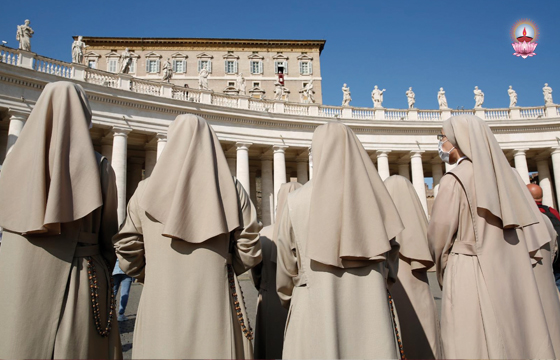
Pope toughens rules on new religious orders
Pope Francis has ruled that new religious orders must receive Vatican approval before being established. It is a significant move that is likely to prevent the hasty establishment of small groups of religious and seeks to put an end to the sexual abuse scandals that have bedevilled such institutes in recent decades.
Francis has amended Canon Law meaning that local bishops will now need written permission from the Holy See before approving the setting up of communities of religious in their diocese. It also signals that bishops will be required to undertake a more credible and rigorous discernment than they have in the past before establishing congregations.
A proliferation of new “institutes of consecrated life or societies of apostolic life” have been established during the latter part of the 20th century, although many of them similar to one another. In an alarming number of cases, the founders of new orders have sexually and spiritually abused their members.
The Vatican has investigated a range of problems inside newly established congregations. These include cults of personality developing around the purportedly orthodox or charismatic founders; how members are formed; an excessive focus on traditionalist liturgies out of sync with the local church; authoritarian leadership styles; psychological manipulation oft those inside the groups and financial mismanagement.
“The faithful have the right to be advised by their pastors about the authenticity of the charisms and about the trustworthiness of those who present themselves as founders,” the Pope explained in the ruling. “It is the responsibility of the Apostolic See to accompany the Pastors in the process of discernment leading to the ecclesial recognition of a new institute or a new society.”
In a sign the Vatican is taking the issue very seriously, Archbishop José Rodríguez Caraballo, the secretary of the Holy See’s congregation for religious, recently wrote the foreword for a new book published this year Risques et dérives de la vie religieu-se (Risks and deviations of Religious Life), which examines sexual and spiritual abuses and how to combat them. The book is written by Dysmas de Lassus, the minister general of the Carthusian Order who is based at the historic Grande Chartreuse monastery in the French Alps. Carthusians, who follow a strict rule of silence, do not normally give their names publicly to what they write but in this case, de Lassus has made an exception.
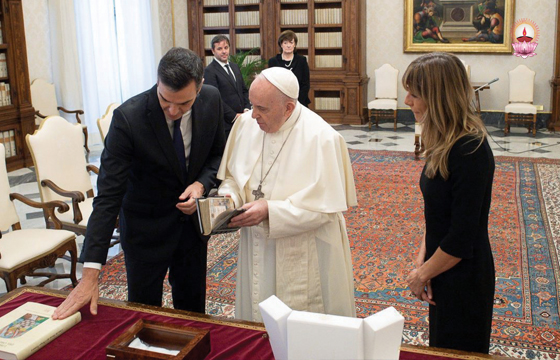
Pope warns Spanish prime minister of rise of nationalism, ideology
The rise of nationalism and the ideological divide that springs from it could create the same circumstances that led to the rise of the Nazi party in Germany and World War II, Pope Francis warned.
In a rare move, Pope Francis asked for a microphone and gave an off-the-cuff speech to Spanish Prime Minister Pedro Sanchez, who was accompanied by his wife, Maria Begona Gomez, and a delegation of officials on Oct. 24.
Citing a book by Italian philosopher Siegmund Ginzberg titled “Syndrome 1933,” the Pope said he agreed with its assessment that the ideological shift in today’s European political climate risks something similar to what occurred in Germany after the fall of the Weimar Republic, giving rise to the ideology of National Socialism, more commonly known as Nazism.
Ideologies “sectarianize, ideologies deconstruct the homeland, they don’t build it,” he said. And Ginzberg “very delicately, makes a comparison of what is happening in Europe. He says: ‘Be careful, we are repeating a similar path.’”
In his roughly eight-minute address to Sanchez and the Spanish delegation, the Pope recalled St Paul VI’s recognition of politics as “one of the highest forms of charity.” “Politics is not only an art, but for Christians it is an act of charity, it ennobles and often leads to the sacrifice of one’s life, one’s privacy, so many things, for the good of others, and this is because the politician has in his hands a very difficult mission,” he said.
The Pope’s comments came at a time of political division in Spain when lawmakers overwhelmingly rejected a vote of no-confidence on Oct. 22 brought against Sanchez, a member of Spain’s Socialist party, by members of the far-right Vox party.
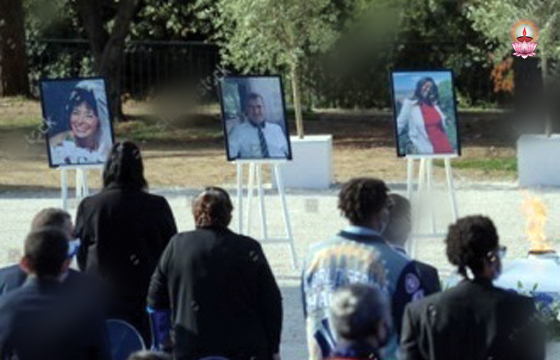
Nice Jihad: Bishop Blames Europe, Cardinal Names Islam
A Portuguese bishop is blaming European prejudices for the slaughter and beheading of three innocent Catholics by an illegal Muslim migrant in Nice’s Notre Dame Basilica.
“The attack on the cathedral in Nice is not Islam’s fight against Christianity: It is the result of the prejudices of those Europeans who not only do not foster intercultural and interreligious dialogue but are always at the ready to accuse religions,” Bp Manuel Linda of Porto tweeted on November 6.
Calling upon the West to fight against jihadi forces with “force and determination,” the French-speaking Guinean prelate warned that Islam would “not stop its war” against Europe.
“Unfortunately, we Africans know this too well. The barbarians are always the enemies of peace. The West, today France, must understand this. Let us pray,” tweeted Sarah, prefect of the Vatican Congregation for Divine Worship and the Discipline of the Sacraments.
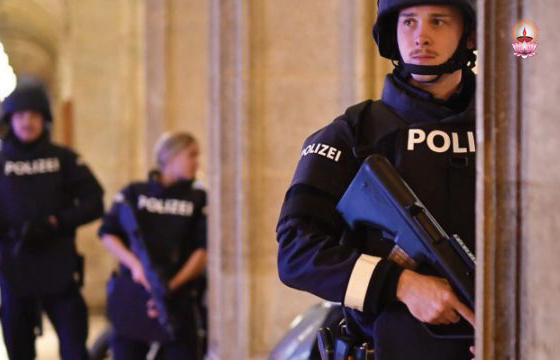
At least one killed in terror attack in Vienna
At least one person was killed and at least 15 others – including at least one police officer – were seriously injured in exchanges of gunfire in central Vienna that Austria’s interior minister descri-bed as a terror attack.
One attacker was shot dead after incidents at six locations close to Seitenstettengasse street in the heart of the Austrian ca-pital, a spokesperson for Vien-na’s police force told broadcaster ORF.
The local APA news agency reported that a bystander had also been shot dead.
“At the moment I can confirm we believe this is an apparent terror attack,” Karl Nehammer, the interior minister, told ORF.
He said the attacks were thought to have been carried out by several people with long guns, adding there were likely to be more casualties.
“We believe there are several perpetrators. Unfortunately there are also several injured, probably also dead,” he said.
A total of 15 people were being treated for injuries in local hospitals late on November 2, a spokesperson for the Vienna hospital association told ORF. Seven victims were reported to be critical condition.
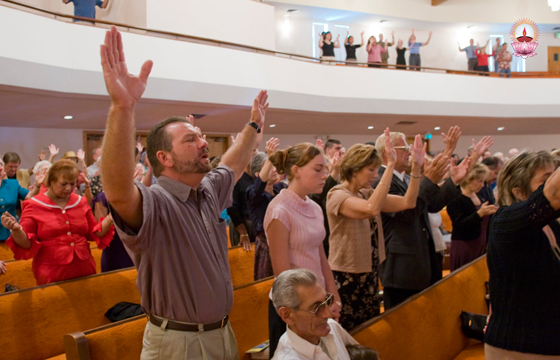
Trump wins white evangelicals, Catholics split
President Donald Trump won support from about 8 in 10 white Evangelical Christian voters in his race for reelection, but Ca-tholic voters split almost evenly between him and Democratic opponent Joe Biden, according to AP Vote Cast.
Trump’s strong hold on white evangelical voters illustrates the GOP’s enduring success with a bloc of religious conservatives who have been a linchpin of the president’s political base since his 2016 victory. The president’s path to a second term has grown narrower, however, amid a divide among Catholics between Trump and Biden, a lifelong member of the faith.
AP Vote Cast showed 50% of Catholics backing Trump and 49% favouring Biden, reflecting the faith’s longstanding role as a closely contested vote in presi-dential elections — particularly in Rust Belt battleground states such as Michigan and Wisconsin. Trump won both of those states by less than 1 percentage point in 2016, but Biden prevailed in both this year. The survey of more than 110,000 voters nation-wide was conducted for The Associated Press by NORC at the University of Chicago.
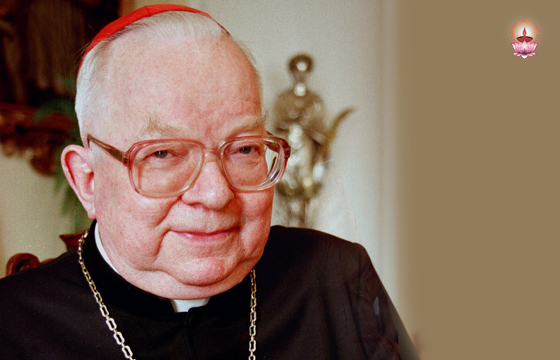
‘Hard times’ ahead for Church in Poland after cardinal sanctioned by Vatican
In an unprecedented move for the Polish Church, the Vatican banned a retired cardinal from public ministry, public appearances, and the use of the bishop’s insignia. Cardinal Henryk Gulbinowicz of Wroclaw also cannot be buried in the archdiocesan cathedral after his death. The disciplinary measures are a historic and symbolic moment for the Church in Poland.