
“We believe a fresh post-mortem will be able to establish our charge,” said Minakshi Singh, general secretary of Unity in Christ, a forum of Protestant churches based in New Delhi.
Venus said her sister’s body was on the bed. “Bloodstains were found on her leg, and one of her shoes was filled up with blood. There were injury marks on her left eye and neck, and swelling in other parts of the body.”
“Her private parts were also not properly covered, indicating that she was raped and killed. Her right hand had some cotton as if someone kept it there to prove that she had committed suicide by injecting poison,” Venus said.
“If she had injected poison and killed herself, how could there be so much blood and injuries? Why should clothes be removed from her private parts,” she asked.
A three-member church fact-finding team met with family members of the deceased woman. Singh, a team member, told on Nov. 5 that they “have sufficient grounds to prove that she was raped and murdered.”
She said the preliminary autopsy report “has given enough indication that she had not committed suicide. But the police were not ready to acknowledge it,” Singh said.
The case is now being investigated by a three-member police special investiga-tion team (SIT) after complaints that police covered up the case.
Police inspector Praveen Kumar, part of the team, said they are waiting for the viscera report. “Until we get the viscera report, we cannot jump to conclusions,” he said. He refused to divulge any details of the probe, saying it would breach its confidentiality.
Daily Archives: November 17, 2020
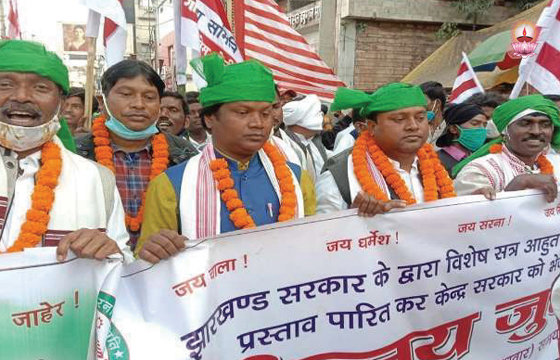
Indian state nods to record tribal religion in national census
The Jharkhand State government in eastern India has conceded to a long-standing demand to allow tribal people to record their Sarna religious faith in the upcoming national census. State chief minister Hemant Soren’s administration passed a resolution on Nov. 11, allowing a special column for Sarna religious followers to record their faith in the 2021 decennial census.
“It is a new dawn in Jharkhand history as well as for tribal people in the state because for the last three decades we have been demanding a separate census column for the Sarna religion,” Ratan Tirkey, a member of the Tribes Advisory Committee of Jharkhand, told. “This is a victory for the voiceless,” he said.
The resolution will be sent to the federal government. Once is approved, tribal people who follow the Sarna religion will have a new option as they are currently forced to opt for the Hindu column on the census form.
Later a column called “Others’ was added for people who do not opt as Hindu, Muslim, Sikh, Christian, Jain or Buddhist. But it was removed in the 2011 census, which meant all others who do not come under the six religions were counted as Hindu.
The federal government led by the pro-Hindu Bharatiya Janata Party and Hindu groups argue that all tribal people are Hindus and record it as such in census records.
As the Sarana people have not a column to mark their religion, most opt for Hindu and other religions. “This did not reflect the actual numbers of Sarna believers, Santhosh Tirkey said.
The state has 1.4 million Christians in a population of 33 million, some 26 percent of tribal people according to the 2011 census.
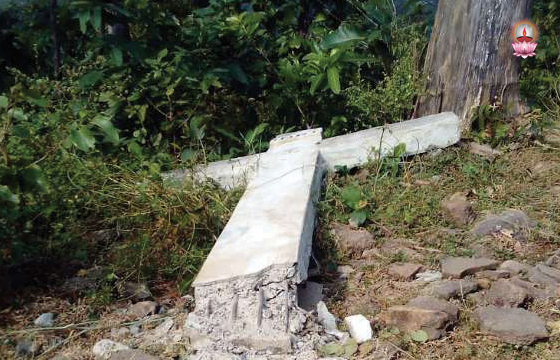
Cross demolished, temple set up in Indian village
A cross was demolished and a makeshift temple set up some 200 meters away in a village in India’s Chhattisgarh State, Christian leaders said.
The concrete cross on a hillock in Madanpur village in Korba district was popular among Christians living in the village and its nearby areas for more than two decades. They gathered around for prayers, especially to do the Way of the Cross during Lenten season, said Arun Pannalal, president of Chhattisgarh Christian Forum that works among persecuted Christians in the state.

Indian court rejects religious conversion for marriage
A court in the northern Indian State of Uttar Pradesh has rejected religious conversion for marriage and personal benefit, describing it as un-acceptable.
While dismissing a petition filed by a couple, Allahabad High Court found that a Muslim woman had converted to Hinduism and later married as per Hindu rituals within the span of one month.
A.C. Michael, national coordinator of the United Christian Forum, accused the judge of exceeding his brief.
“He has no business trying to stop a person from changing religion even if it is for marriage,” he said.
“We are citizens of a country that guarantees in its constitution that we can change anything we want including one’s sexual orientation. Religion is my personal choice. Today I will go to church and worship Jesus Christ, tomorrow I can start going to a temple, mosque or gurdwara. Nobody can stop me — not even the gods themselves!” The court ruled that “marriage after one month shows that conversion has taken place only for the purpose of marriage.”
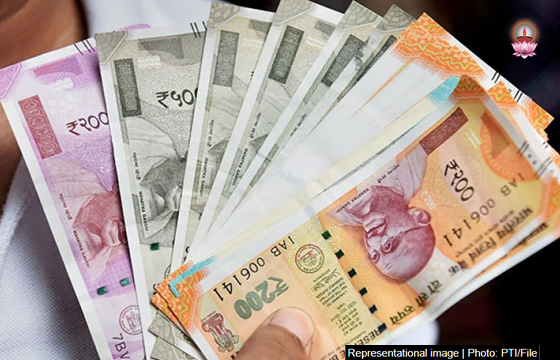
Government tightens rules for NGOs intending to receive funds from abroad
The NGOs that intend to receive foreign funding will now face tougher rules with the Union Home Ministry making it clear that such organisations must have existed for at least three years and spent Rs 15 lakh in voluntary activities to be eligible to receive money from abroad.
In a notification, the Home Ministry also said office bearers of the NGOs seeking registration under the Foreign Contribution (Regulation) Act must submit a specific commitment letter from the donor indicating the amount of foreign contribution and the purpose for which it is proposed to be given. The FCRA rules were issued about two months after the central government had amended the law under which providing Aadhaar numbers of the office bearers of the NGOs was made mandatory, office expenses were brought down to 20 percent of such amount and election candidates, government servants, members of any legislature and political parties were prohibited from accepting foreign funding.
Indian Theological Ethicists Respond to COVID-19 Pandemic
The 30th annual conference and meeting of the Association of Moral Theologians of India (AMTI), conducted online on 15, 22 and 29 October 2020, focused on “Covid-19: Ethical Challenges.” The conference emphasised that Covid-19 Pandemic has raised great ethical challenges in the field of healthcare, migration, democracy, faith practices, use of technology, etc. New ethical principles have to be formulated to address these challenges. Inaugurating the conference on 15 October 2020 by Bp Stephen Chirappanath, Apostolic Visitator for the Syro-Malabar Faithful in Europe. In the Presidential Address, Dr Shaji George Kochuthara highlighted some of the theological challenges that Covid-19 poses: developing a theology and spirituality that makes lay people mature and independent in their spiritual life; a Family-centred, People-centred theology; to strengthen our social commitment; to engage the public square more effectively; to develop further a theology of Suffering, a theology of Hope, etc. The conference conducted in three sessions had nine papers. Besides, twenty eight participants shared their personal experience in responding to the Covid-19 pandemic.

Kerala Latin bishops call for debate on reservation
The Kerala Region Latin Catholic Bishops’ Council (KRLCBC) has called for discussions by the government with Dalit as well as other backward communities in connection with the implementation of reservation for economically weaker sections (EWS) among forward communities.
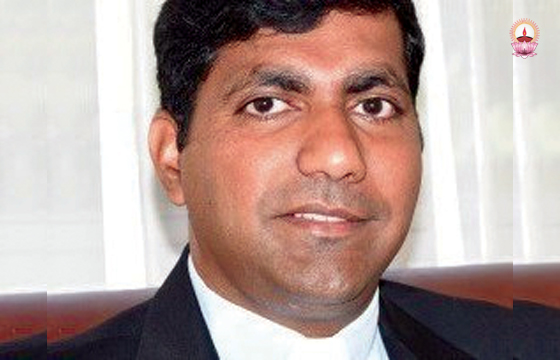
Pope appoints Mangalore priest as ‘Chaplain to His Holiness’
Pope Francis has appointed Mangalore diocesan priest Father Alfred Rayan D’Souza as “Chaplain to His Holiness. A Chaplain of His Holiness is a priest to whom the Pope has granted this title. They are addressed as monsignor and have certain privileges, such as regards ecclesiastical dress. Presently, Father D’Souza is serving as second secretary at the Apostolic Nunciature in the Republic of Croatia. He hails from Pangala in Udupi district.
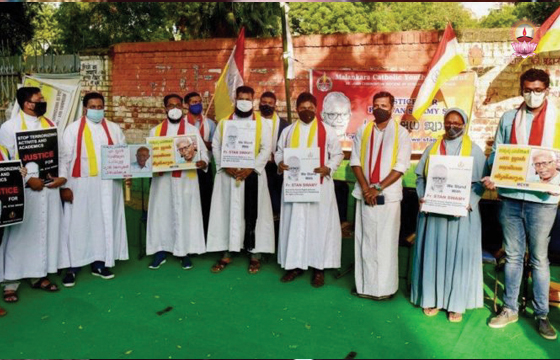
Father Swamy’s confreres condemn ‘fabricated’ charges against him
The Jesuit congregation is hopeful that the case against 83-year-old Father Stan Swamy will be shattered in the court, as there is no evidence to establish that he was in some way connected with the violence against Dalits at Bhima Koregaon.
The imprisoned priest’s close associate, Fr Joseph Xavier, alleges that Swamy hasn’t visited Pune for the last 15 years. Fr Swamy, a member of the Jesuit’s Jamshedpur province, was on October 8 arrested by the National Investigation Agency (NIA), India’s counter-terror task force for his alleged links with Maoists.
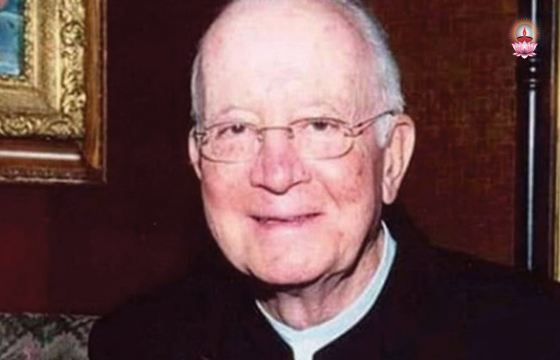
Prime Minister Modi mourns death of Jesuit savant
Prime Minister Narendra Modi was among those mourning the death of a Spanish Jesuit who contributed a new style of writing in Gujarati and translated many mathematical concepts into that Indian language.
Father Carlos Gonzalvez Valles died on Novem. 9 in Madrid, capital of Spain. The priest, who was popularly known as Father Valles, had turned 95 on November 4.