Pope Francis announces a 2022 synod on synodality

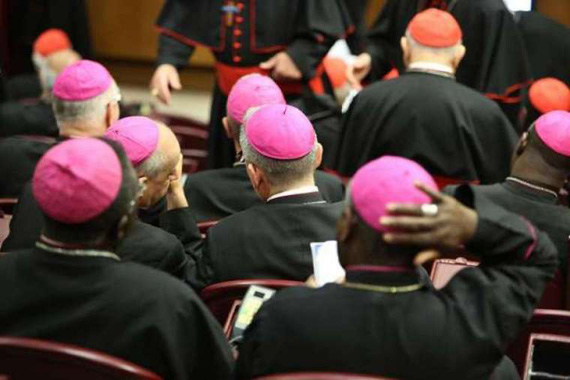
The next ordinary Synod of Bishops will be a Synod on synodality, the Vatican announced on March 7. In October 2022, bishops from around the world will meet in Rome to discuss the theme: “For a Synodal Church: communion, participation and mission.”

The concept of “synodality” has been a topic of frequent discussion by Pope Francis, particularly during the previous ordinary Synod of Bishops on young people, the faith, and vocational discernment in October 2018.

Synodality, as defined by the International Theological Commission in 2018, is “the action of the Spirit in the communion of the Body of Christ and in the missionary journey of the People of God.”

The term is generally understood to represent a process of discernment, with the aid of the Holy Spirit, involving bishops, priests, religious, and lay Catholics, each according to the gifts and charisms of their vocation. Pope Francis told the Vatican Congregation for the Doctrine of the Faith’s theological commission in November that synodality will be key for the Church in the future. “Synodality is a style, it is a walk together, and it is what the Lord expects from the Church of the third millennium,” Pope Francis said on Nov. 29.

A Synod is a meeting of bishops gathered to discuss a topic of theological or pastoral significance, in order to prepare a document of advice or counsel to the Pope.

The Synod of Bishops was created in 1965 by Pope Saint Paul VI, who charted the Synod to encourage close union between the Pope and the world’s bishops and to “insure that direct and real information is provided on questions and situations touching upon the internal action of the Church and its necessary activity in the world of today.”

Ordinary Synods happen every three years on issues voted upon by Synod Delegates elected or appointed from each continent, and from certain Vatican offices. There have been 15 ordinary Synods to date. There are also extraordinary Synods and special Synods.

Pope Francis forms Child Protection Task Force

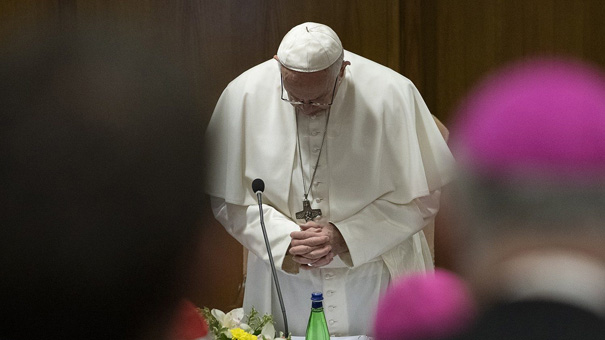
Pope Francis has established a task force “in order to assist the Episcopal Conferences in the preparation and updating of guidelines for the protection of minors.”

The intention to form such a group had already been announced by the Pope at last year’s Meeting for the Protection of Minors in the Church, which ran from February 21-24, 2019. One year later, after the details of the project had been worked out, Pope Francis has made the plan a reality.

In a statement released on February 28, the Holy See Press Office explained that the task force will be supervised by Archbishop Edgar Peña Parra, the Substitute for General Affairs of the Secretariat of State.

The other members of the organizing Committee for last year’s Meeting were: Cardinal Oswald Gracias, Archbishop of Bombay; Cardinal Blase Cupich, Archbishop of Chicago; Arch-bishop Charles Scicluna, Arch-bishop of Malta and Deputy Secretary of the Congregation for the Doctrine of the Faith; and Jesuit Father Hans Zollner, Dean of the Institute of Psycho-logy of the Pontifical Gregorian University and member of the Pontifical Commission for the Protection of Minors.

Women deacons possible after ‘Synodal Way,’ says German bishops’ chairman

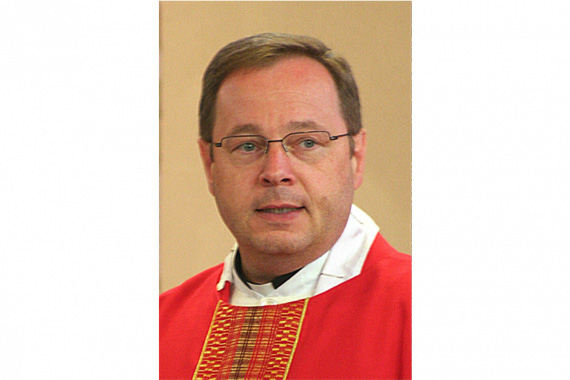
The new chairman of the German bishops’ conference has said that calling for the ordination of women could be a conclusion of the two-year “synodal way” being undertaken by the Church in Germany. Bishop Georg Bätzing of Limburg said in a radio interview on March 9 for Inter-national Women’s Day that such a conclusion would require Roman approval.

In an interview with WDR5 on March 9, Bishop Bätzing answered questions on the role and future of women in the Church. He said that if the “synodal way” calls for the ordination of women to the diaconate, Rome would have to grant an indult to allow German bishops to begin ordaining women. In that event, he said, it would be important that the synodal assembly call for the change with “a very strong voice.”

Bätzing said that if bishops and laity united to present a “strong appearance,” Rome would be more likely to respond positively.

Speaking after his election, he said that the role of women “is the most pressing question we have concerning the future” of Church. “That is where the Church really has a backlog. We won’t be able to wait. Women must be given equal rights,” the bishop said on the ARD morning program.

Bätzing also said that Pope Francis “did not take a position” on the possibility of ordaining women to the deaconate, which last year’s Synod on the Amazon recommended for further consideration, and that the subject was open for further discussion.

Bätzing has said he “fully supports the synodal way,” calling it “at the center of our considerations” for the Church in Germany.”

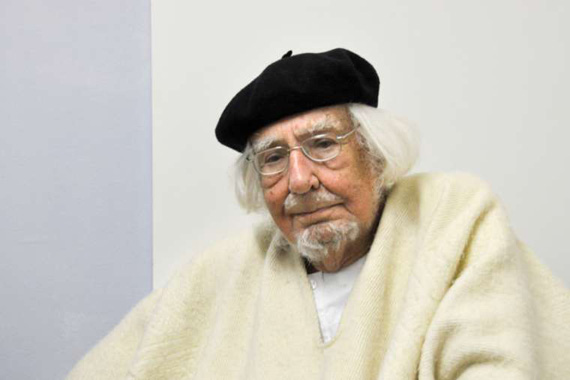
Nicaragua’s Fr Ernesto Cardenal dies at 95

Fr Cardenal died on March 1 after a brief hospitalization.

His wake will be at the Mount of Olives funeral home, and a funeral Mass was said on March 3 Managua’s Immaculate Conception Cathedral.

Fr Cardenal was born on Jan. 20, 1925 in Granada, Nicaragua. He studied literature and was for a time at the Trappist’s Gethsemani monastery in Kentucky, but he returned to Nicaragua and was ordained a priest in 1965.

The following year he founded an artists colony on an archipelago in Lake Nicaragua.

When the Sandinista National Liberation Front ousted Nicaragua’s Somoza dictatorship in 1979, Fr Cardenal was named Minister of Culture in the new government.

He added: “The Bible is full of revolutions. The prophets are people with a message of revolution. Jesus of Nazareth takes the revolutionary message of the prophets. And we also will continue trying to change the world and make revolution. Those revolutions failed, but others will come.”

Coronavirus impacts Church worldwide

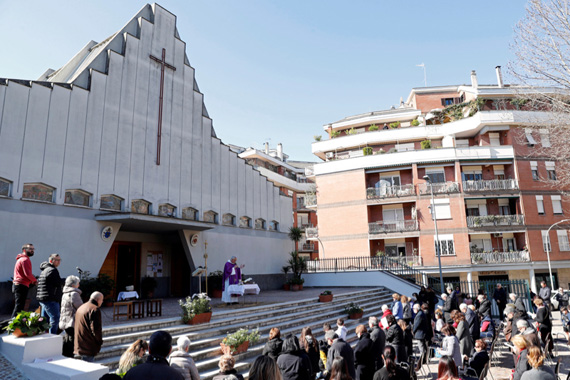
Italy has banned all religious ceremonies, including Masses and funerals, in a bid to contain the spread of the coronavirus.

The highly restrictive decision keeps the ban on public liturgies in place until 3 April and comes after the government quarantined 16 million people in the north of the country.

In the Vatican, Pope Francis’ public celebrations of the Angelus and Wednesday audience are taking place behind closed doors and live-streamed into St Peter’s Square. Francis’ private masses in the Casa Santa Marta have been closed off to guests but, for the first time, have been broadcast live online.

“In these days, I will offer Mass for those who are sick from the coronavirus epidemic, for the doctors, nurses, volunteers who are helping them, for their families, for the elderly in nursing homes, for prisoners,” the 83-year-old Pope, who has tested negative for the virus after suffering from a cold, said as he opened the liturgy on March 9 morning.

Meanwhile, the Holy See announced the closure of the Vatican museums until 3 April along with all the museums attached to pontifical basilicas and papal villas.

Elsewhere, the city of Bethlehem in the occupied West Bank has been placed in lockdown after the first cases of the coronavirus. The Church of the Nativity was closed on 5 March and, along with other sites, is expected to be shuttered for a month. This is just weeks ahead of the busy Easter holiday. All tourist buses to and from Bethlehem have been banned until further notice. French bishops who met with the Pope on March 9 during their “ad limina” visit to Rome sat in chairs that were placed one metre apart, and at a significant distance from Francis.

Krakow archbishop opens beatification causes of St John Paul II’s parents

Archbishop Marek Jêdraszewski of Krakow announced on March 11 that having obtained the approval of the Congregation for the Causes of Saints, the archdiocese has opened beatification processes for the parents of Saint John Paul II.

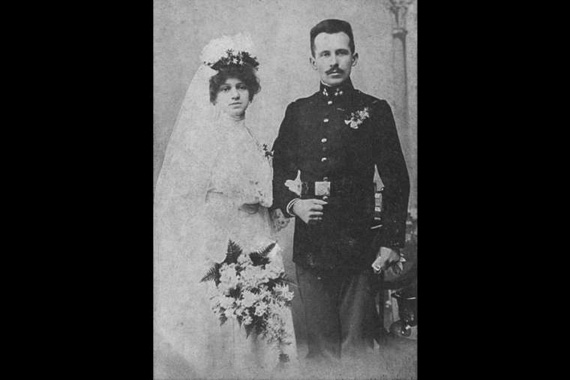
The Archdiocese of Krakow publicly made the announcement on March 11, setting in motion the beatification causes of John Paul II’s father, Karol Wojtyla, and mother, Emilia nee Kaczorowska.

Edicts signed by Archbishop Jêdraszewski opening the cause bear the date on March 2.

The faithful are being asked to provide the Krakow curia with any documents, letters, or messages regarding Karol and Emilia by May 7. The Polish bishops had given a positive opinion to the opening of the cause in October 2019.

Karol, a Polish Army lieutenant, and Emilia, a school teacher, were married in Krakow on Feb. 10, 1906. The Catholic couple gave birth to three children: Edmund in 1906; Olga, who died shortly after her birth; and Karol Junior in 1920.

The family was known to be faithful Catholics and rejected the increasing anti-Semitism of the time.

“The immediate family strongly influenced spiritual and intellectual development of the future Pope,” the bishops’ conference said.

Poll shows pope’s country doesn’t know what the Church does, doesn’t go to Mass

As bishops from Pope Francis’s native Argentina figure out how to pay their own salaries instead of taking funds from the state, a new poll shows that while seven in ten Argentines declare themselves to be Catholic, six in ten don’t know what activities the Church is doing in the country and seven in ten attend Mass less than once a month.

At first glance, the results of the study, commissioned by the bishops after they announced the progressive end of public funding for the Church late last year, aren’t all bad news: 67% of Argentines identify as Catholic, and most know the main missions of the Church: Evangelization, education and guidance, providing spiritual and emotional support, and material aid.

In addition, seven in ten Argentines believe that the basic sense of religion is to give meaning to life in this world.

Yet only 16% of Catholics attend Mass weekly and just 13% more do so once a month, while 49% attend less than once a month and 22% never go to church unless it’s for a wedding or a baptism.

Five out in ten Argentines believe that the main beneficiary of the Church’s work are religious – bishops, priests and nuns – and only 21% say the institution helps lay Catholics, while just 17% believe the Church helps the entire country.

Pew survey shows divide among religious believers over views about Trump

President Donald Trump may be as divisive to religionists as he seems to be to other groups in American society, as indicated by the latest Pew Research Cent-re survey.

“We’re seeing a big divide between white Christian and minority Christians and non-Christian groups,” said Pew research associate Claire Gecewicz, who was the lead researcher on the 55-page Pew survey, released on March 12.

Gecewicz also cited a lengthening “bridge between white and Hispanic Catholics, especially with the questions about Donald Trump.”

White Catholics increasingly believe their side has been winning politically. This Pew poll, taken on Feb. 4-15, showed 55% believing that, more than double the 26% recorded in May 2016, and up from 41% from just last May.

Hispanic Catholics look at Trump differently. Majorities said he was “prejudiced” and “self-centered,” while minorities of 21-24% described him as “honest,” “morally upstanding” and “even-tempered.” Only 31% said Trump “fights for what I believe in,” and just 30% agree with Trump on all, nearly all or many issues.

Survey shows decline in US Catholics’ concern about global Christian persecution

Global Christian persecution is ranked as less urgent an issue than human trafficking, poverty, climate change and the global refugee crisis.

A new poll shows that although more than half of US Catholics are “very concerned” about the persecution of Christians around the world, that level of concern has sharply declined in the past two years.

The percentage of US Catholics who say that they are “very concerned” about global Christian persecution dropped from 69% in winter 2018 to 52% today – a decline of almost 25%. The percentage of US Catholics who think that Christian persecution is very severe  declined 11% compared to a year ago, falling from 46% to 41%.

As to actions US Catholics can take themselves, 68% of respondents ranked prayer as “very important,” followed by raising awareness of the plight of Christian persecution at the parish level (59%), donating to agencies that help persecuted Christians (53%) and contacting Members of Congress (52%).

Bangalore Parish To Follow Ten commandments To Help Poor

A parish under the Archdiocese of Bangalore has decided to follow a new set of ten commandments as part of its observation of the Year of the Poor.

The Don Bosco Church in Bengaluru, capital city of Karnataka State, will follow a simple lifestyle, avoid culture of waste, educate poor children, feed the hungry, heal the sick, support the imprisoned, welcome immigrants, provide shelter to the homeless and show concern for the differently abled and the marginalized and offer employment opportunities to the poor. Father Aloysius Santiago, the pastor, said these moves are the Salesian parish’s response to a circular from Archbishop Peter Machado of Bangalore that declared 2020 as the Year of the Poor.

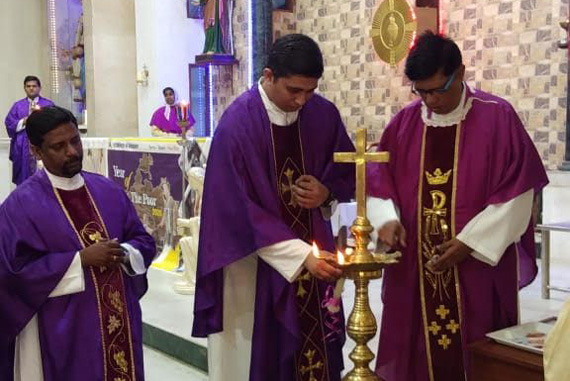
Father Santiago, his assistants Fathers Stanley George, James Sunder and Sunder joined lay and youth representatives to light the lamp as a symbol of opening the year. Father Sunder read out the action plan containing the ten commandments proposed by the archbishop to be observed during the year.

In his homily the parish priest asked people to follow the archbishop’s directives to alleviate poverty in the parish. He also urged the people to help him educate girl children from the new academic year. He said the presence of the Catholic community in the slums near by the parish is to radiate God’s goodness to the people. He said children should not be deprived of quality education because they are poor. The inauguration ended with the recitation of the prayer for the Year of the poor as given in the circular.

Archbishop Machado, in a recent circular, exhorted all to imbibe the spirit of Saint Joseph as whose feast falls on March 19. He expressed the hope the foster father of Jesus would “certainly inspire us to reach out to the poor and marginalized, especially in this Year of the Poor in our Archdiocese.”

St Joseph is referred to as the patron of the poor. Though poor, the saint is referred in the Bible as a “just man,” a man who did justice to everybody, both in his role as the head of the Holy Family and as a man of dignity who was proud of his poor profession.