World’s tallest Christ statue plan runs into trouble

A Hindu politician’s plan to build the world’s tallest statue of Christ has run into trouble after some radicals raised objections.

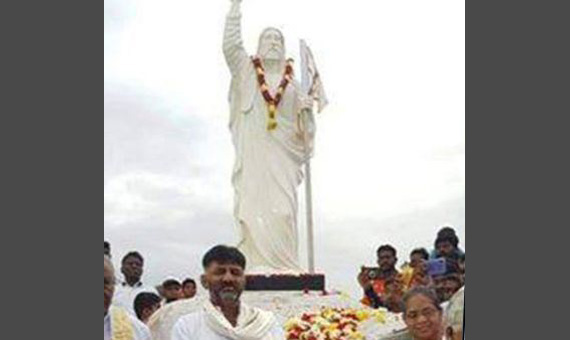
Doddalahalli Kempegowda Shivakumar, popularly known as D K Shivakumar and a leader of the opposition Congress party in Karnataka state, has pledged to build the 114-foot-tall Jesus statue at Harobele in Ramanagara, some 80 km south of the state capital of Bengaluru. On December 27, a day after Shivakumar, a former minister and currently a legislator, laid the foundation stone for the statue, the Karnataka government said it would review all land allotments made during the time of the previous government, a coalition of the Congress and a regional party.

The pro-Hindu Bharatiya Janata Party now heads the state’s current coalition government

The proposed ‘tallest’ statue of Jesus Christ is threatening to snowball into the tallest controversy yet, reports the Bangalore Mirror daily.

Karnataka Law Minister J C Madhuswamy said that there was a need to review the government land allotments during the time of the previous government. The proposed project is coming up on a 10-acre land in the backdrop of Kapali Betta (mountain). The Congress leader has paid the money to the land allotted by the previous government and is funding the project too.

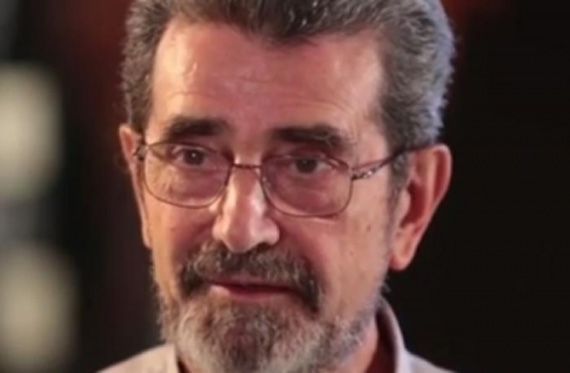
Priest who left India to build links in Chinese Church dies

Initially placed in charge of vocations and youth movements, in 1969 he obtained a license in theology at the Pontifical Gregorian University following a period of study of the English language in London. He was then sent to India where he was assigned an assistant in the parish in Mumbai and attended the theological faculty of the Pontifical University of Pune. Unable to obtain a permanent visa for India, he was transferred to Hong Kong. For several years he was assistant cooperator in Tsuen Wan.

In 1981 he returned to Hong Kong, first as parish priest of Yuen Long, then, in 1986, he was appointed Director of the HK Press Office and of the AsiaNews Agency.

Mamata Banerjee attends midnight Mass at Portuguese cathedral

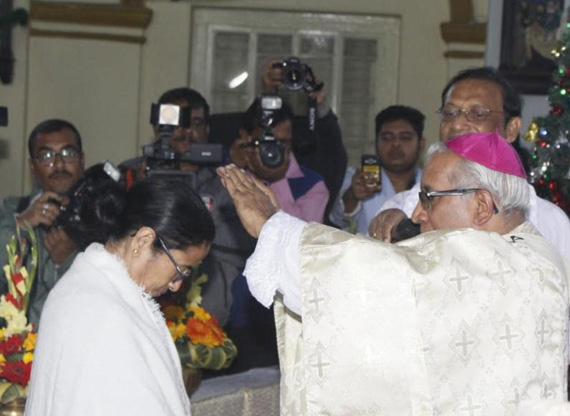
West Bengal Chief Minister Mamata Banerjee attended the Christmas night services on December 24 at the Cathedral Church in Kolkata. On her first visit to the cathedral for Christmas, Banerjee inaugurated the crib – traditional nativity scene of Jesus birth.

Banerjee has served as the eighth and current chief minister of West Bengal since 2011, the first woman to hold the office. She founded the party All India Trinamool (grassroots) Congress in 1998 after separating from the Indian National Congress, and became its chairperson.

Archbishop Thomas D’Souza of Calcutta presided over the Christmas night services at the cathedral. “Jesus is born for all people of good will, to bring them love, peace and joy,” said cathedral parish priest Father Siluvai Pitchai recalling the message of angels who announced the birth of Jesus to shepherds.

The traditional nativity scene at the church entrance this year wore a modern look with an art work depicting the Holy Family of Nazareth.

Peace, not strife, on our mind for Christmas

Prayers for peace and understanding marked Christmas this year in the midst of subdued celebrations in light of the prevailing situation in the country and state.

A Christmas message from the Assam Christian Forum said it all: “We humbly pray that peace returns to our land, and every tear is wiped from the eyes of everyone who has suffered or lost their dear ones, and may the ruling dispensation understand the pain and anxieties of its citizens before trying to impose laws that is (are) bent to divide us.”

The Forum had earlier expressed its concern in the interior areas of the state, where the bulk of Christians reside, heading to churches in groups for the midnight mass on Christmas Eve.

Spokesperson for the Forum, Allen Brookes, put to rest the apprehensions on Christmas day when he said, “Reports from different places were positive. There were no untoward incidents and everything went off peacefully. Police pickets had been posted. Anyway, we advanced the prayer service in Upper Assam due to the situation and the cold wave.”

On the Christmas spirit, Brookes said, “The faith part of Christmas went off as usual but the larger celebrations were toned down more in solidarity with what was happening in the country. As a community, we are also part of society, which is facing an onslaught at the moment. The festive spirit was subdued. We would have gone a little further but there were apprehensions.”

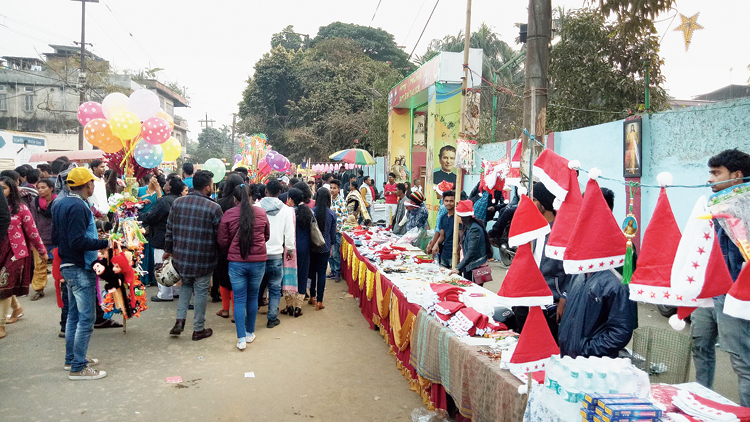
In the city, however, things looked to be almost normal as the services in different churches went on till midnight and the day service also passed off normally. People started to come out since late morning and the crowds swelled as the day progressed. By early evening, the areas near churches were chock-a-block with people from different communities and age groups.

Foreigners vacate Brunei, where Christmas is banned

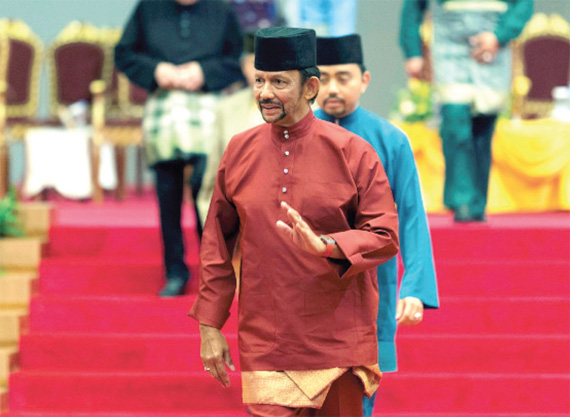
Foreign workers are gathering their families, packing their bags and leaving Brunei, where a ban on celebrating Christmas has been enforced since 2014 by an authoritarian regime happy to impose stiff penalties for any breaches of the law.

Fearing Muslims would be led astray and convert to Christianity, the sultan of Brunei imposed full Sharia law in April, a culmination of an all-imposing Islamic legal system that was introduced step by step over the last six years.

In a move that bears striking similarities to Biblical stories from the Roman occupation of the Holy Land, Christians are only allowed to celebrate Christmas within the privacy of their own homes and only after they have notified authorities.

Any breaches can result in jail terms of up to five years and fines of up to US$20,000, or both, following the growing influence of Wahhabism, a harsh brand of Islam followed by the likes of former al-Qaeda leader Osama bin Laden that has its roots in Saudi Arabia.

“The people in Muslim-dominated Brunei are quite tolerant and very easy to get along with, but the government is fearful of outside religions,” said one Western expatriate who fears Brunei’s harsh defamation laws and declined to give his name.

Increasingly, foreign Christians working in Brunei spend Christmas time outside the Islamic country and return only in the new year, the expatriate said.

“Leaders here don’t have the oil money they once did and are trying to impress and win foreign aid dollars from Saudi Arabia. The only way to enjoy the festive season is to get out for a vacation.”

Malaysian state declares extra holiday for Christmas

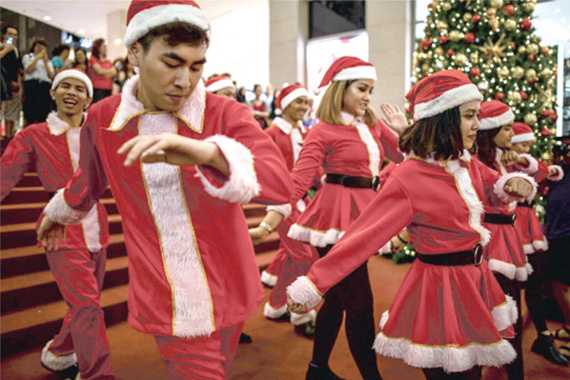
The Muslim chief minister of Sabah in Malaysia has ramped up the celebratory mood among Christians in the state by adding Dec. 24 or Christmas Eve as a new public holiday.

The neighbouring state of Sarawak is also thinking of declaring Christmas Eve a holiday, local reports said.

“The additional public holiday will enable those celebrating Christmas to return home earlier,” Sabha Cheif Minister MohdShafieApdal said when launching the five-day Kota Kinabalu Christmas Carnival in the state capital on Dec. 11.

The state is the first in Malaysia to add the Christian celebration to the list of two-day public holidays accorded to significant festivals in the country after Eid al-Fitr and Chinese New Year.

For many Christians in Malaysia, Christmas celebrations can be a minefield. Decades of Islamization and the steady rise of Islamic conservatism in the South-East Asian nation has led to anti-Christian rhetoric forcing restraint when observing such religious events.

Sri Lanka dragged into global conflict with Islamic extremism

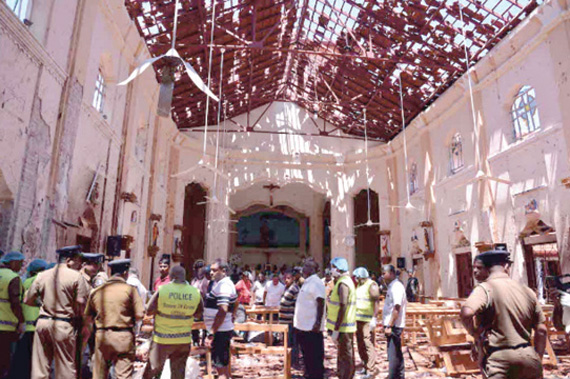
The sudden deterioration of the security situation in Sri Lanka has come as a shock to its people. Five days after a series of suicide bombings on Easter Sunday killed more than 250 people, injured over 500, wrecked three Christian churches and caused substantial damage to three five-star hotels, Sri Lanka continues to be in a state of siege. A night-time curfew has been declared and there is vastly reduced traffic on the usually packed Colombo roads.

Rumours of further attacks are spread wildly and widely, forcing the government to ask people only to listen to official police warnings. The little-known National Thowheeth Jama’ath (NTJ), which has been identified as the source of the suicide bombers, has about 150 members. It is feared that many of them might be potential bombers. There is a high-priority security search for them. Until they are all found, the danger of another suicide bombing will remain.

Funding restrictions cripple Church agencies in Pakistan

Christian groups in Pakistan are trying to stop the government closing their bank accounts as part of a process it says is in-tended to throttle foreign funding to terrorist organizations.

The government has revoked the licenses of thousands of non-governmental agencies and thus prevented them receiving foreign funding, including from Christian non-governmental agencies.

“The future of our workers is at stake. We are still being accused of working on a Western agenda and labelled as anti-national groups,” said Cecil Chaudhry, who heads the Catholic Church’s National Commission for Justice and Peace.

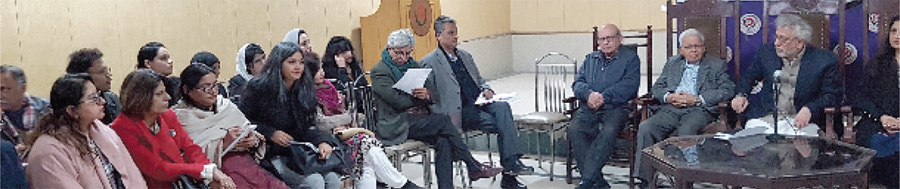
He was speaking at a Dec. 16 meeting of right civil groups at the Lahore Press Club organized by the Joint Action Committee for People’s Rights (JAC), a form of human rights groups and journalists union. Speakers expressed concern over the military’s increasing involvement in governance, attacks on liberal news agencies and closure of non-governmental agencies.

Chaudhary told the meeting that commercial bank accounts in three of the country’s seven dioceses had been closed.

The Church’s human rights organization employs 40 Christian activists and they were now struggling to pay staff salaries, he added.

The secret lives of Vietnam’s Catholic mothers

Mary Nguyen closes the door carefully and says evening prayers with her two children in her room whenever her husband comes home late from work.

And Nguyen, who lives in the house of her Buddhist parents-in-law, quietly takes them to weekend Masses once or twice a month at a church near her own parents’ home in Vietnam’s southern Ho Chi Minh City.

“I have to pretend to her parents-in-law that I take the children to visit my parents so that we can go to church,” the mother said in a low, strained voice.

Her husband and parents-in-law do not want them to embrace Catholicism before they turn 18, when they say the children can decide for themselves what religion to follow. They have threatened to turn her out of their home if she takes the children to church.

Nguyen said they do not know their grandchildren are Catholics as she had them — a girl and a boy — baptized while she was living for months at her parents’ home after she gave birth to them.

She tries to help instill faith in Catholicism while their grandmother regularly takes them to Buddhist temples.

Nguyen, who works for a local printing company, said her husband, a Communist Party member, converted to Catholicism when he married her. However, he subsequently jettisoned the Catholic faith and often checks on whether the children have secretly gone to church.

“I forgive him and try to be a good Catholic so that I can bear witness to the Good News,” said Nguyen, who regularly joins Catholic friends and family members in attending church services and feasts.

Muslims pray in church during citizenship protest in Kerala

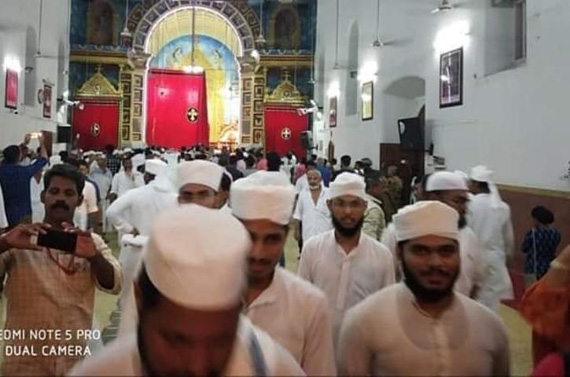
This could be the first such incident when the Maghrib (evening) prayer was recited from a church and hundreds of Muslims offered Namaz in a church compound. It happened in Kothamangalam, in Kerala’s Ernakulam district on December 28.

It was a massive rally organized by the All India Professional Congress, against the Citizenship Amendment Act (CAA). The rally from Muvattupuzha to Kothamangalam also saw the participation of leaders from various political parties.

By the time the march reached Kothamangalam, it was time for the Maghrib prayers. And, without any hesitation, the authorities at the St Thomas Church, Kothamangalam (Mar Thoma Cheriapally) opened its campus and welcomed the Muslims to offer their prayers there.

The priest of Marthoma Cheriapally offered water to perform Wudhu (the ritual washing performed by Muslims before prayer) to IUML leader Sayyid Munavvar Ali Thangal who was part of the march.

“It was such nice gesture to see the priests and Christian devotees welcome us there,” Munavvar Ali wrote on Facebook.

Sharing the video of Muslims offering prayers at the church Munavvar Ali further wrote: “This is a reflection of the desire of lakhs of people who want to see our country remain how it is now.”

“Friends, let love be our weapon and unity our shield. We cannot let them destroy this country. We will overcome this,” he said in the Facebook post.