Bishop, former chaplain to queen, to be received into Catholic Church

A former chaplain to Queen Elizabeth II is to be received into the Catholic Church.

Bishop Gavin Ashenden of the Christian Episcopal Church will become a Catholic Dec. 22 in Shrewsbury cathedral. He said he had reached the conclusion that only the Roman Catholic and Orthodox churches “have the capacity to defend the faith” from the influence of secularism.

A Dec. 17 statement from the Diocese of Shrewsbury said Ashenden’s Anglican orders will be suspended and he will become a lay Catholic theologian.

In a Dec. 17 statement sent by email to Catholic News Service, the bishop said, “The claims and expression of the Catholic faith are the most profound and potent expression of apostolic and patristic belief” and that he now accepted the primacy of the pope.

Ashenden said he was grateful to Catholic Bishop Mark Davies of Shrewsbury and the Catholics of his diocese for the opportunity to “be reconciled to the church that gave birth to my earlier (Anglican) tradition.”

“I am especially grateful for the example and the prayers of St. John Henry Newman,” he said.

“He did his best to remain a faithful Anglican and renew his mother church with the vigor and integrity of the Catholic tradition,” he said. “Now, as then, however, his experience informs ours that the Church of England is inclined to be rooted in secularized culture rather than the integrity and insight of biblical, apostolic and patristic values.”

In a Dec. 17 statement, Davies said it was “very humbling to be able to receive a bishop of the Anglican tradition into full communion in the year of canonization of St. John Henry Newman.”

Islamists in Nigeria kill Christian hostages

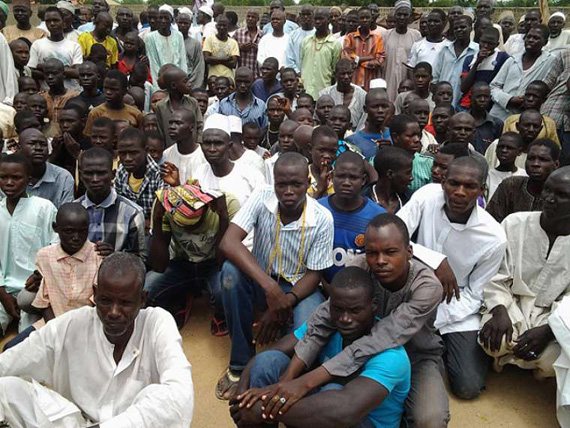
The Islamic State group in Nigeria released a video on December 27 claiming to show the killing of 11 Christian men. The Dec. 26 video shows masked militants be-heading 10 blindfolded captives, and shooting an eleventh. The west African province of Islamic State, which broke off from Boko Haram in 2016, said the killings were in vengeance for the October deaths of Islamic State’s caliph, Abu Bakr al-Baghdadi, and of its spokesman, Abul-Hasan al-Mujahir, Reuters reported. Another video claimed the captives were taken in recent weeks from the Maiduguri area in Borno state.

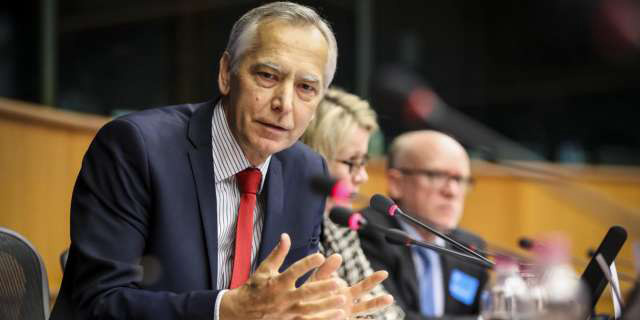
Europe needs a “climate change on religious freedom,” says EU Special Envoy

According to the latest report of the Observatory on Intolerance and discrimination Against Christians in Europe, there have been in the last year about 500 cases of anti-Christian discrimination on European soil.

Christianity is the most persecuted religion in the world.

In Europe, the persecution might be subtle or take place in the form of attacks on  sites of worship. The situation in the world is different. This is the reason why the exiting European Commission looked attentively at the religious persecutions and established the office of the EU Special Envoy for Religious Freedom outside  the European Union.

EU announced the establish-ment of the office on the very day Pope Francis was given the Charlemagne Prize in the Vatican.

Jan Figel was chosen as the EU special envoy for religious freedom. In that capacity, Figel was able to carry out some remarkable successes, as the liberation of Asia Bibi, the Pakistani Christian woman convicted of blasphemy and sentenced to death. The woman won her final appeal, but she was in danger in her country. It was thanks to Jan Figel that she and her family were able to leave Pakistan and find a haven in Canada.

Catholic homilies shortest of all denominations, study finds

A new analysis from the Pew Research Centre shows that many Catholic priests are holding to Pope Francis’ advice to keep their homilies on the shorter side, especially compared to Protestant denominations.

An analysis of nearly 50,000 sermons, given across a variety of Christian denominations during the months of April and May this year, found that the median length of a sermon was 37 minutes, but for Catholic priests, the average length was just 14 minutes. Pew found that historically black Protestant sermons had the longest median length of 54 minutes, while mainline Protestant sermons were an average of 25 minutes long, with evangelical churches falling in between at 39 minute per sermon.

The analysis was published on Dec. 16, and was titled “The Digital Pulpit: A Nationwide Analysis of Online Sermons.”

While the terms “homily” and “sermon” are often used interchangeably, they are actually different in nature. A “homily” refers to an explanation or further commentary of scripture during a Mass. A sermon is usually defined as a talk on a religious or moral subject, especially one given by a religious leader during a liturgy.

For the purposes of this study, Catholic homilies were counted as “sermons.”

Pew took data from 6,431 different church websites to create the analysis. The churches all posted all or part of their religious services online. For this research, “online sermon” was defined as “a portion of a religious service posted to a church website that contains a commentary from the pulpit but sometimes may include other parts of the service as well.” The analysis found that while sermons at historically-black and evangelical churches typically contained roughly the same number of words, the sermons at the black churches were longer in length. The study’s authors suggested that this was due to the inclusion of “musical interludes, pauses between sentences or call and response with people in the pews.”

In analyzing the content of the sermons, Pew found that 98% of Catholic homilies included the terms “God” and “Jesus.” The only word that included in 100% of the Catholic sermons examined was “say.”

Pope sets term of office for dean of College of Cardinals

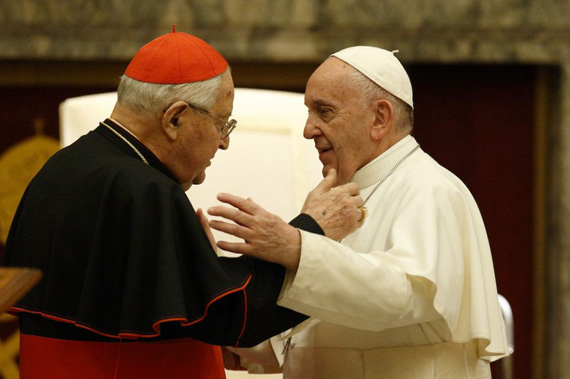
After accepting the resignation of 92-year-old Cardinal Angelo Sodano as dean of the College of Cardinals, Pope Francis changed the norms of the office so that the dean would be elected to a five-year term renewable only once.

Cardinal Sodano, the former Vatican secretary of state, was elected dean in April 2005 after Cardinal Joseph Ratzinger, dean under St. John Paul II, was elected Pope Benedict XVI.

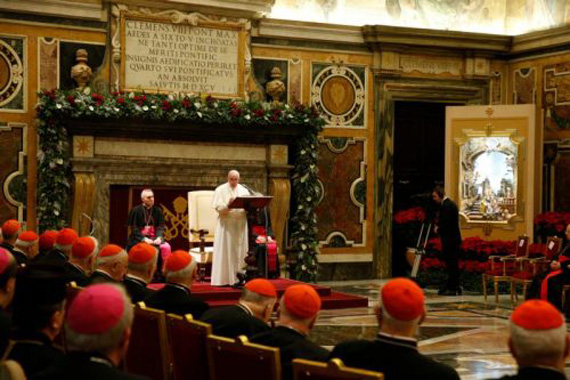
In his apostolic letter issued “motuproprio” (on his own accord), Pope Francis said that given the size of the College of Cardinals and the workload being dean entails, he decided it was best for the office to have a defined term of service. The letter was released by the Vatican Dec. 21 after Cardinal Sodano performed his last official task as dean by offering Pope Francis Christmas greetings on behalf of the cardinals and top officials of the Roman Curia.

Pope Francis used the occasion to express “my gratitude, including in the name of the members of the College of Cardinals, for the precious and punctual service he (Cardinal Sodano) has offered as dean for many years with availability, dedication, efficiency and a great ability to organize and coordinate.”

The dean is charged with officially informing the other cardinals and heads of state that a pope has died; he establishes the date the cardinals will begin their “general congregations” to discuss the current status and needs of the church; and he presides over those meetings before the cardinals enter the conclave to elect a new pope.

If the dean is under the age of 80 and therefore eligible to enter the conclave, he issues the oath of secrecy to the cardinals and determines whether the college is ready to begin the election. He also is the one who asks the person elected if he accepts and what name he wishes to use.

Cardinal Sodano was already over 80 when Pope Benedict resigned, so he was not in the conclave that elected Pope Francis. Those duties were assumed by the sub-dean, Cardinal Giovanni Battista Re.There are these damaging allegations against the cardinal who for 16 years served as Vatican secretary of state. The two most serious cases involve his dealings with Father Maciel and his blocking of an investigation into Cardinal Hans Hermann Groër, the late archbishop of Vienna, who was found guilty of sexually abusing children in 1998.

‘Christendom no longer exists,’ pope says, explaining need to revamp Curia

The ongoing reform of the Roman Curia is a necessary part of the Catholic Church’s fidelity to its mission to proclaim the Gospel, recognizing that very few countries today can be described as “Christian” and that new ways of evangelizing are necessary, Pope Francis said.

But attempts to meet the new challenges are threatened by “the temptation of assume an attitude of rigidity,” the pope said Dec. 21 during his traditional pre-Christmas meeting with cardinals and top officials of Vatican offices. “Rigidity, which is born of the fear of change, ends up erecting fences and obstacles on the terrain of the common good, turning it into a minefield of incomprehension and of hatred,” the pope said. “And today this temptation of rigidity has become very evident.”

“Christendom no longer exists,” he said. “Today we are not the only ones who produce culture, nor are we the first or the most listened to.”

Actor breathes new life into Gospel of John at New York’s Sheen Centre

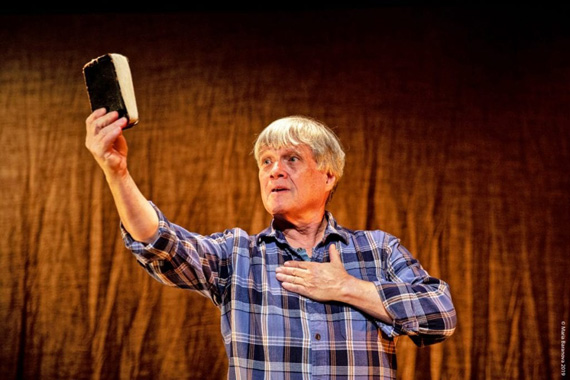
On a nightly basis this month – and on weekend afternoons – “the word” is becoming flesh in lower Manhattan with a one-man performance of the “The Gospel of John” at the Sheen Centre for Thought and Culture.

Longtime Broadway actor Ken Jennings has memorized the entirety of his favourite Gospel – which he first began to commit to memory as a personal prayer – and at age 72, is thrilling audiences with his new dramatic staging of it. In an interview with Crux, Jennings said that it took him somewhere between two to three years to memorize the full text, which he turned to when he was going through a rough period in his personal life.

Throughout the performance, he often carries a small pocket-sized Bible around the stage with him – a Bible that dates back to when he was a part of the original Broadway cast of Sweeney Todd in the 1970s.

Medical discoveries about pregnancy could shed light on Mary as Mother of God

Kristin Marguerite Collier is an Assistant Professor of Internal Medicine at the University of Michigan Medical School where she practices general Internal Medicine. She serves as an Associate Program Director of the Internal Medicine Residency Program and is the Director of the Program’s Primary Care Track. In addition, she is the Director of the University of Michigan Medical School Program on Health, Spirituality and Religion. She spoke to Charles Camosy about Mary, Jesus, and pregnancy.

Kristin Marguerite Collier M.D said in an interview, “As many of your readers may know, the placenta is the organ through which the mother and prenatal child interface. The placenta is an organ that is attached to the inside of the uterus and connects to the prenatal child through the child’s umbilical cord.

What is not as well known about this organ is that the placenta is the only organ in human biology that is made by two persons, together, in cooperation. The placenta is ‘built’ from tissue that is part from mom, and part from the growing baby. Because of this, the placenta is referred to as a ‘fetomaternal’ organ. It is the only organ made by two people, in cooperation with providence. It is the first time mom and her baby come together, albeit at the cellular level, to do some-thing in cooperation.”

“In addition to the placenta, mother and prenatal child interact at a cellular level in something known as ‘fetomaternal-microchimerism.’ In Greek Mythology, the chimera is a fire breathing monster comprised of three species in one – a lion’s head, a goat’s body and a serpent’s tail. In science, “microchimerism” is the presence of a small population of genetically distinct and separately derived cells within an individual. During pregnancy, small numbers of cells traffic across the placenta. Some of the prenatal child’s cells cross into the mother, and some cells from the mother cross into the prenatal child. The cells from the prenatal child are pluripotent and integrate into tissues in her mother’s body and start functioning like the cells around them. This integration is known as ‘fetomaternal microchimerism’.

The presence of these cells is amazing for several reasons. One is that these cells have been found in various maternal organs and tissues such as the brain, the breast, the thyroid and the skin. These are all organs which in some way are important for the health of both the baby and her mother in relationship. The post-partum phase is when there is need, for example, for lactation. The fetomaternal microchimeric cells have been shown to be important in signalling lactation.”

“I know that most women experience an immense sense of wonder and awe during their pregnancy that sometimes isn’t celebrated and discussed perhaps as much as it should be.”

“ If we consider the biological reality of fetomaternal microchimerism, we can assume that some of Jesus’ cells transferred across the placenta in Mary’s womb into the Blessed Mother. What we could take from this is that even when Jesus physically left his mother, part of him remained in her and remains in her forever. This further magnifies her position as the glorious Theotokas.

No harm in backtracking on citizenship law: Cardinal Gracias

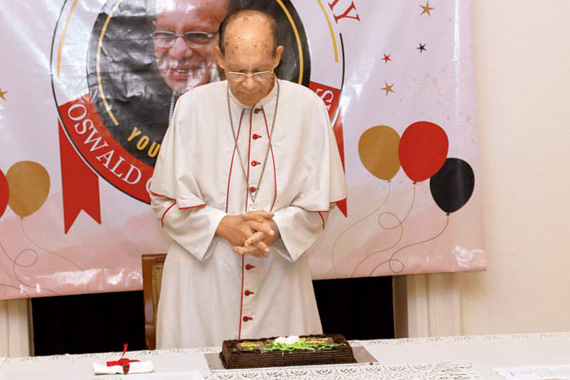
There is no harm in backtracking if the government thinks it has erred in amending citizenship laws, says Cardinal Oswald Gracias, head of the Catholic Church in India.

“Religion should never be made a dividing factor,” asserted the cardinal when asked about the political turmoil in India over the controversial Citizenship Amendment Act 2019 (CAA) and the implementation of the National Register of Citizens (NRC).

However, the prelate disapproved people indulging in violence to get their voices heard. “Violence is not right. A continuous discussion must take place,” the Bombay arch-bishop told friends and well-wishers who on December 24 greeted him on his 75th birthday.

Cardinal Gracias, president of the Catholic Bishops’ Conference of India and an adviser of Pope Francis, says he is “very keen” on inter-religious dialogue between people of different faiths. “This will knock off any prejudices and eventually help to understand and appreciate each other. I want the Catholic community to be at the forefront of this… to build bridges,” he added.

The Indian Church leader termed the love for the nation as an important trait of citizens. “If we truly feel strongly about India, then we must work for the country, to the point of being ready to sacrifice for it,” the cardinal asserted.

To foster patriotism, the cardinal suggests people engage in reflection and exchange of ideas. “Reading and knowing the thoughts of others helps one’s own thoughts to mature and conceptualize a better India, in which everyone is like one big family. This is what should be our priority,” Cardinal Gracias explained.

Attack on Indian spirit will harm secularism: Goa archbishop

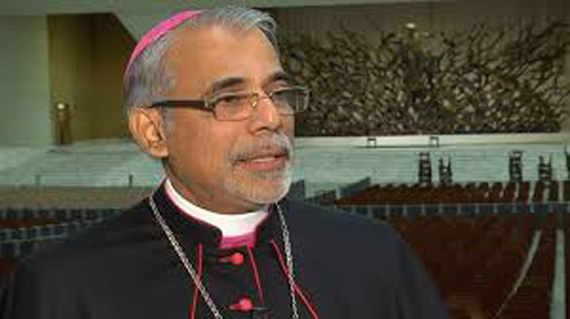
Any attack on “Indian spirit” can damage the age-old secular fabric of the country, warns Archbishop Filipe Neri Ferrao of Goa.

The prelate was addressing the annual civic reception on the occasion of Christmas in Panaji, the state capital. Goa Chief Minister Pramod Sawant and several ministers were present on the December 27 program.

Although the archbishop did not refer to any political issue, his remarks came amid the raging controversy over the amended Citizenship Act. Anything that vitiates the genuinely “Indian spirit” can damage the “centuries-old secular fabric of our nation,” he said.

“Sometimes, it (attack on Indian spirit) causes disturbances and flare-ups that can mar the peace and the tranquillity among its citizens,” the archbishop said.