Bhutan’s only Catholic priest

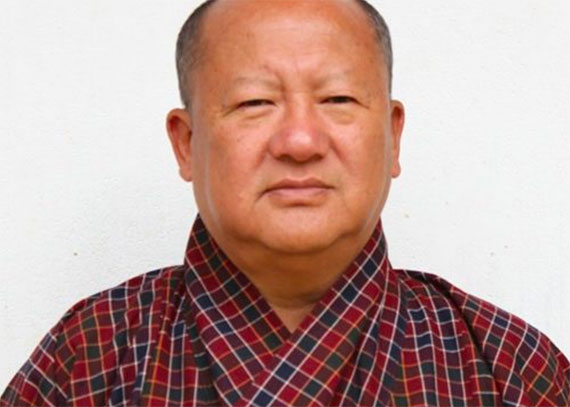
Recently by chance, I met Father Kinley Tshering, former provincial superior of Darjeeling Jesuit Province in India, the first and only native Bhutan Catholic Priest. Bhutan is a close Buddhist theocracy with a population of less than a million, located in the Eastern Himalayas in South Asia, sandwiched between India and China. Bhutan is the second least populous nation after the Maldives. Bhutan and the Maldives were only two countries without Catholics. But about 10 years ago, the Bhutan government allowed freedom of religion, and at present, there are about 100 Catholics, mostly from Nepal or India.

Peaceful Bhutan with the best gross national happiness is the only carbon-negative country and the least corrupt. A place where smoking and damaging nature are banned. Never having been colonized, Bhutan was able to develop a distinct identity based on Buddhism introduced in the 7th century. Basic education and health care are free for all in Bhutan. Foreign missionaries are not allowed to live in Bhutan; only native Catholics or Christians can work. About 77 percent of the population is Vajrayana Buddhist and about 23 percent is Hindu. Less than 1 percent of the population follows other religions.

Born in the upper class in Bhutan, Father Kinley was amazed when he saw the little child in the manger in Christmas cards. When he went abroad at age 5 to a boarding school run by Jesuits in Darjeeling, he saw the crucifix in a convent, and the sisters explained to him the story of the little boy in a manger in relation to the man on the cross. At age 15, on May 18, 1974, he was baptized in secret. Despite the objection of his family, he aspired to be a priest; but due to the objection of nearby missionaries, he entered university, earned an MBA, and worked in a company for three years.

Move to end seats in parliament upsets Anglo-Indians

India plans to end the practice of nominating representatives of Anglo-Indians in its parliament, shocking the mostly Christian group that traces its ancestry to the British.

The federal government, led by the pro-Hindu Bharatiya Janata Party (BJP), on Dec. 9 presented a bill to amend the constitution, aiming to end the provision of reserving two seats in the national parliament and one seat each in 14 state legislatures to Anglo-Indians.

“This has come as a tremendous shock to all of us,” said George Baker, who was one of two nominated Anglo-Indian members along with Kerala’s Richard Hay in the 2014-19 parliament.

However, the BJP government, which began its second stint in May, did not nominate any Anglo-Indians in the 545-seat national parliament.

“It is astounding that we have no stake in decision making,” Baker told ucanews. “Everyone in this country has representation. The only community that does not have a voice in law-making bodies is the Anglo-Indian community,” he said.

The term Anglo-Indian now includes descendants of all British, Portuguese, Dutch or other European men and women who had married Indians or settled in India. They also include some English-speaking Christians whose families have adopted European lifestyles for centuries.

India’s first Prime Minister Jawaharlal Nehru and his home minister Sardar Patel in “recognition of our services to the nation introduced the special representation,” said Glen Galstaun, a sitting Anglo-Indian member of the Jharkhand State legislative assembly.

“We fought for the country even before and after independence. We served the defines forces and other government departments selflessly.

“Our men played crucial roles in India-Pakistan wars. An Anglo-Indian regiment of the Indian army contained the mutiny in Punjab, immediately after India’s partition.”

Arunachal missionary nun receives International Human Rights Award

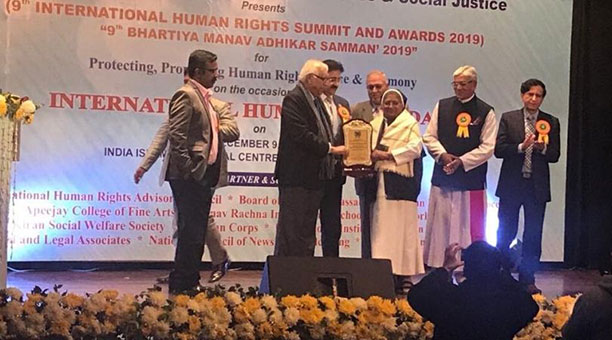
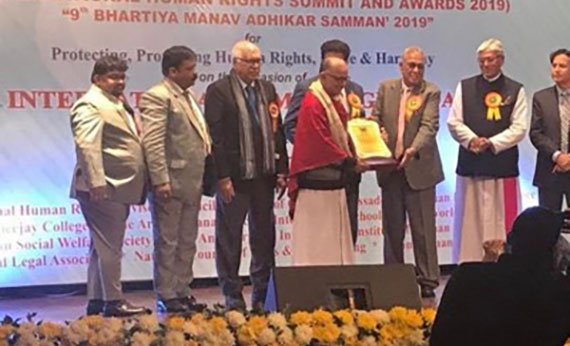
Sacred Heart Sister Rose Tom, a gynaecologist, has been conferred with ‘International Human Rights” award for 2019 for her healthcare services in interior villages of Arunachal Pradesh.

The Delhi-based International Human Rights Council gave the award on December 9 at a function held in the India Islamic Centre Auditorium in the presence of invitees from all over the country and abroad.

Sister Tom, a native of Kerala, has more than 33 years of experience working in various parts of India. She has worked for the past four years at the Krick and Bourry Memorial (KBM) Hospital in Injan village of Changlang district, Arunachal Pradesh.

“I am totally humbled by this honour,” said the 67- year-old nun told.

Kandhamal children receive educational support from Canadian group

A Canada-based Catholic humanitarian group has come forward to support the education of children of the Kandhamal survivors in Odisha, eastern India.

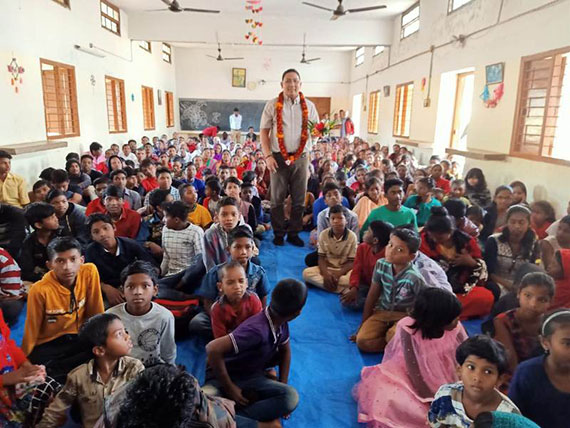
“Faith without work is dead,” said Al Basilo, operations head of the Answering the Cry of the Poor (ANCOP) International Canada, at a gathering of 522 such children who gathered at Catherine’s Girls’ Convent, Raikia, a major parish in the Kandhamal district of Odisha.

The area comes under the Archdiocese of Cuttack-Bhubaneswar. Basilo said they started ANCOP as the social arm of the Couples for Christ to fulfill its responsibility to build the Church of the poor. “I am really inspired to know the sacrifice of Kandhamal people who witnessed Christ even unto death,” he told.

“The persecution, killing and murder just because you are Christian are indeed very sad and unfortunate. I want to listen to the children of Kandhamal survivors,” said Basilo, who was visiting India for the first time.

Franciscans seek ways to evangelize through social media

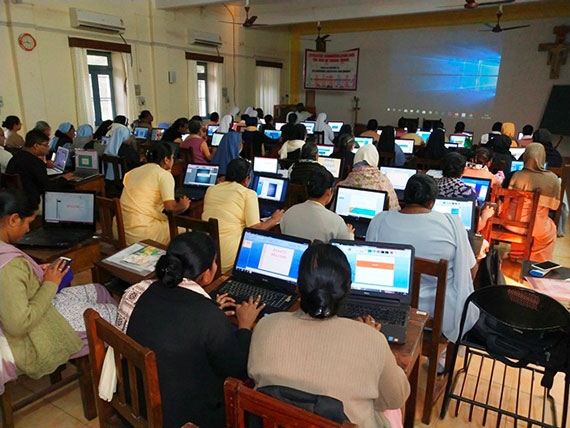
The Association of Franciscan Families of India (AFFI) organized a national training for priests and nuns for effective evangelization through social media at St Fidelis College, Lucknow. As many as 72 members of AFFI along with secretaries of other religious congregation attended the Dec. 1-4 intensive hands-on training on “Social Media and Communications,” said Capuchin Father Nithiya Sagayam, national co-ordinator of AFFI and organizer. Explaining the rationale of the seminar, Father Saga-yam said that the AFFI through its nationwide network of 50,000 members working in various fields through 125 provinces is involved in the socio-economic and cultural uplift of people. The secretaries, administrators and executives of these provinces and institutions are aware of these by their network.

The Religious in India offer their might towards the nation-building through committed apostolate of education, health care and social uplift of the poor and the marginalized. But keeping up with their simplicity and unassuming character by avoiding advertisement, popularity and seeking name and fame, their activities are not known to the world at large, said the priest.

Bishop voices concern over proposed anti-conversion law in India

A local bishop in India has voiced his objection to a proposed new anti-conversion law in the State of Uttar Pradesh.

The UP State Law Commission on submitted a report to Chief Minister Yogi Adityanath suggesting a new law to check “forcible religious conversions.” The head of the commission, Justice Aditya Nath Mittal, was quoted in local media as saying that “existing legal provisions are not enough to check religious conversion and on this serious matter, a new law is needed like in 10 other [Indian] states.”

The proposed law would increase the punishment for “forced conversion” to seven years if the convert is under 18 or belonging to one of India’s Scheduled Castes or Scheduled Tribes, who have traditionally been on the bottom of the country’s society. Bp Gerald John Mathias of Lucknow told Crux the law is not needed.

“The Catholic Church is always against any ‘forceful conversion.’ Forced conversion is a contradictory term; if anyone is forcibly converted, he or she is not actually converted. Unless there is an internal conversion, there is no conversion. There has to be a conversion of ‘heart’ for any real conversion. If a person is not ready to accept Christ, or is unwilling to accept Christ, no amount of force, can convert that person,” the bishop said. He said the Church has seen a “spurt in incidents against the Christians.”

“Ambassador of Peace” calls for ‘ability to listen’

The secret of success of any peace effort is the ability to listen, says Archbishop Thomas Menamparampil, who on December 9 received the latest “Ambassador for Peace” award from the International Human Rights Council. “Many think that volubility and vocabulary, a cute approach and a persuasive tongue will convince the parties in conflict. But far more important is a contextual understanding of their more serious anxieties in their complexity and depth. But ultimately, a ‘sympathetic listening’ to their inner agonies alone will open the doors for dialogue,” said the 83-old Salesian prelate who received the award at a glittering ceremony held at India Islamic Centre Auditorium in New Delhi.

28-year-old nun found dead on railway track

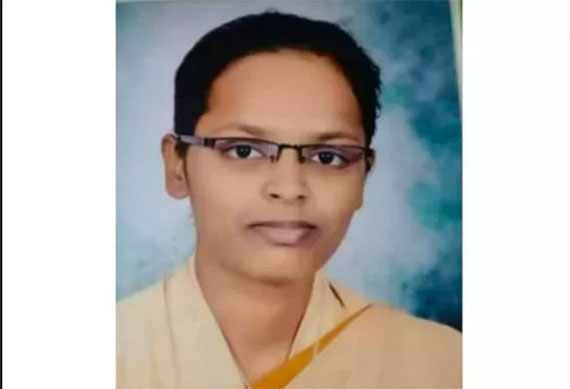
The severed body of 28-year-old nun was found on a railway tracks in Hublitwon of Karnataka.

The shocking incident occurred around 3:30 am on December 4. Sister Mary Sendra Vianney of the Sacred Hearts of Jesus and Mary Convent is the second child in the family of four children born to Gurushantappa and Kosumaria at Gadag, Belgaum.

She joined the Sisters of the Little Flower of Bethany in 2012.

The Filipino fighting for a Japanese samurai’s sainthood

Historian Ernesto De Pedro with statues of Dom Justo UkonTakayama who was beatified in early 2017.

As Pope Francis visits Japan, an 83-year-old Filipino historian is hoping the pontiff will recognize a Japanese samurai who once offered his life for the faith.

Dom Justo UkonTakayama, or “Justus Ucondono” as missionaries fondly called him, was a warrior who fought under the banner of the cross in the land of the rising sun.

He was an eminent Japanese feudal governor who served under Japan’s three hegemons — Oda, Hideyoshi, and Toshiie — who unified Japan.

In 1587, Chancellor Toyotomi Hideyoshi took drastic steps against Takayama, who declined to obey the chancellor’s order to renounce the faith.

Takayama was baptized a Christian in Sawa Castle on June 1, 1563, when he was 11 years old.

For refusing to renounce his Christian faith, Takayama was sent to Manila as an exile on Dec. 21,1614. Months after his arrival, he died on Feb. 3, 1615 in the old walled city of Intramuros.

The faithful of Manila promptly presented the Japanese warrior’s case to the Vatican for beatification. But after centuries passed, Takayama seemed to have been forgotten.

In 1963, Cardinal Rufino Santos of Manila endorsed the cause of the samurai to the Church in Japan. But there were no updates as church officials came and went.

Then one day, a Filipino history enthusiast passed by a statue of a Japanese man in the Plaza Dilao in the old city of Manila where the samurai supposedly baptized Japanese converts.

Historian Ernesto De Pedro wondered why a Japanese figure would standing as such in the Philippines. He did not give it much attention until a group of Japanese Protestant pastors came to inquire.

The Protestants were researching about a certain Takayama whose statue stands in the middle of Manila. They found nothing.

De Pedro wondered. “Why nothing?” he asked. He did his own research. He found out later that in Manila Takayama “Dom Justo Ukon Don.” In the papal archives, he was identified as “Ukon Don.”