Tamil remember their civil war dead despite government opposition

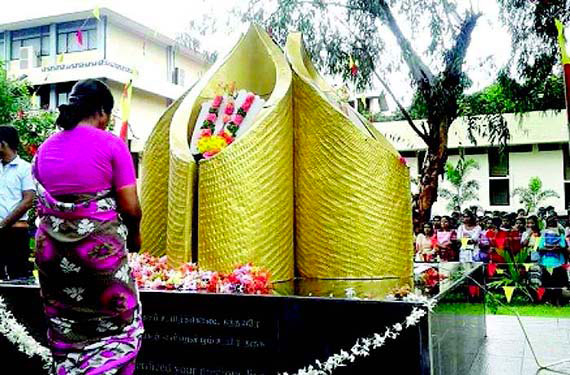
Thousands of Tamil in northern and eastern Sri Lanka have commemorated their relatives who died during and after the country’s civil war, which lasted more than a quarter century.

The main ceremonies were held last Wednesday, Maaveerar Naal (Great Heroes’ Day), as Tamils remembered those who died or went in missing in battle.

The Sri Lankan government has always opposed the remembrance. Under former President Mahinda Rajapaksa, brother of the current president, memorial ceremonies were banned as an apology for Tamil independence ideology.

For their part, Tamil com-plain that under the first Rajapaksa the graves of thousands of Tamils were destroyed, whilst war monuments, luxury buildings and other structures were built on top “in an attempt to erase our memory and control us.” “The graves of our children were in a row in the cemetery of Kopai,” some Tamil told Asia-News. “At least 2,000 people were buried there, but in March 2011 soldiers arrived and demolished everything.”

Mindanao rights group welcomes lifting of martial law

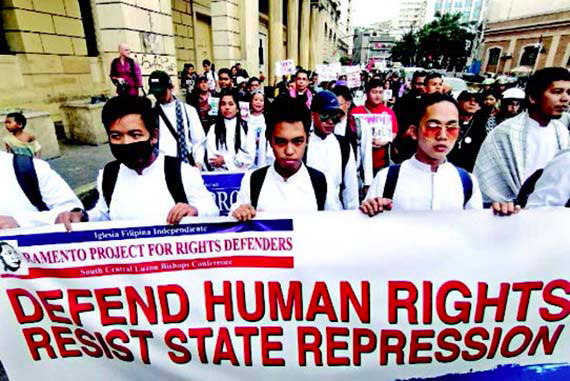
A human rights group in the southern Philippines has welcomed a  government statement announcing the imminent lifting of martial law across Mindanao, but it called for an international probe into alleged atrocities committed by the military while it has been in force.

The group BarugKatungod (Stand for Rights) said two and a half years of martial law in the region had resulted in more than 162 killings. At least 704 cases of “fabricated charges,” 284 cases of illegal arrest and detention, 1,007 victims of aerial bombardments and the forced evacuation of at least a million people were also reported.

“This announcement to end martial law will ultimately not bring relief for all the victims,” said Bishop Redeemer Yanez of the Philippine Independent Church, convener of the rights group. The presidential palace announced on Dec. 10 — International Human Rights Day — that President Rodrigo Duterte will not seek another extension of martial law in Mindanao.

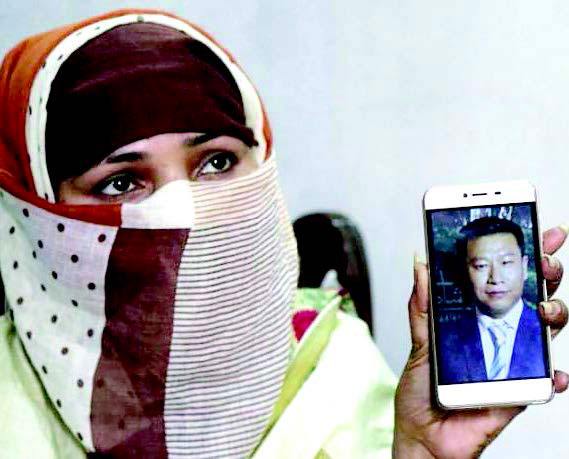
Islamabad, 629 child brides sold to China

At least 629 Pakistani girls sold as enslaved brides to Chinese husbands. This is the official number of the recent phenomenon of trafficking in women from the South Asian country to the Chinese giant. This was revealed by an investigation by the Associated Press, which managed to have the original reports of the complaints filed since 2018.

However, according to investigators, the phenomenon is far more extensive, if only the judicial authorities had continued to register the complaints at the same pace as the first few months. After an initial investigative momentum, there is a progressive slowdown in the registration of cases.

People “informed of the facts” motivate this contraction due to pressure and interference from the Islamabad government. In fact, it would have exercised its influence to curb investigations so as not to damage the “profitable” link with Beijing.

Proof of this is the acquittal of 31 Chinese in a single case of trafficking in human beings, freed by the court of Faisalabad in October. According to some family members of the victims, who speak under anonymity, the accusing victims later refused to testify against their torturers because of threats or for compensation received to keep silent.

Christian children given Islamic names in Pakistan to avoid abuse: bishop

Christian parents in Muslim-majority Pakistan are giving their children Islamic names to protect them from religious abuse at school, according to a local bishop.

Bishop Samson Shukardin of Hyderabad has told Catholic charity Aid to the Church in Need that families belonging to minority faiths feared their children would be targeted for discrimination.

“Many minorities give their children Islamic names, so they will not be singled out as Christians and become potential targets for discrimination in primary or secondary schools or at the college level,” the bishop said in an article on the charity’s website.

“In many cases, minority students do suffer abuse in public schools.”

Textbooks in schools negatively depicted minorities who were considered infidels, which promoted prejudice in the classroom against fellow students, he said.

Bishop Shukardin spoke of a climate of fear among Christians, saying Islamic extremists wrongly associated them with the West. Other minorities as well as moderate Muslims were also at risk of attack, he said, while raising concerns of kidnappings of Christians, forced conversions to Islam and forced marriages, echoing fears made by other clergy in the country.

Treatment of religious minorities in Pakistan grabbed the international spotlight in May when Catholic woman Asia Bibi fled the country after spending eight years on death row for speaking against the Prophet Muhammad.

Bibi’s conviction on blasphemy charges was earlier overturned on appeal and she released from prison, sparking violent protests from hardline Islamists.

The contentious blasphemy law is aimed at promoting Islam and uniting the country, but rights groups say it has been misused by hardliners to persecute religious minorities.

Religious leaders from the different faiths earlier this year called on Prime Minister Imran Khan’s government to safeguard the rights of minorities and women.