Ideological dogmatism posing “danger” to scientific temper: Christian philosophers

The current trends of ideo-logical dogmatism are posing “danger” to India’s scientific temper, said the Association of Christian Philosophers of India (ACPI).

“India’s contribution to science has been immense. There has been a scientific temper down the ages, which is in danger of being diluted by current trends of ideological dogmatism, whereby the distinction between fact and fiction, history and mythology are blurred,” an ACPI statement said.

“Indigenous sciences and democratized applications of the same need to be encouraged. The spirit of a healthy scientific tem-per needs to be protected from vested corporate interests and the dysfunctional influences of caste, gender, class and religion,” the statement read.

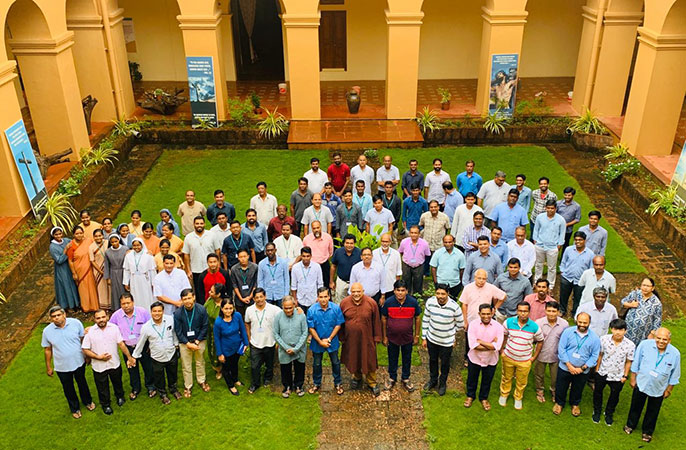
The press statement was issued at the end of the 44th annual research seminar of the ACPI at the St Joseph Vaz Spiritual Renewal Centre in Old Goa, on Oct. 23 to 25. As many as 87 participants attended it.

Indian nuns call for women’s ‘due place’ in church leadership

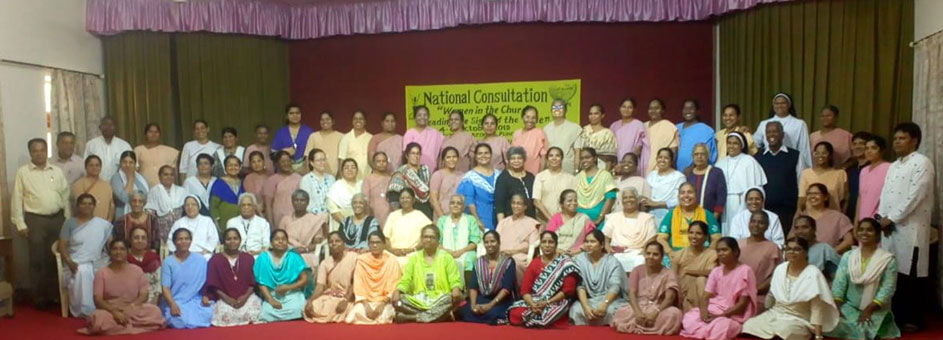
About 100 Catholic women religious in India have called for a place at the table in church leadership and asked that canon law be amended to make it more relevant and inclusive.

They stressed these and other points at a “Women in the Church” consultation held on October-4-6 at Ishvani Kendra Pune, the cultural capital of Maharashtra.

The participants said in the statement that the consultation helped them embark on “a journey to challenge ourselves to bring about transformation in ourselves and in the church in keeping with the vision of Christ.”

They have resolved to restore equality in the church and create a consciousness to negotiate partnership in the church.

The meeting also stressed developing “feminist consciousness” to read the signs of the time, critically evaluate current structures, values and practices and build solidarity across gender, class, caste and other divides to help transform lives.

The women religious noted that caste and class along with “toxic masculinity and femininity affect the church consciously and unconsciously.”

Patriarchy, the basic organizing principle of society, thrives by dividing men and women, giving power and status to the males and leaving caring and nurturing to females, the statement notes.

Problem not sexual abuse, but clericalism: Salesian chief

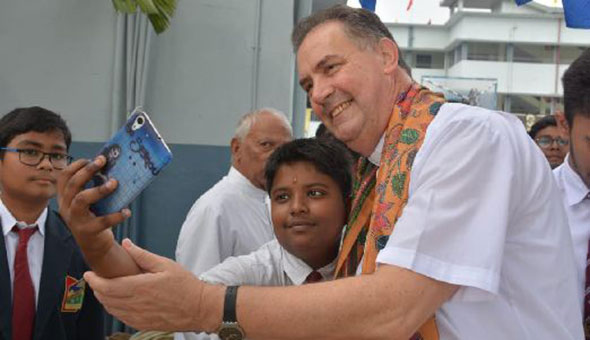
The Rector Major of the Salesians of Don Bosco addressing a group of Salesians gathered at Siliguri in North Bengal said, “the greatest problem the Church faces today is not the scandal of sexual abuse of minors by its clergy, but the scourge of clericalism and power seeking by clerics.”

Rector Major, visitor from Rome, on his second visit to Kolkata province addressed the gathering in Italian. while Kolkata Provincial Father Nirmol Gomes translated into English.

The Salesian gathering consisted of Salesian Novices and professed confreres who numbered some 100 people.

“Clericalism is a disordered attitude of the clergy (priests and religious included),” the Rector Major explained saying, “it is an attitude of an excessive assumption of their moral superiority.”

When “Clerics feel they are superior, [and when] they are far from the people, clericalism shows up,” he warned.

Clericalism can be “fostered by priests themselves or by lay persons” — lay-people can fall into clericalism, by thinking that their contributions to the life of the Church are only second-rate, or that in all things, surely “Father knows best,” or that priestly virtue exhausts Christian virtue.”

Salesians of Don Bosco congregation consists of both priests (over 90 plus per cent) and lay brothers.

Rector Major explained further stating how clericalism is played out, “I am priest, have all the power, authority, the parish/institution is mine, lay people and women religious must obey me.”

“Sometimes some priests also take advantage of their position,” the superior general lamented.

Hindu reconversion drive troubles church leaders in southern India

Hindu groups have launched their reconversion move-ment targeting Christians in India’s Andhra Pradesh state, which church leaders say is a troubling move aimed at political gain.

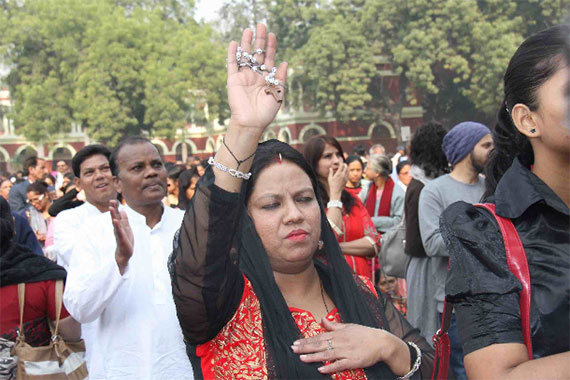
Hindu seers and Bharatiya Janata Party (BJP) leaders conducted massive prayers and rituals on October 20 at the popular Hindu temple in Srisailam town of Kurnool district in the southern state.

They later visited areas of socially poor Dalit and tribal people and made some 500 poor Christians take an oath to follow Hinduism, local reports said.

“It is a warning sign for all of us here as well as in other southern Indian states,” said Father Anthoniraj Thumma, who heads the Federation of Telugu Churches.

The reconversion movement started some three decades ago in central India, said Father Thumma, whose federation also covers neighbouring Telangana State.

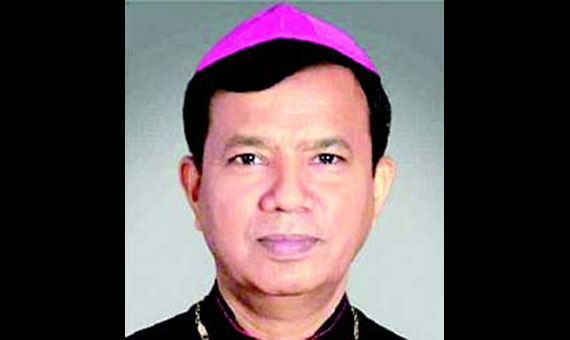
100,000 attend Archbishop Jala’s state funeral

Nearly 100,000 people from across north-eastern India, particularly Meghalaya State, attended the state funeral of Archbishop Dominic Jala in Shillong.

Archbishop John Moolachria of Guwahati, president of the North East India Bishops Council, led the Mass at the Cathedral of Mary Help of Christian, Laitumkhrah, down-town Shillong.

He was assisted by 15 archbishops and bishops from northeastern India other dioceses in India.

The mortal remains was brought to the Cathedral of Mary Help of Christians in Laitumkhrah on October 21 morning.

After the Mass, Archbishop Jala was laid to rest in a grave close to the Cathedral Church.

Crusader nun rescues two teenage girls from traffickers

An anti-trafficking crusader nun in Chhattisgarh has done it again.

She has rescued two more teenage girls from the central Indian state who were sold to brothels in Pune and Goa.

The girls, aged 19 and 16, are siblings of a Bhil tribal family in the Kerasa village of Surguja district.

Traffickers exploit the tribe’s acute poverty, bemoans Franciscan Missionaries of Mary Sister Annie Jesus Mary, who helped rescue the girls.

The nun is the director of Jeevan Jharna Vikas Sanstha (JJVS, foundation for the progress of life stream) at Kansabel in Chhattisgarh.

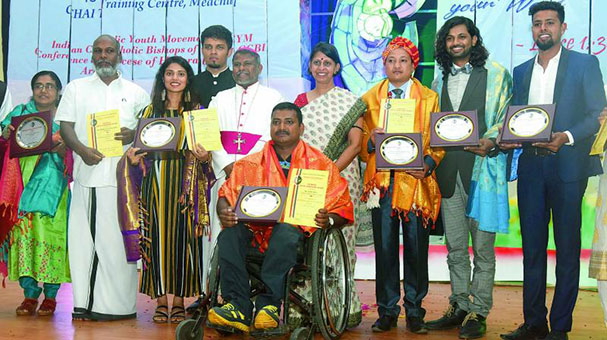
Youth awarded at ICYM event at Medchal

The second national youth conference, 2019, hosted by the archdiocese of Hyderabad, organised by the Indian Catholic Youth Movement (ICYM) at the Catholic Health Association of India (CHAI) concluded. With over 450 people, from 70 dioceses, showcasing 14 regional cultures from all over India, the five-day conference which commenced on October 13th, was an exceptional journey for youth in attendance.

Church should redeem flock, not chase miracles

The Vatican’s strategy to make up for shrinking numbers of the faithful in the traditional catchments of Europe and the West has energized the Catholic Church in India.

However, the process of canonization, mandating two miracles, has nevertheless led to a controversy over the archaic practice, centered on medical as well as theological grounds.

On October 13, Pope Francis conferred sainthood on Thrissur-born Mother Mariam Thresia, the founder of the Congregation of the Holy Family.

This prompted the Kerala chapter of the Indian Medical Association (IMA) to seek an explanation from Doctor V.K. Sreenivasan, a neonatologist at the Amala Institute of Medical Sciences in Thrissur, for reportedly “certifying the miraculous cure of a newborn afflicted with a seemingly incurable primary pulmonary hypertension.”

The child reportedly recovered dramatically after its parents prayed to Mother Thresia from the hospital bed in 2009.

“Dr Sreenivasan, who travelled to the Vatican as a witness, has to tell us what specific markers he had found in the child’s condition to claim supernatural healing. We come across many instances of a cure, often very rare and medically the least anticipated. But to call them miracles is outside the pale of medical ethics,” says Doctor N Sulphie, the IMA state general secretary.

The criticism from within the Church against miracles is centered on the legacy of saints, hailed as iconic examples rather than miracle workers or intercessors. The fullness of heroic lives of virtues, as witnessed by fellow humans, should be sufficient for their veneration as role models. Miracles are merely the interpretation, attributing divinity to causes mortals espouse.

Says Fr Paul Thelakat, the chief editor of “Sathyadeepam” (Light of Truth): “I do know that the Church has strict procedures with respect to miracles and relics, but I may suggest a real rethinking from the theological and scientific point of view two items in canonization, namely the necessity of two miracles and relics. It is time to have a cultural, theological and pastoral re-evaluation of the meaning and the relevance of relics in our times.”

India, home to Christianity for centuries, has survived the paradox of being without a saint for nearly 2,000 years. The first Indian saint was Gonzalo Garcia, a martyr, canonized in 1862. Out of a total of six saints in the country, five were canonized after 2000.

Reading Bible may become mandatory in Philippine schools

A Philippine legislator has filed a bill in Congress to make the reading of the Bible mandatory in the country’s public schools.

House Minority Leader Bienvenido Abante Jr., a pastor of the Metropolitan Bible Baptist Church and Ministries, noted that Filipinos seem not to have truly appreciated the “relevance, importance and power” of the Bible.

“If only Biblical discipline, principles and standards are taught and inculcated in the minds of our children, there would not be so many problems of leadership, governance and peace and order,” said the legislator.

In filing the bill, Abante said it is best to strengthen the “moral, spiritual, ethical, intellectual and social character and personal discipline” of young people while they are in school.

Under House Bill 2069, the subjects English and Filipino, in public elementary and high school, shall include the reading, discussion and examination of the Bible.

Abante said the Bible should be read and studied because religion is allowed to be taught in public elementary and high schools where literary works such as Homer’s Iliad and Odyssey are also being read and studied.

In the case of Muslim students, English and Filipino subjects should also include the reading, discussion and examination of the Quran, the bill provides. Bishop Arturo Bastes of Sorsogon, former head of the Episcopal Commission on Biblical Apostolate of the bishops’ conference, supported the proposal. “This is very good. I hope this gets approved. It is good news for us to read the Good News of God,” he said.

Father Conegundo Garganta, executive secretary of the Episcopal Commission on Youth, also welcomed the bill describing it as “great news and a relevant act.”

Lahore archbishop urges Pakistan, India to dialogue for peace

A Catholic bishop of Pakistan has expressed concern over the confrontation between Pakistan and India over the disputed region of Kashmir and wishes the leaders of both the nuclear-armed nations take on the path of dialogue to save humanity.

“Atomic weapons will never be needed or used if world leaders remain firm in their commitment to build global peace,” Arch-bishop Sebastian Shaw of Lahore said, during a ceremony to commemorate the historic meeting between St Francis of Assisi and Sultan al-Malik al-Kamil of Egypt, 800 years ago in Egypt 1219.

The ceremony took place amidst high tensions between India and Pakistan, particularly over the disputed region of Kashmir.

Recalling that both countries have nuclear weapons, Archbishop Shah urged Prime Ministers Narendra Modi of India and Imran Khan of Pakistan to “choose the path of dialogue to establish peace and save humanity.”

The ceremony, held in St Mary’s Catholic Church, was organized by Fr Francis Nadeem, the custodian of Mariam Saddeeqa run by which is under the Capuchin Friars Minor of Pakistan. “Today we celebrate the 800th anniversary of the meeting between St. Francis of Assisi and the Sultan of Egypt Al-Kamil. We promise to become means of peace in our society, just as these two great men of history have shown us the way of dialogue,” Fr Nadeem said.

The celebration started by ringing peace bells, an act of unity and solidarity with the international community of Europe. Archbishop Shah who returned from Belgium said that on the Feast of St Francis on 4 October at 2 p.m., peace bells would be rung in 40 countries of the world. He thus urged that all the priests and faithful ring the church bells for peace.