Synod calls for more church roles for women, but stops short of diaconate

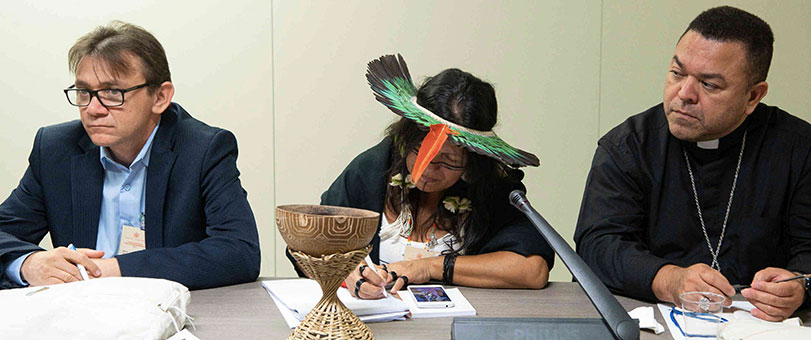
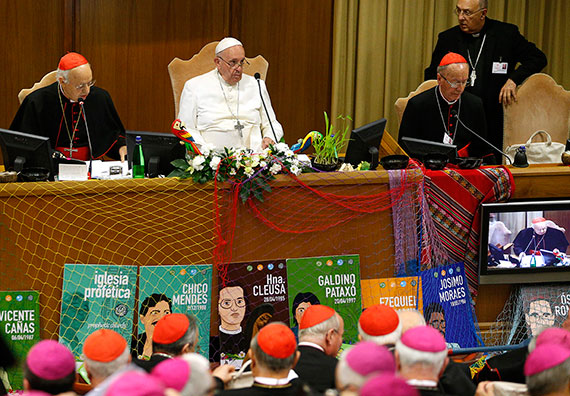
Members of the Synod of Bishops for the Amazon asked that women be given leadership roles in the Catholic Church, although they stopped short of calling for women deacons. In the Amazon, like in the rest of the world, the essential roles women play within the family, the community and the church should be valued and recognized officially, members of the Synod said in their final document.

The document, which Synod members voted on Oct. 26, included a call for the creation of “the instituted ministry of ‘woman community leader,’” something they said would help meet “the changing demands of evangelization and community care.”

Speaking after the vote on the document, Pope Francis said the Synod’s discussion on women “falls short” of explaining who women are in the church, particularly “in the transmission of faith, in the preservation of culture. I would just like to underline this: that we have not yet realized what women mean in the church,” but instead “we focus on the functional aspect, which is important,” but is not everything.

Synod members also asked Pope Francis to revise St Paul VI’s 1972 document on ministries, “Ministeria Quaedam” (“Some Ministries”), so that women could be installed formally as lectors and acolytes and in any new ministries to be developed.

The final document also asked that “the voice of women be heard, that they be consulted and participate decision making” in the church.

“It is necessary for the church to assume with greater strength their leadership within the church and for the church to recognize and promote it by strengthening their participation in the pastoral councils of parishes and dioceses, or even in instances of government,” the document said.

While noting that a “large number” of participants in the pre-synod consultations asked for women deacons and that several members of the Synod itself made such a call, the final document did not include an explicit request for such a move.
Christians must shun self-worship, pope says at synod’s final Mass

Poor people from the Amazon have shown that God’s creation must be treated “not as a resource to be exploited but as a home to be preserved, with trust in God,” Pope Francis said.

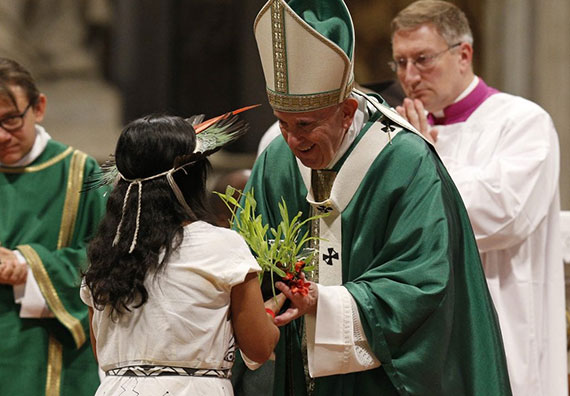
He celebrated Mass on Oct. 27 to mark the end of the Synod of Bishops for the Amazon, which brought together bishops, priests and religious, and lay men and women, including indigenous people, from the nine Amazonian countries.

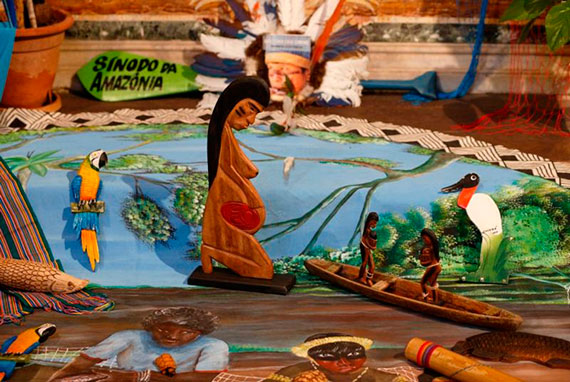
Synod participants, some wearing their native dress and feathered headdresses, led the procession into St Peter’s Basilica. During the offertory, an indigenous woman presented the Pope with a plant.

Their presence was a reminder of the Pope’s rebuke to a bi-shop who had made a derogatory comment about an indigenous man wearing his headdress at the Synod’s opening Mass on Oct. 6. Instead of using a crosier made of precious metals, the Pope carried a carved wooden crosier that the Vatican said was a gift from the Synod. During the assembly, participants described the environmental devastation and social problems caused by mining in the Amazon.

Pope apologizes that statues were vandalized, says they were recovered

Pope Francis apologized that two men entered a church near the Vatican, took controversial statues and tossed them into the Tiber River.

“As bishop of the diocese, I apologize,” he said on Oct. 25, the first time the full membership of the Synod of Bishops for the Amazon was gathered since the statues were taken from the Church of St Mary in Traspontina on Oct. 21.

Referring to the statue as “Pachamama,” like many media had done, Pope Francis told bishops at the Synod that the statues had been displayed in the Rome Church “without any idolatrous intention,” although the men who took the statues claimed on social media that they did so because the statues were idols. “Pachamama” is a term for “Mother Earth” used by some South American indigenous people.

The Pope also said that the statues, which floated, had been recovered by Italian police. The statues, “which created such a media clamor,” he said, “were not damaged.”

Proposed Amazonian rite centred on Christ, indigenous professor says

Addressing concerns about a proposed Amazonian rite in the Catholic Church, an indigenous participant at the Synod of Bishops for the Amazon called on Catholics to soften their hearts and understand the needs of Catholics in the region.

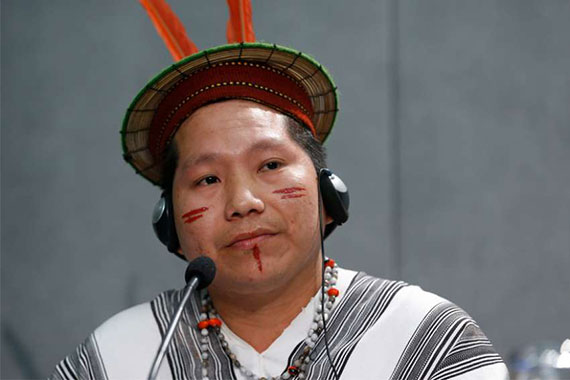
At a Synod briefing on Oct. 24, Delio Siticonatzi Camaiteri, a member of the Ashaninka people and a professor from Peru, said that fears about the proposal are unwarranted because indigenous people seek unity and not division.

“Do we (want to) have our own rites? Yes, we do! But those rites must be incorporated with what is central, which is Jesus Christ. There is nothing else to argue about on this issue! The centre that is uniting us in this Synod is Jesus Christ,” he said.

Throughout the Synod, members discussed the possibility of incorporating local traditions and cultural elements in the liturgy. While there are nearly two dozen different rites in the Catholic Church, those critical of the proposal fear that it would introduce so-called pagan elements into the liturgy.

Speaking to journalists at the briefing, Siticonatzi said that he noticed those present seemed “a bit uncomfortable” and did not “understand what the Amazon truly needs” when it comes to establishing a new rite. “We have our own world view, our way of looking at the world that surrounds us. And nature brings God closer to us. Our culture brings the face of God closer to us, in our life,” he said. Nevertheless, he added, there are many who are “doubtful of this reality that we are looking for as indigenous people.”

“Do not harden your hearts! Soften your hearts; that is what Jesus invites us to do,” he said. “We live together. We all believe in one God! At the end of it all, we are going to be united.”

Pope criticizes cruelty of world marked by hunger, obesity, food waste

Resolving the global crises of world hunger and malnutrition demands a shift away from a distorted approach to food and toward healthier lifestyles and just economic practices, Pope Francis said.

“We are, in fact, witnessing how food is ceasing to be a means of subsistence and turning into an avenue of personal destruction,” he said in his message to Qu Dongyu, director general of the Food and Agriculture Organization of the United Nations, to mark World Food Day on Oct. 16. World Food Day marks the date the FAO was founded in 1945 to address the causes of world hunger.

Pope Francis said he hoped the world day theme of 2019 – “Our actions are our future: Healthy diets for a #ZeroHunger World” – will be a reminder of how many people continue to eat in an unhealthy way.

“It is a cruel, unjust and paradoxical reality that, today, there is food for everyone, and yet not everyone has access to it, and that in some areas of the world food is wasted, discarded and consumed in excess, or destined for other purposes than nutrition,” he said.

“To escape from this spiral, we need to promote ‘economic institutions and social initiatives which can give the poor regular access to basic resources,'” he said, citing his encyclical, “Laudato Si’.”

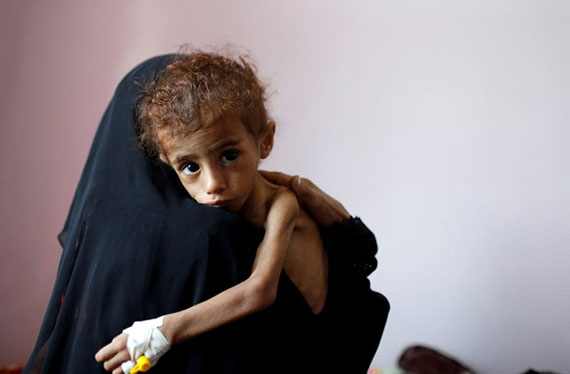
The theme also points to “the distorted relationship between food and nutrition,” he said. Some 820 million people in the world suffer from hunger, “while almost 700 million are overweight, victims of improper dietary habits,” said Pope Francis.

Being overweight is no longer a major health issue in developed countries, he said, but also in poorer areas where people may “eat little but increasingly poorly, since they imitate dietary models imported from developed areas.”

Vatican promotes launch of ‘smart rosary’

The Vatican promoted the launch of  ‘smart rosary’ bracelet on Oct 15 compatible with an iOS and Android app, which costs over $100.

“In a world of indifference and in the face of so many injustices, poverty, elementary rights denied, praying for peace in the world means reconciling ourselves in our daily relationships, with the poorest, with the stranger, with different cultures and spiritual and religious traditions, but also with our land, our forests, our rivers and oceans,” Fr Frédéric Fornos, SJ said in a press release sent by the Holy See Press Office on October 14.

“The rosary is a beautiful spi-ritual tradition for contemplating the Gospel with Mary, it is a simple and humble prayer,” he said.

Synod groups propose Amazonian rite, new ministries for women

Creating an Amazonian-rite liturgy and new ministries for laypeople, including the ordination of women deacons, are some of the recurring proposals made by small groups at the Synod of Bishops for the Amazon.

Such proposals, one group said, would increase as well as transform the Catholic Church’s presence in the Amazon, turning it from one of transience to one of permanence.

The group identified as Spanish-B noted differences of opinion. Some Synod members, it said, proposed asking the Pope for the “the possibility of conferring the priesthood on married men in the Amazon on an exceptional basis, under specific circumstances and for certain specific peoples, clearly establishing the reasons that justify it.”

The 12 small-group reports, published by the Vatican on Oct. 18, were the result of reflections in groups organized by language; each group summarized their members’ conclusions and offered proposals for the whole Synod. Most of the groups cited the presence of women as a “decisive factor in the life and mission of the church in the Amazon,” and one that must be recognized officially. Four of the groups explicitly called for the ordination of women deacons and three others said the church should study the possibility.

Welby hails Newman canonisation: ‘We are still family’

The Church in England and Wales rounded off almost a month of celebrations for the canonisation of St John Henry Newman with a service of ecumenical vespers at West-minster Cathedral.

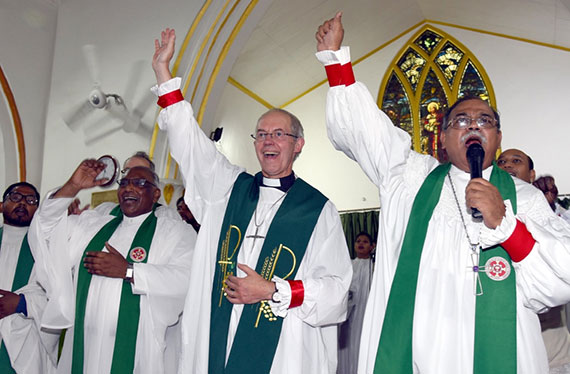
The Archbishop of Canter-bury, Justin Welby, who preached at the service – which was presided over by Cardinal Vincent Nichols – said that the sea change in ecumenical relations that has taken place over the past century would have left Newman “speechless with astonishment”.

For a modern Archbishop of Canterbury to preach about Newman – the former leader of the Oxford Movement whose conversion was among the most high profile of modern times – was, he admitted, a cause for apprehension.

“Some might argue that it is like the owner of Liverpool asking the Everton manager to welcome to the Reds one of the greatest players Everton had produced, and who had left the Blues against their will,” he said. Referring to Liverpool-born Cardinal Nichols, he continued: “I know that His Eminence would deny the possibility of greatness and Everton being in the same sentence but exercise the imagination.

“Or more savagely, it might be asking a party leader to welcome one of his own who had crossed the floor in the worst of circumstances. That is how our churches are often seen, at best rivals, possibly mutual opponents, and even in some cases enemy forces in a five-century war. It is this way of thinking that leads the political turmoil of the present time to be compared to the Reformation.”

But, he said, this analogy was wrong: “For we are not enemies, nor are we opponents, nor even rivals… We are more like a family that had a very bitter dispute, a divorce in the past, and has acquired the habits and occasionally bad manners of separation. For all that we are still family, called together by grace, caught up in the love of God.”

New ‘Amazon’ rites intended to ‘enhance’ liturgy

Proposals at the Synod of Bishops for the Amazon for indigenous – or Amazonian-rite ceremonies are meant to enhance and enrich the liturgy with cultural signs and gestures, not change what is essential for Catholics, a bishop said.

Spanish-born Bishop Rafael Escudero Lopez-Brea of Moyobamba, Peru, said Catholics are not asking for a new “liturgical rite,” but want to maintain the essential elements “received by the Lord and the apostles in the Eucharist” while introducing cultural elements.

“When we speak of this possibility, it means to introduce some symbols into the Eucharist, some rites that do not affect what is essential in the Eucharist because if not, we would ruin the sacrament and go against that revelation,” Bishop Escudero told journalists.

During that morning’s session of the Synod, several participants addressed the theme of inculturation which, according to a Vatican News summary, would “open the church to discover new paths within the rich diversity of Amazonian culture.”

At a briefing at the Vatican press office, Bishop Escudero said the idea of incorporating local traditions and cultural elements in the liturgy is not new, offering the examples of the Eastern Catholic Churches and of Latin-rite Masses in Africa.

Women can be parish in-charge: Cardinal Gracias

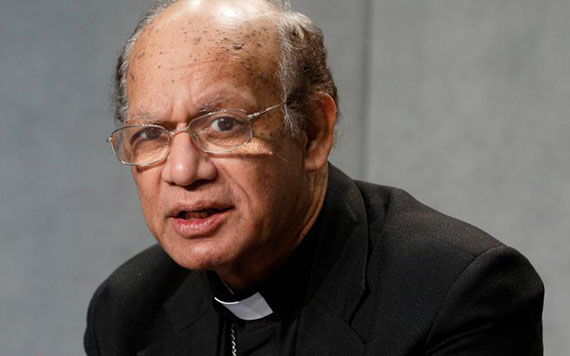
Catholic bishops are not fully utilizing Church Law to maximize the role of women in decision making capacities, Cardinal Oswald Gracias said on October 23.

While acknowledging that women are unable to hear confession, say Mass, or administer confirmation, “she can do practically everything else,” said Gracias. “Women can even be in charge of a parish according to Church Law.”

The cardinal’s remarks came during a press briefing as the Synod of Bishops on the Amazon nears its final conclusion, where the role of women in the Church has been a repeated theme as the Church considers how to better respond to the pastoral needs of the Amazon region.

“We must use all of this,” Cardinal Gracias added, noting that Pope Francis “very [much] wants decentralization,” and for bishops to enact changes where they can already do so without the permission of the Holy See.

In addition to being the archbishop of Mumbai, Cardinal Gracias serves on Pope Francis’s Council of Cardinal Advisers.

The role of women in the Church dominated much of the press conference with several of the other representatives from the Amazon speaking for the need for concrete and tangible action, while steering clear of addressing the question of women’s ordination to the diaconate, which is anticipated to be addressed in some form in the Synod’s final document.

Bishop Ricardo Ernesto Centellas Guzmán of Potosí, Bolivia, who heads the country’s bishops’ conference, also called for a change in “mind-set” when it comes to women in the Church.

“We all have to change our mentality to make sure participation of women becomes authentic and that is equitable and fair,” he said.

At present, he said the role of women who are involved in decision-making power is “very low,” adding that in some places it is “almost invisible.”

“Things must change by starting with the smaller things,” he said, noting that work in the parish level and local communities is the place to start. He specifically called out pastoral councils that only give women consultation status, without any real decision making abilities. Inculturation, said Cardinal Gracias, “flows from the Incarnation. Our Lord became incarnated.”