Populism is pushing democracy to the brink, warns new cardinal

Democracy is under threat due to the rising tide of populism, according to a new Luxembourg cardinal who is urging the church to stand against anti-democratic forces present in politics.

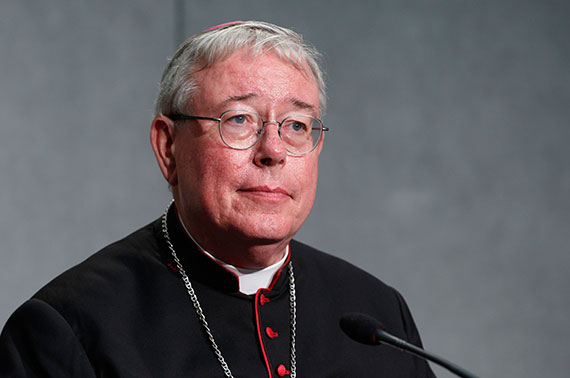
Archbishop Jean-Claude Hollerich, who made a cardinal by Pope Francis on 5th October, said the simple answers offered by populist politics will not solve complex problems and end up leaving people even more disillusioned. “The church has a very clear standpoint. We are against populism, we are in favour of human rights and we are in favour of democracy. And democracy is in danger because civilisation is changing,” he told The Tablet.

The interview is published on the day the Supreme Court ruled that the Prime Minister Boris Johnson’s suspension of parliament was unlawful, although Hollerich spoke to before the ruling was announced by Lady Hale.

Cardinal-designate Hollerich, 61, who is President of Comece (the Commission of Bishops’ Conferences of the European Union), said the pace of change caused by digitisation raises questions about how democracies can function in the future.

“Populism in that sense is very dangerous because the questions are not asked anymore,” he said. “You give a very simple answer – and simple answers are popular nowadays. It’s much more difficult to present a complex situation and find complex solutions. But people will also be disillusioned.” “If the United Kingdom is not a member of the European Union, it is still a European country, and we need to have good relations,” he explains. “So we should do everything to have the best deal, and compromises have to be found, and that is very important for me.”

Indian bishop says Church needs ‘to clean our own house’ on Dalit rights

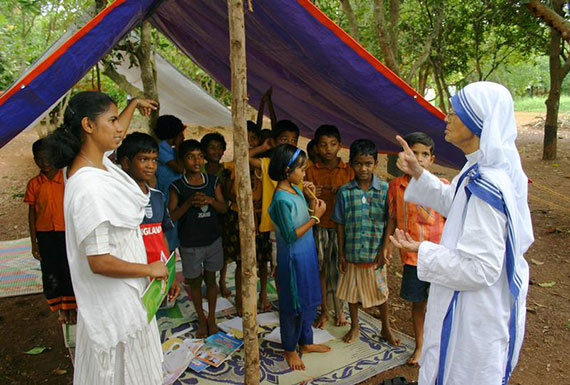
Despite guidelines supporting Dalit Christians – formerly known as “untouchable” – not every church leader is working in their defense, according to one Indian bishop.

“We still have to clean up our own house,” Bishop Sarat Chandra Nayak told Crux. “In some places, sadly, the caste system is still there, in spite of us being Christians, and Dalit Christians suffer because of it still. It’s a very scandalous image of the church, but it’s there.”

“I don’t see so much of a hardship, but a continuation of persecution that we’ve faced. But we also have to trust in our judiciary system: If someone is accused of something, you have to go to the court.

Our challenge is that even in the case of the Khandamal violence, we had to go all the way to the Supreme Court to get permission to help our own people, because the local judges wouldn’t allow us to. We had to fight it out.

That’s still happening today: We have to go all the way to the Supreme Court. This is the case of rights for Dalit Christians, that has been in the Court for over 15 years. They represent some 20 million people, who are suffering exclusion in the name of religion, but nobody seems to be taking it seriously and the government is lingering.

However, the information we have is that in the month of September there will be a hearing.

“At a bishops’ conference level, we released a series of policies on Dalit Christians, but in the end, it’s up to each bishop and each diocese to guarantee that these don’t remain as just a document. And on the bishops doing more at a local level, I believe there’s still much to be done. We still have to clean up our own house. In some places, sadly, the caste system is still there, in spite of us being Christians, and Dalit Christians suffer because of it still. It’s a very scandalous image of the Church, but it’s there.”

Over 200 cases of violence against Christians in India reported

More than 200 incidents of violence against Christians reported in India, according to data compiled by advocacy group, New Delhi-based Alliance Defending Freedom (ADF) – India.

According to ADF-India, 218 incidents in 243 days of 2019, 159 mob violence incidents and 27 incidents a month were recorded. Since the beginning of this year, the reported incidents of violence against Christians have been reported on United Christian Forum (UCF) toll-free helpline number. “Modus operandi followed in all 159 cases of mob violence are the same. A mob accompanied by the police arrives at the prayer service, shouts slogans and beats up the members of the congregation including women and children. Then the pastors are arrested or detained by the police under the false allegation of conversion,” A C Michael, development director for ADF- India, said in a press statement.

According to him, in some cases, friendly media is taken along to ensure publication of their side of story. What’s more important to notice is that till today none of these false allegations have ever been sustained in a court of law. In fact, almost all of the arrested pastors have either been released on bail or acquitted as the police or the unruly crowd has failed to provide evidence of forceful conversions.

“It will not be exaggeration if it is stated that many Christians are experiencing restrictions of their freedom to practice their faith in one way or the other in a large part of India’s territory that is 23 states out of 28 states of India,” he said.

Uttar Pradesh leads the chart with 51 incidents followed by 41 in Tamil Nadu, 24 in Chhattisgarh, 17 in Jharkhand, 16 in Karnataka, 14 in Telangana, 12 in Andhra Pradesh, 9 in Maharashtra, 6 in Haryana, 5 in Bihar, 4 in Delhi, 3 in Odisha, 2 each in Himachal Pradesh,

Dream new South Asia of cooperation, harmony: Pattery

The head of the Jesuits in South Asia has called for a new South Asian Association of Regional Corporation that encourages greater economic exchanges and more socio-political harmony.

South Asia like rest of the world currently witnesses “an upsurge of the right-wing, with a lethal combination of nationalism and religion, the ongoing weakening of democratic processes and the apathy of the youth for social concerns,” says Father George Pattery, president of the Jesuit Conference of South Asia.

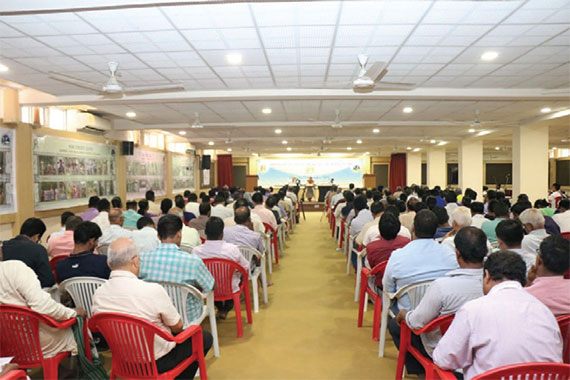
He was addressing the opening session of a two-day program to celebrate the 50 years of Jesuit commitment to social justice and reconciliation. Around 220 Jesuit social activists and their collaborators are attending the September 26-27 program at Navjeevan Renewal Center in Old Delhi.

The Jesuits in Social Action and the Vidyajyoti College of Theology, joint organizers of the program, terms it as convention to “walk with the poor, the outcastes of the world, those whose dignity has been violated, in a mission of reconciliation and justice.”

“Across the world there is an upsurge of the right-wing, with a lethal combination of nationalism and religion, the ongoing weakening of democratic processes and the apathy of the youth for social concerns. “And the young man went away sad because he was a man of riches’- the world seems to have been numbed into sadness of the plenty of the rich!”

South Asia is no exception. Majoritarian religious nationalism, the near-total compliance of the media to the desires of the ruling Govt, the populist methods over-ridding true democratic processes and the mob rule with the silent condoning by the Govts mark our situation today. While Sri Lanka is struggling with the terrorist threats, Bangladesh and Pakistan are on thin democratic threads, Afghanistan remain uncertain about its future. We, Jesuits of South Asia have to begin to dream of a South Asia, cradle of many religions and cultures, to grow into a credible socio-political entity to bring in fresh thinking. As Fr Arthuro Sosa said to us: “I want South Asian Jesuits to be players in international relations and peace initiative in S. Asia.” Fr George Pattery said.