158 anti-Christian incidents in six months: Christian Forum

The first six months of 2019 witnessed 158 incidents of violence against Christians in 23 states of India, says United Christian Forum, based on the records of its helpline.

Among the 158 incidents recorded, 130 relate to attacks or intimidation and threats by violent mobs that beat up faithful assembled peacefully in church or house-church for prayer service.

Freedom of Religion or Belief is severely curtailed in 23 of India’s 29 states.

This means that “practicing one’s faith is becoming dangerous to life in over 90 percent of the Indian territory,” bemoans the forum.
All the incidents were recorded at the UCF Helpline Number 1800-208-4545.

“Mob violence has become a norm in the country with no political party taking strong position against such acts of violence,” regrets a UCF press release.

Another disturbing trend is the refusal of police to file First Information Record against violence perpetrators. “Only 24 incidents out of 158 have FIRs registered against them,” the press release says.

It also notes that the police inaction was noted in 11 states are “under the rule of so-called secular parties” as against 12 states under the rule of the pro-Hindu National Democratic Alliance.

List of states where violence against Christians are reported are: Andhra Pradesh, Bihar, Chhattisgarh, Delhi, Goa, Gujarat, Haryana, Himachal Pradesh, Jammu and Kashmir, Jharkhand, Karnataka, Kerala, Madhya Pradesh, Maharashtra, Odisha, Puducherry, Punjab, Rajasthan, Tamil Nadu, Telangana, Tripura, Uttar Pradesh and West Bengal.

Uttar Pradesh continues to witness highest number of incidents with 32 incidents of violence reported against Christians followed by 31 incidents in Tamil Nadu, the press release says.

In the recorded 158 incidents, 110 women and 89 children injured. “Sadly, these incidents have become so common nobody has time to condemn them including political, civil society and religious leaders. There are just about couple of publications which gave unbiased report,” the forum bemoans. (See Focus)

Education policy: Church wants to be consulted

Catholic bishops have proposed a series of changes in a draft education policy prepared by the Indian government, criticizing its silence on the rights and contributions of Christians.

The government of Prime Minister Narendra Modi, led by the pro-Hindu Bharatiya Janata Party (BJP), drafted the National Education Policy (NEP 2019) in its attempt to revise and modernize the country’s education system and invited public responses to it.

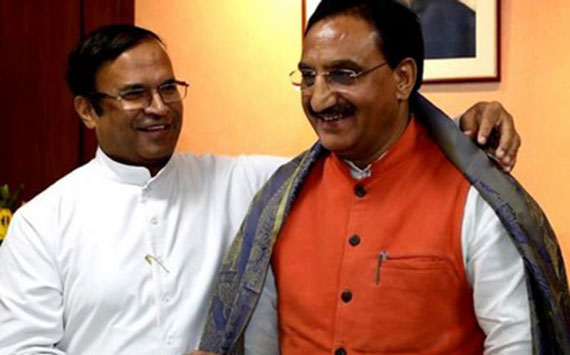
The Indian bishops’ Office for Education submitted a 28-page proposal on July 25, when a six-member delegation met with Human Resource Development Minister Ramesh Pokhriyal Nishank at his office in New Delhi. Education comes under Nishank’s portfolio.

Father Joseph Manipadam, secretary of the bishops’ education office, told ucanews.com the draft policy failed to address basic issues of education such as lack of teachers and lack of basic facilities such as drinking water, basic hygiene and clean toilets.

Government asked to invite Pope to India

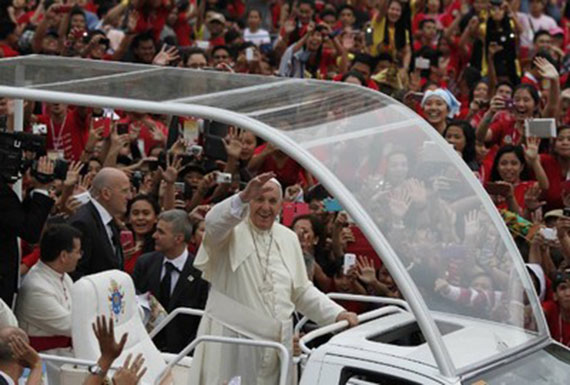
The Indian government should invite Pope Francis to come to the populous nation as vast numbers of people were anxiously hoping for such a visit, according to an Opposition Congress Party Member of Parliament.

Kodikunnil Suresh told the lower house that a papal visit would enhance the nation’s reputation for honouring individuals who enhance communal tolerance and understanding.

It was not just Catholics, but rather a broad cross-section of Indians who wished to see Pope Francis visit, argued the parliamentarian from the nation’s south. Suresh, himself a Hindu, added that the presence of the leader of the Catholic Church would encourage acts of mercy and charity as well as the elimination of social evils.

No Pope has visited India since Pope St John Paul II in November 1999.

However, Suresh told ucanews.com that Francis, since his election as Pope in 2013, had on several occasions expressed a personal desire to come.

And Catholic Church leaders in India during the past six years have publicly appealed to the government to issue an official papal invitation. In March last year, Indian Cardinal Oswald Gracias directly asked Prime Minister Narendra Modi to do so.

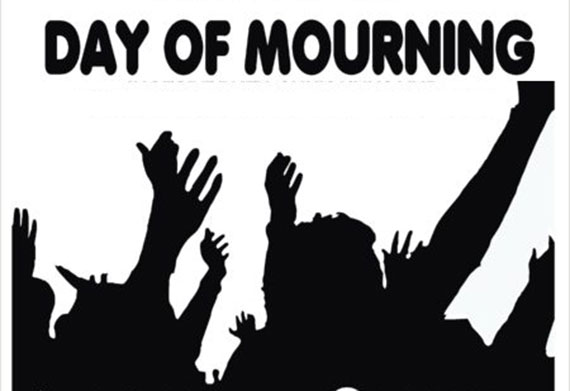
Indian Church to observe August 10 as ‘Day of Mourning’

The Church in India will observe August 10 as a “Day of Mourning” for Christians and Muslims of Dalit origin.

“Throughout India, August 10 is being observed as ‘Day of Mourning’ in all the churches. Rallies, demonstrations and candle vigils are conducted and specials prayers are offered in the churches,” says a press release from the Office of Scheduled Castes and Backward Classes under the Catholic Bishops’ Conference of India.

In the national capital, the office will collaborate with the National Council of Churches (NCCI) and National Council of Dalit Christians (NCDC) to hold a special program at Jantar Mantar near the Parliament building, a venue marked for public protest.

The program will begin at 10 pm and last for two hours, according to a press release from the Catholic bishops’ conference.

NCCI is the national body of Protestant and Orthodox Churches and their associations and centres in India.

“We request your presence for the Day of Mourning observance… and support the marginalized minorities,” says the press release.

The Constitution (Scheduled Caste) order 1950 was signed on August 10, 1950, by then President of India that says that “No person who professes a religion other than Hinduism shall be deemed to be a member of the Scheduled Caste.”

Church pays tribute to Indian politician who loved Christians

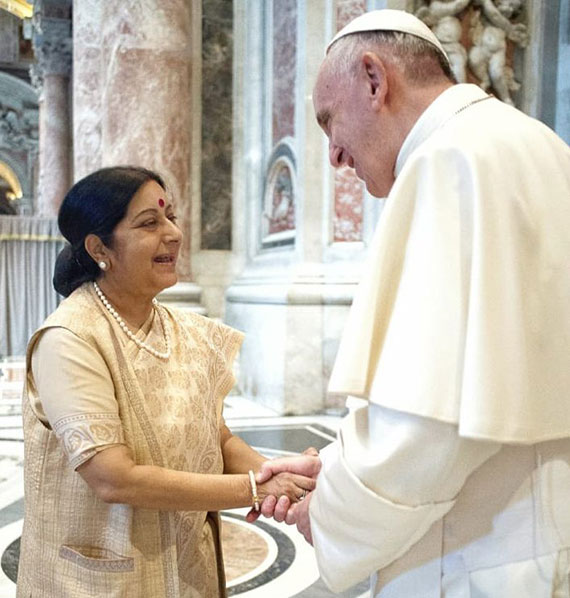
Church leaders have expressed their condolences following the death of Sushma Swaraj, India’s former external affairs minister, recalling her role in securing freedom for two abducted Catholic priests.

Swaraj, a prominent member of the pro – Hindu Bharatiya Janata Party (BJP), died on August 6 following a heart attack. She was 67.

“She brought a human touch to all decisions of the ministry. As foreign minister, she was our best ambassador and projected a great image of the country in international circles,” said Cardinal Oswald Gracias, president of the Indian bishops’ conference.

Swaraj headed the foreign ministry during the first term (May 2014 to May 2019) of Prime Minister Narendra Modi. An acute diabetic, she underwent a kidney transplant in 2016. She later moved away from active politics and was not part of the cabinet.

The untimely death of BJP leader and former external affairs minister Sushma Swaraj has saddened Salesian Father Tom Uzhunnalil, who freed 18 months after his abduction by suspected Islamic militants in strife-torn Yemen in 2016.

Recalling Swaraj’s role as external affairs minister in securing his freedom, Father Uzhu-nnalil said he prayed for the 67-year-old leader, who “was like a sister” to him.

“I feel so sad about the demise of such a beloved and pleasant personality. Of course, I prayed at once for her soul and then prayed for her near and dear ones,” the Indian Express quoted Father Uzhunnalil saying as saying.

The priest was abducted in Herat province in western Afghanistan by unidentified gunmen on June 2, 2014. He was released on Feb. 22, 2015.

4 cops sacked for raiding Jalandhar priest’s house

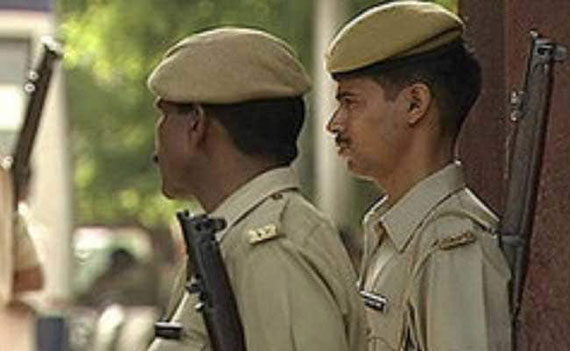
Three Assistant Sub-Inspectors of Police are among four Punjab policemen dismissed from service, over four months after they raided a priest’s house in Jalandhar without approval, a senior official said.

Senior police official of Patiala Mandeep Singh Sidhu on August 10 dismissed the four policemen, who are currently lodged in the Patiala Central Jail.

The four were part of a police party that raided the priest’s house in Jalandhar without any approval in April this year.

He said the policemen were dismissed following departmental inquiries.

Sidhu said the dismissed policemen include ASIs Joginder Singh, Rajpreet Singh, Dilbagh Singh and Head Constable Amrik Singh.

The Khanna police had in March initially claimed to have recovered 96.6 million rupees from six men including a church priest.

However, the priest had taken up the issue with the police and the Income Tax Department and sought that the entire 166.5 million rupees “seized” money be released forthwith.

The priest had claimed that the money was part of the business proceeds and accused the police of allegedly misappropriating some amount from the money they had seized from the premises.

The Patiala Police had held a depart-mental probe into the alleged role of ASIs Joginder Singh and Rajpreet Singh, whose statements helped the investigating team recover 46 million rupees. Two ASIs of the Khanna Police were arrested for allegedly pocketing 58 million rupees from the seized amount. A sum of 46 million rupees had been recovered from them so far.

Top UK church leader to push for Article 25 on India visit

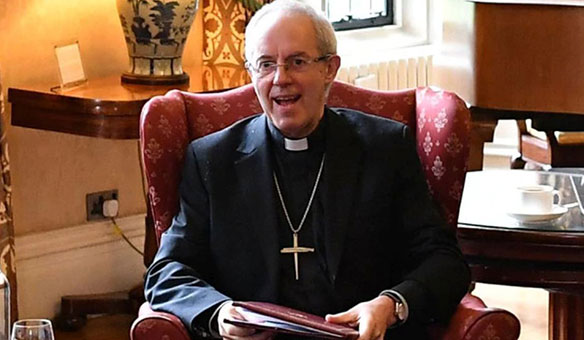
Justin Welby, the archbishop of Canterbury and a leading figure in the British establishment, will seek to encourage Indian leaders to affirm and implement Article 25 of the Constitution that guarantees freedom of religion during his forthcoming 10-day visit to the country.

Visiting at the invitation of the United Churches of North and South India, Welby, 63, will be accompanied by his wife and will travel to in Kottayam, Bengaluru, Hyderabad, Medak, Jabalpur, Kolkata and Amritsar from August 31 to September 10.

Church of England leaders said he will travel to India from Sri Lanka, where he will express “solidarity” with Christians who were targeted in a series of bombings during Easter, which killed over 250 people.

Welby’s visit comes in the backdrop of a report earlier this month by the bishop of Truro commissioned by the Foreign and Commonwealth Office that listed alleged attacks against Christians in India.

Bishop joins Tamil parties to condemn Kashmir move

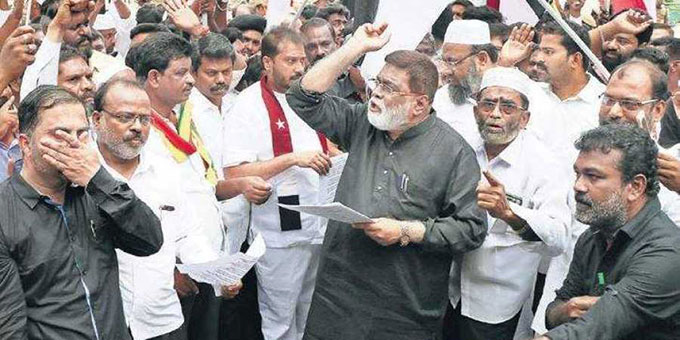
Bishop Ezra Sargunam of the Evangelical Church of India was among hundreds who joined various political parties in Tamil Nadu to protest the federal government repealing Article 370 of the Constitution that gave special status to Jammu And Kashmir State. They on August 7 tried to march towards Raj Bhavan, the residence of the governor, to express their displeasure.

Around 300 cadre and leaders of various political parties including Thamimun Ansari, legislator and general secretary of Manithaneya Jananayaka Katchi; Suba Veerapandiyan of Dravida Iyakka Tamilar Peravai, gathered at the Little Mount and moved towards Raj Bhavan. They were stopped by the police on the way, taken to a community hall located nearby and detained, newindianexpress.com reported.

Dismissing justice — the case of Sisters Lucy and Lissy

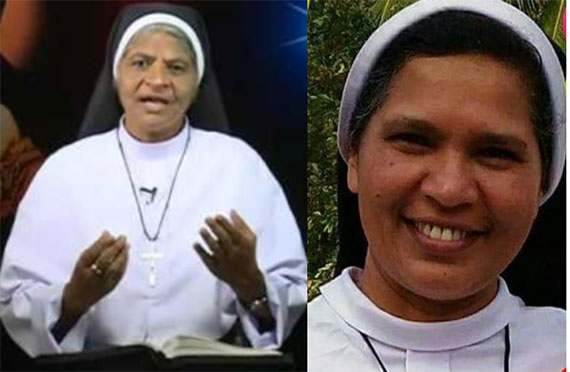
Until August 2018, Sisters Lucy Kalapura and Lissy Vadakkel had very little in common except that they belonged to the same congregation and had somewhat similar names. But today they are perceived as partners in crime.

Sister Lucy became a target for disciplinary action after she joined the historic public protest for Mulakkal’s arrest, as she felt it her Christian duty to support a nun who was fighting a case of sexual abuse and rape – A nun who has got no support from those in positions of power within the Church hierarchy.

Sister Lucy’s articulation and method of engaging with her passion of working with people were constantly criticized for being out of step of the accepted congregational way of life of the Franciscan Clarist Congregation.

In Sister Lissy case, it was dramatically different – she had been a star of her congregation and of Church authorities because of her very powerful preaching skills. She was booked for retreats and meetings for months together.

Jesuit’s book highlights “resilient culture” of Bihar’s “noble people”

A Jesuit’s book on Bihar’s Musahars will help sensitize society about one of the most deprived communities who live in abject poverty, hunger and deprivation, says a noted educationist.

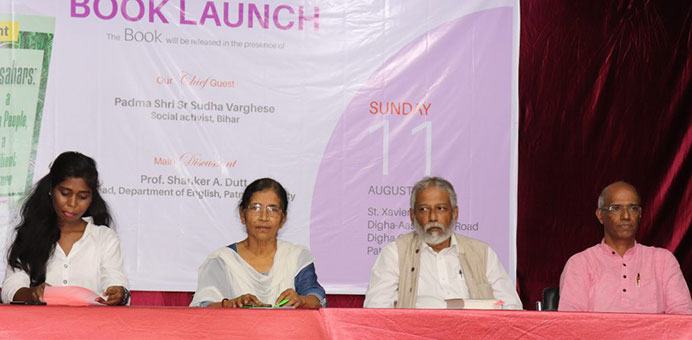
The word “Musahar” (literally rat eater) is derogatory and not associated with profession or food habit, asserted Shanker Ashish Dutt, head of the Department of English in Patna University. He was speaking on August 11 at the release of “Musahars: a noble People, a resilient Culture,’ written by Jesuit Father T Nishaant, principal of St Xavier’s College and St Xavier’s College of Management and Technology, Patna.

Dutt and other speakers, including eminent social worker Padmashri Sister Sudha Varghese, called for change in the nomenclature of Musahar people, who fall under the ‘Mahadalit community’ or the most marginalized of the lot. People of the Musahar community eat meat of not only rats but of many other animals, Dutt pointed out, adding that they are also involved in digging of soil, apart from being working as watchmen.

Father Nishaant’s book, the university professor added, would “go a long way to sensitize people about one of the most deprived communities living in abject poverty, hunger and deprivation, in the social landscape.”

Sister Varghese agreed with Dutt while addressing the gathering as the chief guest. The term Musahar was “outdated” as the community members are no more rat eaters. People of other castes also ate rats, pointed out the Notre Dame nun who has worked with the Musahar community for more than 30 years.

Congratulating the author for the book, Sister Varghese said the Musahar community had been fighting for water, land, food for years. “Even today people of the community were fighting for survival,” she added.