Patna archbishop urges students to imbibe Ignatian spirituality

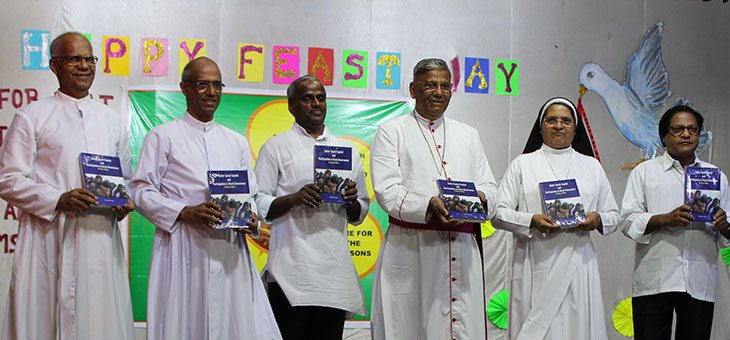
Archbishop William D’Souza of Patna on July 31 urged students of a Jesuit college to imbibe right moral values as they strive to become achievers in life.

“All of us want to succeed in life. We want to be achievers. But the success does not come with wealth or by climbing the career ladder. It rests on certain values and principles,” said the Jesuit prelate, who was the chief guest at a function organized by St Xavier’s College of Management and Technology in Patna, to celebrate the feast of St Ignatius of Loyola, who founded of the Society of Jesus in 1554.

As Hong Kong tensions intensify, Catholics call for cool heads

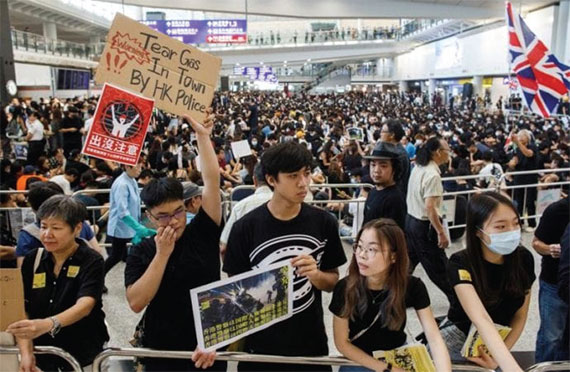
More than 1,000 Catholics prayed during a candlelight vigil for Hong Kong to solve its political crisis in a peaceful, nonviolent manner. Organizers of the Aug. 8 vigil said they hoped the faithful can remain solely a prayer movement so that tensions ease in the weeks long series of mass demonstrations by Hong Kong citizens opposing a controversial extradition law.

A crowd estimated at 1,200 demanded a full withdrawal of the extradition amendment proposed by chief executive Carrie Lam; the establishment of an independent committee to investigate the conflict between protesters and police; and accountability by the Hong Kong Legislative Council and chief executive.

They gathered in front of the Cathedral of the Immaculate Conception and marched through the central business district to the Court of Final Appeal of the Hong Kong, singing hymns and holding electronic candles.

The vigil was organized by the Justice and Peace Commission of Hong Kong Diocese, Hong Kong Federation of Catholic Students, Diocesan Youth Commission and St Benedict Parish’s social concerns group.

Hong Kong Auxiliary Bishop Joseph Ha Chishing addressed the gathering, saying the situation called for the Catholic Church to speak with peace and reason. “In the past two months, we have really experienced the limit of humanity and we should pray,” he said.

“Violence will only create more violence. Hatred will only produce more hatred. Injustice will never achieve justice. History will prove that only peace and reason can establish a long-term peace,” he said.

The bishop pointed out that the root cause of the demonstrations lay with the Hong Kong government, which, he said, had no excuse for its actions.

Church media in Philippines meet to fight ‘fake news’

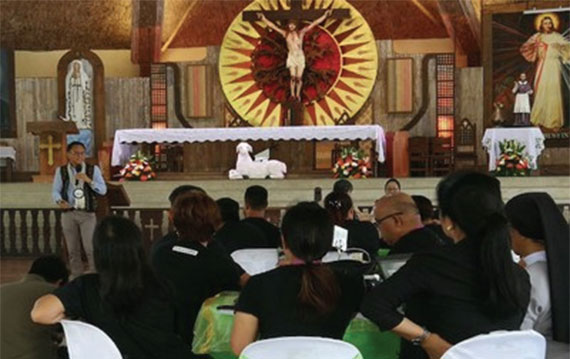
Catholic media workers from across the Philippines met in Batangas province to discuss strategies to spread church teachings and how to counter the spread of “fake news” especially among the youth.

Archbishop Gilbert Garcera of Lipa, host of this year’s National Catholic Media Convention, reminded participants about the importance of “renewal for truth” when working in the media.

“Fake news and attacks are out in the open, but we gather to renew ourselves like the transfiguration of Jesus,” the prelate said during the first day of the four-day gathering on August 6.

He also reminded the mostly young participants to think and reflect about the issues that they will post on social media as he stressed the importance of prayer in their work.

Archbishop Garcera said the Church’s social communications ministry needed to renew its commitment to truth especially with the challenges brought about by “fake news.”

Inter-religious leaders in Pakistan urge protections for religious minorities

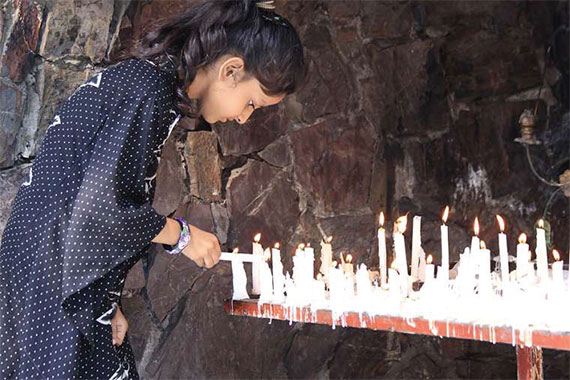
Catholic and other religious leaders signed a joint resolution on August 8 encouraging the Pakistani government to adopt policies to protect religious minorities.

The leaders held a press conference in Karachi on August 8 organized by Aid to the Church in Need – Italy and by local advocate Tabassum Yousaf.

In attendance were Fr Saleh Diego, vicar general of the Arch-diocese of Karachi, who represented Cardinal Joseph Coutts. Representatives of the country’s Muslim, Hindu, Sikh, and Baha’i communities  were also present and signed the resolution.

The joint resolution, sent to Prime Minister Imran Khan and obtained by CNA, includes 10 recommendations meant to safe-guard the rights of minorities and women.

Pakistan’s State religion is Islam, and around 97% of the population is Muslim.

The country’s authorities have consistently failed to implement safeguards on behalf of religious minorities, despite numerous policies in favour of economic and physical protections for members of non-Muslim religions.

Macau to host new seminary for Asian evangelization

A new seminary to train priests for all of Asia will open in the Chinese territory of Macau in September.

The Congregation for the Evangelization of Peoples has entrusted management of the Redemptorist Mater College for Evangelization in Asia to the Neo-catechumenal Way, uca-news.com reported.

The seminary was established by a decree signed on June 29 by Cardinal Fernando Filoni, congregation prefect, after an audience with Pope Francis.

Filoni told Agenzia Fides, information service of the Pontifical Mission Societies, the college is “the fruit of apostolic creativity that looks to evangelization in that continent and expresses a will of decentralization of the congregation.”

The Neocatechumenal Way has long-standing experience of forming priests for the mission in Asia, he said.

The new college’s “specific nature is to take care of the formation for missionary priests who will have the evangelization in the territories of Asia at heart,” he continued.

On anniversary, Japan’s bishops renew hope for nuclear-free world

With the anniversary of the atomic bombing of Hiroshima and Nagasaki in August 1945, the bishops of Japan are renewing calls and prayers to build peace by abolishing nuclear weapons worldwide and promoting integral human development. They also expressed hope that Pope Francis’ visit in November and his expected calls for peace will strengthen people’s desire and boost efforts to bring about a nuclear weapon-free world.

The first atomic bomb used in warfare was dropped by the United States on Hiroshima on August 6, 1945, killing more than 100,000 people. On August 9 another atomic bomb was dropped on Nagasaki, killing about 74,000 people. Japan surrendered on August 15. St John Paul II visited both cities during a February 1981 trip and appealed for peace, calling for the elimination of nuclear weapons around the world.

“Let us work hard for peace through justice; let us make a solemn decision now that war no longer be tolerated and seen as a means to resolve disagreements; let us promise with our counterparts that we will tirelessly strive for disarmament and the abolition of all nuclear arms, let us replace violence and hatred with trust and care,” he said, addressing world leaders.

Throughout that speech at the Hiroshima Peace Memorial Park, St John Paul repeated that “to remember the past is to work for the future,” which inspired Japan’s bishops to observe Ten Days of Prayer for Peace from August 6 to 15 every year.

Abp Joseph Mitsuaki Takami of Nagasaki, president of the Catholic Bishops’ Conference of Japan, said in a message for the days of prayer that guaranteeing peace and security in the world required “not only to eliminate the nuclear threat by abolishing nuclear weapons, but at the same time to make all people richer in all aspects” through integral human development.

Catholics appeal to Bangladesh PM to help return ‘seized land’

Ethnic indigenous Catholics joined by priests, nuns, Muslims and Buddhists, have staged a protest rally and submitted a memorandum to Prime Minister Sheikh Hasina to get back land allegedly grabbed by a Buddhist monk in southeast Bangladesh. About 200 people, mostly Catholics from ethnic Tripura and Marma communities, staged a human chain program in front of the Press Club in the Bandarban district of the Chittagong Hill Tracts (CHT) on July 31.

Surrogacy in any form morally unacceptable: Catholic scientist

A bill banning commercial surrogacy was introduced in the upper house of Indian parliament on August 5 after gaining the approval of the lower house. The Surrogacy (Regulation) Bill, 2019 allows “ethical altruistic surrogacy” to the intending infertile Indian married couple, between the age of 23 and 50 years for the female and 26 and 55 years for the male. The Bill says the surrogate mother must be a relative of the couple seeking surrogacy who offers her womb for altruistic motives without any compensation except for medical expenses and her insurance coverage.