Hagia Sophia might be reverted to a mosque, Erdoðan says

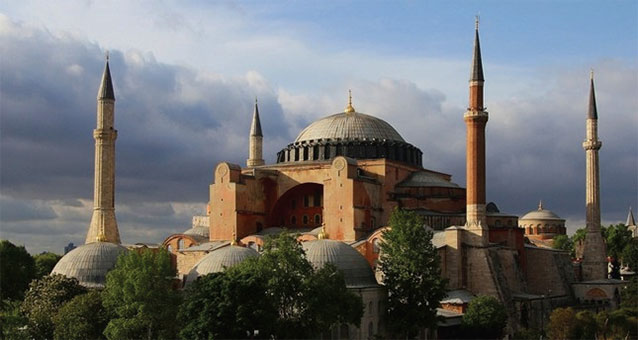
President Recep Tayyip Erdodan on March 24 voiced the possibility of reverting the Hagia Sophia, which has been used as a museum since 1935 and is considered one of the world’s wonders, to a mosque.

“This is not unlikely. We might even change its name to Ayasofya Mosque,” Erdodan said during a live interview with Turkish broadcaster TGRT.

“This is not a strange proposal,” he said regarding the calls to convert the historical building to serve the purpose it did for half a millennium.

“As you know, the mosque was converted to a museum in 1935, as a reflection of the (Republican People’s Party) CHP mentality. We may as well take a step and change that,” he concluded, pointing to the harshly secularist policies of the 1930s CHP, which is the main opposition today.

The Hagia Sophia was built in the sixth century during the Christian Byzantine Empire and served as the seat of the Greek Orthodox Church. It was converted into an imperial mosque with the Ottoman conquest of Istanbul in 1453. The structure was converted into a museum during the strictly secular single-party rule in 1935, but there have been discussions around converting it back to a mosque, with public demands to restore it as a place of worship gaining traction on social media.

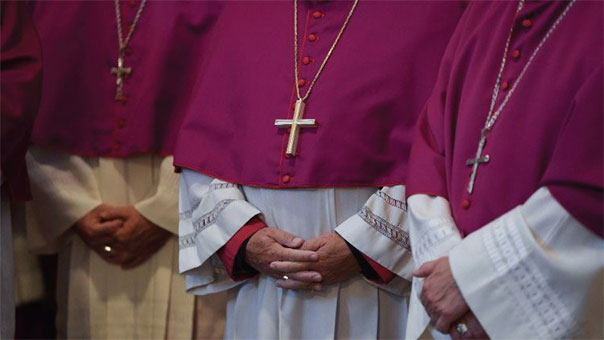
French, German and Swiss Bishops discuss future of Europe

Two months ahead of the European elections and amidst the many difficulties faced by the European project, bishops from France, Germany and Switzerland meet for a seminar in Paris to discuss the “European Common Good.” A seminar, entitled “Dialogue on the European Common Good,” jointly organised by the French, German and Swiss episcopal conferences, took place in Paris from 25 to 26 March. It was presided over by the three presidents of the Bishops’ Conferences: Archbishop of Marseille, Georges Pontier, Archbishop of Munich, Cardinal Reinhard Marx and Bishop of Bâle, Félix Gmür.

On the day of the opening of the seminar, the French Bishops’ Conference released a letter encouraging all Christians and citizens in France to vote in the upcoming European elections.

Catholics urged to support Middle East Christians on Good Friday

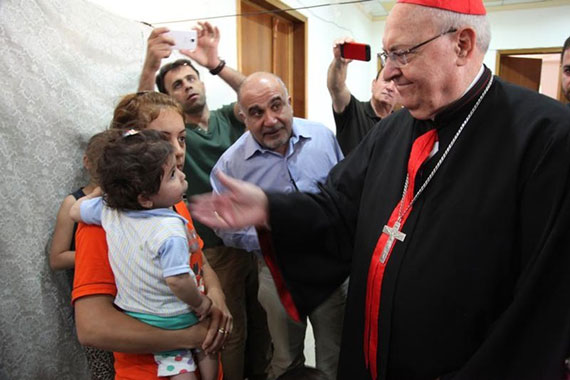
Iraqis and Syrians returning to their homelands and refugees living abroad need the help of all Catholics and people of goodwill, said the Congregation for Eastern Churches.

“Greater cooperation and a generous commitment by Christians all over the world to their brothers and sisters of the Holy Land and the Middle East is needed,” it said in its annual appeal, which the Vatican press office published on March 28.

In a letter sent to bishops around the world, Cardinal Leonardo Sandri, congregation prefect, asked for continued support for the traditional Good Friday collection for the Holy Land.

The collection, taken up at the request of the Pope, is administered by the Franciscan Custody of the Holy Land — an administratively autonomous province of the Franciscan order — and the Congregation for Eastern Churches. The congregation monitors how all funds are used and supports projects in the Holy Land, Cyprus, Syria, Lebanon, Egypt, Ethiopia, Eritrea, Turkey, Iran and Iraq.

The Franciscan Custody is responsible for most of the shrines connected with the life of Jesus as well as for providing pastoral care to the region’s Catholics, running schools, operating charitable institutions and training future priests and religious.

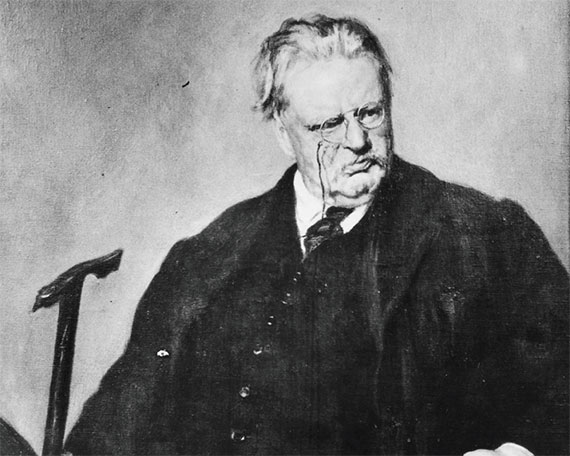
In divisive times, Chesterton inspires unity

At a time when Catholics seem to be split between conservative or progressive factions, the life and works of English writer G.K. Chesterton can inspire men and women in the church to rise above conflict, according to U.S. scholar Dale Ahlquist.

“People on the left and right both find things to connect to Chesterton,” Ahlquist told Catholic News Service on March 22.

“Chesterton is a unifier. I think he did see the potential for the schism that is going on right now, the great division between people. But it’s just a general splitting of society because we’ve lost our roots.” Ahlquist’s latest book, titled “Knight of the Holy Ghost,” is designed to introduce people to Chesterton, who lived from 1874 to 1936.

“There are some excellent biographies out there that are very good. But sometimes, Chesterton can get lost in the details and I wanted to bring out the highlights, some of the most important features of his life so that he stands out,” he said.

Ahlquist, who serves as president of the Society of Gilbert Keith Chesterton, a Catholic lay apostolate inspired by the early 20th century writer, also makes the case for Chester-ton’s sainthood cause.

In 2013, Bishop Peter Doyle of Northampton, England, appointed Father John Udris, a priest of the diocese, to conduct an investigation into Chester-ton’s life and writings. The report, Ahlquist told CNS, has been completed and “recommends that the cause be opened.”

Now it is up to the bishop to request Vatican permission to open the cause.

In his book, Ahlquist dispels misunderstandings or falsehoods that some have cited as obstacles to Chesterton’s canonization, including the misconception that he was “rapidly anti-Semitic.”

“It’s one of those things that the more it gets repeated, the more it is believed,” said Ahlquist.

“No, it’s not that wine and beer are evil things, they can just be abused like any good thing,” said Ahlquist. “He called puritanism the ‘righteous indignation about the wrong things.’”

Theologian Gutierrez supports declaring Saint Romero ‘doctor of the church’

One of the founders of liberation theology in Latin America said he supports an effort to declare St Oscar Romero a doctor of the Catholic Church.

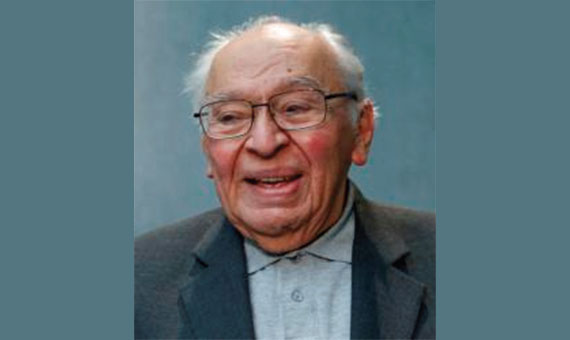
During a March 18 livestream of an event celebrating the Salvadoran saint canonized in October, Dominican Father Gustavo Gutierrez, considered by many as the father of liberation theology, said he thought the idea of naming St Romero a doctor of the church was an “excellent” proposition.

While some value a person’s writings or academic record, when it comes to declaring a saint a doctor of the church, “love toward another person is worth more than all of the theologies,” said Father Gutierrez, recalling something he’d read from another theologian. He was speaking via internet to those gathered for “Romero Days,” an event sponsored by the University of Notre Dame.

St Romero’s feast day is on March 24.

Saints who are declared doctors of the church “are probably best thought of as doctors in the Ph.D. sense of the word,” said Father Larry Rice, explaining the term in 2015 on the website of the U.S. Conference of Catholic Bishops.

Saint Romero was a prolific writer and much can be gleaned from his works, explained Father Gutierrez, who said he encountered the Salvadoran saint in the early 1970s. But contrary to the belief that many promulgated that Saint Romero himself was a follower of liberation theology and its embrace of the “preferential option for the poor,” there isn’t much to support that, said Father Gutierrez.

Catholic diocese in Colombia has served 1 million meals to Venezuelan migrants

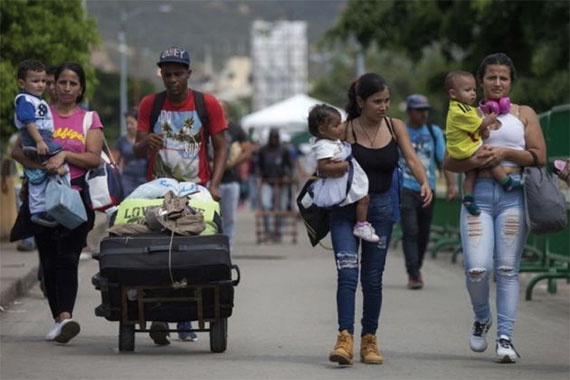
The Catholic Diocese of Cúcuta in Colombia says it has provided one million meals to Venezuelan migrants affected by the humanitarian crisis in their country. The diocese on March 18 thanked the volunteers and donors who since June 5, 2017, have provided support to those affected by the emergency at the Colombian-Venezuelan border, Catholic News Agency reported.

“As the Holy Father Francis has well reminded us, the Church is like a field hospital where wounded people come, seeking the goodness and closeness of God,” Bishop Víctor Manuel Ochoa Cadavid said.

Venezuela has the largest proven oil reserves in the world and is not engulfed in conflict, The New Humanitarian reported on March 19.

Yet its people have been fleeing on a scale and at a rate comparable in recent memory only to South Sudanese or Syrians at the height of their civil wars and the Rohingya from Myanmar, said the crisis journalism portal.

Since Nicolas Maduro succeeded Hugo Chávez as president of Venezuela in 2013, the country has been marred by violence and social upheaval, CNA reported.

Under the government, which says it is socialist, hyperinflation and severe shortages of food, medicine, and other necessities, have afflicted the country and millions of Venezuelans have emigrated.

France: Card. Barbarin (Lyon), “Not reporting the facts might have been a mistake; if I am convicted, it is fine”

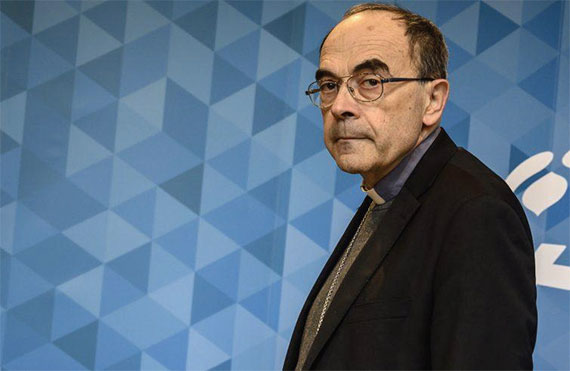
“I knew absolutely nothing about the world of courts and justice. What is beautiful and powerful about the French justice system is that the picture is clear and you have to listen to others,” in this specific case to the victims, although “I had already met with dozens of them, as well as with their relatives and children.” In an interview with KTO, Cardinal Philippe Barbarin, Archbishop of Lyon, referred back to the trial. “For my part, I was grilled for three hours and I answered all the questions about what I had done in a clear and transparent way.” The goal was “not to say that I did well, but what I did and why.” As for the decision to appeal the sentence, he explained: “I have this right in France,” I follow the advice of lawyers and prosecutors, “and even the Pope agrees.” The cardinal, who still maintains his innocence, reiterated: “I explained what I did, how I did it and why I did it. I am not saying that I did well. I acknowledge that I have made mistakes, but not those I am accused of.” He recalled that when he met with one of the victims in November 2014, who “told me about his sadness for not having reported the facts, I proposed to look into whether there were more young victims, something that this person did.” But none of the two had thought that it was up to the cardinal to report the facts and “the prosecutor in the first instance acknowledged that the victim was in a position to do it.” And he added: “Not reporting the facts myself might have been a mistake, and if I am convicted, it is fine.”

Maltese Catholics Criticize Archbishop Scicluna’s Leadership on ‘LGBT’ Issues

A priest representing Pope Francis’ point man on sexual abuse in the Church, Maltese Archbishop Charles Scicluna, spoke approvingly of homosexuality as created by God and “part of his plan” to a talk show audience. Appearing on March 8th, on the show, called Xarabank, Father Kevin Schembri, who teaches Canon Law at the University of Malta, also told the show’s host, Peppi Azzopardi, that God created people with “different sexual orientations,” and that being homosexual “cannot be something bad, because he created it.”

According to an English translation of his interview transcript provided to the Register, Father Schembri, who is the archdiocesan defender of the bond, went on to say that if a person recognizes he is “a gay person as created by God, he does not need to change,” and he would actually be “harming himself” if he did not accept himself “as a gay person.”

He also said a sincere “relationship of love” between homo-sexuals is as “good” as a relationship of “love between heterosexual couples.” “Where love is, there is God,” said Father Schembri, who is known for his ministry to same-sex attracted Catholics, adding that homosexual love is simply a “variant” created by God. In the TV interview, he also rejected reparative, or conversion, therapy, and said Archbishop Scicluna had also spoken against it. The archbishop spoke publicly against reparative therapy in 2015 and 2016.

Father Schembri’s comments caused considerable anger and frustration among Maltese faithful and clergy who contacted the Register to express their concern. Sources told the Register that the archdiocese has been “inundated” with complaints.

Catholic Church is an ‘integral part of China’

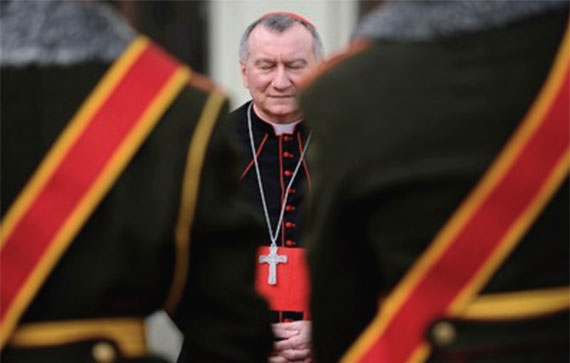
The Catholic Church in China is a fundamental part of Chinese history and can play a leading role in promoting the common good of all its citizens, says Cardinal Pietro Parolin, Vatican secretary of state.

“The Catholic Church in China is not a ‘foreigner’ but an integral and active part of Chinese history and can contribute to the edification of a society that is more harmonious and respectful of all,” the cardinal wrote in the preface of the soon to be launched “The Church in China: A New Departure.”

The book edited by Father Antonio Spadaro, SJ, editor of La Civiltà Cattolica comes at a particular moment in the history of relations between the Apostolic See and China, following the signing of the provisional agreement on the nomination of bishops that took place in Beijing last September.

The volume emerges from the “China Forum for Civilizational Dialogue,” a collaboration bet-ween the journal, La Civiltà Cattolica, and Georgetown University. It gathers various studies that have appeared over the last two years in La Civilità Cattolica.

Trafficking in women from Myanmar: young brides held captive in China

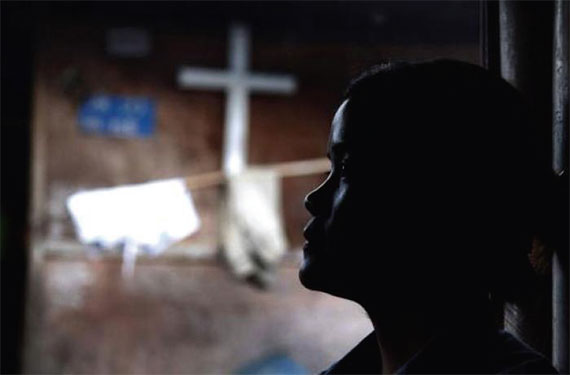
Chinese and Myanmar authorities are failing to stop the brutal trafficking of young women, often teenagers, for sexual slavery from conflict-ridden Kachin, a state in northern Myanmar, this according to a report by New York-based Human Rights Watch.

Released on March 22, the report notes that women are often tricked into travelling to China in search of work or kidnapped and held against their will to be sold as “brides” to Chinese men. Most of those taken hostage by Chinese families are locked up and raped, it says. Those who do escape are often obliged to leave children fathered by their tor-mentors.

As a direct result of its one-child policy, China finds itself with 34 million more men than women. This fuels women-trafficking from neighbouring countries, where poverty and social discrimination make women more vulnerable. Myanmar, Cambodia and Laos are especially affected by the problem.

More than 120,000 people have been displaced by armed clashes between government forces and rebel groups in Kachin and in the northern part of Shan State – conflicts that started up again in 2011. In Kachin alone there are more than 100 refugee camps.