Two hundred families in Karachi flee after three young Christian women are accused of blasphemy out of revenge

Charges of desecrating the pages of the Qurân saw three young Christian women, including two minors, placed under arrest. It was later discovered that none of the charges were true, but by then the news had spread across their Karachi neighbourhood, provoking a violent reaction by local Islamic radicals who forced some 200 Christian families living in the area to abandon their homes to save themselves.

In Pakistan the accusation of blasphe-my-even without evidence-triggers action by Muslim extremists. Thankfully, Christian clerics were able this time to intervene quickly and mediate the affair, which ended peace-fully. One of the clerics, Fr Saleh Diego, a member of the Justice and Peace Commission of the Catholic Bishops’ Conference of Pakistan (CBCP), told AsiaNews that “police released the young women, who now live at a secret location for security reasons.”

The three victims falsely accused of insulting Islam are Permisha, 16, Suneha, 15, and Sunaina, 22. The latter is married. All live in a predominantly Christian part of the Farooq-e-Azam district.

At the centre of the incident is a woman related to all three, Mrs. Khurshid Bibi, who is the grandmother of the first two and Sunaina’s mother-in-law.

In January 2019 she rented a flat to a Muslim couple, Fayaz and Samina Riaz. After three weeks, however, given the disrespectful behaviour of the couple, she asked them to leave the premises.

On 19 February, the three Christian women went to the flat owned by their relative to clean it. Since the Muslim couple had not yet moved, they asked Fayaz and Samina to take away their belongings so they could clean the rooms. At that point, Samina, by her own admission, decided to accuse the three of blasphemy.  She went outside and started screaming that the “kafirs” (infidels) had stolen a copy of the Koran and thrown it into a tub.

Her screams attract the attention of Muslims, who surround the area and attacked several Christian homes causing damages.

Jhabua nuns’ gangrape: absconding accused arrested after 21 years

Twenty one years after four nuns were raped by 26 persons in the Jhabua district of Madhya Pradesh, a 45-year-old absconding accused in the case has been nabbed, police said on March 5.

Kalu Limji was arrested from Aamba village in the district the previous day, a police official said.

In September 1998, the accused, mostly tribals, raped the nuns at the Priti Sharan Mission at Naupara village in the predominantly tribal district. Nauapara is 25 km from the district head-quarters.

Of the 26 accused, 24 were arrested immediately after the incident, police said. Nine were awarded life imprisonment by a local court, while 13 others were acquitted.

Limji was one of the two accused absconding. He “was arrested at Aamba village under Kalidevi police station after a tip-off,” Jhabua district Superintendent of Police Vineet Jain told reporters.

Limji earlier worked as a labourer in neighbouring Gujarat, the police official said.

Arunachal women pray for jailed Mother Teresa nun

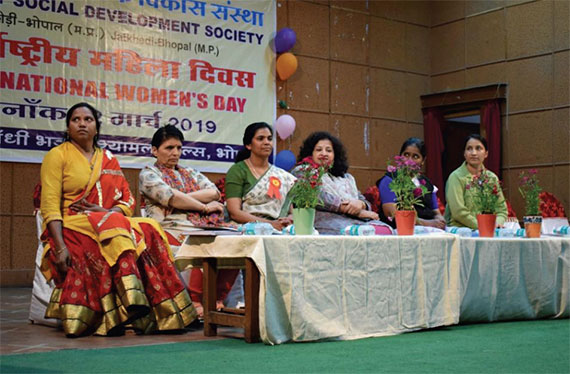
Women in a remote village in Arunachal Pradesh marked the International Women’s Day by praying for the release of jailed Missionaries of Charity nun in Jharkhand State. “We know that Sister Concelia (Baxla) is inno-cent. She is in jail for false case by people with vested interests to show the Church in poor light,” said Likro Mossang, president of the Catholic Women of East Arunachal Pradesh. “We join with her and scores of other women who languish in jail because of false cases. This is our best way to celebrate our women’s day this year,” she told the gathering at Neotan village in Changlang district of the northeastern Indian state.

Bishop hospitalized after attack by parishioners

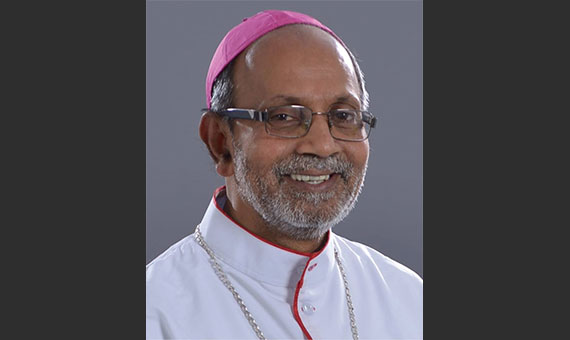
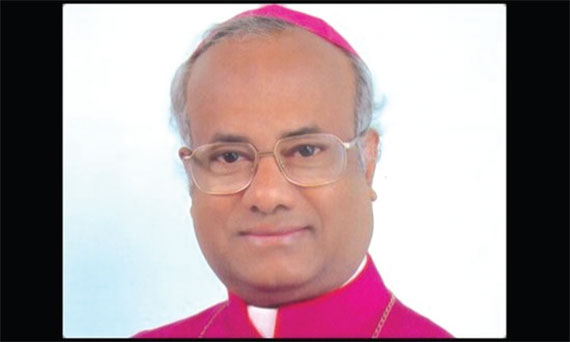
A Catholic bishop was reportedly hospitalized in Tamil Nadu, southern India, after a group of Catholics attacked him over a land dispute. Police in Marthandam in Kannyakumari district have registered a case against 58 people for attacking Bishop Jerome Dhas Varuvel of Kuzhithurai and a security guard, Tamil newspaper the Daily Thanti reported on March 11. The attack took place the previous day at the bishop’s residence in Unnamalaikadai near Marthandam some 45 km southeast of Thiruvananthapuram, the Kerala State capital, which is the nearest major city.

Indian Catholics want Pope Francis to go beyond comments about abuse

Weeks after Pope Francis’ open admission of the issue of clergy abuse of nuns, reaction to his remarks remains muted among Catholics in India, where a progressive group of religious had raised the problem three years ago.

They urge the Pope not to stop with identifying the problem but to act firmly against abusers, especially in India, where a bishop has been accused of rape by a former superior general of a diocesan congregation.

“Pope Francis gives some hope, but nothing is percolating down,” lamented Holy Spirit Sr Julie George, one of the 75 signatories of a “letter of concern” the Forum of Religious for Justice and Peace sent to all bishops and major superiors in India in February 2016.

The letter brought to light for the first time in India the prevalence of sexual violence against religious women by priests. It bemoaned that the problem went unaddressed, allowing its perpetrators to go unpunished. “This cannot be tolerated anymore,” asserted the forum, which said it was forced to write the letter as its analysis of current challenges to religious life revealed issues that needed urgent attention by church leaders.

However, the letter seems to have had little impact in the past three years. The forum and other groups such as Save Our Sisters Action Council allege that Indian church leaders have ignored the nun’s complaints against Bishop Franco Mulakkal of Jalandhar.

George, a lawyer, accuses the Indian bishops of ignoring the Pope’s call to show compassion to the victims of clergy abuse. “Instead, they side with the accused and even try to silence every voice of dissent against them,” she told Global Sisters Report.

The church leaders threaten those supporting the alleged rape victim with defamation suits and other tactics, George alleged, referring to a move by the Syro-Malabar Church mid-February to sue the officials of the Save Our Sisters Action Council who had organized a sit-in last September demanding Mulakkal’s arrest. Mulakkal has denied the accusations.

Fr Paul Thelakat, editor of Sathyadeepam (Light of Truth), a church weekly, agrees with the Pope that the recent scandals are God’s plan to cleanse the church.

“I am not afraid of this vulnerability bringing shame to our honour and respect. Look at the Bible. It tells stories of sin and salvation. Every scandal is converted to instance of God’s grace,” Thelakat told.

Parties urged to include Dalit reservation in manifesto

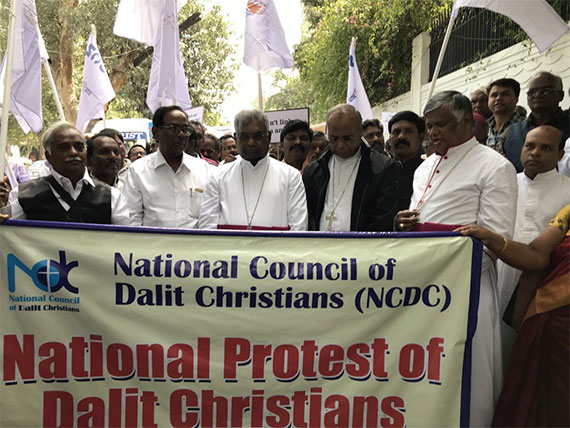
A national rally in New Delhi on March 12 urged political parties to include in their election manifestos the reservation for Dalit Christians and Muslims.

“We have to see that our rights are rightly accepted. We should not lose our fight,” said Archbishop George Antony-samy of Madras Mylapore while address-ing the rally.

The National Council of Dalit Christians (NCDC) organized the rally with support from the Catholic Bishops’ Conference of India and the National Council of Churches in India.

The rally started at 10 am from Janpath ended at Jantar Mantar, both close to the Indian parliament building.

Besides Archbishop Antonysamy, three bishops from Tamil Nadu joined the rally. Monsignor Susai Sebastian, vicar general of the Archdiocese of Delhi, and Danam, a retired civil service officer and NCDC president led the rally. Dhanam said the main purpose of the rally was to demand from the government Scheduled Caste status for Christians and Muslims of Dalit origin. These groups are as socially, economically, and politically weak as their counterparts in Hindu, Buddhist and Muslim religions. Yet they are discriminated on the basis of religion, Dhanam regretted..

The rally demanded deletion of paragraph 3 of the Constitution Scheduled Caste Order 1950 that made reservation on the basis of religion.

Dalit Christians and Muslims have appealed to national and regional political parties to include in their election manifesto a promise to grant the Scheduled Caste Status to them.

Idukki bishop asks priests stay away from the electioneering

Bishop John Nellikunnel of Idukki has written to his priests explicitly telling them not to take any position favouring any political party or ideology. The Bishop’s March 9 circular to priests assumes importance as Kerala’s more than 18% Christian population has significant sway in certain key pockets of central Kerala.

The state is scheduled to go to poll on April 23. The Idukki bishop has cautioned his priests from engaging in election meetings and taking sides in political debates lest their actions harm the community. “We are called to be shepherds with the smell of the sheep. As spiritual leaders of our people, we should not take any position favouring any sides. Our people do not want us to be actively involved in electoral politics in the present context. Our people are intelligent enough to decide in elections,” Bishop Nellikunnel wrote.

He also reminded the priest their duty before God to become symbols of charity and unity.

“Therefore I appeal to all of you to abstain from election-related propagandas, statements and meetings. By our words and activities, we should not give any scandals to the faithful and to the public.”

Tamil Nadu bishops seek poll date change

The Tamil Nadu Bishops’ Council has sought change in the poll date for the southern Indian state. The state’s 39 parliamentary and 18 assembly seats will go to poll on April 18, which coincides with Maundy Thursday, an important observance for Christians across denominations.

On March 11, Abp. Antony Pappusamy of Madurai and president of the council, requested the Election Commission of India (ECI) to change the polling date. The letter stated that polling date on Maundy Thursday would not be conducive for the Christians as it was in the middle of the Holy Week observance (April 14 to 21).

The archbishop said that Christians working as government school teachers and officials engaged in election duty will not be able to attend Mass on Maunday Thursday when Christians observe the commemoration of the final meal – Last Supper – that He had with His disciples a day before His crucifixion and death on the cross. The council cited another concern that many schools run by dioceses are located inside the campus of churches and many across the state are polling stations.

Toxic bootleg liquor destroys lives in India’s northeast

When Sunil Kiro enjoyed some moonshine to unwind after a hard day’s work at a tea estate in India’s northeastern Assam State, he had no idea he would never be able to see again.

He was among an estimated 500 victims of a tragedy that swept the region on Feb. 20 when 160 people died and others were left per-manently blind, or with other serious health issues such as damaged kidneys or livers, as a result of locally brewed alcohol that proved toxic to their systems.

“Now I am surrounded by darkness. I have to identify people from their voice,” said the 38-year-old, who lives in Jorhat district under Dibrugarh Diocese. The deaths in Assam occurred few days back after 100 people died from drinking illegal liquor made with house-hold disinfectants and anti-freeze in two other Indian states.

There are about six million people working the tea gardens of Assam, making up 17% of the state’s 31 million population, according to Catholic leaders in the region.

French missionaries remembered on Tibetan National Uprising Day

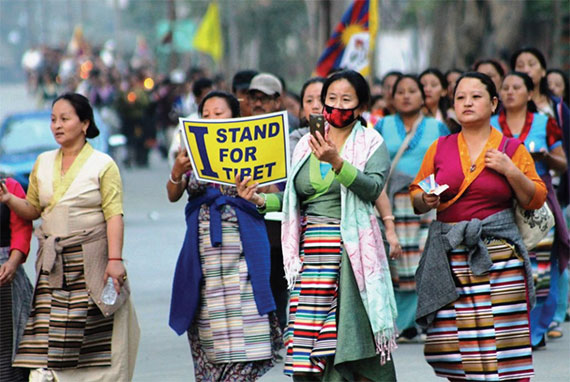
Two French missionaries were remembered at the 60th Tibetan National Uprising Day commemoration in Miao town in Arunachal Pradesh.

“Tibet and Christianity in Arunachal Pradesh have an age-old connection,” said Likro Mossang, women president of Miao Diocese in east Arunachal Pradesh.

“French missionaries Nicolas Krick and Augustine Bourry were killed on their way to Tibet in 1854. They sowed the first seeds of Christianity in Arunachal Pradesh 165 years ago before they were killed on August 2 the same year at the Tibet-Arunachal border region by a Mishmi Tribe chieftain.”

Tibetans all over the world gather together every year on March 10 to pay homage to the thousands of heroes who laid their lives, resisting brutal suppression of the Chinese Communist occupation forces in 1959.

“Although Fathers Krick and Bourry could not enter Tibet, my presence with you as a guest on the 60th Anniversary of the Tibetan National Uprising Day is like fulfilling their dream,” Mossang said addressing some 500 Tibetan women from the Miao Tibetan Settlement. With 500 families of more than 3,000 people Miao has the largest Tibetan settlement in north-eastern India.