POPE WILLING TO MEET NORTH KOREAN LEADER: VATICAN OFFICIAL

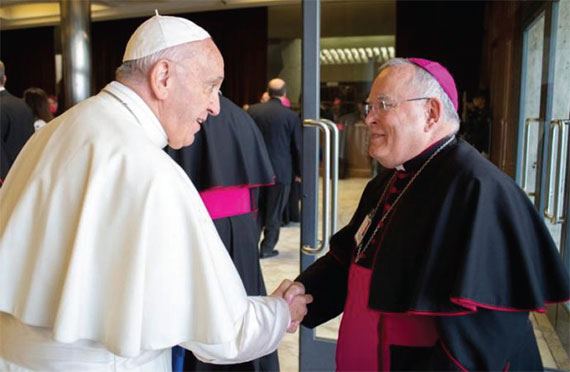
Pope Francis is considering an unprecedented visit to North Korea, according to a Vatican official. An invitation from Kim Jong Un was relayed to the Pope by South Korea President Moon Jae-in during a meeting in the Vatican on October 18.

It would be the first visit by a Pope to the reclusive East Asian state, which is known for severe restrictions on religious practice and does not allow priests to be permanently stationed there.

Vatican secretary of state Cardinal Pietro Parolin said the Pope was considering the visit. He told reporters: “The Pope expressed his willingness. We have to wait for it [the invitation] to be formalized.”

Cardinal Parolin said North Korea would have to meet certain conditions ahead of any potential visit by the Pope.

“This will come later,” he added. “Once we start thinking in earnest about the possibility of making this trip, then we will have to think about conditions in which the trip can take place. “[The Pope] is willing to make the trip, but a trip of this kind will need serious preparation.”

Beyond a small number of state-controlled places of worship, including a Catholic Church in the capital of Pyongyang, no open religious activity is allowed in North Korea. Authorities have repeatedly jailed foreign missionaries.

SYNOD MISSED OPPORTUNITY TO APOLOGIZE FOR SEX ABUSE, ARCHBISHOP SAYS

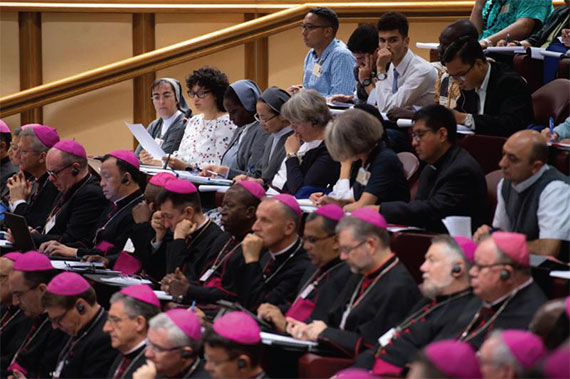
The more than 250 Catholic bishops from around the world meeting at the Vatican in October missed an opportunity to confront the global sex abuse crisis, said Archbishop Charles J. Chaput of Philadelphia.

“I wish that we had spent more time not only talking about (the crisis) but apologizing to people for it,” said Chaput, one of the delegates elected by the U.S. bishops to participate in the Synod of Bishops on young people, the faith and vocational discernment.

The “resistance (of) some bishops” meant the abuse crisis was largely absent from the discussions, he told Catholic News Service on Oct. 25. “Some say that (sex abuse) really is an issue of the Western world.”

But “it seems to me that it’s an issue of human nature, and it’s very important for the Church to talk about it,” said the archbishop, who in August had written to Pope Francis asking him to postpone the Synod in the wake of the scandal. Chaput was a member of the Synod’s ordinary council, which prepared the October assembly.

Judging from the discussion and the first draft of the meeting’s final document – a draft he said could be amended significantly – Chaput said there also were other topics on which the Synod could have been stronger.

“There was very little discussion of human sexuality at all. But anybody who sits in the confessional knows that that’s an issue,” he said, especially “for young people who are trying to learn how to be human and how to be Christian in a world that really promotes a wrong understanding of human sexuality.” “It’s a natural desire for men and women to be married – it’s not good for man to be alone, we have the Lord God’s word on that – so that’s a common issue for young adults everywhere,” but the issue of marriage preparation got little attention at the Synod, he said.
“That probably should have been 98% of what we did because that’s 98 percent of what the issues are for young people, but we didn’t spend much time on it at all,” he said.

In his own address to the Synod, Chaput asked that people not be identified by sexual orientation in the Synod document, for instance by referring to “LGBTQ Catholics,” because the Church does not put people into categories like that.

The archbishop said it is a “sadness” for him when “people who have same-sex attraction talk about themselves” only or primarily by referring to their sexual orientation.

TEMPLE DISPUTE SPARKS GENDER EQUALITY DEBATE IN INDIA

The decision of India’s top court to allow women of reproductive age to enter a Hindu temple in Kerala has snowballed into massive street protests and started a debate on gender inequality in other religions including Christianity and Islam.

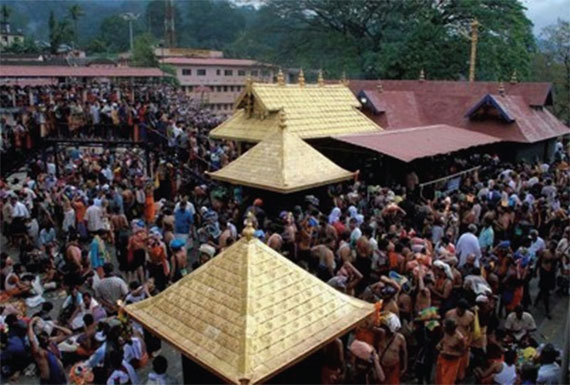
Thousands of Hindus, mostly women, continue to protest on the streets of the southern state against allowing women aged 10-50 to enter the 12th century Sabarimala, a popular hilltop temple. The Supreme Court in its Sept. 28 ruling said “the attribute of devotion to divinity cannot be subjected to the rigidity and stereotypes of gender.” The ban was an expression of gender discrimination, it said.

Christian groups, which together form some 18% of Kerala’s 33 million people, have not taken any stand in the dispute.

Father Varghese Vallikkatt, spokesman for the regional bishops’ council, said there was no need for the church to intervene. “The Hindus protesting for their faith are enlightened enough to resolve the issue,” he told ucanews.com.

However, Hindu leaders like Rahul Easwar believe the top court’s verdict sets a precedent for the court to interfere with the faith issues of other religions such as Christianity and Islam.

“There is absolute discrimination in the church that women cannot do what men do. Women are endowed with the ability to reproduce and thus they are treated as unclean,” said Virginia Saldana, a theologian in Mumbai.

She told ucanews.com that Vatican II had “removed this idea of women as unclean, but still they are not given their due share in the church.”

There is a custom among Christian women in India to abstain from entering a church for 40 days after giving birth.

“Though I visited church after my delivery, my parents and seniors strictly asked me not to step inside the church and pollute it. I had to follow them,” said Christian activist Philomina Joseph.

In some Catholic Churches, nuns and women distribute communion but are not allowed to enter the area of the altar.

According to Holy Spirit nun Sister Lizy Thomas, based in Madhya Pradesh State, the problem rests with the mindset and perception of men, which keeps away women, including nuns, from leadership positions in the church.

“Generally, men tend to treat women as inferior and until and unless it is changed, gender equality is a mirage in the Catholic Church,” she said.

Astrid Lobo Gajiwala, a women’s leader and theologian based in Mumbai, said women in the Catholic Church have been asking for gender equality for ages.

Bishop Gerald Almeida of Jabalpur said: “The Catholic Church is all in favour of the maximum participation of women in all activities of the church except the ordination of women.”

CHURCH SCHOOLS IN INDIA AMONG THOSE THAT ‘SHOULD NOT EXIST’

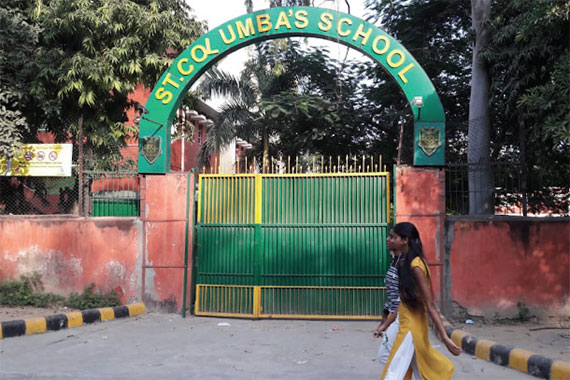
Muslim and Christian leaders in India see danger in a pro-Hindu group’s demand that the government revoke a policy allowing minority groups to own and manage educational institutions in the country.

A report released on Oct. 10 by the Centre for Policy Analysis, a think tank of hard-line Hindu group Rashtriya Swayamsevak Sangh, stated that allowing religious minority groups to have institutions for their own people was tantamount to “compartmentalization” that works against the unity of India.

“There is no rationale for the existence of a separate wing for education of minorities such as [the] National Commission for Minority Educational Institutions in the Ministry of Human Resource Development. Aren’t such types of national level regulating bodies compartmentalizing education on religious lines and weakening the national mainstream?” asked the report.

The Centre for Policy Analysis wants the government to discontinue the National Commission for Minority Educational Institutions, a legal body that advises the federal and state government on issues related to minority institutions.

Archbishop Thomas D’Souza of Calcutta, who chairs the Indian bishops’ office for education, said the demand goes against the provisions of the Indian constitution that allows religious minorities to establish and administer educational institutions of their choice to help advancement of their community members. “In effect, they are asking to change the Indian constitution,” the archbishop told in ucanews.com.

Technically, the Hindu group has only asked to close down the National Commission for Minority Educational Institutions. But by de facto the demand is to remove the provision to have minority institutions as the commission is the authority to grant minority status to an educational institution.

“All Indians, particularly religious minorities, should be afraid about such demands,” Archbishop D’Souza said. Some 220 million people or 18.4% of 1.2 billion Indians are officially considered part of a religious minority. Some 140 million Muslims, the largest minority, constitute 13.4% of the population, while 27 million Christians (2.3%) are the second largest minority group. Other religious minorities are Sikhs (1.9%), Buddhists (0.8%) and Parsis (0.07%) of the country’s total population.

BIBLE STILL MOST READ BOOK IN PHILIPPINES

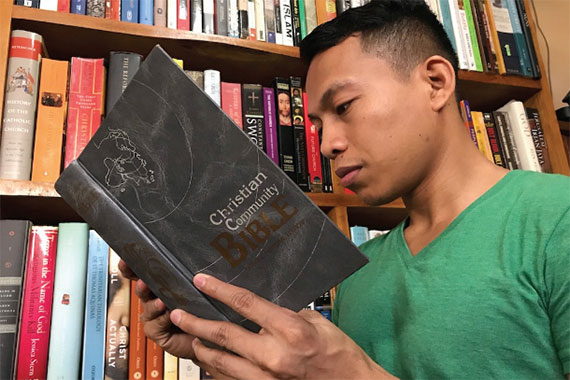
Centuries after Spanish missionaries first introduced it in the Philippines, the Bible remains to be the most widely read book in the country in the last year, according to the state-run National Book Development Board (NBDB).

During his presentation of the results of the 2017 NBDB Readership Survey in Quezon City on September 28, UP School of Statistics Dean Dr. Dennis S. Mapa said 72.25% of the Filipino adults polled picked the Bible as their most read book, climbing from 58% in the agency’s previous poll in 2012.

The Scriptures are also the top choice of those in the 25-to-34 (72.4%), 35-to-44 (75.1%), 45-to- 54 (72.1%) and 55-and-older (78.4%) age groups.

Picture books and storybooks for children ranked second among those surveyed at a distant 53%, followed by short stories for children at 52.08%. Both were added as survey choices only last year.

Books about romance and love scored 48.17 percentage, compared with 25% in 2012; reference books (encyclopaedias, almanacs, dictionaries, thesauri, atlases and maps)— the top genre among 18-to- 24-year-olds (70.4 percent- age)—47.92 percentage; and leisure, and entertainment and hobby books, 46.25 percentage.

Cookbooks and books on food and drinks got 42.83%, compared with 21% six years ago; books on health, wellness and medicine, 38.58% graphic novels and comics, 37.67% and short stories and novels for young adults, 33%.

Conducted by the Philippine Statistical Research and Training Institute, the survey involved the participation of 1,200 Filipino adults—18 years old and older—divided according to region: Luzon, Visayas, Mindanao (excluding the Autonomous Region in Muslim Mindanao), and the National Capital Region (Metro Manila).

FR RIBOLINI: CHRISTIANITY, ‘A REVOLUTION’ FOR TRIBAL FAMILIES

Fr Marco Ribolini is a priest with the Pontifical Institute for Foreign Missions (PIME) and pastor in Ban Thoet Thai, a remote village in the Diocese of Chiang Rai, north-western Thailand.

For him, the journey from evangelisation to true conversion among tribal people “is long and lasts several generations since Christian values are revolutionary for both religious and social life.”

Local Catholics belong to various ethnic minorities (Akha, Lana, Lahu, Isan, Thaiyai, Kachin), who live in the mountain and rural areas amid poverty as well as social and geographical marginalisation. The four PIME missions in the north of the country – Fang, Ban Thoet Thai, Mae Suay and Ngao – have some hostels to meet the residential and education needs of young people from poor families.

“Ours is still a ‘catechumenal’ church,” Fr Ribolini said. It is based on “first evangelisation and conversions. The geography is complex since Christians live in villages in the forests and far from each other.”

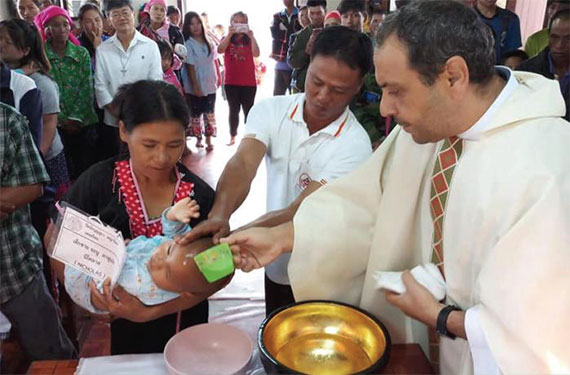
The mission in Ban Thoet Thai alone caters to 27 settlements and offers young people various recreational activities, together with moments of prayer and catechism lessons. This is the case of the ‘Sacraments camp’ that started today involving some 70 kids aged 7 to 12 for four days.

“Through this initiative, we will prepare the children for the sacraments of Christian initiation: baptism, confirmation and the eucharist,” the missionary explained.

“Praying never fails in PIME hostels,” he added. But the mission also takes care of families, who have the opportunity to study catechesis through various programmes.

IRELAND: PRIEST SHORTAGE FORCES CANCELLATION OF SUNDAY MASS IN 1,500 YEARS

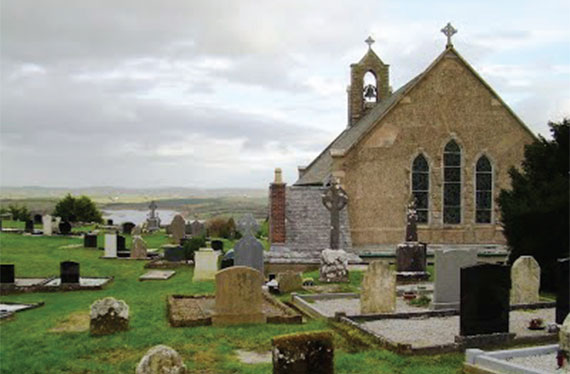
Sunday Mass was not delivered on October 21 in an Irish village for the first time in 1,500 years due to the shortage of Catholic priests.

The Church of the Sacred Heart, in Boho, Co. Fermanagh, stands on the site of an early Christian monastery dating back to the sixth century.

But the service was cancelled, as the local Diocese have been forced to alternate Mass between the church in Boho and another in Monea, a neighbouring rural village, every week.

Parishioners were not consulted on the changes and many fear if will threaten people’s local identity. One man in his 90s, who has walked to church every Sunday in Boho, will now have to find a lift in order to go to Mass at another church. The situation is expected to get worse, local clergymen revealed, as the number of priests being ordained is failing to grow. Monsignor McGuiness, who holds a senior post in the Catholic Church, said that the situation had become critical and the church had to deal with the reality that the number of priests will reduce still further.

SYNODALITY IS A PATH NOT ONLY FOR BISHOPS, BUT FOR ALL, BISHOP SAYS

Synodality is about more than just bishops participating in the governance of the church; it encourages the involvement of all the faithful in a spirit of collaboration, said Archbishop Hector Miguel CabrejosVidarte of Trujillo, Peru.

During an Oct. 25 briefing with journalists, Archbishop Cabrejos said that “synodality” was a theme that was heavily discussed throughout the Synod of Bishops.

Synodality, he said, is more than just a word; it’s a way of life for the church that “promotes everyone’s participation.”

“When I say everyone, I don’t just mean the church as in the bishops, priests. No! It is also the laity and the faithful at all levels. And all of us bishops are called — and this is part of that synodality — to make colla- boration grow,” Archbishop Cabrejos said.

“The church,” he added, “is not having a Synod for youth, but with youth.” The archbishop, who also serves as president of the Peruvian bishops’ conference, explained that synodality involves the entire church “walking together” not only with young people who are in the church but “also with those who are far, with nonbelievers.” “The word that best describes synodality is walking; walking together not just as a church, not just as a youth group, not just as a priest, not just as a religious congregation for men and women or a lay group. It is walking together. And I think the clear image is that we bishops are called” to foster growth, participation and synodality.

Austrian Cardinal Christoph Schonborn of Vienna was asked on Oct. 26 about the difference between “synodality” and the “collegiality” the Second Vatican Council saw a need to strengthen.

Collegiality involves all the bishops together and with the Pope exercising their leadership as successors of the group of Twelve Apostles chosen by Jesus, he said. “Synodality is a much wider notion,” one that recognizes that each Christian, by virtue of his or her baptism, has something to contribute to the life and mission of the church.

POLICE PURSUE CHRISTIAN DONATIONS

Officials probing more than 80 Indian Christian institutions in eastern Indian Jharkhand State have recommended a federal investigation on fund diversions, which church leaders say is an attempt to project Christians as law breakers.

The state’s Criminal Investigation Department (CID) has recommended a probe by the Central Bureau of Investigation (CBI), the premier agency under the federal government, the local Hindi language daily Prabhat Kabar (Morning News) reported on Oct. 17.

Since July, the state has been investigating 88 Christian organizations, including those managed by various Catholic dioceses and religious congregations such as Jesuits, Salesians and several groups of nuns. They are accused of diverting overseas donations to help win converts.

Senior CID official Ajay Kumar Singh, in a report submitted to the chief of state police, claimed irregularities in the financial transactions of these institutions and recommended an in-depth federal probe, the newspaper reported.

The CID has completed investigating 10 of the Christian organizations allegedly involved and found there were “suspicious cash transactions” involving of millions or rupees. It also found that funds were being used illegally for religious promotional activities as well as in the providing of inaccurate information to the government, the news report stated.

An Indian law, the Foreign Contributions (Regulations) Act stipulates that overseas donations must be received through a government regulated system and used strictly for defined purposes.

Audit reports must be submitted to the government annually, the law stipulates.

However, Bishop Theodore Mascarenhas, secretary general of the Indian bishops’ conference, maintained that church organizations have been strictly following the law and the recommended further probe was a clear case of harassment.

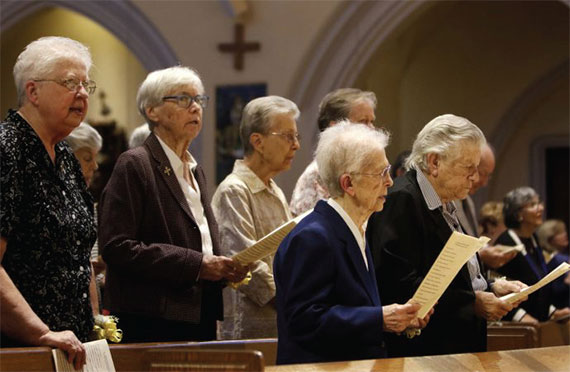
BISHOPS, SISTERS DISCUSS DECLINING NUMBERS OF U.S. WOMEN RELIGIOUS

The precipitous decline in the number of women in religious life and what it means to the Church has people thinking about how to prepare for the future.

Their actions stem from data gathered by the National Religious Retirement Office at the U.S. Conference of Catholic Bishops that projects an estimated 300 women’s religious institutes will likely phase out of existence in the next decade.

The estimate is fuelled by the fact that the overall number of women religious has declined by 75% since 1965 with no change in the trend expected.

Bishops, women religious, canon lawyers and others discussed the future of religious life in a two-day workshop on Sept. 25-26 in Oakbrook, Illinois, outside of Chicago.

The workshop, “Fidelity to the Journey: Together in Communion,” was sponsored by the Resource Centre for Religious Institutes under a grant from the GHR Foundation.

The number of women religious in the United States has declined from a peak of 181,421 in 1965 to 47,160 in 2016, National Religious Retirement Office statistics show. About 77 percent of women religious are older than 70.

As many as 300 of the 420 religious institutes in the United States are in their last decades of existence because of aging membership and declining vocations, officials said.