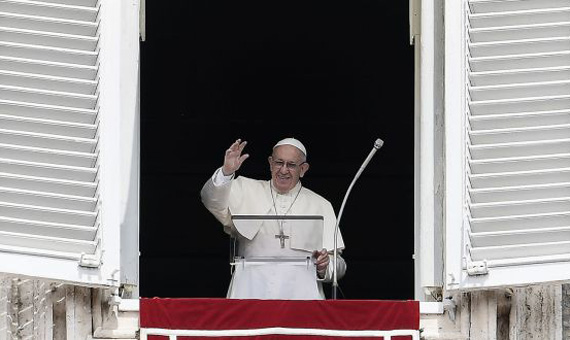
ABUSE SCANDALS DRIVING YOUNG PEOPLE AWAY FROM CHURCH : POPE FRANCIS

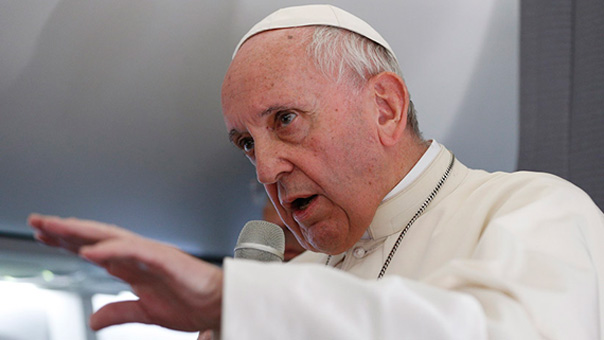
Pope Francis admitted that sex abuse scandals surrounding the Catholic Church have driven younger people away.

“We know – and you have told us – that many young people do not turn to us for anything because they don’t feel we have anything meaningful to say to them,” he told a group of Catholic, Lutheran and Orthodox young people in Estonia on September 25.

“They are upset by sexual and economic scandals that do not meet with clear condemnation, by our unpreparedness to really appreciate the lives and sensibilities of the young, and simply by the passive role we assign them.”

Surveys commissioned by the Vatican, of a bishops meeting to discuss how to better minister to young Catholics, have been filled with similar complaints.

Francis said that the church wanted to respond to the criticism in an honest and transparent way. “We ourselves need to be converted,” he said.
“We have to realise that in order to stand by your side
we need to change many
situations that, in the end,
put you off.” The Pope was
speaking during the fourth
and final day of his tour of
the Baltics. The public
admission coincided with a devastating new report into decades of sex abuse and cover- ups in Germany. The document, produced by the German bishops’ conference, found that around 3,677 people were abused by clergy between 1946 and 2014.

Over half of those abused were 13 or younger. Nearly a third were altar boys.

University researchers compiled the report and found evidence that some files on the abuse were destroyed, many cases were not brought to justice and some bishops were simply moved to other dioceses when complaints were made, without congre- gations being informed about the accusations. The sex abuse scandal began in Ireland in the 1990s but has returned to the headlines recently after a former Vatican ambassador accused the Pope of knowing about abuse allegations against Theodore McCarrick, an American cardinal.

Francis is accused of rehabilitating Mr McCarrick despite the allegations.

GERMAN BISHOPS APOLOGIZE FORMALLY, RELEASE SEX ABUSE DATA

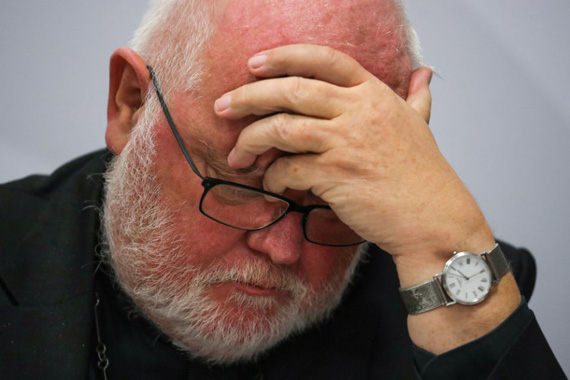
The head of the German bishops conference formally apologized for sexual abuse in the church, saying it “has been denied, turned away from and covered up for far too long.”

“Sexual abuse is a crime,” Cardinal Reinhard Marx of Munich and Freising told a news conference on September 25 in Fulda, Germany. “And whoever is guilty of it must be punished by law.”

The bishops met in a plenary session in Fulda and released a study, conducted on behalf of the Bishops’ Conference from 2010 to 2014, on abuse. The study, leaked earlier in September, researched an estimated 3,700 sex abuse cases in the German church.

Marx said that, although prevention measures had been put in place by the Bishops’ Conference, it was not enough.

“I feel shame for looking away from many who did not want to believe what happened and who did not provide care for the victims. That also applies to me,” the cardinal said. “We did not listen to the victims.”

“As a church, we want to build up new trust. I know that many people do not believe us anymore. And I understand that,” he said. “But I hope very much that we can earn trust again.”

Criminologists who conducted the study were present in a panel to discuss their findings and answer media questions.

The details of the research project’s findings in all 27 German dioceses were released. Ten dioceses were selected for research dating back to 1946. Within the remaining 17 dioceses, the research focused only on abuse dating from 2000. The names of those accused were withheld from the document.

ON PLANE, POPE DISCUSSES SEX ABUSE, CORRUPTION OF COVER-UP, CHINA PACT

The Catholic Church has grown in its understanding of the horror of clerical sexual abuse and of the “corruption” of covering it up, Pope Francis said. Returning to Rome from a trip on Sept. 22-25 to the Baltic nations, Pope Francis was asked about his remarks to young people in Tallinn, Estonia, when he said young people are scandalized when they see the church fail to condemn abuse clearly. “The young people are scandalized by the hypocrisy of adults, they are scandalized by wars, they are scandalized by the lack of coherence, they are scandalized by corruption, and corruption is where what you underlined — sexual abuse — comes in,” the Pope responded.

Whatever the statistics say about rates of clerical abuse, the Pope said, “if there is even just one priest who abuses a boy or a girl, it is monstrous, because that man was chosen by God to lead that child to heaven.”

The fact that child abuse occurs in many environments does not in any way lessen the scandal, he said.

But it is not true that the church has done nothing “to clean up,” Pope Francis told reporters. If one looks at the Pennsylvania grand jury report released in
August or other similar
studies, he said, it is clear
that the majority of cases
occurred decades ago “because the church realized that it
had to battle it in a different
way.” “In olden times these things were covered up — but they were covered up also in families, when an uncle abused his niece, or a father raped his child; it was covered up because it was a very great shame,” Pope Francis said. “That was how people thought in the last century.”

To understand what happened in the past, he said, one must remember how abuse was handled then.

“The past should be interpreted using the hermeneutic of the age,” Pope Francis said. People’s “moral consciousness” develops over time, he said, pointing to the death penalty as an example.

But, he said, “look at the example of Pennsylvania. Look at the proportions and you will see that when the church began to understand, it did all it could.”

In fact, the Pope said, he has encouraged bishops to report cases to the Congregation for the Doctrine of the Faith, and he “never, never” granted amnesty to a priest found guilty of abuse.

Pope Francis did not mention by name Archbishop Carlo Maria Vigano, the former nuncio to the United States, who claimed that Pope Francis knew of and ignored the sexual misconduct of former Cardinal Theodore E. McCarrick. And the journalists’ question about Archbishop Vigano was never asked because the Pope insisted that most of the questions be related directly to his trip to Lithuania,

Latvia and Estonia.
But the Pope did say that “when there was that famous statement from an ex-nuncio, bishops from the whole world wrote to tell me they were close to me and praying for me.” One of the letters, he said, came from China and was signed jointly by a bishop from the government-controlled Chinese Catholic Patriotic Association and a bishop from “the, let’s say, traditional Catholic Church.”

PARENT FAILURE TO TRANSMIT FAITH TO KIDS HELPING FUEL GROWTH OF RELIGIOUS ‘NONES,’ STUDY SUGGESTS

The study, conducted by the Barna Group in collaboration with the Association for Biblical Higher Education, asked parents of prospective students to identify what they consider to be the goals or ultimate purpose of college education.

A new study lends supporting evidence to the theory that a failure of parents to transmit their faith to their children is a factor in the rise of the number of Americans who say they have no particular religious affiliation and identify instead as a group popularly known as religious “nones.”

The study, “Religious/secular distance: How far apart are teenagers and their parents?” authored by Ryan T. Cragun, Joseph H. Hammer, Michael Nielsen, and Nicholas Autzwas published in the journal Psychology of Religion and Spirituality.

In the study, cited by PsyPost, researchers developed a tool called the Nonreligious-Nonspiritual Scale which measures secularity along two spectrums: from nonreligious to highly religious and from nonspiritual to highly spiritual.

FEAR, MISTRUST SURGES AMONG INDIANS: CATHOLIC PRIEST

The climate of fear and mistrust among people, cultures and religious communities across India is alarming, an Indian told at an International gathering in Rome, Italy.

Trends such as “populism” and “Hindu nationalism” drastically sweeping the country can pose great dangers and threats for society at large, said Father Charles Irudayam, former secretary, Office for Justice, Peace and Development, Catholic Bishops’ Conference of India (CBCI), New Delhi. A sense of “insecurity” and “polarization” marks India’s present political atmosphere and threatens its social fabric, said Father Irudayam, the lone Indian representative at the September 18-20 “World Conference on Xenophobia, Racism and Populist Nationalism.”

Some 200 delegates across the world are attending the event. Some 15 Asian delegates are participating in the two-day program. Father Irudayam, parish priest at the Kalladithidal church in Sivaganga diocese of Tamil Nadu, southern India, also spoke about the internal migrant problems in India.
Hundreds of migrants from northern Indian states like Odisha,

West Bengal, Assam, Bihar, Jharkhand, and Chhattisgarh to work in the south continue to face discrimination, he said.

MISSIONARIES OF JESUS NUNS FAST FOR JAILED BISHOP PATRON

The Missionaries of Jesus congregation is on a fast on September 26 for their patron, who is now in police custody in a sexual abuse case. The congregation is in “deep sorrow and anguish” that “our innocent father Bishop Franco Mulakkal had to face arrest and jail for a crime he has not committed,” says a September 25 press note from its superiors. Seeking forgiveness from their patron and the world for his “crucifixion,” Sister Regina, the mother general of the Jalandhar-based diocesan congregation, and her councillors said the entire congregation would fast for the reparation of the “stain of sin” in making the prelate suffer unjustly.

INDIAN ACTIVISTS SEEK UNITY TO PROTECT MINORITY RIGHTS

Rights activists in India have called for more united and coordinated work to ensure the rights of religious minorities, tribal and Dalit people.

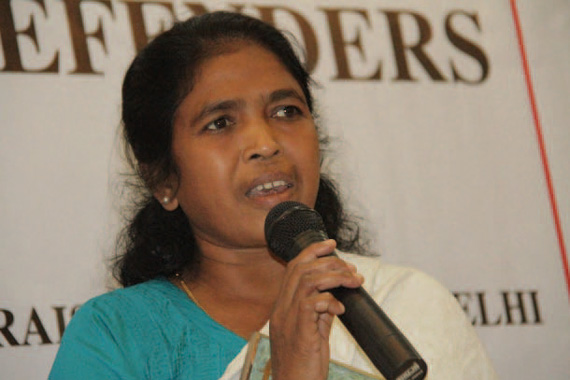
Activists, lawyers and civil society met in New Delhi to honour Soni Sori, a tribal activist who was chosen by Ireland-based rights organization Front Line Defenders for an award this year.

“Sori has become an inspiration to fight for rights violations in India at a time when the nation is witnessing orchestrated violence against minorities,” Supreme Court lawyer and activist Colin Gonsalves told.

“We all can learn from her that if we are firm and united no forces can deny our rights.”

Sori was arrested in 2011 on charges of helping Maoist insurgents. While in custody, she was tortured and sexually assaulted by Chhattisgarh State police. By April 2013, she had been acquitted of six of eight cases against her due to lack of evidence. In 2016, unidentified men threw acid on her face.

Since her release from jail in 2014, Soni has been at the fore- front of protests against abuses committed by security forces in conflict zones in central India. She has also defended several educational centres from destruction by Maoist groups.

Prasant Bhusan, a Supreme Court lawyer, said developments in India show “there is a feeling among people that they are not safe even in their own country and there is a threat from the dominant group.”

He said those speaking for the rights of minorities are “branded as anti-national … You speak in favour of tribals and you will be associated with Maoists,” he said.

POPE PICKS 13 INDIANS FOR SYNOD ON YOUTH

Pope Francis has chosen 13
Indians to
attend the
Synod of
Bishops on
Youth in
October
together
with other
Catholic
leaders
from around the world.

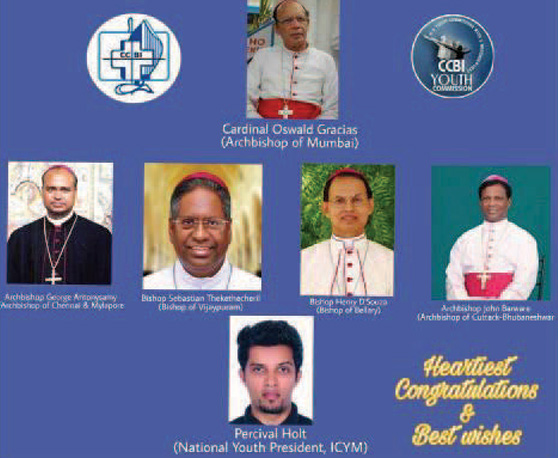
Cardinal Oswald Gracias, Archbishop of Bombay, president of Catholic Bishops’ Conference of India (CBCI), will lead the Indian delegation composed of three cardinals, two archbishops, four bishops, two priests and two youth.

The Pope has approved the members elected by the three individual sui juris (Ritual) Churches that have their respective episcopal bodies, which constitute CBCI, to represent the Indian Church at the synod.

The Syro-Malabar Bishops’ Synod is represented by Cardinal George Alencherry, Major Archbishop of Ernakulam- Angamaly, Auxiliary Bishop Joseph Pandarasseril of Kottayam, president of the Youth Commission, and Auxiliary Bishop Joseph Pamplany of Tellicherry.

Cardinal Baselios Cleemis Thottunkal, Major Archbishop of Trivandrum-Malankaras, will represent the Synod for the Syro-Malankara Church.

The Conference of the Catholic Bishops of India (CCBI) for the Latin Church will include Cardinal Gracias, Abp George Antonysamy of Madras and Mylapore, (Tamil Nadu), Bp Sebastian Thekethecheril of Vijayapuram (Kerala), Bp Henry D’Souza of Bellary (Karnataka) and Abp John Barwa, of Cuttack-Bhubaneswar (Odisha).

MIZORAM PRESBYTERIAN CHURCH WARNS AGAINST ELECTORAL MALPRACTICE


The largest Christian denomination of Mizoram – the Mizoram Presbyterian Church has issued an election statement warning political parties and candidates not to make tall promises that cannot be delivered.

In the election decree which was issued last week, the Mizoram Presbyterian Church warned all political parties to field candidates who abide by the laws of the nation and that of the church.

“We expect all the candidates for the upcoming elections to abide by the laws of the land, must not make promises that cannot be delivered and should abstain from collaborating with underground elements and other elements that will hamper the integrity and communal harmony of Mizoram,” the church statement read.

Mizoram Presbyterian Church Synod is the largest Christian denomination in Mizoram. It was a direct progeny of the Calvinistic Methodist Church (officially named the Presbyterian Church of Wales in 1928) in Wales. It was the first church in Mizoram and is now one of the constituent bodies of a larger denomination Presbyterian Church of India (PCI), which has its headquarters at Shillong in Meghalaya.