Clericalism is killing the Catholic Church even in Africa

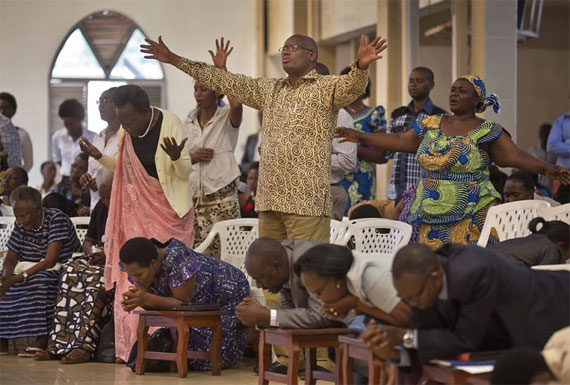
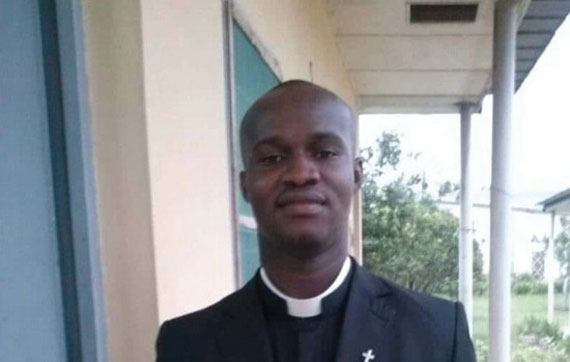
We need to face the facts. The significant number of Christians who are leaving the church to join new communities is a sign that Christians are tired of what we Catholics have offered them. So they are looking for something new that the classical parish pastoral framework is unfortunately no longer able to provide.

In fact, the Catholic Church’s classical parish pastoral program in Ivory Coast is currently trapped in a bureaucratic system that kills the prophetic spirit of pastoral ministry. This has led to a spiritual vacuum among Catholics. Weighed down with the burden of endless socio-political suffering, they are desperately looking elsewhere for a new experience of God.

As the Psalmist wrote: “It is your face that I seek, Lord.” Genuinely thirsty for the Holy Spirit, thousands of Christians have ended up deserting the bureaucratic classical parish pastoral framework in order to “descend into deep waters.” As a result, they are joining the framework offered by many new communities, which seems to quench their spiritual thirst. We therefore need to recognize that at this time in our history, we have failed as pastors.

After shuttering 700 churches, Rwanda proposes stricter clergy guidelines

After closing more than 700 churches and some mosques in March, Rwandan government officials have moved to institute guidelines for how faith groups operate in the majority-Christian East African country.

Rwanda’s minister in the office of the president has brought to Parliament a draft law that would require Christian and Muslim clerics to attain university education before preaching in churches or mosques. The law would require clerics to have a bachelor’s degree and a valid certificate in religious studies. It would also bar clergy who have been convicted of crimes of genocide, genocidal ideology, discrimination or other sectarian practices.

“I agree with the law. Some of our church groups have been operating in a dangerous manner,” Evalister Mugabo, bishop of the Lutheran Church in Rwanda, told Religion News Service.

Italy proposes mandating display of crucifixes in public buildings

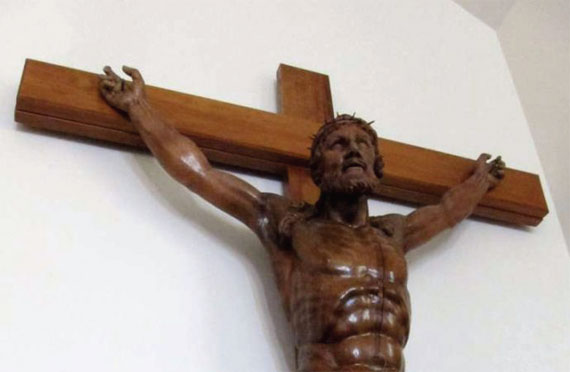
A bill has been introduced in the Italian parliament which would require the visible display of crucifixes in public buildings, Italian news magazine L’Espresso reported on July 23.

The bill, “Dispositions concerning the display of the crucifix in schools and in offices of public administration,” proposes crucifixes be visibly hung in places such as schools, universities, prisons, public offices, consulates, embassies, and ports.

The proposal would also order a fine of up to $1,169 for non-compliance. The bill now waits to be scheduled for discussion in the Chamber and Senate.

It was introduced by the country’s Lega Nord party, headed by Matteo Salvini, the newly-made interior minister and deputy prime minister alongside the leader of the Five Star Movement, Luigi di Maio.

Google celebrates priest who proposed Big Bang theory

The Google ‘doodle’ depicts Belgian priest and astronomer Fr Georges Lemaître Google’s “doodle” for, July 18 celebrated the 124th birthday of the Belgian priest who formulated the Big Bang theory. Fr Georges Lemaître was professor of physics at the Catholic University of Leuven and proposed a theory that said the universe was constantly expanding from a single first point. He named this the “hypothesis of the primeval atom,” or the “Cosmic Egg.”

Tens of thousands mark 100 years since murder of last Russian tsar

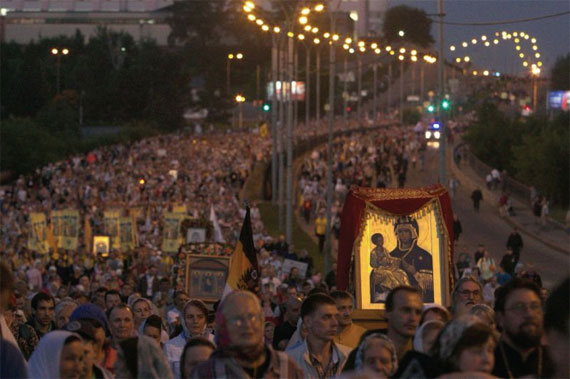
Russian Orthodox Patriarch Kirill led some 100,000 people in a nigh time procession on July17 to mark 100 years since the Bolsheviks murdered tsar Nicholas II and his family, amid a simmering conflict between the state and the Church over their remains.

The procession began in the early hours of July 17 from the murder site in the Urals city of Yekaterinburg to a monastery commemorating the slaintsar, his German-born wife and five children, regional authorities said. Many of the fervent believers came from across Russia and abroad to take part in the colourful ceremony during which many carried icons.

Another 20,000 people joined the commemorations when the procession arrived at the monastery in Ganina Yama after covering the distance of 21 kilo-metres (13 miles), regional authorities said.

The monastery was built at one of the sites where the burnt bodies of the last Russian tsar and his family were taken after their execution in the aftermath of the 1917 Bolshevik Revolution, although they were later moved.

Secretary of State Mike Pompeo: Religious persecution in Iran, China must end now

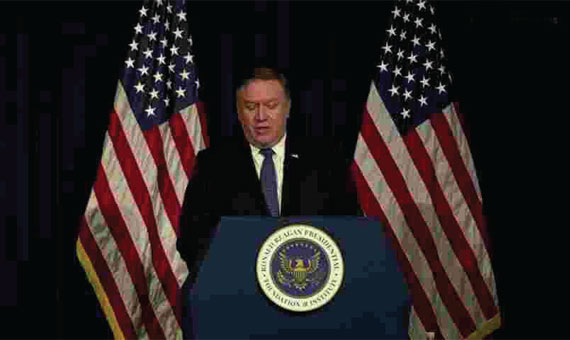
Secretary of State Mike Pompeo on July 22 called the religious leaders of Iran “hypocritical holy men” who amassed vast sums of wealth while allowing their people to suffer. Pompeo also castigated Iran’s political, judicial and military leaders.

Around the world, religious minorities are persecuted and stripped of human rights. This is an issue many countries must work together to solve.

Last month, Mohammad Salas, a member of the Iranian Gonabadi Sufi dervish community persecuted by the Iranian regime for its beliefs, was convicted and sentenced to death on questionable grounds following violent clashes between security forces and Gonabadi dervishes. Mr Salas and his supporters maintained his innocence, reportedly stating he had been tortured into a forced confession. Sadly, on June 18 the regime hanged Mr Salas in the notorious Rajai Shahr Prison.

Salas’s death was part of a larger crack-down on Gonabadi Sufi Muslims that began in February. Hundreds of Sufi Muslims in Iran remain imprisoned on account of their beliefs, with reports of several dying at the hands of Iran’s brutal security forces. The religious intolerance of the regime in Iran also applies to Christians, Jews, Sunnis, Baha’is, Zoroastrians, and other minority religious groups simply trying to practice their faiths.

Around the world, adherents from innumerable faith backgrounds suffer similar violations of their most fundamental human rights. Earlier this year, the State Department hosted six United States-based Uighur journalists with Radio Free Asia’s Uighur Service. Their reporting indicates that Chinese authorities are likely detaining, at least, hundreds of thousands of Uighurs and other Muslim minorities in internment camps in Xinjiang. One journalist, Gulchehra Hoja, shared that 23 of her family members have been detained in the region. She, like others, have little to no information about her family’s well-being.

In Burma, since August 2017, nearly 700,000 Rohingya have been forced to flee to Bangladesh because of an ethnic cleansing campaign carried out by the Burmese security forces. Reports have indicated children, elderly, and infirm persons were burned alive in houses.

To advance the cause of religious freedom, we need all these voices to work together.

We need religious leaders of every faith to articulate to their adherents that violence is not a righteous way to propagate belief.

Philippine clergy, advocates say human rights dying under Duterte

Philippine President Rodrigo Duterte warned the public during his third State of the Nation address July 23 that his two-year war on drugs would become even “more chilling” in the coming days. Earlier that day, a group of human rights advocates attended Mass before taking to the streets of Manila armed with banners and placards calling for an end to extrajudicial killings, rallying for “democracy, justice, and freedom,” and demanding Duterte step down from office.

During the Mass, the bishop who delivered the homily reminded parishioners that some 23,000 people have been slain as part of Duterte’s brutal campaign against narcotics pushers and users, ucanews.com reported.

Some didn’t need reminding; they already had lost family members to what critics see as a campaign of state-sanctioned murder, with many suspects gunned down before being able to defend themselves in court.

Nanet Castillo is a case in point. Her son was killed during the first wave of the war on drugs in 2016. “We continue to seek and wait for justice to be served,” she said. Father Gilbert Villena, a member of Rise Up, a group formed by the relatives of those killed by security forces, said it was time to demand that Duterte fulfill his promises of “change for the greater good.”

Human rights groups have described the past two years as the “worst years for human rights” in the Philippines since the declaration of martial law in September 1972.

Indian state accused of harassing Christians

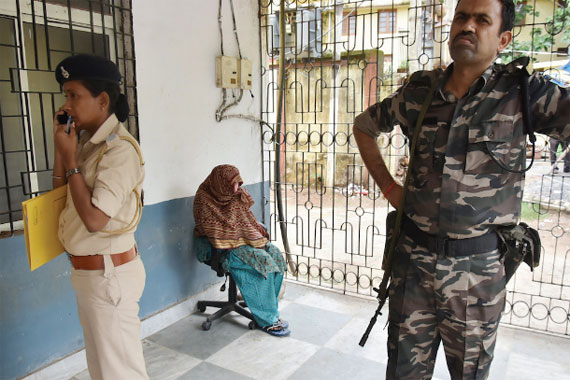
A Catholic leader has sought Indian Prime Mini-ster Narendra Modi’s inter-vention to stop harassment of Christians after Jharkhand State ordered a probe into the funding of more than 80 Christian organizations.

The eastern state on July 19 asked police to probe foreign donations received by non-governmental organizations managed by dioceses and religious congregations such as Jesuits, Salesians and several groups of nuns, accusing them of diverting the money for religious conversion. “This is another sign of how the Jharkhand government is harassing Christian institutions,” Bishop Theodore Mascarenhas, secretary-general of the Catholic Bishops’ Conference of India, told ucanews.com.

“We appeal to Prime Minister Narendra Modi to keep the state government under control. We hope that the prime minister will intervene and stop this harassment.”

Modi’s pro-Hindu Bharatiya Janata Party, which has run Jharkhand’s government since 2014, has been accused of moving against the Christian community, with police arresting nuns, priests and lay Christians on trumped-up charges.

Ecumenism needs renewed interfaith outlook: Asian theologian

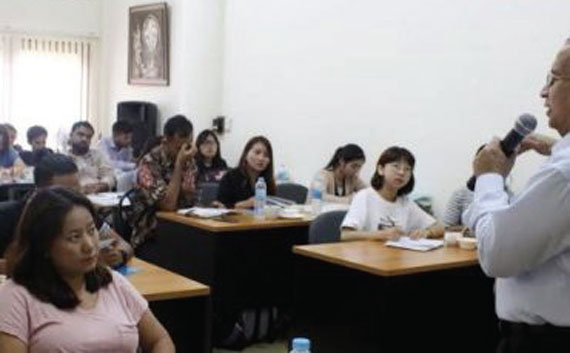
“The ecumenical movement needs renewed interfaith orientations when conflicting theological assumptions and presuppositions are posing challenges to authentic gospel values and Christian witness,” said internationally renowned ecumenical theologian Dr S. Wesley Ariarajah at the Asian Ecumenical Institute (AEI) of the Christian Conference of Asia (CCA) being held at the Payap University in Chiang Mai, Thailand.

Delivering a series of lectures on topics related to the theme of the AEI-2018, ‘Wider Ecumenism in a Pluralistic Asia’ at the month-long ecumenical formation and leadership development training, Ariarajah, an emeritus professor of Drew University in the U.S.A. enthused the prospective ecclesiastical and ecumenical leaders.

“Inter-religious dialogue is an attempt to understand people of other faith, not as people opposed to us or competing with us, but as partners within a pilgrimage. It is in the course of the pilgrimage and in the spirit of partnership that we share the message of Christ with copilgrims,” Ariarajah said.

“Dialogue challenges us to change and renew. It beckons us to a whole new world of relationships. It urges us to re-examine our theology. It calls us not to give up our faith but to grow in our faith by living it with humility,” he reminded the participants.