Assumption nuns’ first Asian head focuses on marginalized

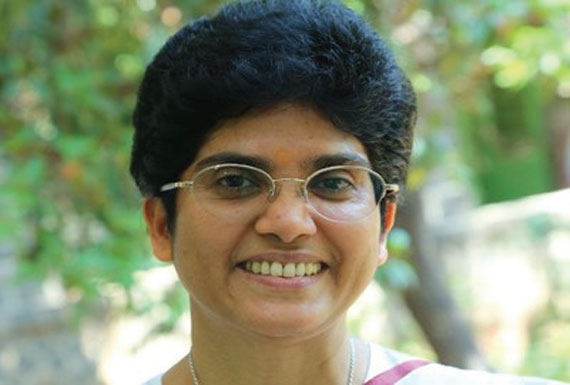
Assumption nun Rekha Chennattu, the first Asian elected to head the global Paris based congregation, says her priority will be to serve people on the margins of society.

Sister Chennattu, an Indian, was elected superior general of the international congregation of the Religious of the Assumption on July 5 at the General Chapter held in Lourdes, France. “It was not my choice and so I believe that it was God’s choice,” said Sister Chennattu, professor of biblical studies and a participant at the Synod of Bishops on New Evangelization at the Vatican.

Focusing on neglected people would be the “identity mark” of the congregation during the next six years of her appointment, Sister Chennattu told ucanews.com.

“All throughout my life, I found God’s choices for me have always been better than mine,” the nun said.

She is part of the Office of Theological Concerns of the Federation of Asian Bishops’ Conferences and an associate faculty member at Jnana-Deepa Vidyapeeth, which is a pontifical institute of philosophy and religion based in Pune, India.

The Assumption congregation was founded in 1839 in France by St Marie-Eugenie of Jesus and now has sisters from more than 40 countries serving in 33 nations of the Americas, Asia, Africa and Europe. In India, they have communities in the States of Kerala, Maharashtra, Bihar and Jharkhand.

Rape accused bishop’s suspension demanded

A group of progressive Catholic religious priests, nuns and laity has mounted pressure on Vatican to act against an Indian Bishop accused of raping a Catholic nun.

They have urged the Apostolic nuncio to India Archbishop Giambattista Diquattro and President of the Catholic Bishops Conference of India (CBCI) Cardinal Oswald Gracias to advise Pope Francis to relieve the accused bishop of his pastoral responsibilities to pave way for an impartial probe.

The survivor in her complaint accused the prelate of raping her 13-times between 2014–2016 in a convent in Kerala where she was superior. Both the nun and the prelate are from Kerala. She belongs to a local congregation of women working in Jalandhar diocese under the direct control of the accused prelate.

But Bp Mulakkal told a Malayalam TV channel from his office in Jalandhar that he has not even been contacted by the police. He also said he has not applied for any anticipatory bail, because he has “done no wrong.”

The 167 member group led by Indian Christian Women Movement consisting nearly 70 nuns 15 priests and the laity exhorted the Church leadership to prove its “zero tolerance to sex abuse” in the Church with the removal of the prelate from all pastoral responsibilities.

Other issues raised in the letter as follows;
1. Every diocese respects and complies with the State laws with regard to addressing abuse cases of minors and sexual harassment of women in the Church.

2. The policy to prevent and deal with Sexual Abuse of Minors and Vulnerable Adults, as well as the Policy to prevent and deal with the Sexual Harassment of Women in the Workplace are disseminated to all the faithful and stake holders in Church and Church institutions so that they can be effectively implemented.

3. The required structures are set up within every diocese of the Church in India to address cases of sexual abuse and to prevent repeat bungling and criminal activity, not to speak of untold damage to the reputation of the Church and the faith of its people.

4. Greater attention is paid to the choice of candidates for the priesthood as well as to their formation in the seminary. This must include conscientization with regard to patriarchal attitudes that promote condescension and even aggression towards those considered “inferior,” and clericalism that is perceived to place the ordained outside civil law and permits lack of accountability and transparency.

5. Catholic Church leadership in India does not take a silent or indifferent stand when a case is reported because it apparently protects the perpetrator. When a man who represents God to people, is a sexual offender, faith in the God he represents is shaken to the core.

Kandhamal survivors inspire Kerala Catholic women

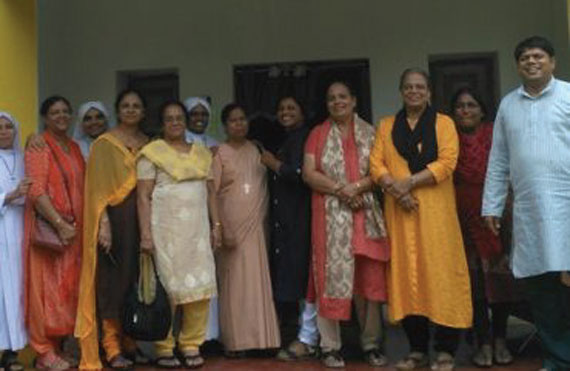
A group of Catholic women from Kerala who spent five days in Kandhamal say the faith of Odisha’s persecuted Christians has deepened their belief in Christ. “The Christians of Kandhamal have manifested a deep-rooted faith in Christ by facing the worst religious persecution in modern India,” said Sister Josia Padinjaradathu, a member of the 11-member team representing the Women Commission of the Kerala Catholic Bishops’ Council. “I am deeply touched and moved by listening to the survivors of Kandhamal,” she told Matters India.

The June 26-30 visit was a part of the Women Council of the Catholic Bishops’ Conference of India’s national reach out program in Kandhamal.

Sister Talisha Nadukudiyil, secretary of the council who arranged the visit, noted that Kandhamal was the epicentre of anti-Christian persecution in Odisha in 2007 and 2008. At least 100 people, mostly Christians, were killed and more than 56,000 people were rendered home-less. Hundreds of churches and houses were also destroyed in the mayhem that lasted for months.

Campaign for jailed Christians achieves milestone

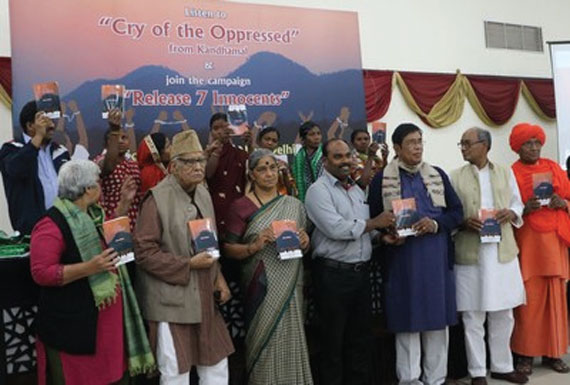
An online signature campaign demanding the release of seven innocent Christians, jailed in connection to anti-Christian riots in Odisha, crossed the milestone of 50,000 signatures on July 11. Journalist author Anto Akkara, who has been spearheading the campaign in a press statement on July 12, called for more signatures for the release of the seven – six of them illiterates including a mentally challenged.

The seven Christians – Bhaskar Sunamajhi, Bijay Kumar Sanseth, Budhadeb Nayak, Durjo Sunamajhi, Gornath Chalenseth, Munda Badamajhi and Sanathan Badamajhi—have been jailed accused of murdering of Swami Laxmanananda Saraswati on Aug. 23, 2008.

The murder sparked a six-week long anti-Christian violence, resulting in the death of some 100 Christians. Frenzied groups raided and torched some 300 churches and 6,000 Christian houses.

Latin-rite bishops reflect on ‘mission of the Church’

Twenty-five Catholic bishops from all over India came together in the country’s commercial capital, Mumbai, in early July to take a closer look at the Church’s core mission in the country, AsiaNews reported.

They prayed and reflected on how best the Church can seek out, touch and heal the wounds of Jesus in suffering humanity.

The July 2-7 “Bishops’ Joint Reflection Programme” was the initiative of Conference of Catholic Bishops’ of India (CCBI), the official body of the country’s Latin-rite bishops, one of the three rites that make up the Catholic Bishops’ Conference of India, the nation’s apex Catholic bishops’ body.

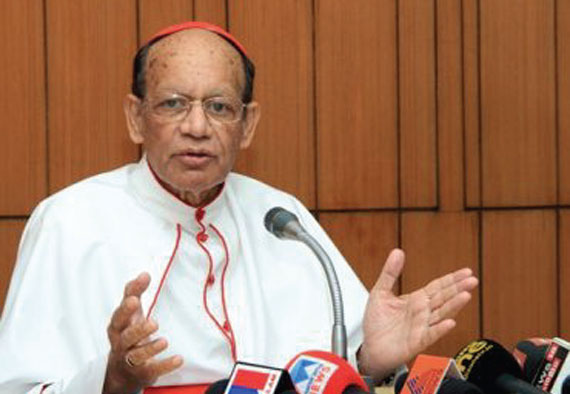
Cardinal Oswald Gracias, Archbishop of Bombay and president of both CBCI and CCBI, explained to AsiaNews that the purpose of the program was “to reflect on the mission of the Church and how we can touch the wounds of Jesus.” “St Thomas the Apostle, whose liturgical memorial recurred on July 3, wanted to touch the wounds of Jesus with his own hands,” Cardinal Gracias explained.

Syro-Malabar expansion not colonization, but evangelization: Archbishop 

A Syro-Malabar archbishop, who heads a diocese in northern India, wants his Oriental Church to become global by breaking free the barriers of Kerala, its base in southern India.

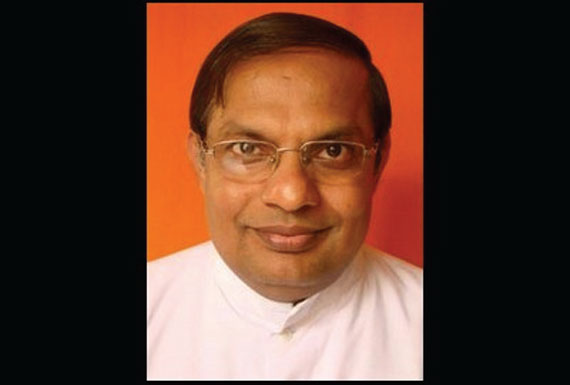
“What we need is globalization and not colonization of the Church,” Archbishop Kuriakose Bharanikulangara of Faridabad said on July 1 in an apparent response to fears expressed in certain circles over the Oriental rite gaining pan India jurisdiction.

The Syro-Malabar Church’s recent all India expansion, the archbishop said, should be seen more as an opportunity for greater evangelization than colonial conquest or territorial expansion.

The Universal Church today needs more “mission power” than “muscle power,” explained the first prelate of Faridabad diocese erected on March 6, 2012, primarily for the Syro-Malabar Catholics settled in the national capital and surrounding regions.

The archbishop, a former Vatican diplomat, expressed these views in a pastoral letter that was read on July 1 in all 36 parishes and 15 mission stations under the diocese that covers the National Capital Region and the states of Haryana, Himachal Pradesh, Jammu and Kashmir, Punjab and Rajasthan.

The prelate repeated them at the opening of the new academic year of catechism and faith formation program in the diocese held on the same day. More than 500 catechism teachers of the diocese attended the program at St Francis Assisi Forane Church in Dilshad Garden, a suburb in eastern India.

Fr Paul Saldanha becomes new bishop of Mangalore

Pope Francis has accepted the resignation of Bishop Aloysius Paul D’Souza of Mangalore and has appointed Fr Peter Paul

Saldanha (54) the new Bishop of Mangalore. The bisop-elect, a priest of Mangalore, is now Professor at the Pontifical Urbanian University in Rome.

This ecclesiastical provision was made public in Rome and Mangalore on July 3. Rev. Fr Peter Paul Saldanha was born in Kinnigoli, Diocese of Mangalore, on 27 April, 1964.

Coadjutor for Patna, administrator for Palayamkottai appointed 

Pope Francis on June 29 transferred Bishop Sebastian Kallupura of Buxar to Patna archdiocese as the coadjutor. Both the dioceses are in Bihar, eastern India.

On the same day, the pontiff accepted the resignation of Bishop Jude Gerald Paulraj A of Palayamkottai, Tamil Nadu, and appointed Archbishop Antony Pappusamy of Madurai as the diocese’s apostolic administrator.

Bishop Kallupura has been the Buxar bishop since June 21, 2009. Earlier, he had served Patna arch-diocese as pastor in various parishes.