Trump administration will terminate temporary status of Nepali immigrants

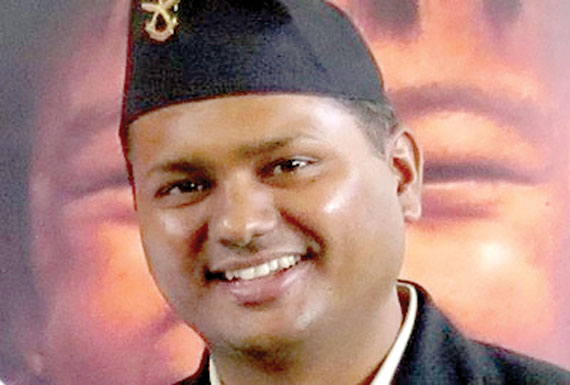
Nearly 9,000 Nepali immigrants living in the U.S. will lose their temporary protected status (TPS) after the Trump administration determined that the country has sufficiently recovered from a 2015 earthquake to accept their return. Aside from the deaths and injuries caused by the earthquake, said Lisa Parisio, an advocacy attorney for the Catholic Legal Immigration Network (CLINIC), Nepal has not yet recovered from “massive damage to public and private infrastructure across the country,” including homes, health care faci-lities, schools, roads, sanitation and water purification infrastructure.

“All of this has resulted in a situation that remains in Nepal today where the country is absolutely in no shape to safely return the 9,000 TPS holders,” Parisio said.

In a statement April 26 announcing the decision, which came a day after the deadline for the Department of Homeland Security to determine whether or not it would extend the status, Secretary of Homeland Security Kirstjen Nielsen contradicted this assessment.

Nepal’s squabble with EU bodes ill for religious freedom

Nepal’s government is still up in arms over claims by the European Union that Christians are not being fairly represented in parliament, while sensitive issues such as the eating of beef or the rights of Hindus and mino-rity groups get much greater consideration.

On March 21, the Ministry of Foreign Affairs (MoFA) drew attention to the conclusions and recommendations in the final report on the House of Representatives and provincial assembly elections by the European Union’s Election Observation Mission (EUEOM) to Nepal, which was released in February.

The EUEOM raised the point that Christians were not represented in the election, which operates on a proportional representation system, despite comprising 1.4% of the population.

This would seem to indicate that Nepal’s electoral system is not fully inclusive, as has been claimed. In fact, the charter sets out no provision for religious inclusion apart from guaranteeing this for Muslims. Instead, inclusion is worked out on the basis of people’s caste or ethnicity.

Islamic revival threatens Bangladesh’s identity

Four decades is enough for an independent nation to determine its true identity.

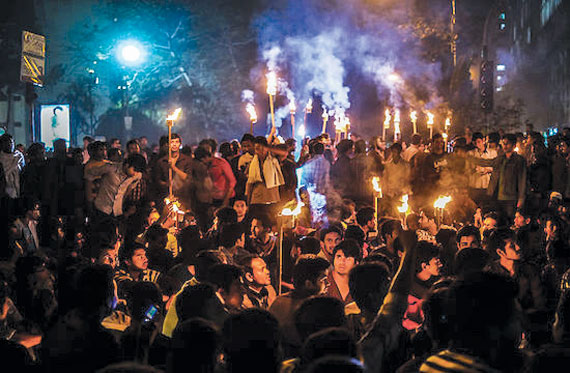
However, recent political manoeuvrings, gradually influenced by a small but strong group of Islamist hardliners and lethal rise of radicalism in recent years, show the struggle for a true national identity for Bangladesh is intensifying.

Major political parties vie for power by appeasing hardliners and their supporters, while an increasingly authoritarian government tries to solidify power with unfair policies and laws disregarding democracy and greater public interests.

Militancy has weakened amid a crackdown by the government, but it has not withered as a recent event proves. A knife attack on Dr Zafar Iqbal, a prominent liberal intellectual, on March 3 was just a warning sign. Iqbal is one of Bangladesh’s best-known physicists, as well as a popular writer of science fiction and children’s books.

Nun beaten unconscious by Vietnamese gangsters

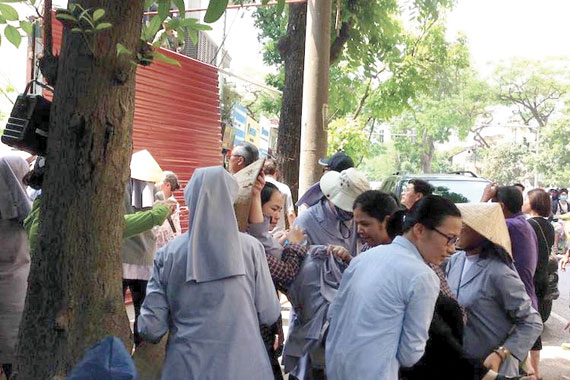
St Paul de Chartres Sisters in Vietnam were attacked by gang-sters while they were protesting construction of a house on their former land.

On May 8, a dozen nuns tried to prevent workers from building a house on the land next to their convent in Hanoi. Workers had taken trucks and tools to the site on the previous night.

Witnesses said gangsters employed to guard the site “insulted and attacked the nuns with batons and one nun was beaten to unconsciousness.”

They said many policemen were present but did nothing to stop the brutal attack.

In a petition to Hanoi authori-ties in 2016, the nuns said their congregation had taken legal ownership of the 200-square-meter land plot in 1949.

After 1954, when communists controlled northern Vietnam, the government rented a novitiate building on the site for an institute of microbiology. Authorities later divided the site and sold it to other people. The nuns have asked the government to return the land many times over the years.

Priest shot dead after Mass in northern Philippines

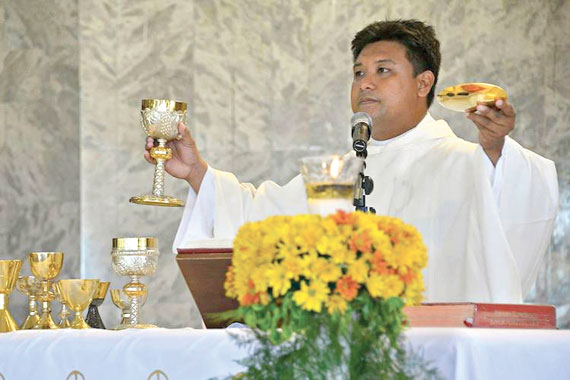
A Catholic priest was shot and killed after saying Mass in the northern Philippine town of Gattaran in Cagayan province on April 29. Police said Father Mark Anthony Yuaga Ventura, 37, was shot twice by a lone gunman.

The priest was blessing children who attended the Mass while talking to members of the choir when a man in motorcycle helmet approached him.

Father Ventura sustained gunshot wounds to the head and chest and died at the scene, according to the police.

The assailant walked out of the gymnasium, where the Mass was held, and fled on a motorcycle with an accomplice.

Minutes after the shooting, pictures uploaded on social media showed the lifeless body of the priest on the ground near the altar.

Father Ventura, known for being an anti-mining advocate and for his work with tribal people in the province of Cagayan, was ordained a priest in 2011.

In Iran, Christian converts face 10 year prison sentences

In Iran, conversion to Christianity can be a crime meriting a sentence of more than 10 years imprisonment.

Catholic Churches within the country are closely monitored with surveillance cameras to ensure that Muslims do not enter, and religious schools are limited in what they can teach, an Iranian-born journalist, Sohrab Ahmari, explained to CNA.

Ahmari is currently writing a spiritual memoir about his own journey to the Catholic faith for Ignatius Press. He converted in 2016 after living in the U.S. for more than two decades. His conversion would have been nearly impossible had he still been living in Iran. “In Iran, Catholicism is primarily an ethnic phenomenon. There are Armenian Catholics and Assyrian. They have their own churches, but they can’t evangelize and they can’t have Bibles in any languages but their own,” said Ahmari, who worked for the Wall Street Journal for several years before becoming a senior editor for Commentary magazine.

Pope asks German bishops to try to find unanimity on Communion question A German Bishop says Pope Francis Has Hinted Support for Intercommunion Proposal

Pope Francis asked the bishops of Germany to continue working together to find broader consensus on guidelines for allowing a Protestant married to a Catholic to receive the Eucharist. “Pope Francis appreciates the ecumenical commitment of the German bishops and asks them to find, in a spirit of ecclesial communion, a result as unanimously as possible,” the German bishops were told, according to a Vatican statement.

The Pope had invited six German bishops and the general secretary of the bishops’ conference to Rome for a May 3 meeting with top officials from the Congregation for the Doctrine of the Faith, the Pontifical Council for Promoting Christian Unity and the Pontifical Council for Legislative Texts.

A German bishop has said he believes Pope Francis has given a clear nod of approval to the German episcopal conference’s controversial proposal which would allow some Protestant spouses to receive Holy Communion.

But Cardinal Willem Eijk, the Archbishop of Utrecht, Holland, said the statement was “completely incomprehensible” as the Church’s doctrine and practice is “perfectly clear.” By failing to create clarity, “great confusion is created among the faithful and the unity of the Church is endangered,” he said, adding that he was reminded of Article 675 of the Catechism of the Catholic Church, which warns of a “religious deception” that offers man “an apparent solution” at the “price of apostasy from the truth.”

In February, the Vatican statement said, “more than three-quarters of the members” of the German bishops’ conference approved a “pastoral handbook titled, ‘Walking with Christ — In the Footsteps of Unity: Mixed Marriages and Common Participation in the Eucharist.’”

Pope Francis invited leaders of the bishops’ conference and some of the bishops opposed to the guidelines to come to the Vatican for a discussion with officials from the three offices. “Various points of view were discussed; for example, how the question relates to the faith and to pastoral care, its relevance for the universal church and its juridical dimension,” the Vatican statement said, without providing further details.

Cardinal Rainer Maria Woelki of Cologne, one of the seven German bishops who objected to the conference guidelines, participated in the meeting at the Vatican May 3. In his letter to the Vatican, which prompted the meeting, he had asked whether the guidelines were not simply pastoral, but went to the heart of Catholic faith and practice, and whether the German guidelines could have a wider impact on the question of eucharistic hospitality in countries around the world.

Pittsburgh diocese will see number of parishes drop from 188 to 57

After three years of discussions, Pittsburgh Bishop David A. Zubik said the 188 parishes of the diocese will be placed into 57 groupings that will eventually become new parishes. Bishop Zubik announced the plan on April 28 during a media conference, saying the effort was designed to promote vibrant faith and revitalize parishes. The announcement detailed the maximum number of weekend Masses per grouping and timelines for each grouping to work toward mergers and clergy assignments.

Henan suppression is ‘systematic and planned’

Concern in Beijing about the growing influence of Christianity triggered a recent escalation of repression against Christians in China’s Henan province, according to a leading Hong Kong academic.

The recent crackdown on various Catholic and Protestant communities was the result of more than two years of organization and preparation at provincial, city and country level through the Chinese Communist Party’s increasingly powerful United Front Work Department, Professor Ying Fuk-tsang, director of the Divinity School at the Chinese University of Hong Kong told ucanews.com.

Mangalore’s age-old harmony caught in crosshairs of communal hate

The beauty of coastal Karnataka is in sharp contrast to its politics. Sparkling back-waters and swaying palms were once witness to a land of religious co-existence. But over the last two decades, this picturesque region has been caught up in the politics of religious polarisation.

It was from here the Sangh Parivar first began its campaigns, starting with Hindu mobilisation against migrant Muslim workers from Kerala. In the 1983 Assembly elections, the BJP won 18 seats for the first time, mostly from the coastal districts of Dakshina Kannada and Uttar Kannada.

In 2013 the Congress breached the saffron fortress and swept the region as the Sangh Parivar faced a revolt within. Out of 12 seats of Dakshin Kannada, Congress won 10, BJP 2. In Mangalore out of 8 seats, Congress won 7. A year later though in Lok Sabha polls it was business as usual as the BJP won all 3 MP seats of coastal Karnataka.

Mangalore comprises 18% Muslims, 13% Christians and 69% Hindus. “The mix of religions here makes Mangalore a communal tinder box,” says Suresh Bhat Bakrabail of the PUCL, “ but those fomenting communal troubles are only playing politics. It is not religious but purely political communalism.”