Former Church of North India priest chosen to be bishop in the Church of England

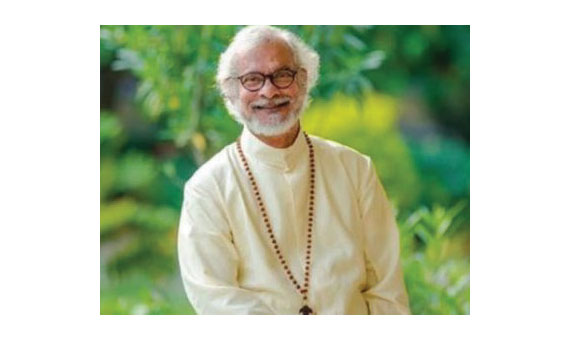
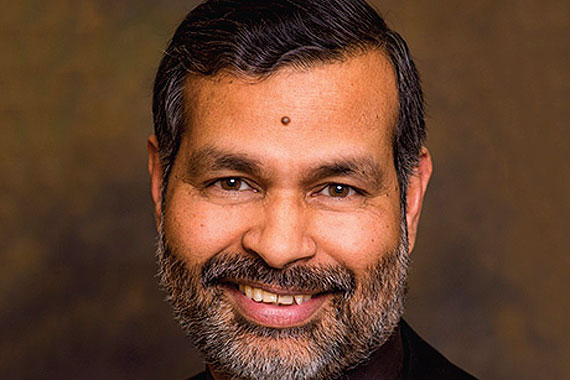
A former priest in the united Church of North India’s Diocese of Calcutta has been chosen to be the next Area Bishop of Bradwell in the Church of England’s Diocese of Chelms-ford. The Ven Dr John Peru-mbalath already serves in the Diocese, which covers the county of Essex and parts of east London, as the Archdeacon of Barking. He comes, origi-nally, from the ancient Syrian Christian community in Kerala, India, and trained for ministry at Union Biblical Seminary in Pune.

Dr Perumbalath worked as a youth worker among uni-versity students for two years and as a theological educator for three years before his ordination in the CNI.

Award for movie about Catholic priest using yoga to treat addicts

A documentary about the transformational power of yoga in fighting drug addiction won the Special Jury Mention Award at the 2018 Jaipur International Film Festival.

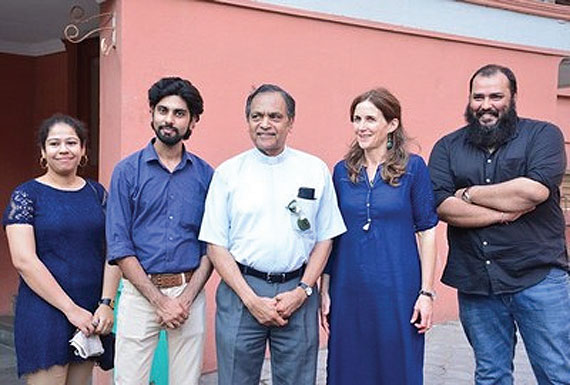
The film, The Circle, directed by British filmmaker Philippa Frisby focuses on the Kripa Dharavi Centre in Mumbai founded by Father Joseph Pereira.

“The Circle is a story that has to be told,” said Frisby, who is also a certified Iyengar yoga teacher.

The 65-minute feature tells the tale of four street children, how they fall into a cycle of addiction and how they live out of trashcans and survive by selling refuse, using drugs to block out their inner pain.

The film shows the child-ren going to school, forming friendships with other boys in the Kripa Dharavi Centre, and beginning the process of rebuilding their self-esteem and hope for the future.

Head of Believers Eastern Church calls for reforms 

The way we look at women and treat them in our country has always been a paradox. On one hand we venerate them and worship them. Look around us – we see goddesses being worshiped; we call our nation – ‘mother’ India; the sages say, take advice from your ‘mother’; more often than not, when we are in danger, the words on our lips are ‘my mother’; Christians have a special place for Mother Mary. Yet what puzzles me is this – we are not averse to killing those little ones who would have one day grown up to become mothers.

Cycle priest becomes popular in Rajkot village

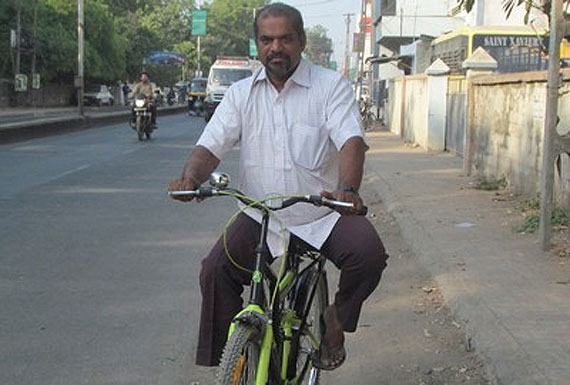
On the yellow mud paths of villages and the tarred roads of Rajkot town, people often spot a Catholic priest rushing on his cycle.

After almost a decade’s work in Rajokt’s Junagadh parish, Father Vinod Kanatt is now nicknamed “cycle priest” in the diocese managed by the Carmelites of Mary Immaculate congregation.

“He always surprises us. I have never seen a priest cycling home to exchange birthday greetings,” said 65-year-old Tony Dias after welcoming the priest came to his house in January. The priest came to wish his daughter Flora Mascarenhas on her 40th birthday.

The 52-year-old priest offered a white envelop carrying a birthday card and offered greetings to Flora Mascarenhas has been mourning the death of her husband. He then prayed over the woman for the gift of her life, changing the melancholic atmosphere in the house.

Dias said the priest make it a point to visit the house every Catholic in his parish on their birthdays. “It is very hard to find such a priest, when priests hardly visit houses once once a year under obligation,” Dias said.

Fr Kanatt visits every Catholic family on all important occasions…and the priest will be the first outside the family to know if anyone is sick. And, in some cases, he takes the sick to hospital and family members get to know of it only later,” Flora said.

Jain head invites pope to inter-faith meet in India 

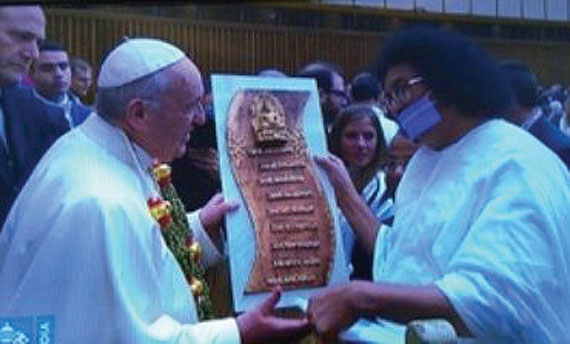
A top leader of Jainism from India has invited Pope Francis to an international Inter-religious meeting in New Delhi.

“Your Holiness, I am here to invite you for an international Inter-religious meeting, in which my organization has invited the president and prime minister of India and supreme heads of all religions of India,” said Acharya Dr Lokesh Muni in a written message to Pope Francis delivered in person in the Vatican on March 7.

Dr Lokesh Muni continued, “I am deeply happy to inform you that in the past we have organized many international inter-religious programs that have graced many international faith and social luminaries.”

In his invitation on behalf of Jain religion Lokesh Muni continued, “This invitation is close to my heart, as I know you are champion of peace and harmony and tirelessly working for bonding and love between religions. I am hopeful that you must grace this program according to your suitability of time.”

We are really optimistic and I am humbled if you can say two words of nonviolence. I am really grateful, if we can meet alone and discuss a few very important issues, which could bring our religions closer.”

Pope in his broken English said “I like and hope to come.”

Church in Germany and India join forces to fight climate change for Lent

A Lenten campaign is bringing together two churches that at first glance might seem worlds apart.

The Church in Germany is one of the wealthiest churches in the world, and at the heart of Europe; the Church in India is one of the poorest and exists at what Pope Francis calls “the peripheries.”

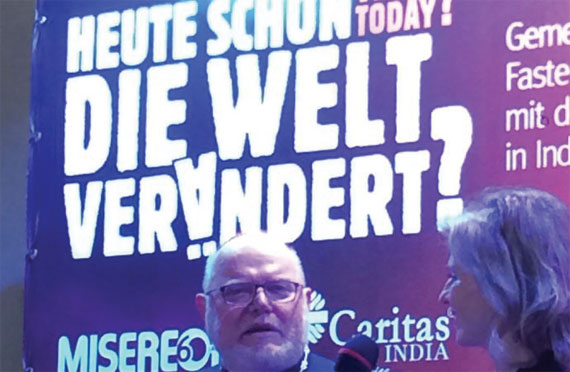
This Lent, Caritas India and Misereor – the German bishops’ international development agency – are joining together to bring awareness to climate change, with the theme “Have you Changed the World Today?”

“We are going around schools and parishes meeting children and people talking about India and the need to change our lifestyles as per the Laudato si’ of Pope Francis,” Father Frederick D’Souza, the executive director of Caritas India, told Crux.

Laudato si’, published in 2015, calls climate change “a global problem with grave implications,” adding that “its worst impact will probably be felt by developing countries in coming decades.”

“In India, Misereor’s partners work to ensure a good life, in particular for those who are forced to live on the fringes of society,” said Franz Gulde, Misereor’s Head of Development Education and Pastoral Work.

Catholic Church rejects mercy killing proposal 

The Catholic Church in India says it cannot accept any proposal to introduce passive or active euthanasia.

“Legalizing euthanasia would place the lives of vulnerable people at risk, including those whom others might be tempted to think would be better off dead,” warns Father Stephen Fernandes, national secretary of the Office for Justice Peace and Development under the Catholic Bishops’ Conference of India.

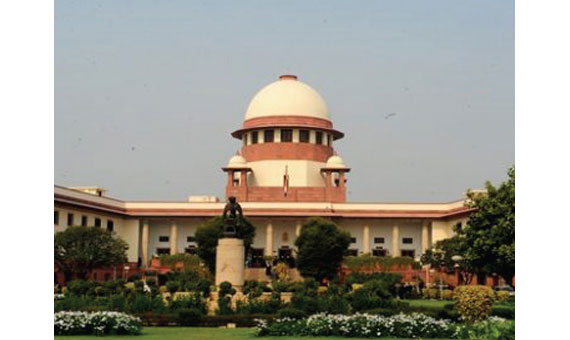
The Church official was reacting to the Supreme Court of India allowing passive euthanasia, stating that human beings have the right to die with dignity.

The March 9 order was passed by a five-judge Constitution bench of Chief Justice Dipak Misra and Justices A K Sikri, A M Khanwilkar, D Y Chandrachud and Ashok Bhushan. The apex court’s order came on a plea by the NGO ‘Common Cause.’

However, the Supreme Court set out strict guidelines for the mercy killing.

The top court also allowed an individual to draft a living will specifying that they not be put on life support if they slip into an incurable coma in the future. In a ‘living will,, a person can state in advance that their life should not be prolonged by putting them on a ventilator or an artificial support system.

Although the judges gave four separate opinions, all of them were unanimous that a ‘living will’ should be allowed, because an individual should not be allowed to continue suffering in a vegetative state when they don’t wish to continue living.

Father Fernandes says the “Church rejects any proposal concerning active euthanasia as well as passive euthanasia.”

Britain to take up ‘persecution’ of religious minorities in India

Britain will raise the issue of alleged persecution of Christians and Sikhs in India during the April meeting of the Common wealth Heads of Government Meeting (CHOGM) in London and Windsor, following demands by MPs to take it up with Prime Minister Narendra Modi.

During a lengthy debate at the Westminster Hall of the House of Commons on ‘Freedom of religion or belief’ last week, MPs cited details of alleged persecution in India, Pakistan, Bangladesh and elsewhere, and demanded that ministers discuss it when Commonwealth leaders are here for CHOGM.

A ministry of external affairs officer in India said the ministry would need to see the transcript of the debate before making any comments on the issue.

Martin Docherty-Hughes (Scottish National Party) mentioned the detention in Punjab of his constituent, Jagtar Singh Johal, allegedly without charge, and claimed that “members of the Sikh community across the UK have become gravely concerned that they, too, may be detained on the simple premise of being a member of the Sikh faith”.

Fabian Hamilton (Labour) raised the issue of alleged persecution of Christians. Hamilton, who visited Kerala recently, recalled the ancient roots of Christianity in India, “Kerala is home to the largest minority of Christians in India; many are from a Catholic background.” He mentioned reports alleging that India was now one of the most dangerous countries to practise Christianity.

Foreign Office minister for Asia, Mark Field, said “some profound points about Prime Minister Modi and about Christian and Sikh minorities in India” were made by the MPs. “We will do our best to raise some of those in an appropriate manner at the Commonwealth Heads of Government meeting in mid-April, to ensure that Parliament’s voice is properly heard,” adding that Modi “will appreciate that diplomacy sometimes needs to be done behind closed doors, rather than with megaphones.”

Wounded priest in Indonesia forgives attacker

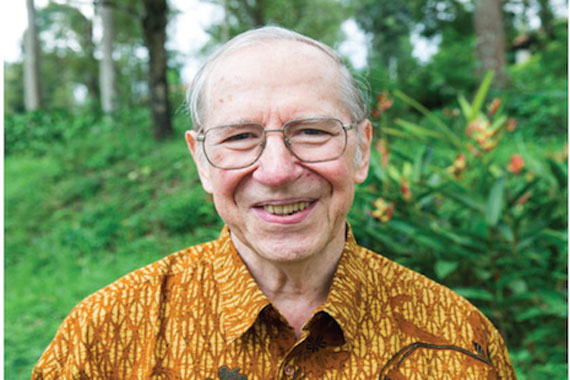
Dutch-born Jesuit Father Karl-Edmund Prier, 80, was the victim of a sword-attack on Feb. 11 when he was celebrating Mass.

A priest in Indonesia attacked and wounded in his church by a sword-wielding man says he has forgiven his attacker.

A suspected Muslim extremist called Suliyono attacked Dutch-born Jesuit Father Karl-Edmund Prier, 80, during a Mass at St. Lidwina Church in Yoyakarta on Feb. 11.

Three other Catholics were injured in the attack, which also saw the attacker decapitate Mary and Jesus statues, before being shot and wounded by police.

“I forgive Sulyono with sincerity. Every day I pray the Our Father prayer, which states that as we forgive those who trespass against us,” wrote Father Prier in a letter posted on the bishops’ commission on social communication website on Feb. 24.

Father Prier said he could have run away during the assault but did not.

“However, my conscience said: ’Do not go. The good shepherd should not run when wolves come.’ I remained standing on the altar to divert the attacker’s attention to me,” he said.

“He had the sword raised high and shouted, Allahhu akbar! As he ran down the aisle toward me,” he added.

He also said Muslims were very kind and helped clean up the church after the attack.

Family of Pakistani blasphemy suspect demands answers

The family of a young Christian man who sustained serious injuries while allegedly escaping sexual abuse is demanding to know how he was implicated in a blasphemy case.

Sajid Masih, 24, was due to have surgery on Feb. 27 after jumping from the fourth floor of the Punjab headquarters of the Federal Investigation Agency (FIA) in a suicide attempt on Feb. 23. He was being interro-gated with his cousin Patras Masih, 18, who was arrested on Feb. 19 for allegedly posting an insulting photo of the burial place of the Prophet Muhammad on a Facebook account.

Sajid claims he was being punished for an act allegedly committed by his cousin and that security authorities had ordered the two men to engage in a homosexual act as they attempted to force confessions from them both. Critics say police duress in such cases is common in Pakistan.

Abid Masih Ghouri, Sajid’s father, was called by a govern-ment hospital official shortly after the suicide attempt that sparked a nationwide outcry from mino-rity circles and civil society. “My senses faded after seeing his bloody body on a hospital trolley. I have never cried so much in my life,” Ghouri, 46, a sanitary worker, told ucanews. com.