Female theologians in Pakistan say “women are being dominated and de-womanised”

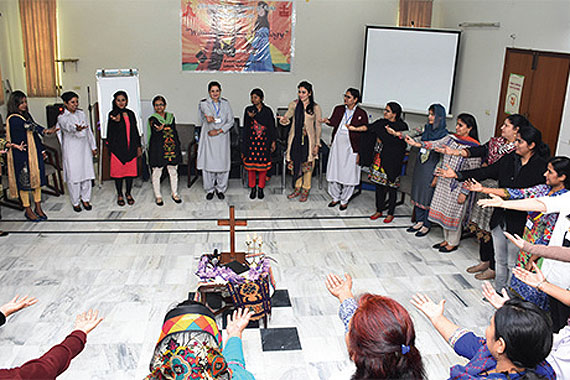
A group of female theologians from different churches in Pakistan have gathered to discuss equal opportunities for men and women to participate in mission and witness. The national consultation on “Women Doing Theology” brought together 33 female theologians from a range of Christian groups, including the Church of Pakistan, last week in Lahore. Addressing the question “what it means by ‘doing theology in Asian Context, especially in Pakistan,’ the participants said that “men and women are equals before God, both bearing the image of God.”

The continued: “God calls upon both men and women to fulfil the roles and responsibilities specially designed for them. However, in all spheres of Asian society, women are being dominated and de-womanised. In the Church and society women are being treated with bias”.

The participants challenged the gender based discrimination in the church and society, and said that “biblical and theological exegesis often grant men fuller participation than women in the life of the church [and] restricts the role of women to inferior levels.”

Hong Kong prepares to welcome thousands of young people for international Taize pilgrimage

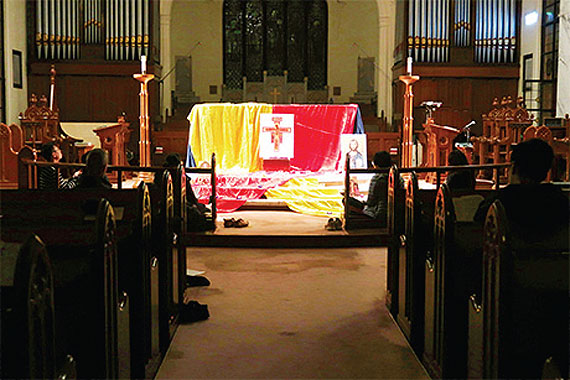
Thousands of young adults from around the world will gather in Hong Kong in August for a five-day Taize Pilgrimage of Trust and Reconciliation. The Hong Kong Sheng Kung Hui (HKSKH) – the Anglican Church in Honk Kong – has joined with the Catholic Church and the Hong Kong Christian Council to invite Taize to stage the significant international gathering in Hong Kong City. Some brothers from the France-based Taize Commu-nity arrived in Hong Kong last month and will stay in the Chinese autonomous territory to help plan for the international event. They have taken part in local services and welcomed to a provincial meeting of HKSKH Clergy.

In a joint letter to Taize, the Anglican Archbishop of Hong Kong, Paul Kwong; the Bishop of the Hong Kong Catholic Church, Cardinal John Tong Hon; and the chair of the Hong Kong Christian Council, the Revd So Shing Yit Eric; said: “We see in this initiative a sign of faith, hope and love, so necessary today for our world and for Hong Kong in particular in promoting justice, reconciliation and peace. Indeed, we have to educate our young people in this respect, so that they too can contribute to transforming human society. It is our understanding that the coming event would not be an end in itself, but rather a means for Christians, together with all people of good will, to open up new paths of faith, hope and love.
From 8-12 August, thousands of young people aged between 18 and 35 will gather in Hong Kong City.

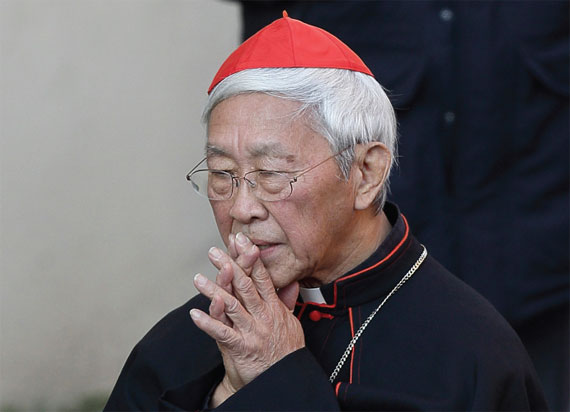
Cardinal Zen: China deal is ‘shameless surrender’

The rumoured deal between the Holy See and China is an “act of suicide” and a “shameless surrender,” Cardinal Joseph Zen has said.

In a recent blog post, the former Bishop of Hong Kong blamed papal advisors for the “bad deal”, accusing them of being “obsessed” with an “Ostpolitik” solution that “compromises without limits.”

The deal would likely involve the Vatican lifting the excommunications on seven Beijing-appointed bishops who were consecrated without papal approval. It would also likely give the Vatican a say over the appointment of future Chinese bishops, but still leave the final decision to Beijing.

Chinese Catholics are currently split between those in the government-backed Church and those in the ‘underground’ Church who remain loyal to Rome. Cardinal Zen said that the Pope “has never had direct knowledge of the Chinese Communist Party and, moreover, is poorly informed by the people around him.”

He singled out Vatican Secretary of State Cardinal Pietro Parolin for criticism, comparing him to his predecessor Cardinal Agostino Casaroli, who was “obsessed with Ostpolitik” and pursued “a sort of political compromise.”

Survey: Pope Francis is still popular, but warm feelings waning among conservatives

Five years after Pope Francis ascended to the papacy, a new survey of U.S. Catholics reports that most still harbour warm feelings toward the pontiff — but his popularity is waning among political conservatives.

According to a new study from the Pew Research Centre, the first Latin American pope retains a soaring 84 % favourability rating among Catholics overall, with only a 1-point drop since 2014. A majority (58 %) also still believe he represents a major positive change for the Roman Catholic Church.

But there are signs Francis’ honeymoon period has ended in some circles. Roughly a quarter (24 %) of American Catholics say he is naive, up from 15 % in 2015, and 34% now say the pontiff is too liberal, compared with 19 % who said the same three years ago.

The divisions appear to be more political than theological. According to the survey, the share of Republican and Republican-leaning Catholics who say Francis is too liberal has more than doubled since 2015, jumping from 23 % to 55 %. Similarly, while only 16 % of Republican Catholics surveyed in 2015 said Francis is naive, roughly a third say so today.

Church of England bans security cameras during services

In a sweeping new move to protect people’s privacy, the Church of England has ruled that CCTV cameras must be switched off during services.

The precedent-setting case by the consistory court came in response to a petition by a Canterbury vicar to install two cameras at his historic 13th century church to ward off vandals.

The commissary general of the diocese authorized the move but said the cameras must be switched off during services, Sunday worship, secluded prayer areas and weddings, The Telegraph reported on Feb. 23.

“Funerals and baptisms, in particular, are examples of occasions on which people are likely to be very sensitive,” said Morag Ellis, adding that any recorded footage should be kept for a maximum of four weeks.

“Similarly, in any churches where sacramental Confession or other ministries of individual pastoral support, such as healing, are practiced, there should be no filming in the part or parts of the church set aside for that purpose.”

Stop Exploiting Nuns for Cheap Church Labour, Vatican Magazine Urges

A Vatican magazine denounced widespread exploitation of nuns for cheap or free labour in the Roman Catholic Church on March 1, saying the male hierarchy should stop treating them like lowly servants.

The article in the monthly “Women, Church, World”, remarkable for an official Vatican publication, described the drudgery of nuns who do work such as cooking, cleaning and waiting on tables for cardinals, bishops and priests.

The article, based on the comments of several unnamed nuns, described how some work in the residences of “men of the Church, waking at dawn to prepare breakfast and going to sleep once dinner is served, the house is in order and the laundry cleaned and ironed”.

It said their remuneration was “random and often modest”.

In many cases, the nuns, who take vows of poverty, receive no pay because they are members of female religious orders and are sent to the residences of male Church officials as part of their assignments.

In the past, most of the nuns working as domestic help in male-run residences or institutions such as seminaries were local nationals.

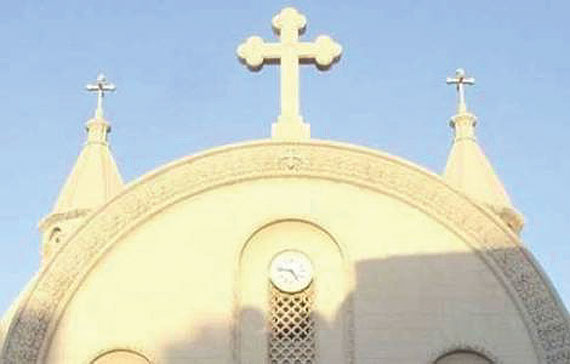
The Egyptian government “legalizes” 53 churches built before the law on Christian places of worship

The Egyptian government has provided full legal certificates to 53 churches with annexed service buildings already built before the new law on the construction of Christian buildings of worship passed by the Egyptian Parliament on August 30th 2016. A meeting of the government Commission set up specifically to conduct a census and examine the legalization of church buildings built before 2016 ratified the full compatibility of the 53 “legalizied” places of worship with the parameters defined by the new legal provisions. The Egyptian Premier, Sherif Ismail, in addition to technicians and representatives of the ministries of construction, interiors and justice, took part in the meeting, which took place on 26 February.

The 53 legalized” churches represent only a first “block” of the more than 3 thousand Christian places of worship that must be taken into examination by the Government Commission to verify whether they meet the standards established by the new law.

Will Pan-Amazonian Synod Result in End to Clerical Celibacy?

The Vatican announced on March 8 that Pope Francis has appointed members of a pre-synodal council who will collaborate with the secretariat of the Synod of Bishops in preparation for the Pan-Amazonian synod next year. Also announced was the theme of the October 2019 synod: Amazonia: new pathways for the Church and for an integral ecology.

Of particular, though not unexpected, interest are the appointments of Cardinal Claudio Hummes and retired Bishop Erwin Kräutler to the council. Both have advocated a change in discipline to allow married clergy in the Latin rite, and the Pan Amazonian synod is expected to provide a forum to at least discuss the matter.

Although some exceptions already exist to allow married priests in the Catholic Church (the Eastern rites and the Ordinariate for former Anglicans for example), the Amazonian case could be used to allow for married clergy wherever priest shortages might exist, and therefore permit a far wider provision.

Bishop Kräutler, an Austrian who headed the Xingu diocese in Brazil from 1981-2015, has long argued for viriprobati (ordination or married men of proven virtue) to make up for a shortage of priests in remote Amazonian regions.

A supporter of the ordination of women despite Pope Francis and his predecessors definitively ruling it out, Bishop Kräutler said in an interview last year that he thinks the Pan-Amazonian synod might consider the issue of viriprobati, and disclosed that after meeting Pope Francis in 2014, the Holy Father had encouraged him to “courageously” explore the matter.

Francis reportedly wanted the issue discussed at the next synod this October, but the theme was voted down by the majority of members on the ordinary council of the Synod of Bishops, the body charged with drawing up the theme. Instead, they opted for a synod on “Young People, the Faith and the Discernment of Vocation.”

Cardinal Hummes, meanwhile, has made comments in the past advocating for a change in the discipline.

A friend of the Holy Father who gave him the inspiration to choose the name Francis, the Brazilian cardinal made headlines back in 2006 when he argued that “even though celibacy is part of Catholic history and culture, the Church could review this question, because celibacy is not a dogma but a disciplinary question.”

Priests’ books recount horrors of Sri Lanka’s civil war

Two Sri Lankan priests who chose to stay among war-affected Tamils have written books about their experiences and challenges.

Senior Catholic Priest Father Terrence Fernando and Anglican Father Mariamuttu Sathievel launched their books on March 5 at the Center for Society and Religion in Colombo.

Father Fernando, a Sinhalese, started a mission in Tamil areas with minimum facilities and great difficulties while living in Vavuniya in the north. He pleaded with church leaders and other leading figures to stand against war.

His book contains letters and articles about the suffering of people during the civil war from 1983 to 2009.

Father Fernando’s book describes how thousands of children lost parents or limbs.

“What I have written in this book is not mere thoughts and essays but stories of the blood and tears of our Tamil brothers and sisters,” said Father Fernando.

African cardinal: Empty churches, not ‘remarried’ divorcees is western church’s

An African cardinal said he is “astonished” to see the church in the west fixated on “remarried” divorcees and on welcoming homosexuals and not on the bigger problem of empty churches. In a March 2 interview with the Austrian public service broadcaster ORF (Österreichischer Rundfunk), the Nigerian Cardinal John Onaiyekan — who is archbishop of Abuja, Nigeria — said he was “astonished that these are the themes that people [in Europe] are concerned about,” referring to the topics of “remarried” divorcees having access to the sacraments as well as homosexuality. While Europe is increasingly secular, the Catholic Church in Nigeria is growing.