Hindu radicals attack a Catholic college attempt Arathi

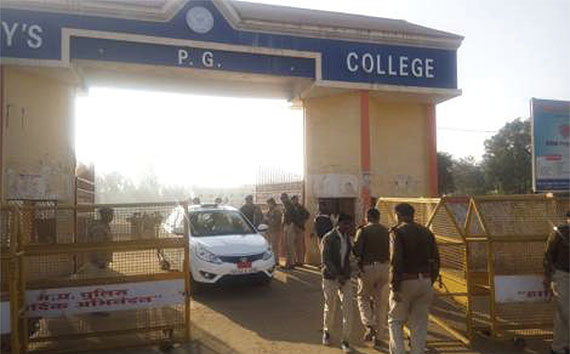
Hundreds of police deployment was done at the St. Mary’s Post Graduate College in Vidisha, Sagar Diocese in Madhya Pradesh, central India as Hindu right-wing groups threaten to perform Hindu rituals in the premises.

“Calm has returned to the place now as only policemen on watch have remained in the area. We thank once again the Union Home Minister Rajnath Singhji and the Madhya Pradesh police force. And a big thank you for your prayers. The Fathers and Sisters and other personnel are in a state of shock. Do continue to pray for them,” said Bishop Theodore Mascarenhas, secretary general of Catholic Bishops’ Conference of India (CBCI), who is following the issue, told Fides news.

On January 4, more than 900 Akhil Bharatiya Vidyarthi Parishad (Abvp), one of the Hindu right wing student groups threatened to gather and forcibly perform “Aarti of Bharat Mata” (incense to national personification of India as “Mother Goddess”, represented by the goddess Durga dressed in an orange sari and accompanied by a lion) and other Hindu goddesses in the college.

“The Madhya Pradesh police assured church authorities full police protection. The priests who manage the College, however feel that the situation is potentially very dangerous as over 900 activists were expected to gather in violation of police orders. There was already an aggression earlier on 30 December despite the presence of 20 policemen. We need to pray more. We are in touch with the Federal Home Ministry,” said Mascarenhas.

Hundreds of right-wing Hindu students clashed with police in central India Jan. 4 after they tried to storm a Catholic-run college to conduct a Hindu religious rite, church sources said.

Police were forced to charge about 800 students from the group Akhil Bharatiya Vidyarthi Parisahd (ABVP) when they tried to gain access to St. Mary’s College in Vidisha, in Madhya Pradesh state to conduct the Aarati, a Hindu ritual prayer hailing Bharat Mata (Mother India).

“They did seek prior permission, but it was refused,” college director Father Shaju Devassy said. Police foiled their attempt.

Syro Malabar church inaugurates biggest diocese in India

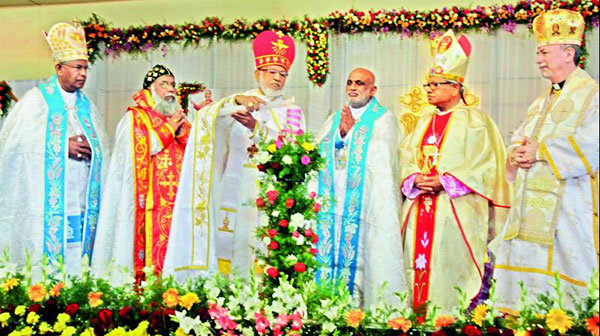
The Syro-Malabar Catholic Church on Sunday marked a historic moment with the inauguration of the Shamshabad Diocese here with pan-India jurisdiction, excluding the existing 30 dioceses, which the Latin Church had taken over in 1886.

The diocese has jurisdiction over all the Syro-Malabar Christians in 23 states and two Union territories, excluding those in Kerala, Tamil Nadu and in the jurisdictions of the Kalyan and Faridabad dioceses, making it the largest in the country, the officials of the new diocese said.

Major Archbishop Cardinal George Alencherry, the head of the Syro-Malabar Catholic Church, formally dedicated the diocese to the Vatican with the installation of Raphael Thattil as its first bishop.

The Diocese of Shamshabad in Hyderabad is the 31st for the Kerala-based church and also the largest in the country with administrative control across 24 states, including the entire Eastern and Northeastern regions, Andhra Pradesh, Odisha, Rajasthan, four Union Territories and all those areas which are not governed by the 14 dioceses outside Kerala.

The new bishop Thattil will serve 1,30,000 faithful spread across 100 cities in the country and has 11 functional churches and seven under construction with around 90 priests and a few hundred nuns.

Hopes fade for 650 fishermen missing after Ockhi cyclone

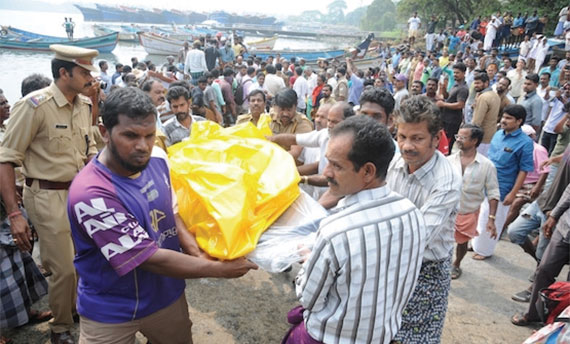
With about 650 fishermen still missing a month after the Ockhi cyclone hit the southern Indian coast, hundreds of families spent Christmas and New Year in lingering hope of their return, but optimism is fading fast.

The federal government has put the number of missing fishermen at 661. Federal Minister of Defence Nirmala Sitharaman told parliament on Dec. 27 that 261 from Kerala and 400 from Tamil Nadu are missing. No one has been rescued since the announcement.

Official government records show 76 people died in the Nov. 29-Dec. 5 tragedy in the southern tip of India covered by the states of Kerala and Tamil Nadu.

“It indeed was a very sad Christmas and New Year for us. With children waiting for their fathers, and wives for their hus-bands, how will families cele-brate?” asked Robert Panippillai, leader of a volunteer group that works in the coastal areas near Thiruvananthapuram (formerly Trivandrum), Kerala’s capital.

No beef sale in Goa , traders protest against vigilantism

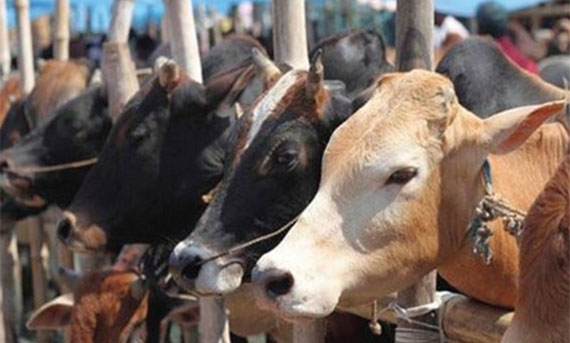
Harassed by vigilante groups, Goa’s only beef traders associa-tion on January 4 said they will go on an indefinite strike from Saturday, until the government cracks down on vigilante groups who hamper bringing in beef from neighbouring states.

The association said the strike would go on till the government eases procedures to bring beef into the coastal state.

Speaking to IANS, Manna Bepari, President of the Qureshi Meat Traders Association of Goa said no beef would be available for sale in Goa, until the government steps in and resolves the issue.

“We are tired of these raids. They are not allowing our business to function. Every other day these groups target the beef consignments which we order from the open market in Karnataka and government officials also keep harassing us,” Bepari said.

“No beef shop will be open until the government helps us and stops these vigilant groups from taking law in their hands,” Bepari said.

He also said that more than five raids were conducted in the last few weeks, especially during the Christmas and New Year period, when sale of beef is at its peak in Goa.

Eight including nun injured in protest march against removal of cross

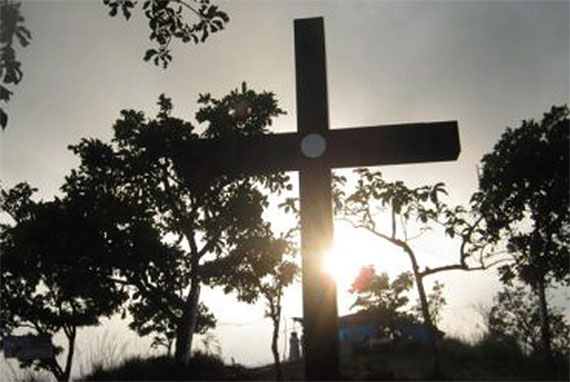
Eight activists including one nun has been injured after a protest march taken out by the Kerala Latin Catholic Women’s Association to the official residence of Forest Minister K. Raju turned unruly.

The demonstration was organised in protest against the destruction of a wooden cross that had been found to be damag-ed a month ago at Kurisumala in Bonacaud. The forum, a feeder organisation of the Kerala Regional Latin Catholic Church, took out the march in protest against the alleged delay in apprehending those responsible for the incident. Nuns and children were among those who took part in the procession.

Police blocked them when they tried to break the police barricade to move towards the residence. Police said they blocked the march when agitators tried to break the barricade and move further towards the minister’s residence.

Opposition leader Ramesh Chennithala alleged that police used force on the women protesters, a charge denied by police. Chennithala wanted a probe and action against the police personnel responsible for it.

The police however ruled out any kind of lathi charge. “When they tried to forcibly enter the minister’s residence the police blocked them. We didn’t resort to lathi charge,” said a senior police official.

Syro-Malabar synod to conclude with silver jubilee celebrations

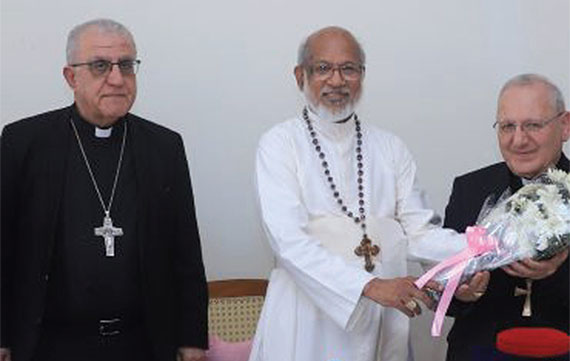
The Syro Malabar Church synod held a valedictory function of the silver jubilee celebration of the church attaining the archieprachy status at its headquarters at St Thomas Mount on Saturday, January 13. Louis Raphaël Sako Head of the Chaldean Catholic Church inaugurated a public meeting to be held on the occasion. Apostolic Nuncio to India and Nepal, Archbishop Giambattista Diquattro chaired the meeting.

Head of the Syro-Malabar Catholic Church – Archbishop Cardinal George Alencherry, President of the Catholic Bishops’ Council of India (CBCI) and major archbishop of the Syro-Malankara Church – Baselios Cleemis and Secretary of the Congregation for the Oriental Churches Archbishop – Cyril Vasi> spoke on the occasion. Other speakers included Bishop Dr Francis Kallarakkal, Bishop Antony Kariyil, Supreme Court Judge Kurian Joseph , Dr Sibi – Superior General of CMC (Congregation of the Mother of Carmel ) congregation .

Pope John Paul II had on December 16, 1992 signed the decree raising the church as a major archiepiscopal church giving it autonomy in the selection of bishops and of the major archbishop who is the head of the church.

The church currently has 34 dioceses – of which 31 are in India. It serves 5 million followers spread across the globe. Chicago in the United States, Melbourne in Australia and Preston in the United Kingdom are its dioceses outside India.

A total of 59 bishops are participating in the synod, which will end on January 13.

Indian priest, nun get jail term for defying court order

A court in central India has sentenced a Catholic priest and a nun to two months each in jail for defying a court order to reinstate two students their school expelled two years ago.

The district court in Ujjain town of Madhya Pradesh state also asked Father Sebastian Mullamangalam, the then manager of St. Paul Convent School, and school principal Sister Archana to pay 1 million rupees (US$16,000) compensation to the students.

The court’s Jan. 6 order, made public three days later, also requires them to pay legal compensation to the state of US$3,200. The court, however, has kept its order in abeyance for a month to help the convicts appeal against the order in a higher court, failing which they will have to accept the sentence. Church officials have removed the accused priest and nun from the school and appointed new officials but maintained they committed no offence. The school is accused of illegally terminating three students at the end of academic year 2015, with a remark in their transfer certificate that their parents’ “behaviour was not good.”

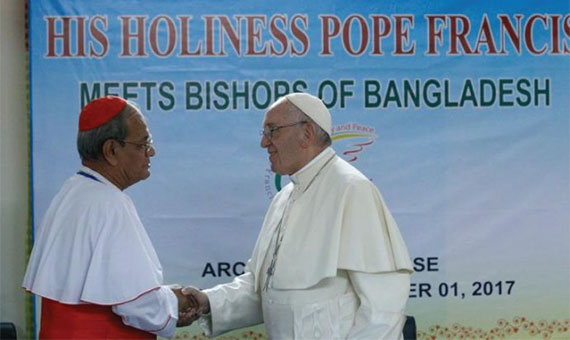
Bangladesh cardinal reflects on visit by Pope Francis

Pope Francis’s visit to Bangladesh “was a celebration of our cultural identity, of harmony, of diversity, and peace,” according to the country’s first cardinal.

Card. Patrick D’Rozario, Archbishop of Dhaka, was in neighbouring India this week, on a family visit in Kolkata. During his stay, he spoke to Crux.

D’Rozario was created a cardinal by Francis on November 19, 2016.

“The expectations of the people – of everyone – was fulfilled: The Catholics, people of other denominations and other faiths, and of the government. All were actively involved in the preparation and participation, and God has done, providentially, much more than what we had planned.” The pope visited Bangladesh from Nov. 30-Dec. 2, 2017, following his Nov. 27-30 visit to Myanmar.

Besides sharing a border, the two countries are also intertwined with the ongoing Rohingya crisis. Over 500,000 of Myanmar’s Muslim minori-ty have fled to Bangladesh since August, creating a dire huma-nitarian situation.

There are only about 350,000 Catholics in Bangladesh, about 0.2% of the total population. The country is over 86% Muslim, while another 12% is Hindu. Among the events Francis attended during his visit to the country was an interfaith meeting, where he met with members of the Rohingya community.

“The Christians in particular were very, very happy,” the cardinal said.

“They got to see the pope close up at all of the four big events, and so many could – unexpectedly – touch the pope, and this for them was a blessing and grace-filled moment.”

Dalit assertions threaten Hindu hegemony

Indian Dalits, former-ly known as untouchables, are challenging the supre-macist ideology of hard-line Hindu groups. But rights activists are blaming Hindu fundamenta-lism for a recent attack on Dalits celebrating victory in a 19th century battle against their upper-caste overlords. A series of violent clashes between Dalits and higher-caste Maratha people were reported in several parts of western Maharashtra state in early January.

This follow a Jan. 1 attack on Dalit people marking the centenary of an 1818 battle between local rulers and forces of the British East India company. The battle in Bhima Koregaon village resulted in the British curtailing the dominance of local Maratha ruler Peshwa Bajirao II.

The rout has been celebrated by Dalits ever since.

However, this centenary year it turned violent, with one person killed and hundreds injured.

Media reports suggested that right-wing groups carrying saffron flags pelted Dalits with stones, prompting them to retaliate.

Thousands protest jailing of Christians in Indian state

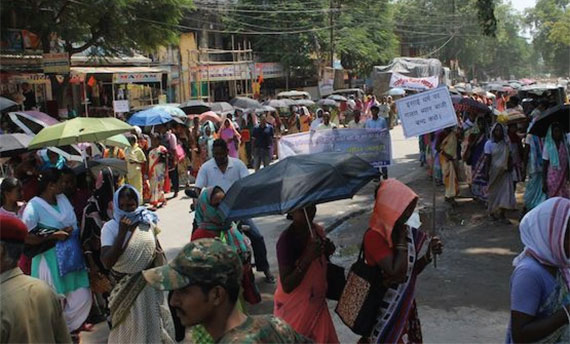
Some 5,000 Christians marched silently through India’s Jharkhand state demanding the release of six Christians jailed last week on complaints of offering money to villagers to attract them to Christianity. The Sept. 25 ecumenical “silent protest” was organized after a local court on Sept. 21 rejected the bail application of six Pentecostals, who were arrested Sept. 15 from Tukupani village in Simdega district.

“We wanted them to be released because they are innocent people who gathered for a prayer,” said Gladson Dungdung, a Catholic leader, who was among those who organized the protest in Tukupani. The court in Simdega district rejected the bail application of five men and a woman “seemingly under pressure from higher ups. But we are appealing to a higher court,” said Dungdung, who works for the rights of indigenous people. Bishop Vincent Barwa of Simdega said an “atmosphere of suspicion” exists after the state’s pro-Hindu government passed an anti-conversion law Aug. 12.