Christmas celebrations disrupted In Rajasthan

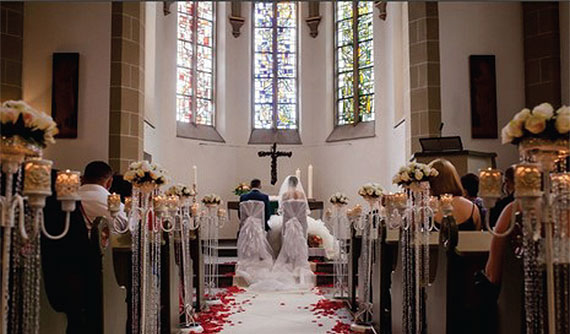
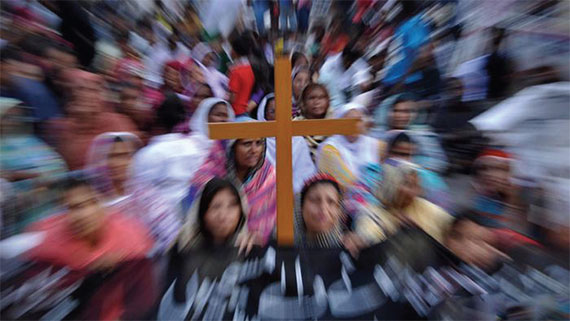
Christmas celebrations at a community centre in Rajasthan’s Pratapgarh district were disrupted December 20 night by a local right-wing group who accused the organizers of trying to convert their guests to Christianity.

According to “Masih Shakti Samiti,” (Jesus power commi-ttee), the organizers of the event, some people barged into the community centre at around 8.30 pm and created a ruckus, pulling down the modest decorations that they had put up and throwing around other literature and books.

The incident comes days after fringe groups in some towns of Uttar Pradesh threatened to disrupt Christmas and New Year celebrations in private schools. One such group had called such activities “a step toward forced conversions” of Hindu students, prompting the state police to alert district police chiefs across the state to ensure there were no disruptions. The community centre, a government building, is right in front of the Collector and the Superintendent of Police’s office. The organizers say they got access to the community center because they had applied for permission from the district authorities.

Queen’s Christmas message: I am inspired by Christ’s generous love and example

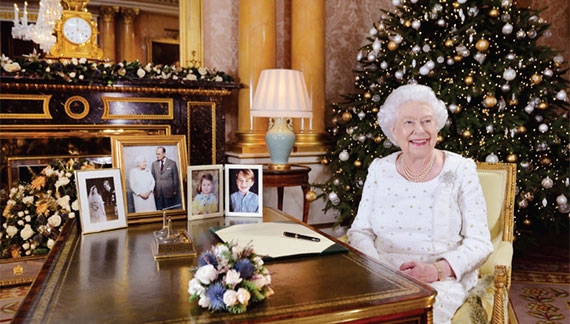
Her Majesty the Queen has spoken of her Christian faith in her Christmas message.” In her annual message, the Queen focused on the theme of ‘home,’ and praised volunteers who were providing meals to the homeless of Christmas Day. “We remember the birth of Jesus Christ, whose only sanctuary was a stable in Bethlehem. He knew rejection, hardship and persecution,” the Queen said.”And, yet, it is Jesus Christ’s generous love and example which has inspired me through good times and bad. Whatever your own experience is this year, wherever and however you are watching, I wish you a peaceful and very happy Christmas.

The Queen also praised London and Manchester for pulling together after terror attacks this year, hailing the cities’ “powerful identities.” Her Majesty, her husband the Duke of Edinburgh and family members attended an Anglican Church service on Christmas morning near the Queen’s country estate in Sandringham. Afterwards, the Royal Family had a private lunch. Prince Harry’s fiancée Meghan Markle joined the family for the first time this year.

Theresa May: Britain should ‘take pride’ in its Christian heritage

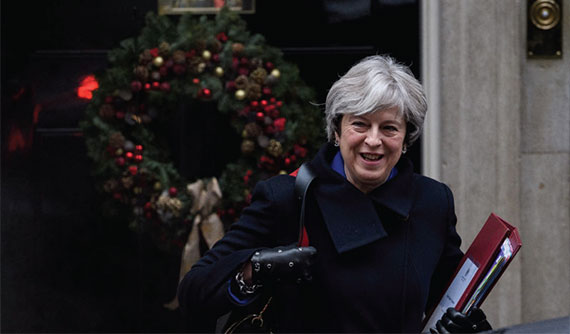
“Let us take pride in our Christian heritage,” Prime Minister Theresa May has said in her Christmas message.

In an address that stressed the role of the emergency services and volunteers, the Prime Minister thanked “all those whose service to others means they will be spending time away from their loved ones this Christmas.”

She also praised the Churches Together initiative, an ecumenical organisation that brings together the vast majority of Christian denominations in Britain.

“As we celebrate the birth of Christ, let us celebrate all those selfless acts – and countless others – that epitomise the values we share: Christian values of love, service and compassion that are lived out every day in our country by people all faiths and none. “Let us take pride in our Christian heritage and the confidence it gives us to ensure that in Britain you can practice your faith free from question or fear. “Let us remember those around the world today who have been denied those freedoms from Christians in some parts of the Middle East to the sickening persecution of the Rohingya Muslims.

Jim Caviezel Goes Back to the Bible in ‘Paul, Apostle of Christ’

The ‘Passion of the Christ’ actor talks about the challenges of playing iconic roles, why pious films are often lame and why good movies aren’t always family-friendly.

Actors who play iconic roles sometimes regret it afterward, not least because their careers often suffer later. Jim Caviezel has said Mel Gibson warned him that playing Jesus in The Passion of the Christ would hurt his career — but he has no regrets about playing the most iconic role of all time.

Caviezel never again played a central role in a Hollywood film like Frequency, The Count of Monte Cristo or High Crimes, though he did find mainstream success on the small screen as the lead in the critical and popular hit series Person of Interest, which ran five seasons. On the big screen, he played a terrorist in the Denzel Washington thriller Déjà Vu and has taken a number of roles in indies and faith-based films like When the Game Stands Tall.

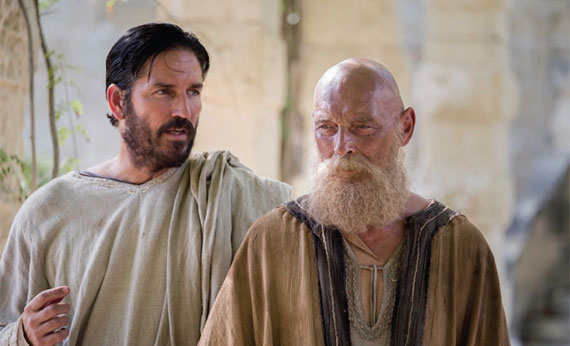
Now, for the first time since The Passion, Caviezel has returned to the Bible-film genre to play the role of St Luke the Evangelist in the upcoming film Paul, Apostle of Christ, written and directed by Andrew Hyatt (Full of Grace) and produced by Sony’s faith-based label Affirm Films.

Caviezel recently spoke: “Going into that world — playing Our Lord — was … I didn’t know how to do it, and I said, “I’m not going to play Jesus. I want him to play me.” It’s the same thing with Luke. I’m praying very deeply.

Recently, I was watching one of the players of the Dallas Cowboys making the Sign of the Cross before they kicked off to him. I guess when you’ve got those guys running at you, going at full speed, and a collision could happen and you could tear your knee, you gotta go into it knowing [the challenge]. I do the same thing on my films. I am praying for the audience — that what I read on script is conveyed to the person in the theatre, and that they have the possibility of changing their lives. When you are playing Jesus or Luke or Paul … it just requires someone like me to get out of the way. And that’s what I pray about.”

“I think one part of it is that he was a physician, and he had this particular lifestyle — he was wealthy, and he left it all. Why? He saw Paul speak. Was it Paul who spoke, or was it Christ speaking through him? I believe it was the latter, and that changed his life. So that’s kind of where I started.”

NINE DIED IN GUN ATTACK ON COPTIC CHURCH NEAR CAIRO

At least nine people including three police have died in an attack on a Coptic Christian Church south of Cairo.

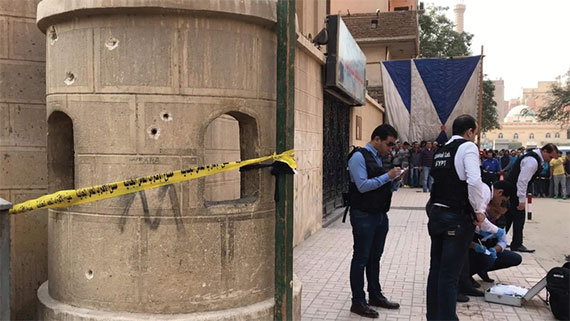
Two gunmen opened fire at the entrance to the church of Mar Mina in Helwan district on 29 December, which was being guarded by police in the run-up to Orthodox Christmas celebrations.

One attacker was shot dead by security forces. The gunmen is said to have been wearing an explosives belt, suggesting an even more deadly attack was planned, reports BBC correspondent Radwa Gamal in Cairo. The second gunman has been detained.

Islamist militants have claimed several attacks on Egypt’s large Christian minority in recent years, including two deadly bomb attacks on Palm Sunday in April and an explosion at Cairo’s largest Coptic Cathedral last December that killed 28 people.

At least 29 Copts were killed on a bus in May and a Coptic Orthodox priest was stabbed to death in Cairo in October.

Police have stepped up security measures around churches ahead of the Coptic Christmas celebrations on 7 January, deploying officers outside Christian places of worship and installing metal detectors at some of the bigger churches.

Pope defends embattled Cardinal Maradiaga

Pope Francis has strongly supported Cardinal Oscar Rodriguez Maradiaga against charges of financial improprieties, suggesting that the charges are an unjust attack on the Honduran prelate. “I’m sorry for all the evil they have done against you, but do not you worry,” the Pope said in a message to Cardinal Maradiaga, made public on the Vatican News web site.

Cardinal Maradiaga—who chairs the Council of Cardinals advising Pope Francis on Vatican reforms—said that the charges against him were really “an attack on the Holy Father,” prompted by “those who do not want the Curia reformed.”

The Honduran cardinal said that the reporter who wrote the story about a Vatican investigation into his financial affairs was lacking in “professional ethics” and had no real credibility.

Cardinal Maradiaga has received more than $40,000 each month from the University of Tegucigalpa, L’Espresso reports. In addition the cardinal has received year-end bonuses of more than $60,000. The cardinal reportedly invested more than $1 million in London financial concerns.

According to L’Espresso, the financial affairs of the Honduran cardinal came under scrutiny after reports that government auditors in Honduras were looking into the cardinal’s financial affairs. Sandro Magister of L’Espresso, who broke the story that Cardinal Maradiaga had received large payments from a Catholic university in Honduras, is a veteran Vatican journalist who, although often controversial, has an established track record of accuracy. And the Vatican has confirmed an investigation into financial affairs of the Church in Honduras, although not necessarily a focus on Cardinal Maradiaga.

Catholics and Protestants slam Macron’s ‘Kafkaesque’ migrant measures

In a letter to the French president, Emmanuel Macron, Christian associations on December 18 expressed their “deep concern” over new measures introduced by the minister of the interior to control immigration and access to the right of asylum.

“The minister of the interior is seeking to excessively accelerate asylum procedures and make access to procedures on French territory nearly impossible by placing all bodies dealing with migrants under his control,” states the letter signed by Secours catholique president, Véronique Fayet, and Jean-Michel Hitter, president of the Fédération de l’Entraide protestante.

An Afghan refugee woman begs for coins near St Christopher Catholic Church in early September in Berlin. The church has continuously provided sanctuary to refugees fearing deportation while their asylum claims are considered by German authorities. Sitting on the bare pavement outside a Catholic Church, an Afghan refugee woman, dressed in a bright floral headscarf, calls out plaintively to passersby, begging for coins.

It’s a scene repeatedly played out in the German capital overwhelmed by refugees fleeing war, persecution and economic deprivation in the Middle East and Africa.

But at Christmas time and beyond, Catholic and Protestant churches are doing what they can to help those struggling and in need. Such sanctuary, known as church asylum in Germany, is providing temporary protection for some 600 refugees currently who do not have a legal residence, in effect placing the church between the refugees and the public authorities and safeguarding them until their legal cases can be heard and considered. While most German church members say they support providing sanctuary to refugees, Michael Haas, coordinator of refugee work in the Catholic Archdiocese of Berlin, told that some parishes are fearful of the practice because it falls into a kind of grey area of the law. It also requires financial resources and manpower to provide the care. Still, he said, the “church, bishops, congregations and the government in Germany have agreed that there might be a mutual trust and that the church will not abuse the system of church asylum.” Churches, he said, have agreed to use sanctuary in “very few and particular cases after a thorough legal check,” while there appears to be a tacit agreement that the government “would not deport such cases without first having a second look at the application.”

Nun celebrates Catholic wedding in Canada

When no priests were available, the bishop of the Que-bec Diocese of Rouyn-Noranda sought and received Vatican permission for a local nun to officiate at a recent wedding.

While the story has been portrayed around the world as a sign that Pope Francis is changing the role of women in the church, Bishop Dorylas Moreau said the wedding was carried out according to a long-established provision of canon law.

It allows an exception for a layperson to be permitted to officiate at a wedding when a bishop, priest or deacon is unavailable. That layperson can be a man or a woman.
“It was also an experiment for the Catholic Church.”

“It is an exceptional situation, not something habitual,” Bishop Moreau said in French.

The bishop said he has only 16 priests for 35 parishes in a diocese that covers nearly 9,300 square miles of rugged territory. The diocese has more than 75 nuns, but no deacons, although three are currently in formation.

German churches warn of increasing oppression of Christians worldwide

German church leaders warned that religious free-dom is under threat across the world, and that a Christian presence in areas of the Middle East is at risk of disappearing entirely. The German Roman Catholic and Protestant Churches (EKD) published a report focusing on religious conversion to Christianity as a “litmus test for religious freedom.” The 70 page report, entitled “Ecumenical Report on the Religious Freedom of Christians Worldwide,” was released during the German Bishops’ Conference. While the Berlin conference is organized by bishops of Germany’s Catholic dioceses, the report was published jointly by the country’s Catholic and Evangelical church organizations. The EKD shared the report on Twitter. Representatives from both churches said that Christians are especially at risk of having their religious rights infringed upon.

Petra Bosse-Huber, the EKD’s bishop responsible for foreign ministries, said: “In our secularized Western society, we can often barely imagine what it means when people are hindered from visiting a mass or reading and studying the Bible with others.”

The report said Christians in the Middle East and North Africa, along with other religious minorities, face the greatest threats. Long-term trends and the effects of the “Islamic State’s” (IS) terror “threatened the end of a Christian presence in some countries.”

The report also highlighted sub-Saharan Africa, including Northern Nigeria, as a region where Christians are victims of Islamist terror, as well as China, Vietnam and countries of the former Soviet Union, where they face repressive authoritarian regimes.

Pope takes 27 candidates a step closer to sainthood

Pope Francis has authorized 12 decrees on miracles, martyrdom and heroic virtues of 22 men and 5 women. Pope Francis took 27 men and women a step closer to sainthood. The Pope received Card. Angelo Amato, the Prefect of the Congregation for the Causes of Saints and authorized him to promulgate 12 decrees regarding 22 men and 5 women from as many as 8 nations. They concern 3 miracles, a martyrdom and 8 heroic virtues. Nineteen candidates, including 3 miracles and the martyrdom of 16, have been cleared for Beatification, the penultimate stage before Canonization or sainthood. Among the 12 is the decree on the heroic virtues of the noted “Rosary Priest,” Servant of God Fr Patrick Peyton of the Congregation of Holy Cross (CSC). Another person whose heroic virtues have been recognized is Servant of God, Cardinal Stefan WyszyDski, the former primate of Poland. The cardinal who was Bishop of Lublin and later Archbishop of Warsaw and Gniezno died on 28 May, 1981, in Warsaw. He is known for his struggle against the Communist state over freedom and the basic rights of the church, and he even suffered imprisonment.