Told Modi privately that country shouldn’t be divided on religious lines: Obama

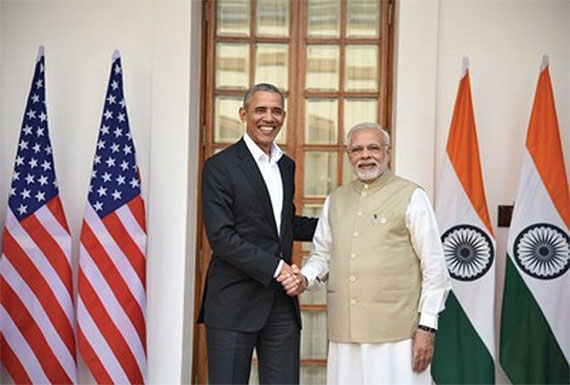
As a debate rages over growing intolerance in the country, former US President Barack Obama on December 1 disclosed that he had privately told Prime Minister Narendra Modi that India must not split on sectarian lines and that it must cherish the fact that Muslims here identify themselves as Indians.

“Particularly in a country like India where you have such an enormous Muslim population that is successful, integrated and thinks of itself as Indian and that is unfortunately always not the case in some other countries where a religious minority never-theless feels a part of. I think that is something that should be cheri-shed, nurtured and cultivated.

“And I think that all farsi-ghted Indian leadership recog-nises that but it is important to continue and reinforce that,” he said speaking at the Hindustan Times Leadership Summit.

Obama, who was making his first visit to India after demitting office earlier this year, was remi-nded of his speech at Siri Fort auditorium on January 27, 2015 — the last day of his last visit to India as US President — in which he sounded caution “against any efforts to divide ourselves along sectarian lines” and pointedly asked if the message was directed at the Modi led BJP government.

He said the message was meant for “all of us” and “the same thing” was told “in private to Prime Minister Modi.”

“If you see a politician doing things that are questionable one of things as citizens you can ask yourself is am I encouraging or supporting or giving licence to the values? If communities across India are saying we are not going to fall prey to division then that will strengthen the hands of those politicians who feel the same way.”
India’s statue building spree neglects hungry masses

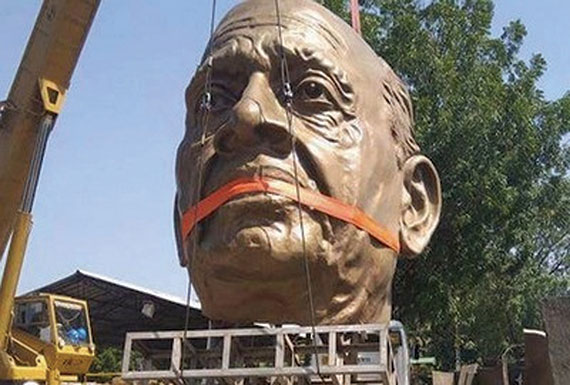
More than a billion dollars is being spent on giant statues of a nationa-list leader, a former king and a Hindu deity in three Indian states where pov-erty is widespread.

All of the states involved are ruled by the Bharatiya Janata Party (BJP), which uses jingo-ism and triumphalism to swing votes their way.

Pravin Mishra, a civil rights activist, said the phenomenon neglected practical needs of ordinary people such as improving health and education services. In Gujarat, a 213-meter statue of Sardar Vallabhbhai Patel, a prominent leader of India’s freedom struggle and a native of the state, is under construction at an estimated cost of US$470 million.

In neighboring Maha-rashtra, a 61-meter statue of Shivaji, a 17th century Maratha king, is being built for US$300 million.

In India’s most popu-lous State, Uttar Pradesh, US$300 million has been allocated for a 91-meter statue of Hindu lord Ram.

Uttar Pradesh, with a population of 200 million, had the highest proportion of homeless people in India (18.56%) followed by Maharashtra (11.9%) and Rajasthan (10.24%).

Mishra notes that the International Food Policy Research Institute recently ranked India at 100th out of 119 countries on its global hunger index, behind North Korea, Bangladesh and Iraq.

Nagaland MLAs, Churches agree to take lead for fair elections

Legislators and churches in Nagaland have agreed to lead and take the responsibility of a fair and honest electoral practice.

The affirmation was made as part of a colloquium on Clean Election organised in Kohima on Nov 29 by the Nagaland Baptist Church Council (NBCC) for the churches and legislators of Nagaland.

“The legislators, churches and citizens affirm that all of us have an investment in the future of the state of Nagaland and that our shared future must flourish without any obstacles,” read a joint statement signed by Nagaland Chief Minister TR Zeliang for the legislators and NBCC secretary general Rev Zelhou Keyho and Nagaland Joint Christian Forum vice president Rev Dr N Paphino for the churches.

“The commitment was done in the spirit of true Christian repentance as we realise that serious malpractices surrounding the conduct of state elections is the major cause of most of the problems that we are facing today,” the statement read.

The signatories on behalf of the legislators and the churches in the state also affirmed to lead and take the responsibility of putting in place fair and honest electoral practices.

Christian colony attack in Pakistan kills young boy

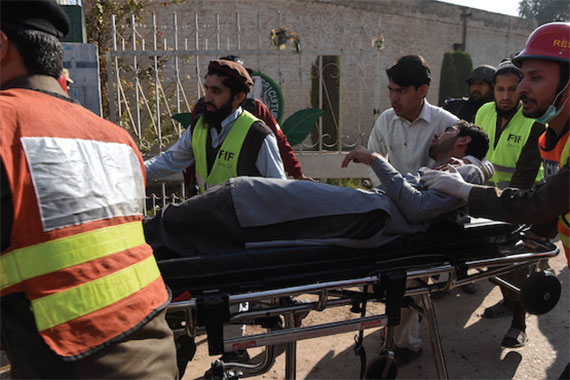
A bomb went off at the main gate of a Christian colony in the Pakistani city of Chaman on Dec. 2, killing a 7-year-old boy and two others, police said, the latest incident of violence in the restive south-western province of Baluchistan. “It was a hand grenade which caused the explosion at the colony’s gate,” Gul Mohammad, a police officer, told English daily Dawn. “The blast also smashed windows in nearby homes,” he said.

The Christian boy killed in the blast has been identified as Lucky Saleem, according to the police officer. The injured were rushed to the Chaman Hospital for medical treatment.

The attack in Chaman took place the day after Taliban gunmen wearing burqas stormed a college in the country’s northwestern region, killing nine people, mostly students. A Taliban faction claimed the responsibility of the attack and said that Peshawar Agriculture Institute was a safe house for intelligence officials. Both the terrorist attacks happened as Muslims were celebrating Milid Miladun Nabi (the birth anniversary of Prophet Muhammad).

In a press statement, Baluchistan Chief Minister Nawaz Sanaullah condemned the blast and expressed sorrow at the loss of innocent life.

He directed the authorities to ensure the best medical care for the injured.

The chief minister ordered the security forces to apprehend those terrorist elements involved in the terrorist attack.

Shezan William, Executive Secretary of Caritas Quetta, condemned the blast.

“Christians live in scattered communities across the biggest province and are rarely attacked. The attack has raised concerns for the safety of churches especially in Christmas gatherings. We are in close contact with locals of the attacked colony and praying for the affected families,” William told.

Huge crowd of mourners bid farewell to slain priest

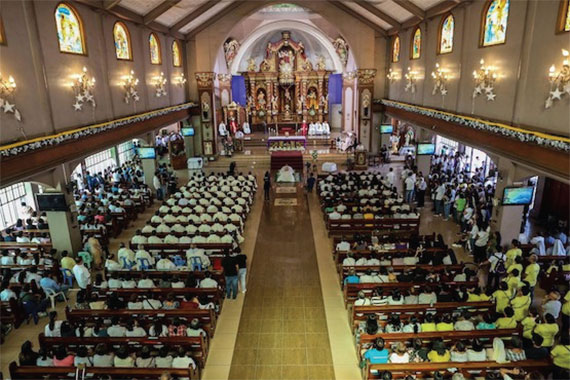
At least a thousand people joined the funeral march for Father Marcelito Paez, a 72-year-old Catholic priest murdered on Dec. 4 on the main Philippine island of Luzon.

The activist priest was ambushed four hours after facilitating the release of a political prisoner.

More than 100 priests conducted the mass with two Filipino bishops – San Jose Bishop Roberto Mallari and Cabanatuan Bishop Sofronio Bancud – presiding at the Eucharistic celebration.

Archbishop Gabriele Giordano Caccia, the Papal Nuncio, attended the mass at the Saint Joseph Cathedral in San Jose, in the province of Nueva Ecija. He did not give any message and priests billed his presence as “a silent form of solidarity and prayer.”

Tears flowed as mourners lined up to pay their last respects to Fr Paez, a retired priest who was a national board member and Central Luzon coordinator for the Rural Missionaries of the Philippines.

He was buried in the Sto. Niño Cemetery in San Jose.

Fr Paez’s casket was placed on the floor to symbo-lize his life as a temporary gift from God.

Peers of the priest said it also symbolized Fr Paez’s humility and decades of ser-vice to the poorest Filipinos.

The bishops wore red and violet stoles to proclaim the priest’s “martyrdom.”

Bishop Mallari said that Father Paez’s, when gravely wounded, told one of his assailants, “I am a priest,” prompting a retreat by the man preparing to give him the final shot.

“Father Paez, like a shepherd, vowed to die first before harm reached his flock,” the bishop said.

He did not retreat from danger.

Fr Paez’s death, the bishop said, should prompt clergy and laity to question the meaning of his sacrifice in terms of both personal change and change within the church.

Postman priest brings Pakistan-India students closer

For the past five years, Father Joseph Kalathil has been deli-vering letters to students in India and Pakistan, despite deep politi-cal animosity between the regi-onal arch-rivals. And this year, the Jesuit priest based in Chandig-arh, northern India, arrived at the Pakistani border on foot.

He informed fellow Jesuits in Pakistan about his presence at Wagah border crossing, located 24 kilometres from Lahore, in Pakistan’s Punjab Province.

“After getting through the passport control, it was only a five minutes’ walk and I was in another country,” Father Kalathil told.

The director of his self-styled “Peace Mission” delivered hand-written letters from 32 students at three Indian schools to two Catholic schools in Faisalabad diocese in Pakistan during his Oct. 22 to Nov. 9 visit.

He returned with parcels and replies to the letters he delivered.

Since 2012, he has delivered hundreds of similar colourful letters between students at educational institutes in the neighbouring countries. “I wanted to start with children,” he said. “I do not discuss religion or politics. Instead we discuss human rights, peace and friendship.” Sometimes young people rejected him, calling India an enemy.

Pope Francis trades popemobile for a rickshaw

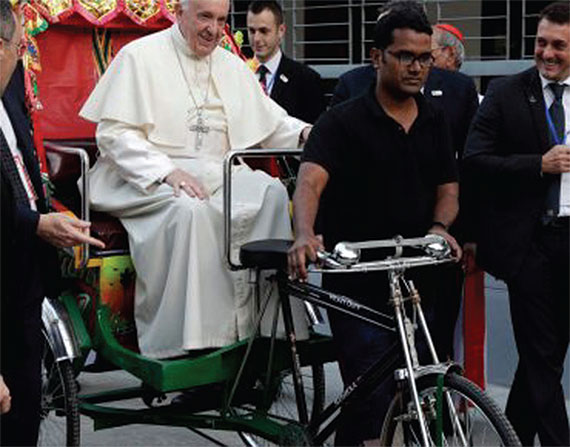
Pope Francis waved to crowds from the backseat of one of Bangladesh’s typical bicycle pulled rickshaws en route to a meeting of interfaith leaders at the residence of Dhaka’s archbishop.

Bangladeshi dancers serenad-ed him as he made his way to the stage for the event, where he was to meet with Rohingya refugees from Myanmar.

Francis has shunned the bullet-proof popemobiles of his predecessors, opting instead for open-sided vehicles so he can personally greet the crowds when he goes on foreign trips. In South Asia, that has meant a few spins in modified golf carts.

Francis isn’t the first Pope to ride a rickshaw. However St John Paul II rode in one when he visited Bangladesh in 1986.

Pope Francis led a giant open-air mass in Dhaka on Dec 1 ahead of finally coming face to face with Rohingya refugees whose desperate plight has dominated his landmark tour of Myanmar and Bangladesh.

Around 100,000 Bangladeshi Catholics crammed into a park in central Dhaka, cheering and chanting “viva il papa” (“long live the Pope”) as Francis was driven through the crowd in an open-sided popemobile made specially for the occasion.

Abducted Bangladeshi priest freed

A Bangladeshi Catholic priest who was abducted in the north-east on Nov 27, ahead of the visit of Pope Francis to the country, was found alive in Sylhet city on December 1. Fr Walter William Rozario is said to have fled from his kidnappers and got in touch with his family, his elder brother Bimal Rozariao told Star Online.

Vatican reporter in Dhaka, Sartre Xavier who has been in touch with the assistant parish priest of Fr. Walter, said Fr. Walter’s elder brother and the police have talked to the assistant parish priest about the rescue.

Vietnam bars another priest from leaving country

Father John Luu Ngoc Quynh from the Redemptorist Community in Hanoi was stopped by security officials at Noi Bai Airport on Dec. 5 and prevented from traveling to France, the community said in a statement. He is the second Redemptorist priest to be prevented from leaving the country this year. Father Quynh was invited to attend the vow-taking ceremony of a Vietnamese Cistercian on Dec. 8 in France, the statement added. The Cistercian is one of the priest’s alumni. Security officers told Father Quynh that he “was banned from traveling abroad for the protection of national security, social order and safety.”

Why would a Saudi Prince pay $450m for a painting of Christ?

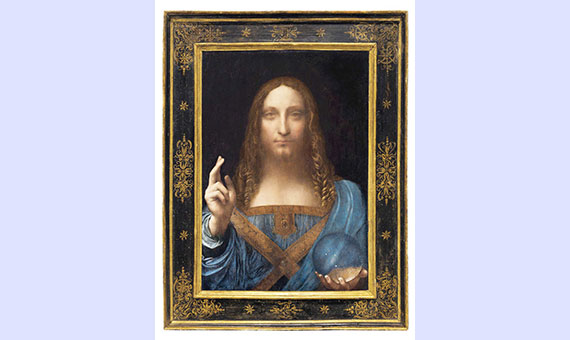
The news that the buyer of Salvator Mundi, the most expensive painting ever sold, is the Crown Prince of Saudi Arabia, Mohammed bin Salman. The painting is destined to hang in the Louvre Abu Dhabi.

But Salvator Mundi is also an interesting painting for Prince to buy for several reasons. Firstly, Saudi Arabia is not as rich as it was, thanks to low oil prices, so it represents a considerable outlay even for the Prince. Secondly, the Leonardo is not just a portrait (something that the strictly aniconic Muslims have never historically appreciated, given the Koran’s condemnation of images), it is a portrait of Christ the Saviour of the World. To import such a picture into Saudi Arabia, where rosary beads are banned, along with any other Christian paraphernalia, would presumably be illegal. That the Prince has bought the picture may be a tangible sign of his moving towards a more moderate form of Islam, as he has spoken of doing. This could mean that the buying of the painting is a sign of hope for many Christians who live and work in Saudi Arabia. Perhaps they are going to be granted some form of religious toleration.

Thus we should be extremely pleased that a Prince from a country that bans Christianity should have bought a Christian picture: it could be a sign of better things to come.