Pope exhorts Myanmar monks to dialogue – compares Buddha and St Francis of Assisi

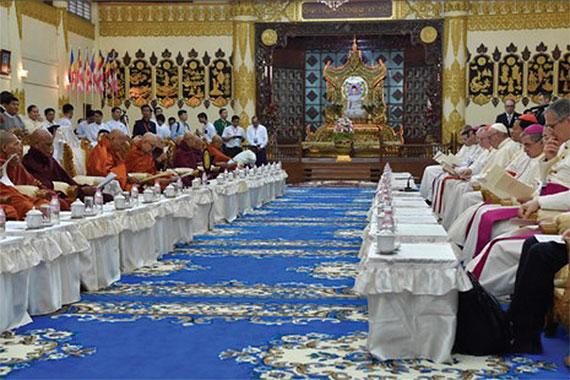
Meeting with Myanmar’s Buddhist leaders in Yangon, Pope Francis again pleaded for interreligious dialogue. Repeating what he had earlier told 150,000 faithful at a papal mass, he emphasized that religions need to work to “heal the wounds” of a still divided nation.

In a meeting at the Kaba Aye Pagoda in Yangon on November 29, Pope Francis challenged Myanmar’s Buddhist monks by comparing Buddha and St Francis of Assisi.

“Overcome anger with non-anger; overcome wickedness with goodness; overcome the miser with generosity; overcome the liar with truth,” Pope Francis said, quoting the Dhammapada, a collection of sayings of the Buddha.

He illustrated the parallel with the prayer of St Francis of Assisi: “Lord, make me an instrument of your peace. Where there is hatred, let me sow love. Where there is injury, let me bring pardon… This witness, Francis said, is particularly needed at a time when, despite technological progress and a rising awareness in society of our common humanity, “the wounds of conflict, poverty and oppression persist, and create new divisions. “In the face of these challenges, we must never grow resigned,” Francis said.

Showing respect to his hosts, upon arriving to the Kaba Aye Centre, Francis took his shoes off but kept on his black socks, in itself an exception, since both monks and visitors always walk barefooted in the Pagodas.

The overwhelming majority of the population in Myanmar is Buddhist, and religious and ethnic minorities often complain of oppression and second-class citizenship. In that context, Francis told the Buddhist monks that the whole of society is called to work to overcome conflict and injustice, adding that civil and religious leaders have a responsibility to ensure that every voice is heard. The official name of the group Francis met with is State Sangha Maha Nayaka Committee, a government-appointed body of 47 high-ranking Buddhist monks that oversees and regulates the Buddhist clergy in Myanmar.

There are an estimated 500,000 Buddhist monks and 70,000 nuns in Myanmar.

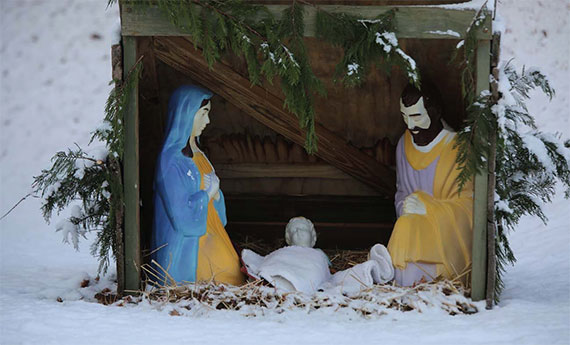
Number of Americans who view Christmas as religious keeps eroding

In a telephone survey of 1,503 U.S. adults conducted on Nov. 28 – Dec. 4 for the Pew Research Centre, 55% said they mark Christmas as a religious holiday. The figure in 2013, when Pew last asked this question, was 59%.

“Nine in 10 U.S. adults say they celebrate the holiday, which is nearly identical to the share who said this in 2013,” said the survey, whose results were released on Dec. 12. “About eight in 10 will gather with family and friends. And half say they plan to attend church on Christmas Eve or Christmas Day,” it said. Those numbers, Pew added, are roughly the same as those of 2013.

“Most respondents in the new poll say they think religious aspects of Christmas are emphasized less in American society today than in the past. But relatively few Americans both perceive this trend and are bothered by it,” the Pew survey said.

“Overall, 31% of adults say they are bothered at least ‘some’ by the declining emphasis on religion in the way the U.S. commemorates Christmas, including 18% who say they are bothered ‘a lot’ by this. But the remaining two-thirds of the U.S. public either is not bothered by a perceived decline in religion in Christ-mas or does not believe that the emphasis on the religious elements of Christmas is waning,” it added. One flashpoint is how Americans think store clerks should greet customers at this time of the year. “Merry Christmas” is the preferred choice of 32%, down from 43% in 2012, the last time Pew asked the question. The generic “Happy holidays” or “Season’s greetings,” went up from 12% to 15%, while 62% said it doesn’t matter, up from 45% in 2012. “One of the most striking changes in recent years involves the share of Americans who say they believe the birth of Jesus occurred as depicted in the Bible,” the Pew survey said.

In western Kenya, growing sect confuses some local Catholics

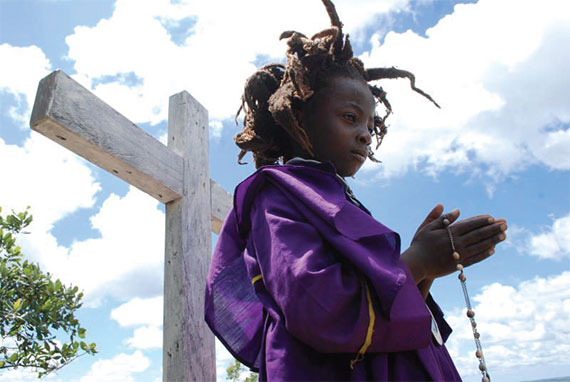
As the drumbeats grew louder at the Jerusalem Church, members of the Legio Maria movement bowed in unison before they began speaking in tongues, praying and singing. Their “cardinal,” Raphael Midigo, dressed in a purple gown, appeared from behind a curtain near the pulpit and began to pray for the sick, the blind, deaf, disabled, the mentally ill and couples who could not bear children. Worshippers responded in shouts as others fainted, overcome with emotion.

“I can now hear. I can speak. I thank God,” shouted 30-year-old Jacinta Atieno, who claimed to be deaf in both ears for 10 years. “I came all the way from Nairobi to receive a miracle,” she said. “I have suffered for a long time. I thank the man of God for healing me.”

Such supposed miracles in the Legio Maria sect have raised concerns among Catholic parish leaders in western Kenya. Thousands of Catholics have joined the sect in search of healing. “This is worrying because leaders from this church (Legio Maria) have their own selfish agendas, which they achieve by making people believe that they have power to heal and provide solutions,” said Geofrey Omondi, a catechist of the Nyatike Catholic church in Migori, a nearby town.

Breast cancer risk skyrockets with longtime hormonal contraception use: new study

Ingesting hormonal contrace-ption for 10 years increases the risk of breast cancer by 38%, according to a new study in The New England Journal of Medi-cine. “This is the first study that had shown intrauterine devices with hormones having associa-tion with breast cancer in large numbers,” Dr David Agus, a University of Southern California physician, explained on CBS News.

“With the lower dose of oral contraceptives, we thought there wouldn’t be as much of a risk as the higher dose but it turns out to be the same – about a 20% increa-se in breast cancer overall,” said Agus.
This study shows the risk increases by “9% if you’re on it for a year, and up to 38% if you’re on it for ten years or more,” he said.

The oncologist who founded breastcancer.org, Dr Marisa Weiss, told the New York Times the study’s results show “a significant public health concern.”

The study, titled Contemporary Hormonal Contraception and the Risk of Breast Cancer, reveals that newer, lower-hormone dose forms of contraception still increase the risk of breast cancer.
The New York Times called this risk created by birth control “a small but significant increase.”

In fifteen years, euthanasia in Belgium has become commonplace

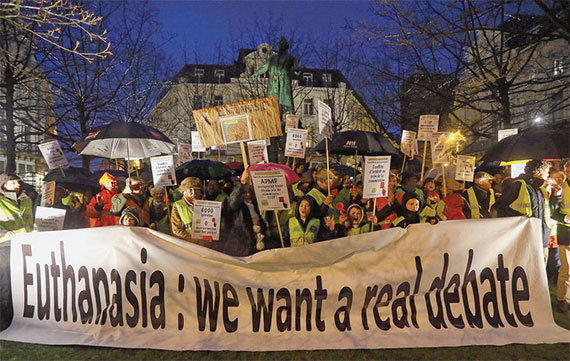
“A slippery slope. ” When asked about the evolution of the practice of euthanasia in his country, Father Marc Desmet Jesuit and chief of a palliative care service in one of the biggest hospitals in Belgium, Hasselt, answer without hesitation. Fifteen years after the decriminalization of euthanasia, this Flemish doctor can only see the evolution of the law. Initially conceived in 2002 as a possibility open to people suffering in an unbearable and constant way from an incurable serious illness, it has since continued to expand: people with mental disorders represent 19% of patients euthanized, and it is possible since 2014 to euthanize minors, even if they are not able to give their consent. As for the figures – 15,000 people in total have been euthanized – they have steadily increased, from 235 euthanasia in 2003 to 2024 in 2016 (2% of deaths in the country).

To reflect on these developments, several researchers met last month at the University of Antwerp, for a colloquium intended to establish a critical assessment of fifteen years of application of this law in the country. This state of affairs was organized while the Belgians have been debating for several weeks a new evolution of the law, to allow “the elderly who have the feeling of a fulfilled life,” also called “tired of living,” even if they do not suffer from any pathology, to access euthanasia. Seven out of ten Belgians are in favour of such an evolution, according to an RTL / Le Soir / Ipsos poll published in mid-September.

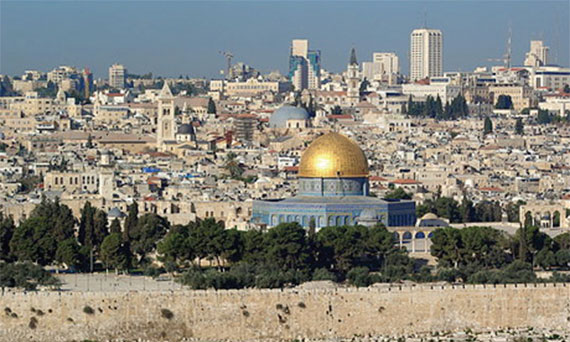
VATICAN RENEWS CALL FOR PEACE AND A NEGOTIATED SOLUTION ON JERUSALEM

Following days of violence and backlash after US President Donald Trump’s decision to recognise Jerusalem as the capital of Israel, the Vatican appealed for “wisdom and prudence” to prevail.

The Holy See “reiterates its own conviction that only a negotiated solution between Israelis and Palestinians can bring a stable and lasting peace and guarantee the peaceful coexistence of two states within internationally recognised borders,” the Vatican said on 10th December statement.

President Trump announced his decision on 6th Dec. to move the US embassy to Jerusalem from Tel Aviv, fulfilling a promise he made during his presidential campaign.

The announcement sparked anti-US protests throughout Asia and the Middle East, including a four-day protest in the Palestinian territories, Reuters reported. An Israeli security guard in Jerusalem, the report said, was in critical condition after he was stabbed by a Palestinian man at the city’s bus station.

Pope Francis expressed his “sorrow for the clashes in recent days” and called for world leaders to renew their commitment for peace in the Holy Land, the Vatican said.

The Pope “raises fervent prayers so that the leaders of nations, in this time of special gravity, commit themselves to avert a new spiral of violence, responding with words and deeds to the desires of peace, justice and security for the populations of that battered land,” the Vatican said.

Archbishop Emeritus Desmond Tutu has condemned President Trump’s recognition of Jerusalem as the capital of Israel.

In a statement, he said: ‘Those who claim divine rights for themselves to physical property on earth are false prophets.God does not discriminate between Christians, Muslims, Jews, Hindus, Buddhists, Taos, atheists – or any other people.’

The Anglican Archbishop in Jerusalem, Suheil Dawani, joined an ecumenical group of Patriarchs and Heads of Churches in a statement issued shortly before the President’s Speech. “We are fully aware and appreciative of how you are dedicating special attention to the status of Jerusalem in these days.” they said.

The statement, signed by 13 Church leaders, continued: “Our land is called to be a land of peace. Jerusalem, the city of God, is a city of peace for us and for the world. Unfortunately, though, our holy land with Jerusalem the Holy city, is today a land of conflict.”

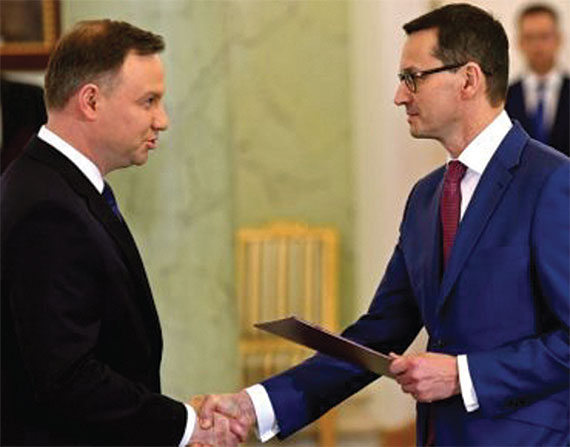
My dream is to re-Christianize EU: New Polish PM

Poland’s new Prime Minister has called on the European Union to return to its “proper values” and traditional Christian roots. A Western-educated former banker who was sworn in on Dec 11, Mateusz Morawiecki said his dream was to “re-Christianise the EU” in an interview with a Catholic channel. Poland is a “great, proud nation,” he told TV Trwam, adding that it would not submit to “blackmail” from European leaders. His comments come after the European Parlia-ment passed a resolution threa-tening sanctions against Poland if it passed a series of measures, one of which is a plan to restrict abortions for foetal impairment. The EU parliament also criticised proposed judicial reforms that would force two fifths of the Supreme Court’s judges to retire and overhaul the body that appoints new judges. When asked about the risk of the EU cutting funds to Poland, Morawiecki recalled former French president François Hollande, saying: “I do remember one former president telling us earlier this year ‘you have values, we have funds.’ Well, I would love to help the West with proper values.”

Britons ‘more likely to trust weather forecasters than priests’

Clergy rank below forecasters and newsreaders in terms of public trust, but are still well ahead of politicians. Public trust in members of the clergy has fallen substantially over the past 30 years, according to a poll by Ipsos MORI, although priests still enjoy relatively high trust compared to other professions. A survey of 998 British adults found that 65% say they trust priests and clergy to tell the truth – down 20% from 1983, and down four since last year.

The figures mean that clergy are the 10th most trusted profession in Britain, ranking below television newsreaders, weather forecasters, nurses and doctors. Despite the drop, more people still say they trust clergy than do not. 30% said they do not trust members of the clergy to tell the truth, giving them a net approval rating of 35%.

Among all demographic groups, clergy also retain a higher level of trust than distrust, achieving particularly high ratings among the over-65 (73%), people in the highest social grades (75%), people with degrees (69%), and people in rural areas (70%).

Young people born in 1996 or later are also much more likely to trust the clergy than those born between 1980 and 1995. 66% of the younger group say they trust priests and clergy, compared to just 54% of the older group. Priests also still rank far above politicians, who only score 17%, and journalists, who have 27%. By contrast, 80% of respondents said they did not trust politicians to tell the truth, and 69% said the same of journalists.

The figures come as religious observance continues to decline in Britain. In September, a survey by the National Centre for Social Research found 53 per cent of adults now describe themselves as having “no religion”, including 71% of 18 to 25 year-olds.

The Orthodox Church’s move on women deacons is a baby step forward

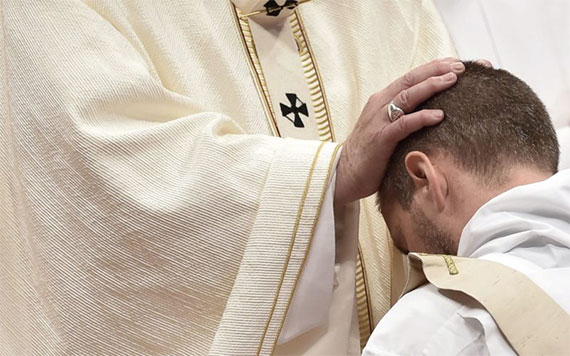
It’s welcome news, though it is short of any goal favoured by feminists, whether Orthodox or Catholic. Patriarch Theodoros II and the Holy Synod of the Patriarchate of Alexandria have decided to reinstate the order of deaconesses in the Greek Orthodox Church. Granted, this is not a full acknowledgement of the equality of women and men, but it is a step in the right direction. And it’s a step from which the Catholic Church can learn. Indeed, Pope Francis expressed interest in this prospect in 2016, when he appointed a committee to study the matter. (It’s not clear where that committee is today in its deliberations).

According to NCR’s reporting, the Greek Orthodox Church is expanding rapidly in sub-Saharan Africa and is in need of clergy in many locations. By the same token, the Catholic Church could use more clergy in many parts of the world. But even if church membership were static in either denomination, this move is both desirable and necessary because it is a move toward gender justice.