Vatican threatens Belgian order allowing euthanasia

A brusque reversal by the Belgian province of the Order of the Brothers of Charity (1) has led to a lively polemic. The order has previously always refused to practise euthanasia, which has been legal in Belgium for nearly fifteen years. But in a document addressed to hospital management and staff of its fifteen psychiatric centres, the Belgium Brothers of Charity in March confirmed its decision to finally authorize medically assisted death, including for its patients who were “in a non-terminal situation.”

This surprising about face by a Catholic congregation attracted the fire of the Belgian Bishops Conference, the Vatican and the hierarchy of the Order.

In a July 29 statement published by the Holy See following a joint inquiry by the Congregation for the Institutes of Consecrated Life and the Congregation for the Doctrine of the Faith, the Pope gave the Belgian branch of the order until the end of August to reverse its position.

Failing this, sanctions will be imposed on the branch, which could go as far as excluding the Order and the withdrawal of its right to label its psychiatric institutions as Catholic.

In fact, it was Brother Stockman himself, who, after having tried in vain to get the Belgian branch to change its decision, asked the Vatican to open an inquiry into the issue.

Holy See Secretary of State, Cardinal Pietro Parolin, personally looked into the matter, Brother Stockman added.

In the face of a growing polemic, the Belgian Bishops Conference reacted at the end of May. A declaration entitled “Euthanasia and psychic suffering” reiterated its opposition to any “trivialization of medically assisted death.”

“We are conscious that psychic suffering may be immense and that a person can thus find themselves in a totally desperate situa-tion,” the statement said.

“However, it is precisely in this situation that it is necessary to remain close and not to abandon him or her,” the bishops emphasized, appealing to hospital personnel to implement “appropriate palliative care.”

Excommunication could be tool for fighting corruption, organized crime

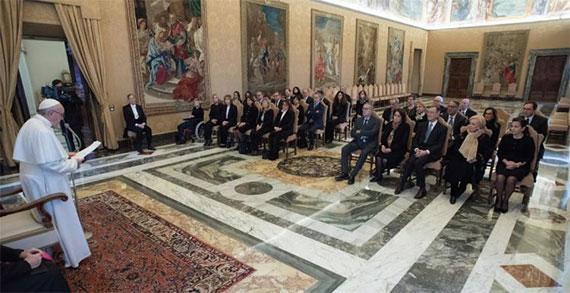
A Vatican consultation group will consider initiatives to bolster the fight against corruption and organized crime, including by looking at possibilities for excommunicating members of the Mafia and other criminal organizations. The Vatican Dicastery for Promoting Integral Human Development published an outcome document Aug. 2 highlighting anti-corruption proposals that came out of the Vatican’s first “International Debate on Corruption.”

Among the proposals made by the consultation group is the “development of a global response—through bishops’ conferences and local churches—to the excommunication of the Mafia and other similar criminal organizations and to the prospect of excommunication for corruption.”

Popes and local bishops, especially in Italy, have long warned members of the Mafia that by committing such grave sins, they, in effect, have excommunicated themselves from the church.

In a June 2014 visit to Sibari, in Italy’s Calabria region, Pope Francis said that “those who follow the path of evil, like the mafiosi do, are not in communion with God; they are excommunicated.”

The June 15 meeting on corruption, sponsored by the dicastery and the Pontifical Academy for Social Sciences, looked at corruption as a global problem and at its connections to organized crime and the Mafia.

Euthanasia responsible for 4.5 % of deaths in the Netherlands

Euthanasia has become a common way to die in the Netherlands, accounting for 4.5% of deaths, according to resear-chers who say requests are increasing from people who are not terminally ill.

In 2002, the Netherlands became the first country in the world that made it legal for doctors to help people die. Both euthanasia, where doctors actively kill patients, and assisted suicide, where physicians prescribe patients a lethal dose of drugs, are allowed. People must be “suffering unbearably” with no hope of relief — but their condi-tion does not have to be fatal.

“It looks like patients are now more willing to ask for euthanasia and physicians are more willing to grant it,” said lead author Dr Agnes Van der Heide of Erasmus University Medical Centre in Rotterdam.

The 25-year review published in New England Journal of Medicine is based on physician questionnaires. The use of numerous methods to shorten patients’ lives “to relieve end-of-life suffering has become common practice in the Netherlands,” the authors said in the report.

The review shows that in 1990, before it was legal, 1.7% of deaths were from euthanasia or assisted suicide. That rose to 4.5% by 2015. The vast majority — 92% — had serious illness and the rest had health problems from old age, early-stage dementia or psychia-tric problems or a combination. More than a third of those who died were over 80.

Ugandan church to boycott Anglican meet over gay rights

The Anglican Church in Uganda is leading a rift with the global co-mmunion over LGBT rights. There are deep divisions over the largely pro-LGBT Western churches and hardline anti-gay Anglican chur-ches in Africa and the Global South, reports PinkNews.

While the Canadian, Scottish and American churches have embraced gay bishops and same-sex unions, many African archbishops have shunned equality rights for the LGBT community.

Stanley Ntagali, the Arch-bishop of Uganda, has disclosed that he will not attend the next meeting of Anglican leaders citing the gradual acceptance of same-sex marriage by the church.

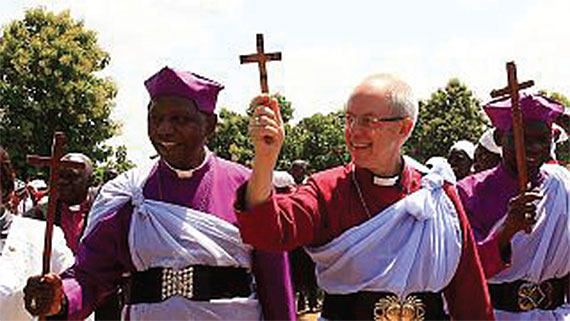
The 62-year-old who also doubles as Bishop of the Ugandan capital, Kampa-la, in an interview with the BBC said he was not prepared to engage with people who took ‘an unbiblical view of marriage.’ He made the comments after joining the global leader of the church, Justin Welby – Archbishop of Canterbury – to visit refugee camps in the country’s north. Welby is on an African tour that saw him visit Sudan where he declared the 39th province of the church in Khartoum.

Civilta Cattolica inspired counterproductive debate, American critics say

A prominent Jesuit publication’s essay on American religion and politics continues to provoke responses from critics concerned its two authors fundamentally misunderstand the situation of Catholics in the United States.

“Their essay is bad but important,” said New York Times columnist Ross Douthat Aug. 2, saying its apparent intention is to warn about Catholic support for “the darker tendencies in Trumpism” like xenophobia, stigmatization of enemies, the “prosperity-gospel inflected worship of success,” and a “crude view of Islam.”

For Douthat, however, the authors’ understanding of American religion “seems to start and end with Google searches and anti-evangelical tracts.” In his view, secularization and political polarization have made the place of Catholics in the U.S. “more difficult and perplexing.” Both Catholic support for Trump and more radical Catholic critiques “are not the culmination of the Catholic-evangelical alliance but rather a reaction to its political and cultural failures — and the failures of liberal religious politics as well.”

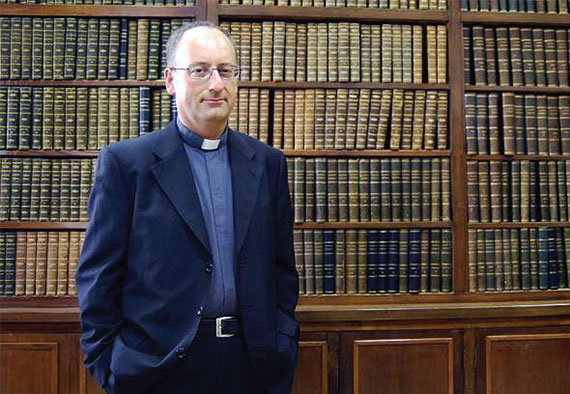
On July 13 the Jesuit-run journal La Civilta Cattolica published an analysis piece co-authored by its editor, Father Antonio Spadaro, S.J., and Marcelo Figueroa, a Presbyterian pastor who is editor-in-chief of the Argentine edition of L’Osservatore Romano, the daily newspaper of Vatican City.

The piece, titled “Evangelical Fundamentalism and Catholic Integralism in the USA: A Surprising Ecumenism” made a number of claims, alleging that many conservative Christians have united to promote an “ecumenism of hate” in policies that contradict Pope Francis’ message of mercy. They claimed that, that “Evangelical fundamentalists” and “Catholic Integralists” are being brought together in a “surprising ecumenism” by a shared desire for religious influence in politics.

Dalit Christians to observe August 10 as ‘Black Day’

The Archdiocese of Pondi-cherry and Cuddalore and the Commission for Scheduled Castes and Tribes will observe August 10 as a ‘black day’ in protest against denial of SC status to Dalit Christians and Muslims.

Fr. A. Arputharaj, Secretary, SC/ST Commission, Puducherry, told reporters that the presidential order issued on August 10, 1950 not granting SC status for Dalit converts was unjust. Therefore, August 10 has been deemed as a ‘black day,’ he said. The order holds that only Dalits who practise Hinduism can be treated as SC.

‘Gene editing’ poses threat of eugenics, ethicist warns

The director of the Anscombe Bioethics Centre in England has raised the alarm about recent experiments in “genetic editing” of human embryos, saying that the procedure involves the acceptance of eugenics.

David Albert Jones re-marked that the experiment also involved “the reprodu-ctive exploitation of women” who contributed eggs for the research and the “experi-mentation on and destruction of embryos” in the process.

While the “genetic editing” experiments have been hailed as a means of preventing disease, Jones pointed out that the procedure aims “not to make people better but to make ‘better’ people.” He explained that in the “editing” technique, a modified embryo is created; since the embryo did not exist before the modification, the procedure “cannot be said to be therapy.”

Jones warned: “Instead of treating existing human beings in ways that respect their rights and do not pose excessive risks to them or to future generations, we are manufacturing new human beings for manipulation and quality control, and experi-menting on them with the aim of forging greater eugenic control over human repro-duction”

14.5 million Christians remain in Middle East

The Christian population in nine Middle Eastern states is 14,526,000, down from 14,740,000 in 2010, according to a report published by the Vatican newspaper. The total population of Cyprus, Egypt, Iraq, Israel, Jordan, Lebanon, Palestine, Syria, and Turkey is 258 million. The report draws on a recent study by the Catholic Near East Welfare Association on Christians in the Middle East. The study documented sharp recent and historical declines in Christian population:
• in Syria, from 2.2 million (2010) to 1.2 million
• in Egypt, from 19% of the population (1910) to 10%
• in Lebanon, from 53% (1932) to less than 40%
• in Jerusalem, from 20% (1946) to less than 2%
• in Palestine, from 20% (1948) to 1.2%

Canadian cardinal would approve funeral after assisted suicide

Cardinal Gerald Lacroix of Quebec City has indicated that he would approve funerals for Catholics who opted for physician-assisted suicide.

Cardinal Lacroix, the primate of Canada, told America magazine that he might deny a funeral for someone who had been a public advocate of euthanasia. But he reasoned that an elderly individual might chose to end his life in a moment of weakness, perhaps under pressure. “So who are we to judge why they are like this?” he said.

The cardinal also remarked that the family of the deceased might have disapproved of the choice for suicide, and the family deserved consolation. “We accompany everybody,” he said.

The sociology of French Catholics

A wide-ranging sociological study commissioned by the Bayard group and published jointly by La Croix and Pèlerin sheds unpre-cedented light on the makeup of French Catholicism. The two authors have distinguished six profile types, which provide tools for understanding the logic of a Catholic world that is far more diverse than may have appeared.

Who are the real Catholics in France? The five percent who attend Mass regularly, according to opinion polls, or the 53% who describe themselves as Catholic? The broad survey carried out by Ipsos under the direction of sociologists, Philippe Cibois and Yann Raison du Cleuziou, shows that there is also a third possi-bility. Thus, 23% of French peo-ple can be characterized as “involved” Catholics, i.e. people who feel attached to the Church by means of their donations, their family lives or their commit-ments.

As a result, the study sets aside the traditional distinction between practising and non-practising Catholics and includes those who do not attend Mass regularly “but who consider themselves all the same as Catholics because they live out their lives differently,” as the authors note.