Jharkhand, new anti-conversion law Cardinal Toppo: There are no forced conversions

The government of Jharkhand (in the northeast of the country) last night approved a law prohibiting conversions brought about by force or coercion. The government spokesman explained that “anyone who violates this law may be sentenced to three years in prison and 50,000 rupees [over 600 euros] fine, or both.”

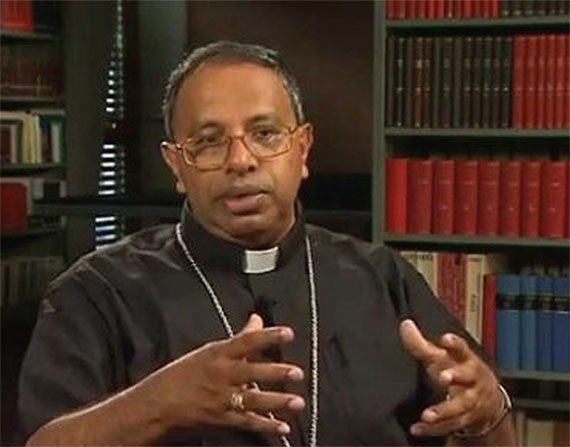
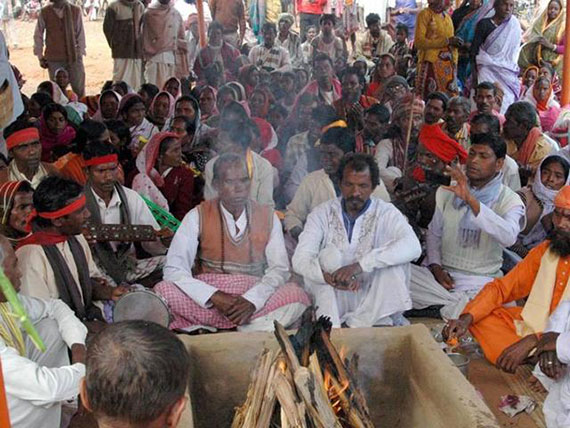
The law provides for more severe penalties for forced conversion of underage girls and tribal women (scheduled tribes). In this case, the culprit can be sentenced to four years in jail and /or a fine of 100,000 rupees. The law, approved by the govern-ment, has to be approved by the local parliament, on August 8. If it passes, Jharkhand will be the seventh state in India with a law against forced or coerced conversions. Such laws already exist in Madhya Pradesh, Chhattisgarh, Odisha, Gujarat, Maharashtra, and Himachal Pradesh. Speaking to AsiaNews, Card. Telesphore Toppo, Archbishop of Ranchi and of tribal ethnicity, states: “This law is not to prohibit conversions, but it is against forced conversions. Forced conversions do not exist. We are free people with a free will and a free conscience and intelligence. No one can force another to convert.”

Commenting earlier to journalists, he had expressed sadness at the government’s decision. “For decades, we have held many schools and colleges, clinics and hospitals across the state, serving the poor, the oppressed, and the abandoned. None of the millions of people we have ever served have been converted to Christianity.”

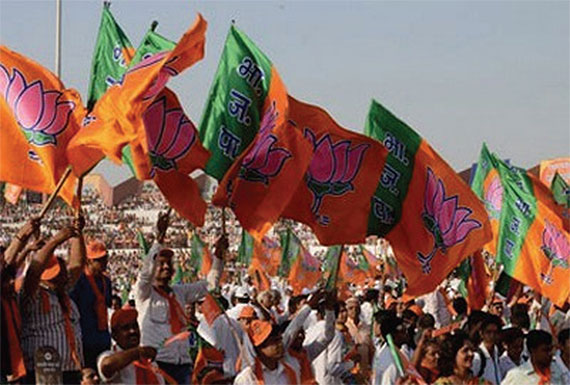
Although the law only wants to prevent forced conversions or illicit conversions, Hindu nationalists fear of any kind of conversion. According to the Times of India, the Jharkhand government’s decision came after the census data was presented in 2011. On a total population of 35 million, 27% is tribal; Christians are 4.3% and Muslims 14.53. Data show that over the past 10 years, the Hindu population has grown by 21%; Christians of 29.7%, Muslims by 28.4%.

Indian nun wins global HIV/AIDS nursing award

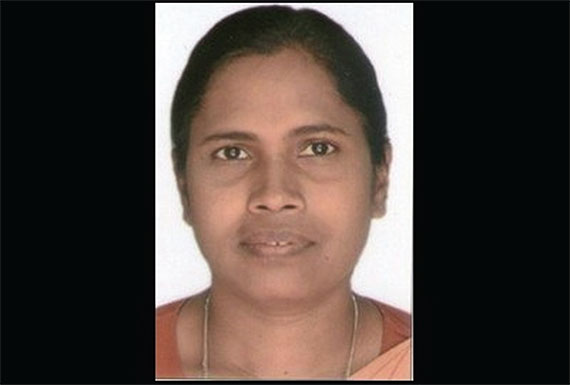
A Catholic nun from India has won a prestigious global award in HIV nursing from an international association.

The Association of Nurses in AIDS Care (ANAC) selected Sr Lourdu Mary Nagothu for developing and implementing the world’s first masters’ curriculum in HIV/AIDS.

The member of the Bangalore province of the Sisters of Jesus, Mary and Joseph will receive the award at a ceremony on Nove-mber 4, the final night of ANAC’s annual conference at Dallas, Texas in the United States. “We are pleased to congratulate you on being selected as the recipient of ANAC’s Excellence in Global HIV Nursing Award,” says an August 2 letter from the association.

Sr Nagothu is the director of Nursing at Bel-Air Hospital as well as principal of its College of Nursing at Panch-gani, a famous hill station in the Satara district of Mahara-shtra State in western India.

The hospital and the college of nursing is an Indian Red Cross Society project managed by Missionary Congregation of the Blessed Sacrament priests and JMJ sisters.

Lead with transparency, Alencherry tells priests

If Christianity is being criticised and misunderstood today, it is due to shortcomings from the clergy commu-nity, said Cardinal George Alencherry. He was speaking at Priests’ Grand Conference on August 2 at the Sehion Retreat centre in Attapady near Palakkad.

Siting the example of Jesus Christ, the cardinal urged the congregation to never preach for publicity. He reminded priests to lead the community in a transparent and innocent manner and to not exercise undue authority .

The Cardinal expressed grief at the fact that Chri-stianity seems to be in a state of decline in some countries, and some of the services of the Church have become merely symbolic.

More than 15 bishops and around 1360 priests, including world renowned evange-lists are attending the six-day reside-ntial conference at the Sehion Retreat center in Attapady near
The program is led by Fr Xavier Khan Vattayil , founder-director of Sehion Ministries and world renowned charismatic preacher.

Malankara Church gets a new eparchy, bishops

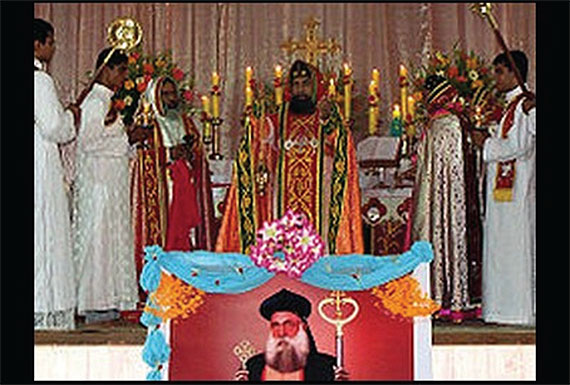
The Syro-Malankara Catho-lic Church has established a new eparchy based in Parassala in Kerala, and named Bishop Tho-mas Mar Eusebios Naickam-parambil as its bishop.

The Aug. 5 announcement made in the Vactian and Church’s headquarters in State capital Trivandrum also said the Pope has named three new bishops and an apostolic visitor for the Church. Bp Naickam-parambil was previously in charge of the Eparchy of Our Lady Queen of Peace for Syro-Malankara faithful in the United States and Canada, Catholic News Agency reported.

Taking his place will be Bishop Stephanos Thottathil, who until now has served as auxiliary bishop of Tiruvalla, in India’s southern State of Kerala, which is predominantly Christian. In addition to the establishment of the Parassala eparchy and the nomination of its bishop, Pope Francis named Fr George Kalayil as Bishop of the Eparchy of Puthur, also in Kerala. He had previously served as a priest in the same eparchy.

The Pope also named Fr John Kuchuthundil as a Curial Bishop and Apostolic Visitor to the Syro-Malankara Church in Europe and Oceania, although no specific reason for the visitation was given.

Bishop stresses prayers, discernment for peaceful Naga solution

The head of the Catholic Church in Nagaland has sought prayers as the northeastern Indian state faces what he says are “moments of darkness and uncertainty” in finding peaceful solution to the Naga problem.

The peace process has entered a critical juncture after the federal government and Naga national leaders signed a “framework agreement,” says Bishop James Thoppil of Kohima in a letter addressed to Bishop Theodore Mascarenhas, secretary general of the Catholic Bishops’ Conference of India (CBCI).

Bishop Mascarenhas shared with media the August 8 letter that notes certain confusion over future as people are not sure “where to turn, what to believe, whom to trust, what to expect, how to be involved.”

Such uncertainty and “moments of darkness” can be overcome only through God’s enlightenment, guidance and inspiration, says Bishop Thoppil. “These can be obtained only by being alert and docile to the Spirit, which come only by prayer,” asserted the 58-year-old prelate who took over the diocese’s administration six years ago.

He urged the CBCI to join the Naga people, who have set apart August 15 as a special day of prayer.

Kerala Church finalizes plans for Rani Maria beatification

The Syro-Malabar Church in Kerala has planed a series of programs to celebrate the Nov. 4 beatification of Sister Rani Maria, a Franciscan Clarist missionary nun murdered in Madhya Pradesh 22 years ago.

Archdiocese of Ernakulam-Angamaly and the Franciscan Clarist Congregation are jointly organizing the programs with involvement of other two Catholic rites in the state—Syro-Malankara and Latin, said press release from the Archdiocese of Ernakulam-Angamaly. As part of the program relics of the nun will be brought to the Major Archbishop’s House in Ernakulam from Indore, where the ceremonies of beatification are palnned. It will be then taken in procession to Perumbavoor, her place of birth, on November 15. A thanksgiving Mass and related ceremonies will be held at Pulluvazhy on November 19.

Beatification is the penultimate stage in the four-phased canonization process in the Catholic Church. Rani Maria’s cause of canonization began in 2003 and she was declared a Servant of God four years later.

The nun was 41 when Samandar Singh, hired by some landlords, stabbed her inside a bus on February 25, 1995. She was on traveling to Indore, the commercial capital of Madhya Pradesh State, en route her native place in Kerala, southern India. The attacker followed her when she ran out of the crowded bus and continued to stab her. She died on the roadside at Nachanbore Hill, near Indore.

Nun leads silent social change in Indian villages

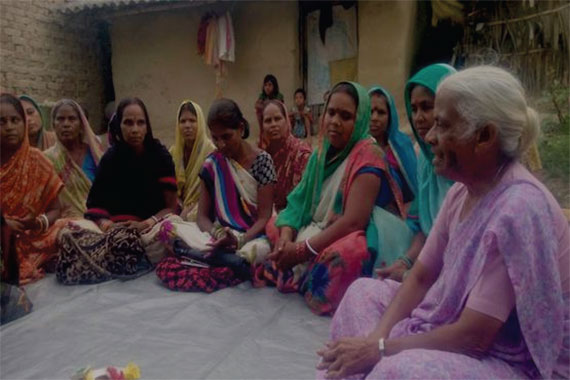
Clad in a simple sari, Sister Jyoti Rosamma sits among the women in a self-help group discussing their issues. In a circle they are all equally important, including the 74-year-old nun, who taught them to fight abject poverty.

The frail-looking Catholic nun was “a stranger to us but now she’s like a mother goddess. Our eyes were opened and we were appalled to see our reality,” said Malti Devi, who escaped poverty because of the self-help groups.

Malti Devi, a 52-year-old woman, is among hundreds of socially and economically poor caste women the nun has helped free from the clutches of moneylenders in the Chhapra area of the eastern Indian Bihar State.

India to host next Asian Youth Day in 2020

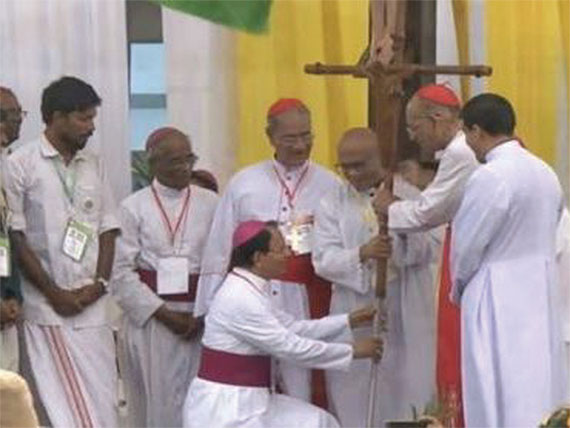
The next Youth Day will take place in India in 2020, the second time the South Asian nation will be hosting the continental-level Catholic Church event since 2003. Card. Oswald Gracias made the announcement on August 5 at the end of the concluding Mass of the 7th Asian Youth Day (AYD7), which he presided over in Yogyakarta, Indonesia.

The venue of the AYD8 will be discussed and decided upon by the Catholic Bishops’ Conference of India (CBCI). Cardinal Gracias, Archbishop of Bombay, together with Indian Church officials and some of the Indian youth delegation received the simple bamboo AYD cross from their Indonesian counterparts for the next AYD to take place in 3 years’ time.

Differences cannot separate us. Among those who flanked Cardinal Gracias, the main celebrant, at the altar were Filipino Cardinal Luis Antonio Tagle of Manila and Archbishop Ignatius Suharyo of Jakarta, who delivered the homily in Bahasa Indonesia.

“We do realize our differences: We are of different nationalities, different languages, different cultures, and so on,” noted the archbishop who is president of Indonesia’s bishops’ conference (KWI).

“However, in this event, we do realize and experience that those differences cannot separate us, but the differences show the richness of the united humanity instead. It proves that the power of faith, hope and love unites us.” Arch Suharyo wished that the AYD7 help the young people to “diligently and faithfully live out the Gospel so that we may be filled with the joy of the Gospel.” “Thus, our life could mirror the glory of the Lord, which changes our lives,” he said.

Bishop supports dam-affected Indian villager’s struggle

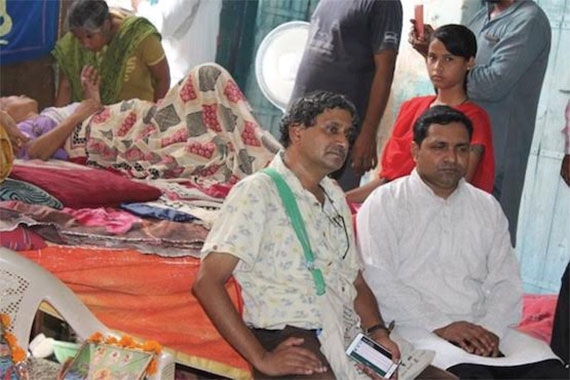
Catholic Church officials are backing a hunger strike in support of demands for com-pensation and rehabilitation for 40,000 families affected by a major dam project in central India’s Madhya Pradesh State. Protesters say increased water levels in the Sardar Sarovar Dam will submerge 912 villages while officials maintain that affected people have already been compensated and benefited from ‘rehabilitation’ measures.

Police on Aug. 7 ‘cane charg-ed’ supporters of 12 people on hunger strike since July 27 at Chikhalda, a village in Dhar district. Activist Medha Patkar was hospitalized as a result of the encounter.
Police also forcefully took six others to hospital as their health deteriorated, but more joined the hunger strike to replace them.

Archbishop Leo Cornelio of Bhopal, who is based in the Madhya Pradesh State capital, said the current situation is a matter of great concern as nobody should be deprived of his or her “right to life.” He called on the government to conduct a fresh survey to determine how many more people should be offered rehabilitation packages.

Churches, mosques must have nationalist slogan: BJP leader

A leader of pro-Hindu BJP party wants morning prayer calls from mosques and sounds of bells from churches be replaced with shouts of nationalist slogans.

President of the Bihar unit of the party Nityanand Rai said “sound of ‘Bharat Mata Ki Jai’ (hail mother India) should replace azaan from mosques and sounds of bells from churches.” He was speaking at a BJP function in Patna Aug 8. However, he made U-turn soon, reported media.

After realizing that he has made a controversial statement, Rai corrected himself before the media and said: “I told that sound of Bharat Mata Ki Jai and Vande Matram should come from mosque and church and did not mean in place of azaan and bell.”

The function, the Sankalp Sammelan of the BJP to honour all the 12 ministers of the party in the newly formed coalition government in Bihar, also turned controversial when Vinod Kumar Singh, state minister for Minister of Mines and Geology, made a similar demand.

Singh wanted all people to join him in loudly shouting “Bharat Mata Ki Jai.” However, when the media persons present did not shout “Bharat Mata Ki Jai,” he expressed his displeasure and anger over it.