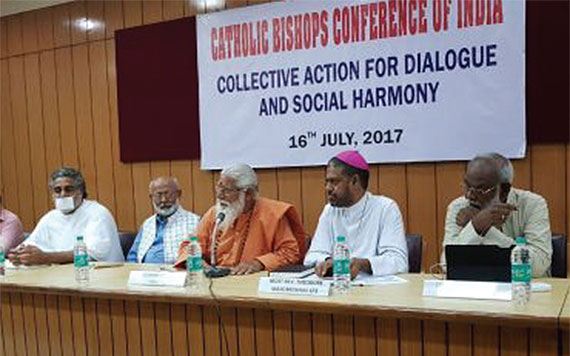
Religious leaders condemn lynching, stress restoration of law

Around 40 spiritual leaders and intellectuals in the national capital on July 16 urged Indians to check an environment of hate, violence and disregard for the rule of law spreading across the country.

They met under the aegis of the Catholic Bishops’ Conference of India (CBCI) and called upon the government to end impunity, which they noted, was at the root of the atmosphere of fear that stalks the land today. They also said these developments threatened not just secularism, but the country’s Constitution as well as the democratic fabric.

They want people to draw from India’s deep spiritual reservoirs to check increasing cases of lying that have claimed “many innocents of religious and marginalized communities.”

The meeting welcomed Prime Minister Narendra Modi’s assurances to leaders of Opposition parties on the eve of the Monsoon session of Parliament.

However, the leaders noted that lynching in various states on the pretext of protecting cows have shocked majority of Indians from all communities. The Prime Minister must now see that state governments and their police forces acted against the guilty in an impartial manner, they assert-ed. The meeting agreed two of five of urgent program of action:

• The ideology of hate is a reality and needs to be challenged by governments, political parties, civil society activists, the criminal justice system and religious communities in a concerted manner.

• Religious leadership must act at the grassroots to assert the inherent unity of the people. This will help restore public confidence and remove the mutual suspicion that had started growing.

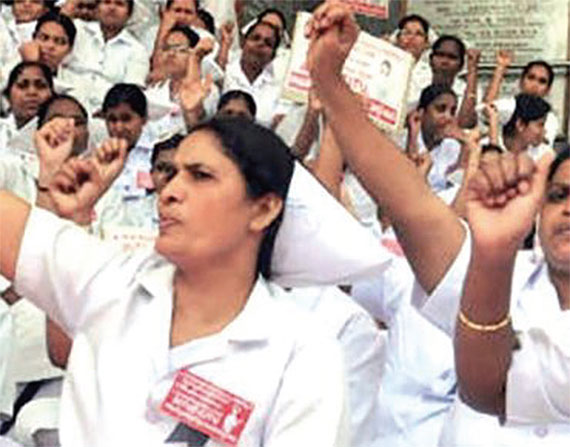
Kerala nurses strike called off after government agrees to hike minimum pay

Following intense protests for almost two months, private hospital nurses in Kerala called off their strike on July 16 after the government agreed to enforce a hike in their minimum pay to Rs 20,000.

The decision was taken in a meeting of the representatives of nurses’ associations with Chief Minister Pinarayi Vijayan at his office on July 20 evening. The Chief Minister’s office said that the decision on the wage hikes was unanimous.

“The decision was unani-mous. It has been decided to hike the minimum pay of nurses working in hospitals with a bed strength of up to 50 to Rs 20,000. The government will appoint a committee to decide on the salary of nurses working in hospitals where the number of beds is more than 50,” a statement from the Chief Minister’s office said.

“There will be timely increase in the stipend of nursing trainees. The committee will also consider and submit recommendations on the trainees’ stipend and the period of training. The committee will submit its report in a month,” the statement added.

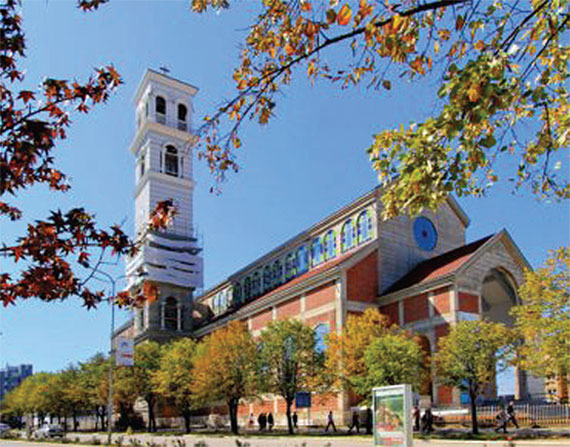
Cathedral dedicated to Mother Teresa due to be consecrated

A cathedral dedicated to St Teresa of Calcutta is due to be consecrated on September 5, the 20th anniversary of the saint’s death. Pope Francis has appointed Cardinal Ernest Simoni to be his delegate at the consecration in Pristina, the capital of the partially recog-nised State of Kosovo.

Although the building has been a place of worship for Catholics since 2010, the shrine will be formally dedicated to Mother Teresa at the consecra-tion. The Italianate-style build-ing has been under construction since 2007 and remains unfini-shed. When complete, it will have two bell towers, each standing at 230 feet tall, making it one of the tallest buildings in the city.

Among the designs on its stained-glass windows are depictions of St Teresa with Pope St John Paul II, and Pope Benedict XVI embracing Pope Francis.

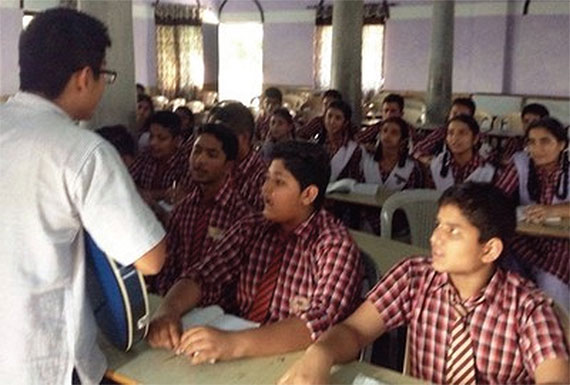
Church group launches peace education for Kashmir students

Jammu-Srinagar Diocese has launched a project to educate young people on the need for peace on the Indian side of the India-Pakistan border where hostilities between the two countries have killed hundreds of people.

The diocese covers the entire Indian State of Jammu and Kashmir, a disputed territory between the two neighboring countries. Both India and Pakistan claim the region and each administer part.

The two nuclear-power rivals have fought at least three major wars over Kashmir. The border area is prone to occasional exchange of fire between the armies of India and Pakistan, often adversely impacting the local people living there. The region has been a sensitive issue for both India and Pakistan ever since they become two different nations in 1947 when British rule ended in the subcontinent.

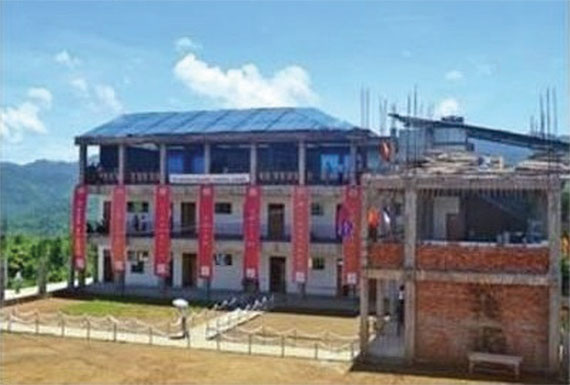
St Xavier’s starts Mizoram campus

St Xavier’s College, one of the country’s most illustrious colleges run by Jesuits, has started a campus in Mizoram.

This is the first Jesuit college in Mizoram. It will be administered by the order’s Darjeeling province.

St Xavier’s University Kolkata, which is the oldest educational institution of the Jesuits, will offer academic help to the new college. The Bishop of Aizawl, the head of the Catholic Church in Mizoram, had requested Jesuits to start a college in the state to give a boost to higher education.

“The college was inaugurated on July 17. It has started inducting students in both its plus two and undergraduate sections,” said Father Daniel Bara, principal of the college.

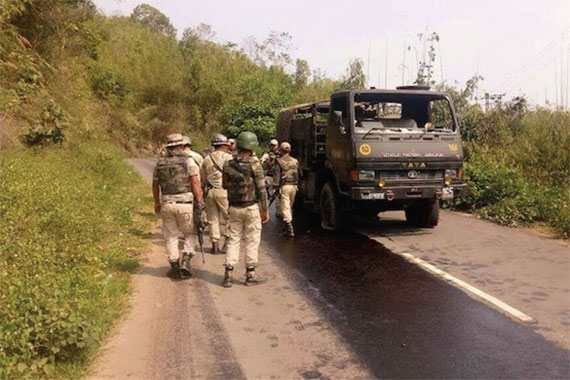
Indian bishop welcomes extra judicial killings probe

A Catholic bishop and human rights groups in India have welcomed a Supreme Court order for a federal investigation into allegations that thousands of people were killed by security forces in the northeastern State of Manipur.

India’s top court July 14 directed the government to engage the country’s Central Bureau of Investigation agency to probe allegations that army, paramilitary forces and police killed without trial 1,528 people in the state between 2000 and 2012.

The court’s decision came while hearing a petition seeking an investigation and compensation. “We welcome the decision and hope the probe will be impartial, devoid of political goals, and bring justice to the victims,” said Bishop Dominic Lumon of Imphal, whose diocese covers the whole state.

The entire northeastern region consisting of seven Indian states, bordering China, Bangladesh and Myanmar remains heavily militarized because of insurgency. Some five decades ago the federal government passed the Armed Forces Special Power Act to check insurgency in Assam and Manipur.

The law was later extended to another seven states as the insurgency spread with the government describing the situation in the region as “war-like.”

Rights groups say the law gives sweeping powers to armed forces in their efforts to crush insurgency and results in unchecked violence that includes night raids, rapes and killings without trial or provocation.

The Asian Human Rights Commission estimates there is at least one security personnel for every 20 citizens in Manipur.

Best time to build Christian-Muslim relations: expert

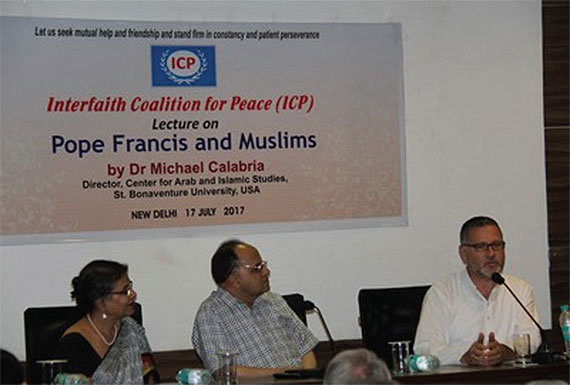
An expert on Islam told an inter-religious gathering here that “this is the best time” for Christians and Muslims to build relation as Pope Francis has been leading the Church for inter-faith actions from front.

Capuchin Father Michael D. Calabria, director of the centre for Arab and Islamic studies in St Bonaventure University based in New York, was addressing a July 17 seminar at India Islamic Cultural Centre in New Delhi.

Some 100 selected leaders from Christian, Muslim and Hindu religions attended the program organized by Interfaith Coalition for Peace, which also includes Catholic organizations and leaders.
Father Calabria told the gathering that he sees this as “best time” not only for “Christians and Muslims to come together” and but also for “inter-faith dialogues” because Pope Francis as leader of the Catholic Church encourages such action as no other Pope did in history.

Salesian priest Goa’s best-qualified b’ball coach

If Fr Ralin de Souza is not celebrating a mass at the Shrine of our Lady of Fatima in the city, you can bet your last penny that he will be at the nearby basketball court.

A Salesian priest at Don Bosco, Fr Ralin has been heading the Goa Basketball Association (GBA) for four years and has now achieved a unique distinction: He is the best-quali-fied basketball coach from Goa and the third-best in the country.

“Basketball is now my vocation. I give it religious significance,” said Fr Ralin, who is the only Goan basketball coach to be listed on the FIBA-WABC website among 111 Indian coaches who are qualified after the intensive coaching program undertaken by FIBA and WABC in India.

From among all his passions, Father Ralin always gave special importance to basket-ball.

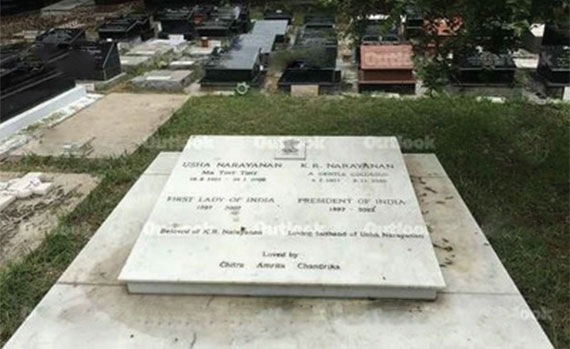
Ashes of KR Narayanan was given a second Christian burial, admits daughter

The tomb was alongside his wife Usha Narayanan in the non-denominational cemetery run by the Delhi Cemeteries Committee on Prithviraj Road. Chitra, the eldest of Narayanan’s two daughters and former IFS officer, in an email told Outlook: “The burial was done according to the wishes of her mother (Usha), a Christian.”

During his stint in Rangoon as an Indian Foreign Service Official, Narayanan had met his wife, a Burmese woman named Tint Tint, an Evangelist protestant. He married her in 1950 after the Centre gave its blessing. Tint Tint later adopted the name Usha.

“After the passing of Shri KR Narayanan, the State Funeral and cremation according to Hindu rites took place in Karma Bhumi near Rajghat,” said Chitra. “A small portion of the ashes were retained by his widow Smt Usha Narayanan, a Christian, to be buried alongside her. At her passing in 2008, this was done according to her wishes at the Prithviraj Road cemetery. This was an entirely private wish and should be respected accordingly.” “A part of the ashes was mingled with those of Shri KR Narayanan’s late parents. Shri KR Narayanan was a Hindu and respected equally all religions,” Chitra said.

Christian households top in donations for charity

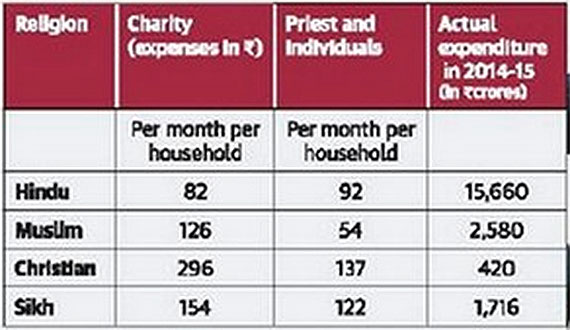
The per-household religious contribution of Christians is the highest among all communities, as per data from the 72nd round of National Sample Survey (NSS) on Household Expenditure on Services and Durable Goods.

After Christians, it is the Sikhs followed by Muslims who contribute more to charity. But in absolute terms, Hindus contributed maximum in 2014-15, thanks to larger population, according to National Sample Survey data.

The data were recently extracted from the NSS’ raw findings by a team of researchers led by Sabir Ahamed of the Pratichi Institute and Zakaria Siddiqui, research assistant at the Crawford School of Public Policy, Austra-lian National University. The 72nd round was conducted in 2014-15, but could be accessed only in late 2016.

Religious contributions are divided under two heads: the contribution to institutions is ‘charity’ and the non-charitable part is under ‘priests and rituals.’ Hindus contribute 82 per house-hold per month to charities and 92 to the priests, while Muslims give 126 and 54 to charities and Maulanas respectively.

Contributions multiplied by each surveyed household of Hindus in the country indicates that the community contributes 15,600 crore to priests and charities. The actual contribution of Muslims is 2,580 crore.