Why was Mother Teresa’s uniform trademarked? 

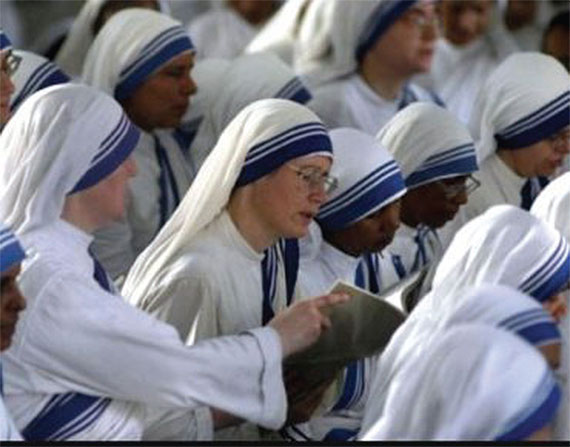
For nearly half a century, Mother Teresa, the Roman Catholic nun who worked with the poor in the Indian city of Kolkata wore a simple white sari with three blue stripes on the borders, one thicker than the rest.

Senior nuns who work for Missionaries of Charity, a 67-year-old sisterhood which has more than 3,000 nuns worldwide, continue to wear what has now become the religious uniform of this global order.

On July 10, news washed up that this “famous” sari of the Nobel laureate nun, who died in 1997, has been trademarked to prevent “unfair” use by people for commercial purposes. India’s government quietly recognised the sari as the intellectual property of the Missionaries of Charity in September last year, when the nun was declared a saint by the Vatican, but the order had decided not to make it public.

Biswajit Sarkar, a Kolkata-based lawyer who works pro-bono for the order, says he had applied for the trademark in 2013. “It just came to my mind that the colour identified blue border of the sari had to be protected to prevent any future misuse for commercial purposes,” he told me. “If you want to wear or use the colour pattern in any form, you can write to us and if we are convinced that there is no commercial motive, we will allow it.”

The austere blue-trimmed white sari has long been identified with the nun and her order. The story goes that in 1948, the Albanian nun, with permission from Rome, began wearing it and a small cross across her shoulder. According to some accounts, the nun chose the blue border as it was associated with purity. For more than three decades, the saris have been woven by leprosy patients living in a home run by the order on the outskirts of Kolkata.
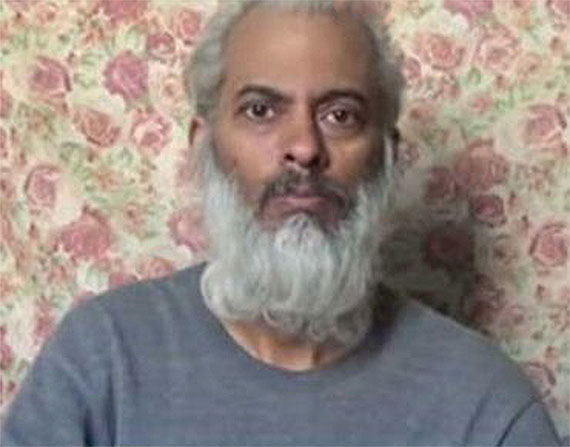
Uzhunnalil alive: Yemen deputy prime minister 

Sushma Swaraj, the External Affairs Minister  of India asked her visiting Yemeni Abdulmalik Abduljalil Al-Mekhlafi to secure the safe and early release of abducted Indian priest Father Tom Uzhunnalil after being told he was still alive. In the meeting, Al-Mekhlafi conveyed that, according to available information, Father Uzhunnalil was alive and the Yemen government has been making all efforts to secure his release and assured all coopera-tion in this regard.

Church condemns attack on pilgrims in Kashmir 

The Evangelical Fellowship of India (EFI) on July 10 condemned what it calls “dastardly attack” on Hindu pilgrims in Kashmir.

“To attack people going to worship is to attack the very essence of what makes us human beings,” says a statement issued by the Protestant Church soon after Indian television channels reported the killing of seven people on their way to Amarnath, a pilgrimage centre in the northernmost Indian state.

More than 12 people were reportedly wounded in the attack that occurred at 8 pm on July 10.

“EFI prays for God’s solace to their families so that they can have the strength to bear their loss. EFI continues to pray for peace in our nation,” says the statement issued by Reverend Vijesh Lal, general secretary of the fellowship.

The Reverend also said his Church prayed and hoped that “sanity and peace will return as people learn to resolve differences and demands in a democratic and constitutional manner.”

Religious based targeted violence must have no place in India, he asserted.

Brave nun fights for women’s rights in Pakistan

The year was 1986. Sister Genevieve Ram Lal was being driven away from Lahore High Court when she noticed armed men in a car following her.

“We were fighting a case for abducted Christian brick makers in a nearby district. The Franciscan priest, sitting behind the steering wheel, knew the streets well and managed to lose the attackers.

We know they were brick kiln owners,” recalled the 59-year-old nun of the Sisters of Charity of Jesus and Mary congregation. “Fact-finding missions in brick kilns were always under the shadow of guns. The armed guards of kiln owners circle around as we collected interviews. The victims usually change the narrative by the time human rights workers reach them,” she said.

Presently, 58 nuns from her congregation serve in the fields of education, medicine and pastoral work. According to the latest Catholic directory, 29 women congregations are present in the Islamic Republic of Pakistan.

Over the coming years, Sister Genevieve’s resolution as an activist only grew stronger as she became closely associated with the Protestant’s Young Women’s Christian Association and the Catholic Church’s human rights body, the National Commission for Justice and Peace. In 2012, she became the national director of the Catholic Women’s Organization(CWO) which observes its 10th anniversary in July.

Indonesian lay Catholics join priests in demanding their bishop resigns

Lay Catholics have joined dozens of priests in demanding Ruteng Diocese’s embattled bishop quit for allegedly misappropriating more than US$100,000 in church funds and having an affair with a woman.

In a July 1 statement signed by 30 people, they said “resignation” was the best course of action for Flores Island’s Bishop Hubertus Leteng as he had failed to perform his duties.

“The bishop is the shepherd, the representative of Christ, the spiritual leader, the model to live the Gospel value. Since his attitude and behaviour violate the nature and identity of a bishop, we urge him to resign from office,” they said.

If Bishop Leteng refuses to resign, they said, the Holy See must dismiss him.

“I think it would be a disaster if Archbishop Apuron were to return as the bishop of record,” said Coadjutor Archbishop Michael J. Byrnes, because of the extent of the loss of trust among the faithful and the “widespread disarray” left behind in church operations.

Byrnes, a former auxiliary bishop of Detroit, spoke to the press in Agana July 6, offering an update of the canonical investi-gation and trial of Apuron and his own personal thoughts about what would be best for the archdiocese moving forward.

Indonesia Catholic educators aim to counter extremism

The guidelines are expected to be ready in the next few months and implemented in Catholic schools when the next academic year begins. “What we are doing is in response to the current situation, where radicalism is so strong, including among teenagers,” Franciscan Father Vinsensius Darmin Mbula, chairman of the National Council of Catholic Education told ucanews.com on July 10. “To stem this, we believe one solution is through education,” he said.

Father Mbula referred to a 2015 survey in 171 schools in Jakarta and Bandung, West Java that revealed 9.5 percent of students supported violence committed by radical groups, including the so-called Islamic State group. An earlier survey by the Institute for Islamic and Peace Studies revealed that almost 50 percent of students supported radical ideas. He said advice would be sought from Islamic experts and thinkers from other religions.

Vietnam bans activist priest from travelling abroad

An activist Catholic priest known for his human rights work and campaigns for social justice has been barred from leaving the country for “national security” reasons.

“Redemptorist Father John Nguyen Ngoc Nam Phong was stopped at Noi Bai Airport and prevented from travelling to Australia on a study trip as he was checking in on June 27,” a church source said.

In a post on Facebook, officials said Father Phong, from Thai Ha Parish in Hanoi, was prevented from travelling overseas “for the protection of national security, social order and safety.”

Catholic blogger John Baptist Nguyen Huu Vinh said on Facebook that Father Phong is well known for fighting for justice, truth and helping people who fall foul of the communist government.
“He struggles for religious freedom among people in northwest provinces and gives them opportunities to escape poverty,” he said.

Nepalese Dalits abandon Hindu faith en masse

The Dalits have decided to organize a secret meeting to pray to Jesus, to save them. Conversions and renunciations of the Hindu faith are occurring in the Surkhet district of western Nepal. The Dalits are marginalized because of their caste belonging. And they are tired of suffering serious discrimination and threats. Sanu Nepali, 21, was beaten by some senior caste members on July 5. They accused him of bathing in public drinking water, polluting it physically and above all “spiritually.” He ended up in the hospital. Two months ago, a nine-year-old Dalit boy, Bhim Bahadur, was brutally beaten with perhaps only because he dared to enter the kitchen of a family of a higher caste of his, in the village of Barahatal, in the same district. It is estimated that about 50,000 Dalits in Surkhet District, who were victims of serious discrimination, have decided to leave the Hindu faith and embrace the message of Christianity. The decision was taken in the meeting with a large number of representatives.

Lal Babu BK, one of the participants said, “We were more than 200. We have come together to convert to Christianity to save ourselves. We have all practised Hindu faith for generations since it was mandatory, but today the country is secularized and Hindu faith can not save us. Those who torment and who humiliate us are Hindus like us. By being named untouchables we are judged from the bottom down. We can not even touch lower caste people, can not enter their homes, we can not touch public drinking water and can not have access to public places. So what is this belief? Are we certain in this faith? We concluded ‘no’ and decided to convert to Christianity.” Jayasara, mother of Bhim Bahadur BK, said: “We made this decision from the moment we had no alternatives to save us.”

Pope Francis approves fourth path to sainthood

Pope Francis has approved a fourth pathway to possible sainthood — giving one’s life in a heroic act of loving service to others.

In a new apostolic letter, the Pope approved new norms allowing for candidates to be considered for sainthood because of the heroic way they freely risked their lives and died prematurely because of “an extreme act of charity.”

The document, given “motu proprio” (on his own initiative) went into effect the same day of its publication on July 11, with the title “Maiorem hac dilectionem,” which comes from the Gospel according to St John (15:13): “No one has greater love than this, to lay down one’s life for one’s friends.”

Archbishop Marcello Bartolucci, secretary of the Vatican Congregation for Saints’ Causes, said the addition is meant “to promote heroic Christian testimony, [that has been] up to now without a specific process, precisely because it did not completely fit within the case of martyrdom or heroic virtues.”

For centuries, consideration for the sainthood process required that a Servant of God heroically lived a life of Christian virtues or had been martyred for the faith. The third, less common way, is called an equivalent or equipollent canonization: when there is evidence of strong devotion among the faithful to a holy man or woman, the Pope can waive a lengthy formal canonical investigation and can authorize their veneration as saints.

While these three roads to sainthood remain unchanged, they were not adequate “for interpreting all possible cases” of holiness, the archbishop wrote in the Vatican newspaper, L’Osservatore Romano, on July 11. According to the apostolic letter, any causes for beatification according to the new pathway of “offering of life” would have to meet the following criteria:

— Free and willing offer of one’s life and a heroic acceptance, out of love, of a certain and early death; the heroic act of charity and the premature death are connected.

— Evidence of having lived out the Christian virtues — at least in an ordinary, and not necessarily heroic, way — before having offered one’s life to others and until one’s death.

— Evidence of a reputation for holiness, at least after death.

— A miracle attributed to the candidate’s intercession is needed for beatification.

Former Manchester United player ordained Catholic priest

A former Manchester United and Northern Ireland star has been ordained a Catholic priest in the Dominican Order.

Philip Mulryne made five appearances for United back in the late 1990s after graduating from the club’s academy. He moved on to Norwich in 1999, where he played 135 times for the Canaries in a six-year spell and also won 27 caps for Northern Ireland. After short spells at Cardiff City and Leyton Orient, Mulryne officially retired from football in 2009.

So far, it sounds like a fairly typical footballer’s CV.

However, Mulryne didn’t move into coaching or punditry once his playing career was over. Instead, the one time Premier League footballer – who would have earned around £600,000 a year at one point – devoted himself to religious life.

He spent two years studying philosophy at Queens University Belfast and at the Maryvale Institute before going to the Pontifical Irish College, Rome, to study theology for one year at the Gregorian University.