

Sister Rani Maria, Franciscan Clarist nun who was assassinated in central India 22 years ago, has been cleared for beatification by the Vatican on Mar 23.
Beatification is the penultimate stage in the four-phased canonization process in the Catholic Church. Rani Maria’s cause of canonization began in 2003 and she was declared a Servant of God four years later.
Rani Maria was 41 when Samandar Singh stabbed her inside a bus on February 25, 1995. Singh was hired by some landlords who were upset with the nun’s fighting for just wages and other rights of the labourers.
She was attacked while travelling to Indore on her way to her native place in Kerala. The attacker followed her when she ran out of the crowded bus and continued to stab her. She died of 54 stab wounds on the roadside at Nachanbore Hill near Indore.
She was buried at Udaingar in Dewas district where she had worked among poor landless agricultural laborers. As part of her beatification process, on November 18, 2016 Bishop Chacko Thottumarikal of Indore supervised the opening of the slain nun’s tomb and shifted the mortal remains to a church.
Rani Maria was born on January 29, 1954, as the second of seven children of Paily and Eliswa Vattalil at Pulluvazhy, a small village near Kochi. She made her first profession on May 1, 1974, as Franciscan Clarist nun and chose the name Rani Maria. She began her mission in northern India in Bijnore in 1975 and came to Udainagar in 1992.
A documentary, “The Heart of a Murderer,” which depicts the murder and subsequent repentance of Singh, won an award at the World Interfaith Harmony Film Festival in 2013. The congregation’s website says the saintly nun’s courageous sacrifice and martyrdom has helped sow “the seed of love and justice and brotherhood in many hearts.”
Daily Archives: April 15, 2017

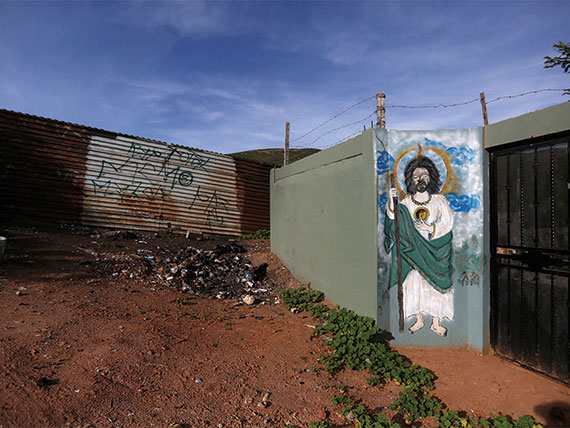
Mexicans who help build Trump wall are ‘traitors,’ top archdiocese says
Mexicans who help build President Donald Trump’s planned border wall would be acting immorally and should be deemed traitors, the Catholic Archdiocese of Mexico said, turning up the heat on a simmering dispute over the project. In a provocative editorial published Sunday (March 26), the country’s biggest archdiocese sought to increase pressure on the government to take a tougher line on companies aiming to profit from the wall, which has strained relations between Trump and the Mexican government.
“Any company intending to invest in the wall of the fanatic Trump would be immoral, but above all, its shareholders and owners should be considered traitors to the homeland,” said the editorial in Desde la fe, the archdiocese’s weekly publication.
On March 28 , Economy Minister Ildefonso Guajardo warned firms it would not be in their “interests” to participate in the wall. But the editorial accused the government of responding “tepidly” to those eyeing the project for business.
A spokesman for the archdiocese, which centres on Mexico City and is presided over by the country’s foremost Roman Catholic cleric, Cardinal Norberto Rivera, said the editorial represented the views of the diocese.

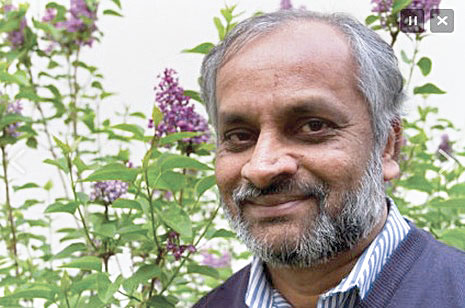
A defender of Sri Lankan fisher folk
He could have been a researcher or an entrepreneur but he chose to get involved in civil society. And at the age of 54, Herman Kumara believes that he made the right choice.
“I am really happy,” he says. “My former faculty comrades are earning money, sometimes a lot of money, but they are not happy with what they are doing. Personally, I have what I need to eat and to survive and that’s enough.” As a student, Herman Kumara studied biology at the University of Kandy in the centre of Sri Lanka, one of the nation’s most reputable universities.
There he was president of the Newman Society which organized the Catholic students.
“We Christians are a minority in the country but an influential minority,” he says. “We are like the salt that gives taste to the curry.” He had planned to do a master’s degree when the civil war broke out. “In 1989, some inhabitants of my village suspected me of being a member of the Marxist party, the JVP. They wanted to kill me.,” he recalls.
“So I realized what oppression of a minority really meant. As Catholics, we could also feel threatened.”
As a result, he ended his studies. “I did not want to be a white collar worker and I understood that my generation was suffering. That it was necessary to find alternatives.”
A priest friend suggested that he join the Catholic development agency, Caritas. The movement then supported the struggles of farmers, fisherfolk, and workers in tea plantations as well as women war victims.
“I did not have confidence in the hierarchy,” he comments with reference to the religious authorities who removed him from Caritas.


The happiest countries in the world: Norway in first place, China ranked 79th despite economic growth
According to a The World Happiness Report 2017, Norway is the happiest country on Earth. Americans are a bit ‘more sad, the Chinese as happy as 25 years ago. The report shows that money is not everything for the people of the 155 countries studied. The rankings are based on gross domestic product per person, healthy life expectancy with four factors from global surveys. In those surveys, people give scores from 1 to 10 on how much social support they feel they have if something goes wrong, their freedom to make their own life choices, their sense of how corrupt their society is and how generous they are.
In Asia, Singapore occupies the 26th place in the rankings; Thailand 32; Taiwan 33; Malaysia 42; Japan is in 51 st place; South Korea ranked 56th; the Philippines 72nd. Cambodia is the saddest Asian country, ranking in 129th position.
Overall, Hong Kong was ranked 71st in the world and China to 79th. The report finds that people in China are no happier than 25 years ago. This contrasts sharply with the growth of income per capita in the last 25 years. The evaluations on quality of life declined steadily from 1990 until 2005 and today approximately amounted to the levels of the ’90s. “China’s soaring GDP growth over the past quarter century is viewed by many analysts as the hallmark of a successful transition from socialism to capitalism,” the report said. “But if the welfare of the ‘common man’ is taken as a criterion of success, the picture is much less favourable and more like that of European transition countries. The other Asian giant, India, is positioned only at 122th place, lower than Pakistan (80), Nepal (99th), Bangladesh (110) and even Iraq, which ranks 117th place.

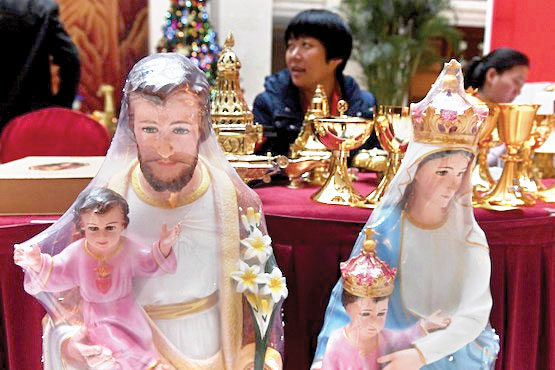
Fresh concerns for Rome in new China church rules
China’s two government appointed Catholic bodies have released their revised constitu-tions with “Sinicization” as a central concept, seen as part of a broader strategy by Beijing to make all religion in the country more “Chinese.” Other changes in the appointment of senior officials finds the government -run bodies at even greater odds with standard Vatican practice, under-scoring the difficult road ahead as the Holy See continues its talks with Beijing over — in the first instance — the appointment of bishops. Specifically, “Sinicization” is now included in both constitutions.

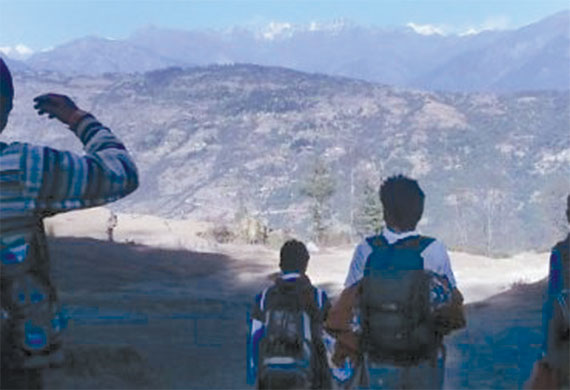
Nepal’s Christians have to trek into mountains to bury their dead
One way in which the freedom of religion or belief in a country can be measured is whether minorities are permitted to carry out their own rituals during key ‘rites of passage’ such as birth, marriage and death. One of the world’s fastest-growing Christian communities is that in Nepal. Between the censuses of 2001 and 2011 its Christian population more than doubled from 180,000 to 375,699.
Nepal’s new Constitution, introduced in 2015, recognizes the freedom of religion or belief but, as this video report by Vishal Arora shows, death in a Christian family in Nepal brings not only sorrow but also a gruelling struggle to find land for burial. As local residents object to any burial in their vicinity, churches in Kathmandu and surrounding areas have bought 130,000 square feet of land on a secluded mountain to build a cemetery.
“The biggest challenge is the road that leads to this cemetery,” says Joshua Magrati, Joint Secretary of the recently built Rest Cemetery in Makwanpur district, about 30 miles from Kathmandu, the national capital. “It’s about two miles from the main road. We have spent about 2.5 million Nepali rupees and yet it’s far from being complete. However, we have already buried two bodies here.”
Only a 4×4 vehicle can reach the cemetery, but few can afford it. Many will have to trek for one and a half hours on the steep, makeshift road, carrying the body.
“We chose this place because of two reasons. One, we wanted a place that was really far from any human habitation, as opposition comes mainly from local communities near a Christian graveyard,” explains Parshuram Sunchuri, a board member of the cemetery. “Two, the nearer the land to the city, the more expensive it is.”
“There is no other Christian cemetery near Kathmandu,” says Ang Dawa Sherpa, the cemetery’s General Secretary. “There is one in Pokhara, and one in Chitawan. They are far from here.”

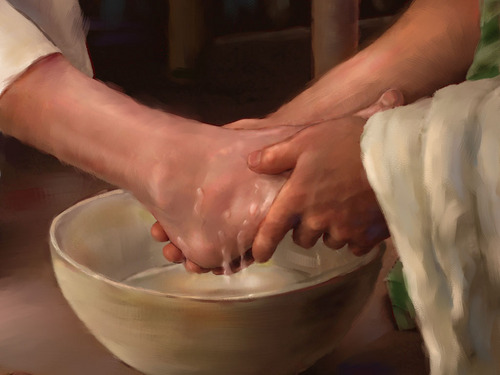
No women for foot-washing ritual: Syro-Malabar church
The Syro-Malabar Catholic Church will stick to the traditional practice of performing foot-washing on Maundy Thursday on men only with the Vatican exempting it from its decree allowing participation of women in the ritual.
Head of the Syro-Malabar Church Cardinal George Alencherry has issued a circular stating that the Church wished to keep the Eastern tradition and the ritual will be performed only on men.
The ritual is said to have been performed by Jesus as one of His last acts on Earth to His disciples before He was crucified to signify an act of humility.
Last year, Pope Francis had issued a decree changing the way that the Maundy Thursday foot-washing was performed in the Church and said it should no longer be limited to men.
The Vatican decree did not go down well with the Syro-Malabar Catholic Church, which comes under the Eastern rites. It sought clarification from the congregation for the Eastern churches in Vatican when the issue came up for a debate. “It was clarified that the decree is meant for the Latin Church only. Both the Decree and the letter of the Holy Father, which prompted it, mention specifically only ‘Roman Missal’.”
“Thus, this change does not concern the liturgical practices in the Eastern Churches,” the circular said.
The Synod of Bishops in the Syro-Malabar Church has decided that the church will wash the feet of only 12 men following the age-old liturgical tradition as the Vatican has exempted Eastern churches, it said. Last year, the Syro-Malabar Church did not follow the Papal decree that women should be included in the foot-washing ceremony.