Jesuit says militants want to build “imaginary country” on “Egyptian blood”

A leading Egyptian Jesuit says fundamentalists want to cause conflicts among Muslims and Christians in Egypt.

Fr William Sidhom said the Muslim Brotherhood, an international conservative Islamic political movement founded in Egypt in 1928, wants “to make their own imaginary religious country on the Egyptian blood.”

The priest serves as the secretary general for the Committee for Justice and Peace of the Association of the Catholic Hierarchy of Egypt.

Sidhom spoke to Crux after the latest deadly attack against Christians, which was on Dec. 29, when a militant opened fire outside a suburban Cairo church, killing at least nine people.

A militant group affiliated with the Islamic State has claimed responsibility for most attacks on Christians in the country, including a series of killings that forced scores of Christian families last year to flee their homes in northern Sinai.

“They want to make things bad between Egyptian Muslims and Christians to create a distortion, because this is the only way to break Egypt,” the priest said. “Because Egypt is very strong, and they have no other option to make a division between people, except through religious things.”

GERMAN CHURCH ACCUSED OF FAILING TO MAKE FINANCES TRANSPARENT

The German Church has been accused of failing to make church finances transparent as the German bishops’ conference had promised it would in 2014 after Bishop Franz-Peter Tebartz-van Elst – since referred to as the Bishop of Bling – was suspended by the Vatican for spending more than 31m euros (£26m) on renovating his bishop’s palace. “We feel and understand the faithful’s desire to be informed about the dioceses’ assets and about how the money is being spent”, the German bishops’ conference declared at the time and promised that each diocese would publish its balance sheets by the end of 2016.

In an article of 21 December (2017) entitled “Heavenly Balance Sheets”, the German newspaper, ‘Handelsblatt’, accused the Church of failing to publish its balance sheets as promised and of hoarding a large part of of its annual surplus from Church tax, which in 2016 (statistics for 2017 are not out yet) came to 6.15 billion euros (£5.5billion).

Church tax is compul-sory for any Catholic who works in Germany and is between 8 and 9% of one’s net income. It is deducted at source by the state and passed on to the Churches. As the German economy is flourishing and unemployment relatively low, the surplus for 2017 is expected to be even higher. According to the Handelsblatt, Germany’s 27 Catholic dioceses have assets of “at least 26 billion euros.” Some dioceses have published their balance sheets, others have partly done so and three have not published them at all. Inquiries on how the surplus billions are invested usually remain unanswered and are “always unwelcome”, the article says. “The motto seems to be “One does not talk of money.”

New Abortion Estimates From India Prompt Renewed Push to Liberalize Law

A recently-released study estimates that abortion in India is twenty times higher than previous estimates–15.6 million children aborted in 2015 alone. The news led abortion advocates to call on New Delhi to liberalize India’s abortion law even further, past the 20-week gestation limit, even though India’s law is already among the most liberal of its kind in Asia. The study, published by the pro-abortion Guttmacher Institute, reported that despite the law, most of these abortions take place outside legally approved facilities and are done by medications without a prescription.

Heart of forgiveness: Ugandan women once child soldiers now lead peace

Two decades ago, Joseph Kony’s Lord’s Resistance Army stormed St Monica’s with guns firing, searching for children they could coerce to be new soldiers. But on this day in January 2017, the bullet holes that still pepper the ceiling of the classrooms were contrasted against thousands of people outside, clasping their hands in a prayer for peace. Sitting among the crowd was Sr Rosemary Nyirumbe, the former director of St Monica’s school. Kony, a self-described prophet bent on overthrowing Uganda’s longtime president, Yoweri Museveni, instructed his followers to kidnap children as young as 8, brainwash them and force them to burn down homes and rape and kill their neighbours. The violence displaced more than 2.5 million people in northern Uganda and left 100,000 people dead.

The process of reconciliation, some of which uses religious leaders to conduct traditional tribal forgiveness ceremonies, is ongoing.More than 1,500 girls and women have graduated from the various courses, which range from three months to two years.

POPE FRANCIS ISSUES BLUEPRINT FOR GEOPOLITICAL STABILITY

Pope Francis on8 January issued a blueprint for geopolitical stability, calling for a de-escalation of tensions in Korea, for nuclear disarmament and for world leaders to recognise that migrating to another country is a “fundamental human right”.

He set out his vision this morning during his annual address to diplomats. His message runs counter to that of US President Donald Trump, underlining the Pope’s role as an upholder of the compassionate, internationally-focussed, post-war consensus.

Speaking to ambassadors from the 183 countries which the Holy See has relations with, the Pope made an indirect criticism of Trump’s policy on Jerusalem which the president recently decided would be recognised as the capital of Israel.

Grand imam condemns attacks on Coptic Christians, calls on Muslims to celebrate Christmas in solidarity

The Grand Imam of al-Azhar condemned recent terrorist attacks on Coptic Christians “in the strongest terms” and called upon Egypt’s Muslims to celebrate Christmas to show their solidarity with Christians.

The Coptic Orthodox Church celebrates Christmas on January 7. “All Egyptian people are urged to stand firm against this evil conspiracy” and to join “their Coptic brethren in celebrating the anniversary of Christ’s birth,” said Ahmed el-Tayeb, whom some Muslims regard as the highest Sunni Muslim authority.

On December 29, gunmen on a motorcycle attacked a Coptic Orthodox church in Helwan, a city of 640,000 near Cairo, leaving 10 dead, including security officers. Egyptian state media reported that one gunman was killed by security forces in a shootout, while the other was arrested.

That same day, two Coptic Christians were killed in an attack on their store in Helwan. Pope Tawadros II, the head of the Coptic Orthodox Church, decried the “treachery and cowardliness of the evils that were the reason for this painful incident.”

“All condolences to their families and to the police, the church and to Egypt, which will still be strong and capable of defeating insensitive and dark and violent forces which have no conscience,” he added.

Chinese officials demolish yet another church: in Shanxi

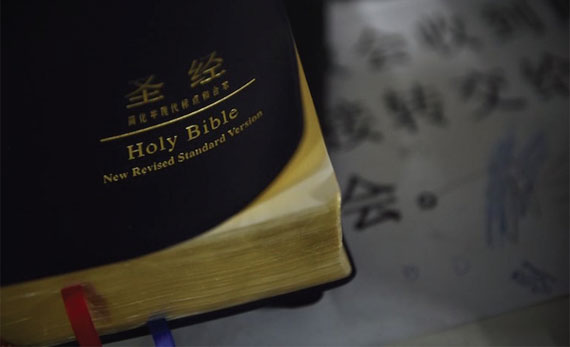
Authorities in China demolished a large church in the city of Linfen, Shanxi province on Jan. 9, despite efforts by worshippers to halt the demolition and who were then pressured to remain silent, according to witnesses. It was the third Christian church demolition or closure in China in just over two weeks and comes amid a broader crackdown on “Western” religions by the government of authoritarian leader Xi Jinping. Muslims groups, especially in the far flung province of Xinjiang have also been targeted.

Officials surrounded the Golden Lampstand Church, while bulldozers reduced the large building to rubble, a witness told Radio Free Asia “It has now been demolished,” a church member said.

The church member, speaking on condition of anonymity, said a large anti-riot team carried out the demolition. ChinaAid, a Texas-based Christian human rights organization, said the Golden Lampstand Church had been subject to government pressure since it was built in 2009.

“China repeatedly cracks down on house churches, which are churches that refuse to register, often to opt out of government monitoring. Officials often prosecute such choices, however, and some of Golden Lampstand Church’s leaders have been imprisoned for one to seven years, simply for serving at their church,” ChinaAid said in a statement on Jan.9.

In Zhejiang province more than 1,500 churches, both Catholic and Protestant, have been targeted for demolition or cross removals in recent years, sources have said in a campaign against churches not coming under state control. Chinese authorities are increasingly using property regulations to remove crosses and demolish churches.

The betrayal of Vietnam’s forgotten Christians

Exasperated after violent interrogations and round-the-clock intimidation at the hands of the Vietnamese government, Christian Montagnard Y-Man Eban escaped into the forests of eastern Cambodia on July 7, 2015.

“The reason I ran away from my country was because the Vietnamese police interrogated me four or five times and put me in jail for a week. They beat me a lot,” Eban, 30, said from Dak Lak province.

When asked why he was arrested, Eban said it was because he sought “the freedom and independence for Dega people.”

Eban was one of more than 300 Montagnard Christians, the indigenous peoples of the Vietnamese Central Highlands, also known as Dega, who three years ago started fleeing into Cambodia with tales of oppression at the hands of the Hanoi government. It was the first exodus in around a decade, when thousands fled amid crackdowns on protests in 2001 and 2004.

Persecuted for decades due to reasons including their support for America in the Vietnam War and their faith, there have been widespread accusations of human rights abuses and land grabs in the rolling hills of the Montagnards’ homeland.

Virtually all have since been returned by the Cambodian authorities and just 20 have been granted refugee status. Eban said the persecution and surveillance back in the Central Highlands had continued unabated since he was sent back in October 2015 after being denied asylum.

“Since I came back to Vietnam, the authorities have viewed me as a criminal,” Eban said. “l regularly read the Bible and pray to God to bless us,” he said. Back in the Central Highlands, Eban had little doubt as to why the Cambodian government appeared so eager to prevent his people finding a safe haven from the wrath of Vietnamese authorities.

US lists Pakistan for ‘violations of religious freedom’

Days after US President Donald Trump threatened to cut American aid to Pakistan, the State Department placed the South Asian Islamic country on a Special Watch List for “severe violations of religious freedom” under the International Religious Freedom Act of 1998.

The move came three days after Trump, in his first tweet of the new year, accused Pakistan of providing a safe haven to terrorists despite receiving billions of dollars in aid over the years.

“The United States has foolishly given Pakistan more than 33 billion dollars in aid over the last 15 years, and they have given us nothing but lies & deceit, thinking of our leaders as fools. They give safe haven to the terrorists we hunt in Afghanistan, with little help. No more!” Trump wrote.

Rejecting Trump’s accusa-tions, Pakistan said its counter-terrorism campaign had served as a bulwark against the expa-nsion of scores of terrorist orga-nizations in Afghanistan — a fact acknowledged by US authorities at the highest level.

Pakistan’s successful counter-terrorism cooperation against Al-Qaeda had led to Pakistan suffe-ring a brutal backlash, including the killing of hundreds of its schoolchildren by terrorists based in Afghanistan, a statement by Pakistan’s powerful National Security Committee said on January 2.

Apart from Pakistan, the US Secretary of State also re-designated Myanmar, China, Eritrea, Iran, North Korea, Sudan, Saudi Arabia, Tajikistan, Turkmenistan and Uzbekistan as “countries of particular concern” on Dec. 22.

On Jan. 4, the Trump admi-nistration announced it had sus-pended all security assistance to Pakistan until it proves its commitment to fight all terrorist groups operating in the region.

Voice from Singapore: ‘Demographic winter’ isn’t just Europe

On January 8 Pope Francis delivered his annual address to the diplomatic corps accredited to the Vatican, in what’s generally considered his most important foreign policy speech of the year. It was a typically wide-ranging overview of the global scene, from nuclear disarmament and the dangers of anti-immigrant rhetoric to the pro-life cause and “ideolo-gical colonization.” Crux spoke with Ambassador Barry Desker of Singapore, who was part of the first generation of diplomats from his country after it gained independence from Malaysia in 1965, and who today serves as one of the “non-residential” ambassadors to the Vatican, meaning he does not live full-time in Rome. He said: “The second factor which will have drawn attention is the reference to a “demographic winter,” meaning the decline in birthrates. In Asia, this is something that’s of concern to countries around the region, including Singapore. For example, many have said that China is likely to grow old before it grows rich because of the one-child policy.”

Official Website

Exit mobile version