
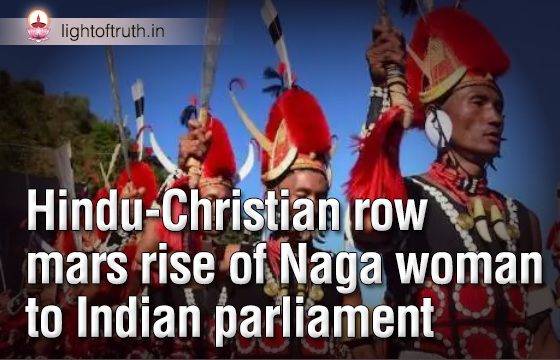
Religion is back in business in India’s Nagaland state. The strongly perceived Christian identity of the indigenous Na-gas is making headlines.
Nagaland is a Christian and tribal-dominated province in the northeast where guerrillas are still seeking independence.
S. Phangnon Konyak, a Naga Christian woman who heads the local women’s wing of the pro-Hindu Bharatiya Janata Party (BJP), was recently elected to the Rajya Sabha or upper house of parliament by her party. As expected, BJP leaders called it revolutionary and empowering for women, especially in the context of a state that has so far not elected a single woman legislator to the local legislature.
Phangnon is only the second woman parliamentarian from the state and the first female among Nagas to be elected to the Rajya Sabha.
However, the episode has gradually become a Hindu-versus-Christianity issue, at least for some individuals and political players. Curiously, one church leader has jumped on the bandwagon.
“The people’s government with Christian votes has shamed and destroyed the image of every Christian and that of the Christian state.”
Appeals filed against Bishop Mulakkal’s acquittal
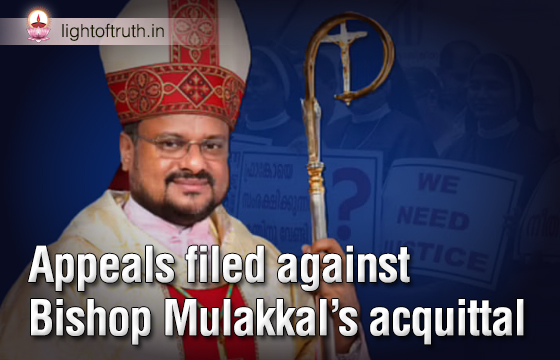
The January 14 acquittal of Bishop Franco Mulakkal in a rape case involving a Catholic sister has been challenged in an appellate court by both the accuser and the prosecution.
Bishop Mulakkal confirms that the government and the nun have appealed to the high court against his acquittal. “Yes. It is their right. We respect it,” he told GSR.
Under Indian law, acquittals in criminal cases may be appealed.
The accuser filed the appeal March 28 in the Kerala High Court online, but it was not officially listed because of some defects in the filing. The nun’s supporters told Global Sisters Report on March 30 that they will fix the problems and the case should be listed in a day or two.
Meanwhile, the home department of the Kerala state government on March 29 sanctioned the prosecution to appeal Mulakkal’s acquittal.
The government move ended the speculation that the Communist-led government in Kerala was not serious about appealing the acquittal.
Nun’s murderer admits killing another elderly nun
The man held in connection with the murder of a 69-year-old nun in Pala allegedly had killed another elderly nun at a convent near Erattupetta in April this year, police said on Tuesday. Satheesh Babu, who has been remanded in police custody for the probe into the murder of Sister Amala in Lisieux Carmel Convent at Pala, has “confessed” to having attacked 83-year-old Jose Maria Iruppakkad at her room in the Sacred Heart Convent in Chettuthodu in Erattupetta in April this year, they said.
Indian priest’s kin seek federal agency probe into his murder
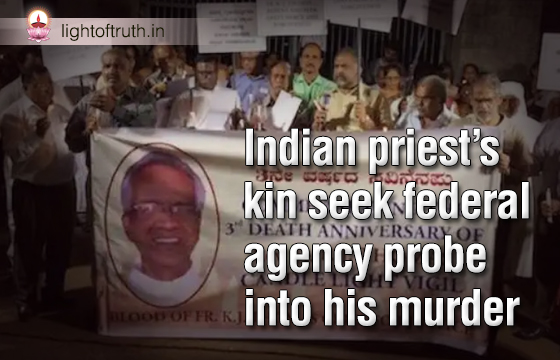
A close relative of a Catholic priest found dead under suspicious circum-stances inside a major seminary in southern India has demanded a federal agency probe to establish the truth. Father K.J. Thomas, 62, the then rector of St. Peter’s Pontifical Institute, Bangalore (now Bengaluru) in Karnataka state, was found dead with multiple injuries outside his room at the seminary on April 1, 2013.
“My uncle was physically tortured and murdered in the most inhuman way,” Joyson Mathew claimed in a March 27 communiqué addressed to Archbishop Peter Machado of Bangalore, blaming ethnic rivalry within the archdiocese for the suspected murder.
The nephew of the deceased priest said his family was not happy with the tardy investigations conducted by the state’s police and urged the Arch-bishop to pursue the Karnataka state government to hand over the probe to the Central Bureau of Investigation (CBI), a premier federal agency.
Synodality key for Church’s relevance in third millennium: Theologian
A renowned Asian theologian says the synodal process now underway in the Catholic Church should prepare it to become relevant in the third millennium and respond to modern challenges.
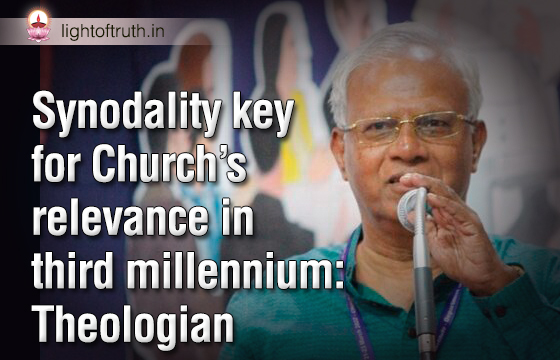
Synodality reflects how the Church’s life and mission should adapt to the modern world. It flows from the Christian value of upholding hu-mans as unique reflection of God’s mystery and image, asserts Father Felix Wilfred, emeritus professor at the State University of Madras, and the founder director of the Asian Centre for Cross-Cultural Studies in Chennai.
The 74-year-old priest was the keynote speaker at a national conference on the theme “Church in India on the Path of Synodality” organized by the department of missiology of Bengaluru’s St Peter’s Pontifical Institute.
The March 21-23 conference was held to help the Church in India reflect on synodal theme, explained Fr Antony Lawrence, who head the department.
Father Wilfred expects the synodal process to lead a tran-sition from the Bishops’ synod to the synodal Church. For this, drastic structural changes are required, a major theological issue synodal process should address, he asserted.
He said when the Church really practices synodality it would become an inverted pyramid. For this, the canon law that now vests the governance on the clergy, has to change to allow all baptized Catholic to share in the exercise of power.
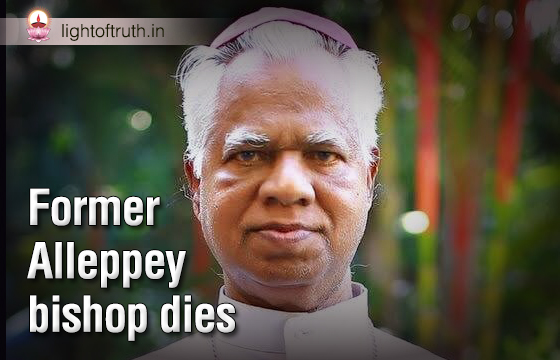
Former Alleppey bishop dies
Bishop Emeritus Stephen Athipozhiyil of Alleppey passed away due to cardiac arrest on April 9, at 8.15 pm at St. Sebastian, Visitation Hospital, Arthunkal in Kerala. He was 77. Funeral was held on Tuesday, April 12, 2022 at Mount Carmel Cathedral at 10.30 am.
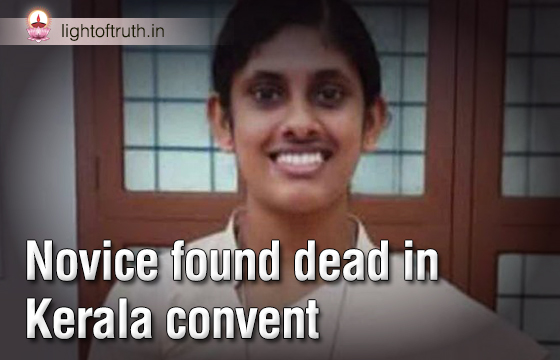
Novice found dead in Kerala convent
Another mysterious death of a novice nun was reported from Kerala, the southern Indian state with a sizable Catholic population.
The 21-year-old nun trainee had gone to room at 10:30 pm on April 1. When she did not join a special night prayer in the convent chapel, sisters went to her room and found her hanging. They rushed Alex to a nearby Dharmagiri Hospital where she was declared brought dead.
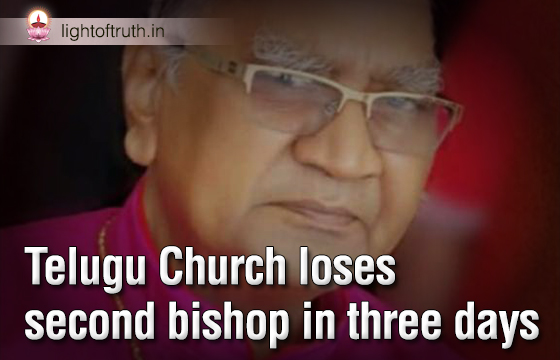
Telugu Church loses second bishop in three days
The Catholic Church has lost another Church in the land of Telugu.
Bishop Emeritus Innayya Chinna Addagatla of Srikakulam died at 11:30 pm on April 1, at the residence of the local Bishop. He was 84, says a report from Father Stephen Alathara, deputy secretary general of the Conference of Catholic Bishops in India.
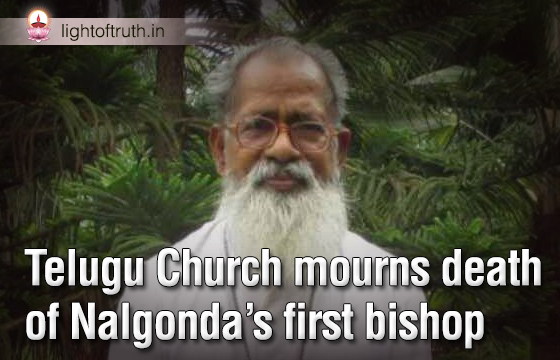
Telugu Church mourns death of Nalgonda’s first bishop
The Church in the undivided Andhra Pradesh on March 30 mourned the death of Bishop Mathew Cheriankunnel, who had sacrificed his life for Telugu people.
The first Bishop of Nalgonda diocese died in the afternoon of March 30 in the regional house of the Pontifical Institute for Foreign Missions (PIME) in Eluru, Andhra Pradesh. He was 91.

Indian Christians condemn call to boycott halal meat
Church leaders have joined political parties and the Muslim community to condemn a call by Hindu groups to boycott halal meat during the traditional New Year celebrations in the southern Indian state of Karnataka. The state celebrated the Ugadi festival followed by Hosa tadukua, which is supposed to be a day of non-vegetarian feasting, on April 2-3. The call to boycott halal meat came close on the heels of Karnataka High Court’s ban on wearing the hijab in educational institutions and a ban on Muslim traders at Hindu temple premises and fairs.
Hindu groups actively campaigned last week to pursue majority Hindus to stop buying halal meat, saying that “as per Islam, halal meat is first offered to Allah, and the same cannot be offered to Hindu gods.”
Local media reported that Hindu activists assaulted a chicken shop owner and attacked a hotelier, leading to a few arrests, but their call went largely unheeded by the state’s Hindus.
Father Faustine Lucas Lobo, spokes-person of the Karnataka Catholic Bishops’ Council, said the pro-Hindu Bharatiya Janata Party (BJP) government in the state had done nothing to address unemployment or arrest rising fuel prices and inflation and so wanted to polarize the electorate on religious lines. “Why only target a particular group considered as second-class citizens by the ruling governments in New Delhi and Karnataka?”
“The state is going to have its assembly elections next year, so the government is trying to convince Hindu voters that it is the savior of their religion and culture,” he told. “It is a well-planned tactic to corner minorities who they think do not vote for a Hindu party.”
He said that “it all started with the hijab controversy and now halal meat, then there were other issues like love jihad. It is all game plan for the forthcoming election, which it does not want to lose.”