The Egyptian government “legalizes” 53 churches built before the law on Christian places of worship

The Egyptian government has provided full legal certificates to 53 churches with annexed service buildings already built before the new law on the construction of Christian buildings of worship passed by the Egyptian Parliament on August 30th 2016. A meeting of the government Commission set up specifically to conduct a census and examine the legalization of church buildings built before 2016 ratified the full compatibility of the 53 “legalizied” places of worship with the parameters defined by the new legal provisions. The Egyptian Premier, Sherif Ismail, in addition to technicians and representatives of the ministries of construction, interiors and justice, took part in the meeting, which took place on 26 February.

The 53 legalized” churches represent only a first “block” of the more than 3 thousand Christian places of worship that must be taken into examination by the Government Commission to verify whether they meet the standards established by the new law.

Will Pan-Amazonian Synod Result in End to Clerical Celibacy?

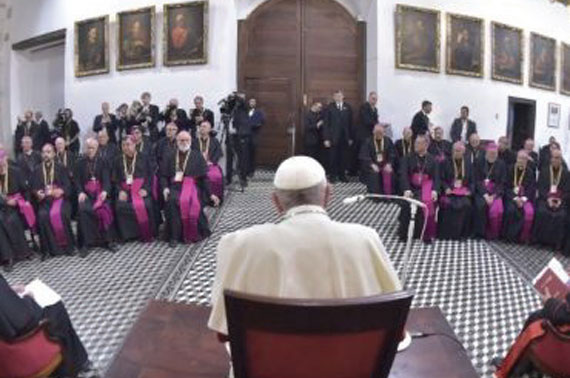
The Vatican announced on March 8 that Pope Francis has appointed members of a pre-synodal council who will collaborate with the secretariat of the Synod of Bishops in preparation for the Pan-Amazonian synod next year. Also announced was the theme of the October 2019 synod: Amazonia: new pathways for the Church and for an integral ecology.

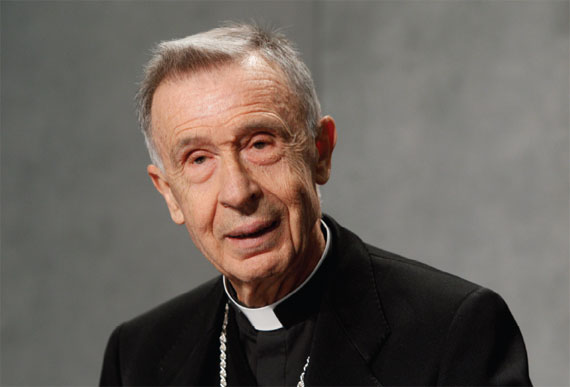
Of particular, though not unexpected, interest are the appointments of Cardinal Claudio Hummes and retired Bishop Erwin Kräutler to the council. Both have advocated a change in discipline to allow married clergy in the Latin rite, and the Pan Amazonian synod is expected to provide a forum to at least discuss the matter.

Although some exceptions already exist to allow married priests in the Catholic Church (the Eastern rites and the Ordinariate for former Anglicans for example), the Amazonian case could be used to allow for married clergy wherever priest shortages might exist, and therefore permit a far wider provision.

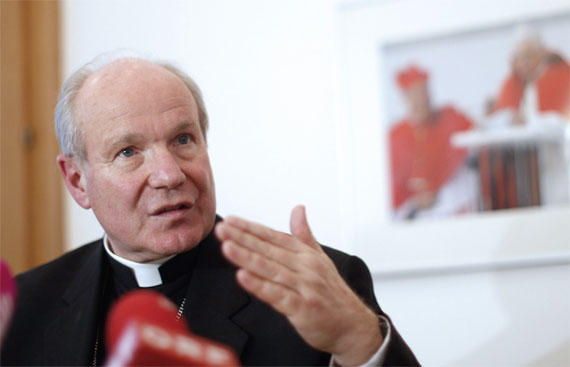
Bishop Kräutler, an Austrian who headed the Xingu diocese in Brazil from 1981-2015, has long argued for viriprobati (ordination or married men of proven virtue) to make up for a shortage of priests in remote Amazonian regions.

A supporter of the ordination of women despite Pope Francis and his predecessors definitively ruling it out, Bishop Kräutler said in an interview last year that he thinks the Pan-Amazonian synod might consider the issue of viriprobati, and disclosed that after meeting Pope Francis in 2014, the Holy Father had encouraged him to “courageously” explore the matter.

Francis reportedly wanted the issue discussed at the next synod this October, but the theme was voted down by the majority of members on the ordinary council of the Synod of Bishops, the body charged with drawing up the theme. Instead, they opted for a synod on “Young People, the Faith and the Discernment of Vocation.”

Cardinal Hummes, meanwhile, has made comments in the past advocating for a change in the discipline.

A friend of the Holy Father who gave him the inspiration to choose the name Francis, the Brazilian cardinal made headlines back in 2006 when he argued that “even though celibacy is part of Catholic history and culture, the Church could review this question, because celibacy is not a dogma but a disciplinary question.”

Priests’ books recount horrors of Sri Lanka’s civil war

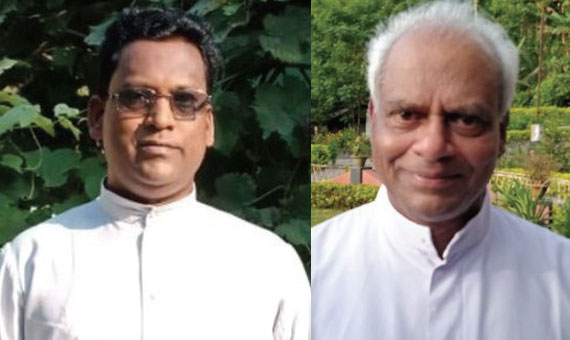
Two Sri Lankan priests who chose to stay among war-affected Tamils have written books about their experiences and challenges.

Senior Catholic Priest Father Terrence Fernando and Anglican Father Mariamuttu Sathievel launched their books on March 5 at the Center for Society and Religion in Colombo.

Father Fernando, a Sinhalese, started a mission in Tamil areas with minimum facilities and great difficulties while living in Vavuniya in the north. He pleaded with church leaders and other leading figures to stand against war.

His book contains letters and articles about the suffering of people during the civil war from 1983 to 2009.

Father Fernando’s book describes how thousands of children lost parents or limbs.

“What I have written in this book is not mere thoughts and essays but stories of the blood and tears of our Tamil brothers and sisters,” said Father Fernando.

African cardinal: Empty churches, not ‘remarried’ divorcees is western church’s

An African cardinal said he is “astonished” to see the church in the west fixated on “remarried” divorcees and on welcoming homosexuals and not on the bigger problem of empty churches. In a March 2 interview with the Austrian public service broadcaster ORF (Österreichischer Rundfunk), the Nigerian Cardinal John Onaiyekan — who is archbishop of Abuja, Nigeria — said he was “astonished that these are the themes that people [in Europe] are concerned about,” referring to the topics of “remarried” divorcees having access to the sacraments as well as homosexuality. While Europe is increasingly secular, the Catholic Church in Nigeria is growing.

AMNESTY SLAMS INDIA FOR INCREASED RELIGION-BASED VIOLENCE

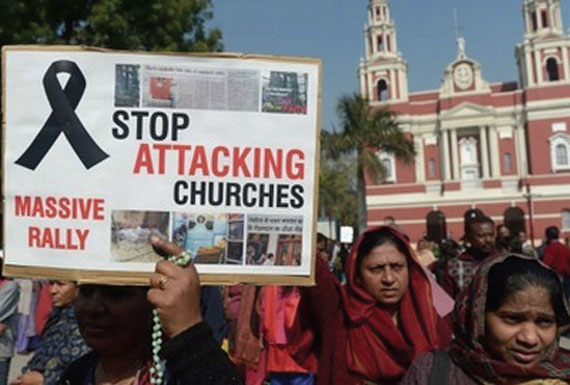
India’s religious minority groups, particularly Muslims, face increasing demonization by hard-line Hindu groups, pro-government media and state officials, says the annual report of rights watchdog Amnesty International. India’s coalition government led by the pro-Hindu Bharati- ya Janata Party (BJP) is using laws to suppress freedom of expression, the report released on Feb. 22 in New Delhi said.

“At least 10 Muslim men were lynched and many injured by vigilante cow protection groups, many of which seemed to operate with the support” of the BJP, it added. Some arrests were made but no convictions were reported.

The report also highlighted that India’s indigenous communities continue to suffer displacement because of industrial projects, while hate crimes against Dalits remain widespread. More than 6,500 crimes were committed against indigenous people in 2016 and their communities continued to face displacement as the government acquired land for projects such as mining, the report said.

In September 2017, activists protested Sardar Sarovar Dam in Gujarat State, saying it had displaced some 40,000 families without paying adequate reparation. “Authorities were openly critical of human rights defenders and organizations, contributing to a climate of hostility against them,” the report said.

The report titled “The State of the World’s Human Rights 2017-18″ covers 159 countries and delivers a comprehen- sive analysis of the state of human rights in the world today.

“Muslims in India and Sri Lanka, Shias in Pakistan and Afghanistan, and Hindus in Bangladesh have all come under attack over the past year. In each case, the governments have either failed to protect them, been indifferent to their fate or even encouraged a climate of hostility,” Patnaik said.

DON’T SELL JESUS, BAPTIST LEADER ASKS NAGA POLITICIANS

The leader of Baptists in Nagaland has urged politicians in the Christian-majority state not to betray their faith for money and power. “Do not surrender your Christian principles and above all your faith for the sake of money and development,” says Reverend Aelhou Keyho, general secretary of the Nagaland Baptist Churches Council (NBCC) in a letter addressed to leaders of all political parties, mostly Christians, in the northeastern Indian state. Nagaland is scheduled to elect its legislative assembly on February 27.

Reverend Keyho urged the state’s politicians not to fall into “the hands” of those using development as a ploy to “pierce the heart of Jesus Christ” and “allow God to weep.” This was in an apparent reference to the attempts by the Bharatiya Janata Party (BJP) to forge electoral alliance and capture power in Nagaland.

NO PARTY OFFERED ANY ‘MONEY OR SOPS’: MEGHALAYA CHURCH

The Baptist Church in Meghalaya on February 24 said that no political party has offered it any “money or sops” ahead of February 27 assembly polls to influence its members.

The statement comes a day after Union Tourism Minister K.J. Alphons rubbished the contention of Congress Presi- dent Rahul Gandhi that the Bharatiya Janata Party (BJP) was trying to buy the churches in this poll-bound state.

“No political party has offered any money or sops to the apex Baptist Church organisation with a view to influencing our members.

Separation of Church and State is one of the distinctive (features) of the Baptist Church polity,” said Rev.J.R.Sang- ma, the general secretary of the Garo Baptist Convention, in a statement.

“The Garo Baptist Church is apolitical and neutral in its political dealings.” Sangma said.

RELIGIOUS NATIONALISM IN INDIA SELF-ANNIHILATION: BISHOPS

Promotion of nationalism based on religion threatened India with annihilation, the nation’s Catholic bishops warned at the conclusion of a biennial meeting. The alarm was sounded following a series of hard-line Hindu attacks on Christian and other religious minorities.

This included attempts by mobs of young Hindus to conduct avowedly patriotic rituals in the grounds of Catholic colleges, notably involving the personification of ‘Mother India.’

It was dangerous to promote nationalism based on any particular culture or religion, the Feb. 2-9 gathering of some 200 bishops from 174 dioceses warned. “Such misconceived efforts can only lead our nation on the path of self-annihilation,” they said.

The bishops met in the southern city of Bangalore for discussions under the theme ‘United in diversity for a mission of mercy and witness.’

They agreed that enhancing of India’s rich cultural and religious diversity was needed to achieve peace and progress.
Militant Hindu groups have stepped up violence against minorities since the Bharatiya Janata Party (BJP) came to power nationally four years ago, critics say.

In 2017, India witnessed 736 incidents of violence against Christians, according to a report of the ecumenical forum ‘Persecution Relief.’ Some hard-line Hindu groups portray Christians and Muslims as being loyal to foreign powers.

TAMIL NADU TOPS IN HATE CRIMES AGAINST CHRISTIANS

Tamil Nadu State in southern India recorded the highest incidents of anti- Christian violence during 2017, according to a study by the Evangelical Fellowship of India (EFI).

The national alliance of evangelical Christians on February 16 released its annual report on hate crimes against Christians in India for 2017.

The fellowship’s Religious Liberty Commission documented at least 351 cases of violence last year, which it says is not exhaustive. “Most cases go unreported either because the victim is terrified or the police, especially in the northern states, just turn a blind eye and refuse to record the mandatory First Information Report,” the report regrets.

The fellowship has urged the Indian government to uphold the rule of law and to punish those engaged in spreading hatred against religious minorities in the country.

EFI says although violence was “evenly spread across the months of the year,” it peaked during Lent and Christmas that draws larger participation of people. April, the month lent, saw 54 cases and December, the Christmas month, 40.

According to the report, 2017 was among the most trauma- tic periods for Christians in India since the mass targeted violence in the Kandhamal district of Odisha in 2007 and 2008.

“The confidence of the community in the government needs to be restored,” the report asserts.

Among the Indian states, Tamil Nadu recorded 52 cases, followed by Uttar Pradesh in northern India with 50. Chhattisgarh and Madhya Pradesh States in central India recorded 43 and 36 cases.

Official Website

Exit mobile version