POPE SENDS MESSAGE COMMEMORATING KOREA’S BLOODY JEJU UPRISING

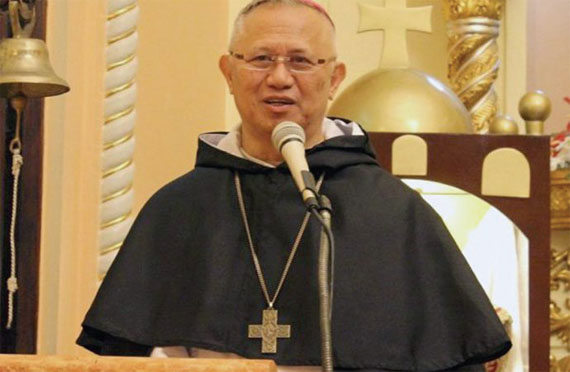
Pope Francis has sent a message of healing and reconci- liation to Koreans commemora- ting the 70th anniversary of the Jeju Uprising and subsequent massacres which resulted in the deaths of more than 10,000 civilians.

“[Pope Francis] hopes that this occasion will foster healing and reconciliation,” wrote Cardinal Pietro Parolin, the Vatican’s secretary of state, in a letter made public by the Catholic Bishops’ Conference of Korea (CBCK). “Entrusting the beloved Korean people to the intercession of Mary, Queen of Peace, I assure all present of my prayers, that they may persevere in hope,” said the letter.

The April 3 uprising by communists on the southern island of Jeju occurred after the division of the Korean Peninsula. It erupted in 1948 and escalated with atrocities being committed, pre- dominantly by the security forces. It lasted from 1948-1954 and was part of Korea’s ideological division following liberation from Japanese colonial rule.

JAFFNA PENINSULA: THE ARMY WILL RETURN 700 ACRES OF LAND TO TAMIL OWNERS

The Sri Lankan army has announced that it will deliver 700 acres of land confiscated during the civil war to its legitimate owners, in short Tamil fishermen and farmers. The lands are located in the Jaffna peninsula and delivery is scheduled for April 13th. Anthony Jesudasan, coordinator of the North-South Peace Desk of the National Fisheries Solidarity Movement (Nafso), told “This is really good news. Finally the Tamils are about to return to their territories, just on the eve of the New Year [the Vesak Buddhist festival that this year in Sri Lanka is celebrated on April 29th.” But, warns the activist, “they must not make false promises yet. It does not have to be a flash in the dark just to satisfy or make fun of the international community.”

The land that will be delivered tomorrow is located near Myliddy, in the High Security Zone, in the Vali-North region. They had been occupied by the military during the civil war between the army and the Tamil Tigers. Specifically, the plots are located in Palali, Varuthalaivilan, in Kadduvan Junction, along the Kadduwan- Myliddy road and opposite the port of Myliddy.

Major General and current commander in chief of the security forces (Sf), Darkshana Hettiarachi, reports that at the moment the road Myliddy- Kankesanthurai-Point Pedro can only be travelled by city buses, but after it will be open to general transit from 6 am to 18 in the afternoon. “The complete reopening of the road will be evaluated later, after having monitored the present conditions.” However, according to the general, “with the return of 700 acres to their legitimate owners, the problem of internally displaced people living in refugee camps will be solved.”

CHINA BANS ONLINE BIBLE SALES, RELIGIOUS BLUEPRINT RELEASED

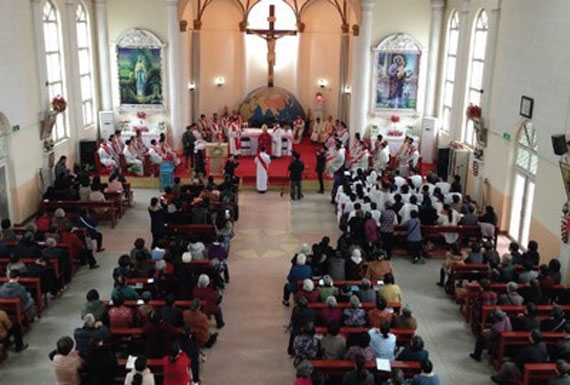
On Holy Saturday, China’s communist government, deep in talks with the Vatican on a deal to appoint bishops, issued a ban on internet sales of the Bible. Four days later, it issued its first white paper on religious freedom in 21 years, only a week after hauling Bishop Vincent Guo Xijin of Mindong away from his diocese for a few days during Holy Week.

A notice issued on Twitter like Chinese site Weibo banned online bookstores, such as Tabao and Dangdang, China’s equivalents of Amazon, from selling Bibles.

People searching for Bibles on these sites were greeted with the message: “Sorry! No products in this category available.”

One observer noted that there is a long-standing rule that the Bible cannot be sold publicly or on the internet in China but that oversight of this rule has been allowed to slide over the years.

“It can only be sold in churches that the government permits — it looks like the government has started to take the matter seriously,” the observer noted.

William Nee, a researcher for Amnesty International, told that the Chinese government should immediately reverse its ban on the sale of Bibles and ensure that all Christians and people of other religions can exercise their faith without government interference or intimidation.

THE ORTHODOXOS EXCEED THE MUSLIMS IN ITALY

According to the most recent ISMU Foundation estimates, foreigners residing in Italy on January 1, 2017 who profess the Orthodox Christian religion are confirmed as the previous year the most numerous (over 1.6 million, +0.7%), followed by Muslims (just over 1.4 million, -0.2%) and by Catholics (just over one million, -0.1%). Turning to the religions of minor quantitative importance, foreign Buddhists are estimated at 188 thousand (+3.5% compared to 1 January 2016), evangelistic Christians in 124 thousand(+2.3%),theHindusin 73 thousand(+0, 8%), Sikhs in 72 thousand (+0.9%), Coptic Christians in 19 thousand (+2.1%). Considering also Christians of other confessions not included among the main ones (111 thousand in total as of 1 January 2017, +3.8% compared to the beginning of 2016), Christians (including Catholics) foreigners residing in Italy total 2.9 million , up 0.6% in the last year.

About a third of Orthodox Christians live in Lombardy or in Lazio. The region in which the presence of foreign Orthodox Christians is greater is Lombardy, with 268 thousand presences, followed by Lazio with 263 thousand and then more distant from Veneto (174 thousand), Piedmont (161 thousand), Emilia Romagna (158 thousand) and Tuscany (117 thousand).

Muslims are concentrated mainly in Lombardy. The region in which more foreign residents of Muslim faith live, including minors, is Lombardy.

CATHOLICS HONOURED BY MACRON’S SPEECH AT BISHOPS’ CONFERENCE MEET


In an unprecedented event on April 9, the President of the Republic was welcomed by the Catholic Church of France at the Collège des Bernardins in Paris. Archbishops, members of the clergy and associations, and representatives from the world of business and culture — all in all, almost 400 French Catholic dignitaries — attended the reception for Emmanuel Macron in the ancient Cistercian college, showcase of the Church of France.

ODISHA BISHOPS, CHURCH LEADERS TO DISCUSS ON DALITS

As members of the Dalit caste were protesting the Supreme Court order that prevented the immediate arrest of those being violent towards them across India on April 2, the Bishops of Odisha and other church leaders have planned to deliberate on the Dalits of Odisha on April 4.

The Indian church published the ‘Catholic Bishops’ Conference of India Dalit Policy,’ on 13 December 2016, as an ethical imperative and the Gospel-mandate for the Catholic Church in India for the empowerment of the Dalits.

SEVEN GERMAN BISHOPS ASK VATICAN TO BLOCK INTERCOMMUNION PROPOSAL

The recent proposal by Germany’s bishops to allow some Protestant spouses of Catholics to receive Holy Communion under certain conditions is meeting seriousresistanceinGermany,as well as opposition from some Church leaders elsewhere.

On April 4, the KölnerStadt- Anzeiger newspaper reported that seven German bishops — including Cardinal Rainer Woelki of Cologne — have written an urgent appeal to the Vatican in protest against the proposal.

According to German media, the seven bishops said in their letter that they believe the proposal contradicts Catholic doctrine, undermines Church unity and exceeds the competence of the bishops’ conference. The letter, leaked to the media April 4, was sent last month to both the Congregation for the Doctrine of the Faith, and the Pontifical Council for Promoting Christian Unity.

Cardinal Reinhard Marx of Munich and Freising, the president of the German bishops’ conference, sent a letter to Germany’s bishops, written and released immediately after the seven bishops’ letter was leaked. In it, the cardinal defended the bishops’ conference’s decision, saying it was consistent with theological and ecumenical texts and canon law.

Cardinal Marx, who according to a prelate invariably invokes the Pope to justify his positions, also said it was the result of “the encouragement of Pope Francis to take further steps in ecume- nism.”

At their spring conference in February, Germany’s bishops voted in favour of producing a guide, or pastoral handout, to allow some Protestant spouses to receive Holy Communion under certain circumstances.

Indian priest rides on donkey to enforce Palm Sunday message

Mounted on a donkey, the priest moved slowly as boys and young men waved palm branches and sang hymns to Jesus during a Palm Sunday procession in a central Indian parish.

Fr Thomas Rajamanikyam and his parishioners at St Joseph Church in Nanda Nagar, Indore Diocese enacted the biblical account of Jesus’ entry to Jerusalem, an event Catholics commemorate on Palm Sunday, which this year fell on March 25.

The parish priest on a donkey leading the Palm Sunday procession surprised many. Kanti Kumrawat, a grandmother and parishioner, said it was first time they had such a procession and never heard of any other parish in the vicinity having commemorated the event in such a way.

Alencherry breaks silence, stresses purification for all

Cardinal George Alencherry, the head of the Syro-Malabar Church, on March 25 shared with lay people his views on the land deal row that has pitted him against the priests of the Archdiocese of Ernakulam-Angamaly.

“Whatever I and the auxiliary bishops have given out in a statement on the sale of land belonging to the church earlier, is true. It is correct and other news doing the rounds on the land row shouldn’t be believed,” the cardinal said leading the Palm Sunday ceremony at the St Mary’s Basilica, in Kochi, Kerala.

On March 24, the cardinal and his two junior prelates – Bishops Sebastian Edayanthrath and Jose Puthenveettil – released a press release expressing their happiness in resolving the land sale controversy that has reached even the Supreme Court of India.

The statement said a meeting of the priests’ council earlier in the day had decided to resolve the problem amicably.

Addressing the Sunday Mass, the cardinal acknowledged power and money make people impure. “All are impure in one way or the other. You and I are also among those who are impure. Individuals, families and the Church need to be purified,” the cardinal told the faithful.

The land controversy had raised doubts about the cardinal leading the Palm Sunday ceremonies in the cathedral as some priests and lay people reportedly were opposed his presence.

While some of the laity claimed the Mass participation was comparatively less, others said the cathedral had the usual attendance.

The cardinal had in a YouTube video uploaded on March 24 said each Palm Sunday initiates a purification process. He referred to Jesus expelling the merchants and the money changers from the Temple in his address.

“We should purify ourselves and purification at the time of Palm Sunday should be a deep one,” he asserted.

Official Website

Exit mobile version