
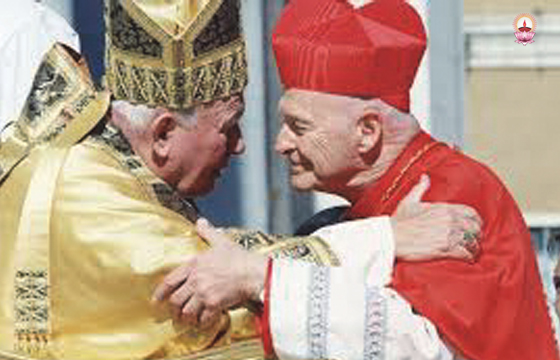
The recent report detailing the Vatican’s response to the scan-dal surrounding ex-Cardinal Theo-dore McCarrick shows why it’s a mistake to canonize Popes (or anyone) quickly after their deaths.
According to the Vatican report released, Pope John Paul II received warnings about McCarrick from Vatican officials and New York Cardinal John O’Connor in 1999. Two years later, McCarrick was installed as archbishop of Washington, D.C. John Paul was beatified in 2011, six years after his death, and was made a saint three years later.
It’s not just Popes: The church needs more time to examine any person’s life. The people of Argentina, for example, wanted to canonize Eva Peron immediately after her death in 1952. At the time, thankfully, the mandatory waiting period before the canonization process could begin was 50 years. Though she is still revered by many Argentines, Peron’s reputation has been clouded in recent years by accusations that she and her husband harbored Nazis after World War II.
John Paul reduced the waiting period from 50 to five years, because he wanted to canonize individuals who were still relevant to today’s generation. His successor, Pope Benedict XVI, waived even that for John Paul’s canonization in response to popular demand. -RNS
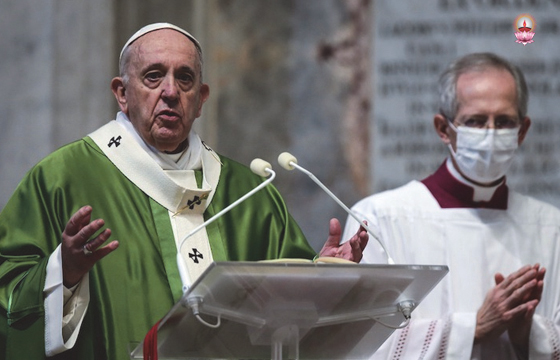
Pope tells Christians to break ‘rules’
Pope Francis has made an impassioned plea to Christians to reach out to the poor and homeless. Speaking on the World Day of the Poor, he said it was not enough simply not to do harm. Not doing good was also not good.
“We must do good, go out of ourselves and look, look at those who are most in need. There is so much hunger, even in the heart of our cities, and many times we enter that logic of indifference: the poor are there, and we look the other way.
“Hold out your hand to the poor: it is Christ.”
The poor are at the centre of the Gospel, he continued. “It is Jesus who taught us to speak to the poor, it is Jesus who came for the poor. Hold out your hand to the poor. You have received so many things, and you let your brother, your sister starve?”
He was speaking in his Angelus address on the penulti-mate Sunday of the liturgical year.
He also criticised Christians who play “on the defensive,” sticking only to keeping the rules and keeping the commandments: “Those measured Christians who never step outside the rules, never, because they are afraid of risk. And these, allow me the image, these who take care of themselves so that they never risk, these begin in life a process of mummification of the soul, and end up with mummies.”

Poland: Prime Minister’s appeal against trips to Christmas
Polish Prime Minister Mateusz Morawiecki has warned Poles against planning travel during the Christmas period, warning that most of the restrictions to keep the epidemic under control will be prolonged, even if you think about the reopening of the shops. “Please don’t plan any trips,” Morawiecki said at a press conference, adding that the government is looking for ways to impose restrictions on movement. Morawiecki suggested that Poles should spend Christmas only with their families and not travel between the country’s cities. Morawiecki also said that theaters, bars and restaurants will remain closed until after Christmas and that schools will continue with distance learning. “The situation is still very serious,” said the premier of Warsaw, expressing concern over the high mortality rate but stressing that the number of new cases has stabilized. The Ministry of Health recorded 574 deaths over 24 hours, bringing the total death toll to 13,288. The number of new infections per day in Poland was 24,213. –ANSA-AFP

Christian astronaut takes Bible, communion cups on mission to space station
Astronaut Victor Glover was- n’t trying to get away from God as he blasted to the International Space Station in the SpaceX Crew Dragon’s capsule Resilience on November 15.
As the first African American astronaut to go on a long-term mission, Glover took on board communion cups and the word of God. He plans to utilize the strong internet connection aboard the craft to access faith-based pro-grams, too.
Glover arrived at the ISS with the three other crew members on-board the first commercially developed space vehicle certified by NASA and the Federal Aviation Administration to ferry astronauts up to low-Earth orbit and back again. The crew will stay at the space station until the spring.
“As we’ve grown our family, that’s really when I’ve started to develop a real, true appreciation of my own faith and not just the academic,” he said. The couple has attended two Houston-area congregations: League City Church of Christ and the Southeast Church of Christ in Friendswood. They’ve been going virtually since the COVID-19 pandemic began.

Christian Persecution: A Glaring Blind Spot in Nigeria and Beyond
“Traveling by road into Maiduguri, the capital of Nigeria’s northeast, has become one of the most dangerous journeys on earth.” So begins an alarming and timely Wall Street Journal article about ever-encroaching violence in Nigeria, Africa’s largest country and most powerful financial centre. Writer Joe Parkinson describes four primary highways that lead into that northern Nigerian city, once known as “Home of Peace.” Along those roads some 200 people have been murdered in the past six months. Since its happier days, today Maiduguri is better known as the birthplace of Boko Haram, the brutal Islamist terrorist group. “The attacks are conducted by militants fighting for Boko Haram and a splinter group loyal to Islamic State,” Parkinson explains. “With each passing month they become more brazen, targeting civilians, aid workers, soldiers and even the state’s most powerful politicians.”

Multiracial churches on the rise, Catholic churches lead in diversity: survey
American Churches have grown in diversity with Catholic Churches leading as the most diverse, a new study by Baylor University shows.
The number of churches where less than 80% of people belonged to one race has nearly tripled since 1998, from 6% to 16%. The study counts churches in this category as “multiracial.”
Baylor University Professor Kevin Dougherty ran the study along with professors Michael Emerson and Mark Chaves. To find the information, the group asked 1,262 churches questions about race from 2018 to 2019. The study is the fourth in a series of studies which began in 1998. It’s unclear whether church makeup is changing society or whether some other change is changing church makeup.
“There’s a long history of research that shows when you bring people together to form relation-ships across racial lines, they start to think differently about race. Racism disappears,” Dougherty told The Christian Post. “But for most people, the reason they choose a multiracial place of worship is because they already have positive attitudes about other racial groups.”
Since 1998, Catholic Churches have always been the most diverse, the study suggests. But Pentecostal, evangelical, mainline Protestant and black Protestant denominations have all been catching up.
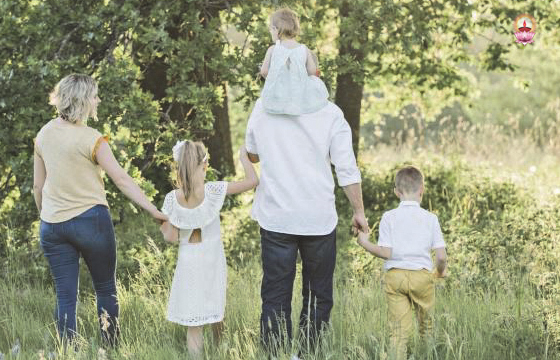
2 in 3 Americans thankful to God; most thankful for family: Survey
Ahead of Thanksgiving Day, which will be celebrated amid the COVID-19 pandemic and following a divisive election, a new survey shows that the majority of Americans still have a reason to be thankful.
The poll from Nashville-based LifeWay Research shows that more than 84% of American adults say they are thankful for their family, 69% are thankful for health, 63% for their friends and 63% of Americans are thankful for memories.
“In a year that has been difficult for most, Americans still express a lot of thanks,” the executive director of LifeWay Research, Scott McConnell, said. “This year of loss and division does not mean people have an absence of good things for which to be grateful.”
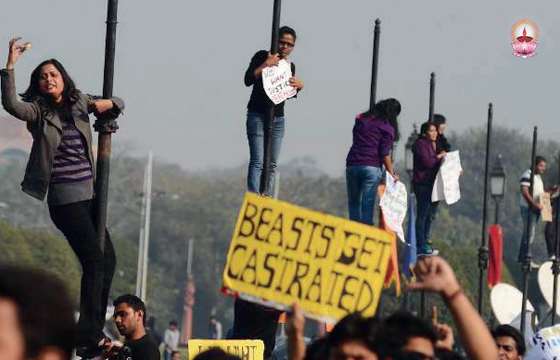
Rape, murder suspected in Indian Christian woman’s death
“We believe a fresh post-mortem will be able to establish our charge,” said Minakshi Singh, general secretary of Unity in Christ, a forum of Protestant churches based in New Delhi.
Venus said her sister’s body was on the bed. “Bloodstains were found on her leg, and one of her shoes was filled up with blood. There were injury marks on her left eye and neck, and swelling in other parts of the body.”
“Her private parts were also not properly covered, indicating that she was raped and killed. Her right hand had some cotton as if someone kept it there to prove that she had committed suicide by injecting poison,” Venus said.
“If she had injected poison and killed herself, how could there be so much blood and injuries? Why should clothes be removed from her private parts,” she asked.
A three-member church fact-finding team met with family members of the deceased woman. Singh, a team member, told on Nov. 5 that they “have sufficient grounds to prove that she was raped and murdered.”
She said the preliminary autopsy report “has given enough indication that she had not committed suicide. But the police were not ready to acknowledge it,” Singh said.
The case is now being investigated by a three-member police special investiga-tion team (SIT) after complaints that police covered up the case.
Police inspector Praveen Kumar, part of the team, said they are waiting for the viscera report. “Until we get the viscera report, we cannot jump to conclusions,” he said. He refused to divulge any details of the probe, saying it would breach its confidentiality.
Indian state nods to record tribal religion in national census
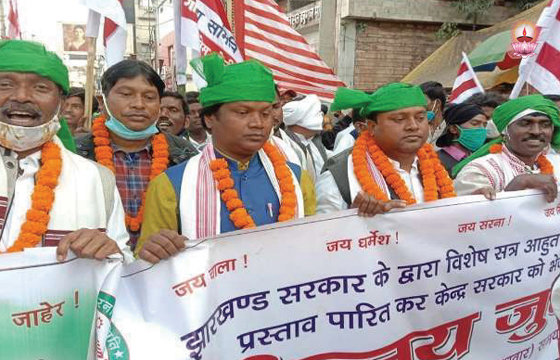
The Jharkhand State government in eastern India has conceded to a long-standing demand to allow tribal people to record their Sarna religious faith in the upcoming national census. State chief minister Hemant Soren’s administration passed a resolution on Nov. 11, allowing a special column for Sarna religious followers to record their faith in the 2021 decennial census.
“It is a new dawn in Jharkhand history as well as for tribal people in the state because for the last three decades we have been demanding a separate census column for the Sarna religion,” Ratan Tirkey, a member of the Tribes Advisory Committee of Jharkhand, told. “This is a victory for the voiceless,” he said.
The resolution will be sent to the federal government. Once is approved, tribal people who follow the Sarna religion will have a new option as they are currently forced to opt for the Hindu column on the census form.
Later a column called “Others’ was added for people who do not opt as Hindu, Muslim, Sikh, Christian, Jain or Buddhist. But it was removed in the 2011 census, which meant all others who do not come under the six religions were counted as Hindu.
The federal government led by the pro-Hindu Bharatiya Janata Party and Hindu groups argue that all tribal people are Hindus and record it as such in census records.
As the Sarana people have not a column to mark their religion, most opt for Hindu and other religions. “This did not reflect the actual numbers of Sarna believers, Santhosh Tirkey said.
The state has 1.4 million Christians in a population of 33 million, some 26 percent of tribal people according to the 2011 census.
Cross demolished, temple set up in Indian village
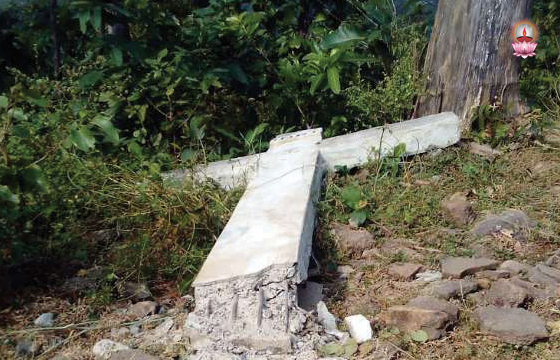
A cross was demolished and a makeshift temple set up some 200 meters away in a village in India’s Chhattisgarh State, Christian leaders said.
The concrete cross on a hillock in Madanpur village in Korba district was popular among Christians living in the village and its nearby areas for more than two decades. They gathered around for prayers, especially to do the Way of the Cross during Lenten season, said Arun Pannalal, president of Chhattisgarh Christian Forum that works among persecuted Christians in the state.