Hong Kong: Asian Church leaders gather to discern AI’s pastoral impact

Asian bishops, communication leaders, and media professionals have opened the Bishops’ Meet–2025 in Hong Kong with a call to embrace artificial intelligence (AI) responsibly, grounding technological advances in human dignity, ethical discernment, and the mission of the Church. The three-day gathering (10–12 December), organised by the Office of Social Communications of the Federation of Asian Bishops’ Conferences (FABC-OSC), is taking place at St. Francis University and brings together more than 30 participants from across the continent.

Celebrating the Opening Mass, Cardinal Stephen Chow, SJ, Bishop of Hong Kong, invited Asian communicators to regard AI as a “gift from God” whose use must remain oriented toward the good of humanity and the care of creation. “I think AI is not from the devil. AI comes from God, who helps us,” he said during his homily. “I pray that this meeting will help us, liberate us, and inspire us to work with AI to achieve the blessings God intends for us.”

The Cardinal encouraged participants to approach technological developments with hope, careful discernment, and ethical clarity. Catholic media, he said, must uphold moral credibility even amid rapid change.

“Otherwise, how can we call ourselves Catholic media?” he asked. “When we put our hope in the Lord, we must first honour Him, not funding agents or ideologies. We need to discern God’s will for our mission in this shifting context.” Cardinal Chow underscored that fidelity to conscience remains essential: “Whenever I spoke from my conscience, even when attacked, I still experienced peace.” Speaking from both personal and communal conscience shaped through synodal processes, he said, brings freedom and authenticity. Quoting Jesus’ words, “My yoke is easy,” the Cardinal concluded that communicators, too, will find lightness “when we speak with our hearts, guided by the Spirit.”

Addressing the assembly on 10 December, Dr Paolo Ruffini, Prefect of the Dicastery for Communication, offered a wide-ranging reflection on the promise and risks of AI for the Church and society. He cautioned against deepfakes, unverifiable sources, algorithmic filtering, and the opaque logic by which digital platforms shape information flows. These dynamics, he said, can enclose users in “filter bubbles” driven by commercial or ideological interests rather than truth. Ruffini noted that dominant AI models often prioritise speed and attention over depth and accuracy, endangering freedom of thought and distorting public discourse.

Echoing messages from Pope Francis and Pope Leo XIV, he stressed the importance of education and media literacy as safeguards for human freedom. Critical thinking, discernment, and an ability to evaluate information, he said, are essential to prevent “the human heart itself” from becoming artificial. “Artificial intelligence must never replace us,” he said, adding that the Church must help believers remain fully human in a digital era that can shape thought, memory, and behaviour. Quoting Romano Guardini, he called for a renewed attitude proportionate to the power of technology—one rooted in conscience, responsibility, and truth.

Pope prays for an end to clashes along Thai-Cambodian border

Pope Leo XIV appealed for an immediate end to the renewed hostilities on the Thai-Cambodian border, where recent clashes have caused casualties – including civilians – and forced thousands to flee their homes. Addressing the faithful gathered for the General Audience on December 10, the Pope expressed his “deep sorrow” at the reports emerging from the region.

“I am deeply saddened by the news of the renewed conflict along the border between Thailand and Cambodia. There have been casualties, including among civilians, and thousands of people have been forced to leave their homes. I express my closeness in prayer to these dear peoples.” 

The violence marks the latest flare-up in a decades-long border dispute, in which contested sections of territory – particularly areas surrounding culturally significant temple sites – have periodically triggered exchanges of fire between the two nations. While past efforts at arbitration and regional diplomacy have sought to stabilise the frontier, ceasefires have often proved fragile, leaving local communities repeatedly caught in the crossfire. Speaking at the end of the General Audience, the Holy Father lamented the recurrence of these tensions and asked the parties “to cease fire immediately and resume dialogue”.

Indian Carmelite friar appointed auxiliary bishop in Germany

Pope Leo XIV on November 26 appointed Carmelite Father Joshy Potteckal as the auxiliary bishop of Mainz, Germany. The announcement was made simultaneously in the Vatican and in Mainz. The 48-year-old bishop-elect is a member of the Order of Carmelites, a mendicant order. He is currently the regional superior of the Carmelites and representative for the clergy of the diocese of Mainz. He was introduced by Bishop Peter Kohlgraf at a press conference at the Mainz bishop’s residence.

The episcopal consecration is scheduled for March 15, 2026 in Mainz Cathedral. As auxiliary bishop, Father Joshy will serve as episcopal vicar for religious orders and continue his work in the personnel department until a successor is appointed.

He was born on April 30, 1977, at Meenkunnam, a village in Kerala’s Ernakulam district. He was ordained a Carmelite priest on December 28, 2003, in Thrissur. He served as a chaplain in 2005 and teacher of religion at the Martinus-Schule in Mainz. He was the head of youth pastoral care for the deanery of Mainz for three years until 2008.

During 2006-2008, he also served as the parish vicar of St. Alban, St. Jakobus and Hl. Kreuz in Mainz-Hechtsheim. He was parish priest of Hirschhorn and Neckarsteinach in 2009. He served as the vice dean of Bergstrasse-Ost in 2021. The following year, he was the staff representative at the Episcopal Curia. Within the Carmelite Order, he has served as regional superior for members of the Province of Saint Thomas resident in Germany (since 2016) and prefect for formation in the Episcopal Seminary since 2024, according to Vatican News.

Animation Movie “Manna of the Manger” Set for Christmas Release

A new multi-lingual animation film titled MOM – Manna of the Manger will be released this Christmas in Hindi, English, and Malayalam, offering audiences a fresh and imaginative reflection on who Jesus is, what he represents as the “Bread of Life”, when and where the story unfolds, why Bethlehem is significant, and how the narrative invites viewers to contemplate divine purpose. The film explores the profound symbolism behind the name Bethlehem, meaning “House of Bread”. Jesus multiplied bread for the crowds, proclaimed himself the Bread of Life at the Last Supper, and — in what the creators suggest may be a moment of divine intent — was born in the House of Bread.

This stable becomes a sacred setting where children shape clay suns, moons, stars, and bread. Jesus joins in their play, delighting in creation. When the children ask him, “Can you turn our clay manna into real bread?”, the moment echoes the temptation in the desert: “If you are the Son of God, command these stones to become bread.” The narrative invites viewers to ponder the choice before him — will the Bread of Life perform such a miracle in the House of Bread? With a concept that creatively bridges scripture and imagination, the film seeks to engage viewers of all ages through the expressive medium of animation.

MOM – Manna of the Manger is an initiative of Father Anand of Atmadarshan, Indore, and is produced by the St Peter Claver Sisters. The film is written and directed by Rajesh K Abraham, a filmmaker from Kerala, who spent months studying theology and scripture to craft this unique storyline. The release is expected to add a meaningful cinematic experience to the festive season, inviting families to encounter the Christmas story through a new lens.

On India-Pakistan border, nuns endure hardships and conflict to care for all

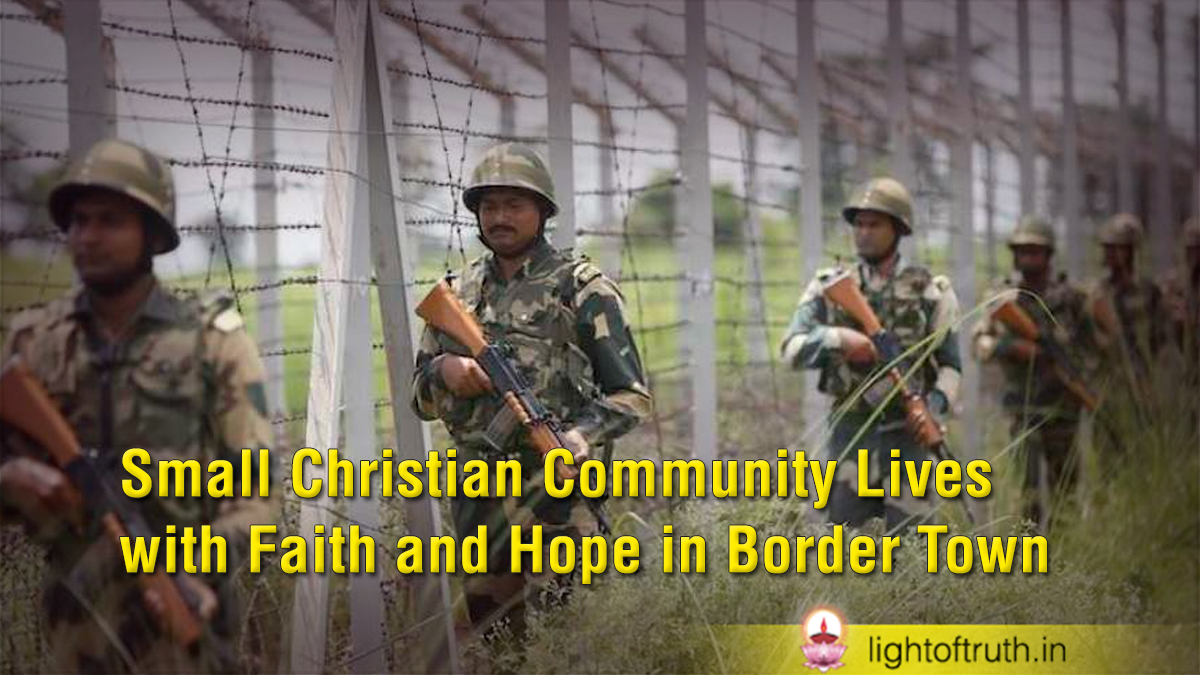
On a tense May morning, villagers in Samba — a small hamlet along the Line of Control between India and Pakistan — woke up to the sound of fighter jets, mortar fire and heavy shelling. As thousands fled to safer areas, three Catholic nuns at St. Joseph Community Hospital made a brave decision: they stayed back to care for the sick and injured. St. Joseph Community Hospital, run by the Jammu-Srinagar Diocese, is the only charitable hospital for the poor in the region. The building is old and resources are limited, but for local villagers it is a lifeline. Sr. Annie Manickathan, the senior nun, said, “If we leave, who will be with them? God sent us here.” She has served in different mission areas for decades and believes this work is her calling.

The hospital has six departments and survives through “simple living and strong faith.” Many patients are migrants, widows and daily-wage workers. “Some don’t even have five rupees,” Sr. Annie said. “For them we give medicines free.” Sr. Lilly Thomas, who joined soon after the war, came from New Delhi’s Holy Family Hospital. Though her family feared for her safety, she said she felt called to serve in this border district. Sr. Anita Minj has been in Samba for eight years and earlier worked with local youth through skill development programs. During the four-day conflict in May, the nuns treated people injured in shelling, cared for mothers and children, and kept the hospital open even when power lines were damaged and bombs fell nearby. Many nights they stayed awake praying for safety.

In mostly-Hindu Samba, the sisters say they share God’s love not through words but through service. Villagers — Hindus, Muslims and Sikhs — come to them simply as “sisters.” For the people of this border village, their courage and compassion have become a sign of hope.

India’s top court upholds Christian army officer’s dismissal

India’s Supreme Court has rejected the appeal of a Christian army officer who was dismissed for refusing to take part in a regimental religious ceremony at a Sikh temple. The court called his behaviour “gross indiscipline.” On Nov. 25, the top court upheld a Delhi High Court ruling that confirmed the dismissal of Samuel Kamalesan, a Protestant officer who declined to enter the inner prayer area of a gurdwara during a weekly parade. The High Court had said he placed his religious beliefs above a lawful military order. Chief Justice Surya Kant questioned the officer’s conduct, saying such behaviour was unacceptable in the armed forces. The bench, also including Justice Joymalya Bagchi, refused to overturn the earlier judgment.

Kamalesan had joined the army as a lieutenant and served as a troop leader in a Sikh-majority squadron. In March 2021, four years after joining, he was dismissed without pension or service benefits. As a troop leader, he was expected to lead his unit into the gurdwara’s sanctum sanctorum during weekly prayers. He refused, saying his Christian faith did not permit him to take part in rituals of another religion. His lawyer argued that it was only a single incident and requested his reinstatement. He also said the officer regularly attended multi-faith prayer spaces common in army stations. However, this regiment had only a gurdwara and a Hindu temple. A Catholic lawyer commented that faith and military discipline are separate issues, and no one should be forced to take part in a religious ritual they do not believe in. He also questioned why a secular army requires participation in religious ceremonies. Regimental religious parades have been part of army tradition for many years.

CBCI Urges Nation to Uphold Constitutional Values on Constitution Day

Extending its greetings to all citizens on the occasion of Constitution Day, the Catholic Bishops’ Conference of India (CBCI) encouraged every section of the population to uphold the foundational principles of Justice, Liberty, Equality, and Fraternity. These values are essential for the well-being of the democratic Republic and call for renewed commitment and careful preservation, the statement said. The CBCI stated that the Indian Constitution, as envisioned by its framers, stands as a beacon of justice, equality, and fraternity. It noted that the Constitution reflects the shared aspirations of a diverse and pluralistic society, ensuring that every citizen enjoys dignity, rights, and opportunities irrespective of religion, caste, or creed.

Constitutional guarantees provided to all sections of society, including religious minorities and other socially vulnerable groups, should be valued and effectively implemented, the CBCI emphasized. The CBCI affirmed that a credible electoral process is at the heart of any democracy. It noted that concerns raised by different sections of the population regarding electoral processes should be addressed. The CBCI called upon the government to take necessary steps to ensure the independence, functional neutrality, and efficacy of democratic institutions. Reaffirming its commitment to uphold the spirit of the Constitution, the CBCI stated that it would continue working for the upliftment of the marginalized, fostering interfaith dialogue, and contributing to the nation’s progress. The CBCI encouraged all citizens to rededicate themselves to the ideals of justice, liberty, equality, and fraternity. It called for collective efforts to build a more inclusive, compassionate, and progressive India under the guidance of the Constitution.

MSJ Congregation Mourns the Passing of Mother General Sr. Philomy

The MSJ Congregation has announced the death of Mother Philomy, who, according to Sr. Merina, Assistant General of the Congregation, was “called by God to her eternal reward.” In a message shared with members, Sr. Merina expressed the community’s profound grief, stating, “With deep sorrow and grief we share that our beloved Mother Philomy was called by God to her eternal reward. Kindly remember her in your prayers and pray for the repose of her soul.” The congregation and its wider community have extended their prayerful condolences to all MSJ members as they come to terms with this loss. Many have joined in praying for the repose of Mother Philomy’s soul, commending her to the peace of the risen Lord.

Hundreds attend Venerable Agnelo’s 98th death anniversary

Thousands gathered at the Pilar hillock in Goa on November 20 to commemorate the 98th death anniversary of Venerable Agnelo de Souza, the saintly priest of the Society of Pilar. The day, revered as Venerable Agnelo’s Day, drew pilgrims from across Goa and beyond. Auxiliary Bishop Dominic Savio Fernandes of Bombay presided over the feast day Mass. He was assisted among others by Bishop Emeritus Alex Dias of Port Blair and Pilar superior general Father Nazareth Fernandes.

Bishop Fernandes, in his homily, expressed joy at the commemoration of the saintly priest, saying that the Church rejoiced because God had blessed Goa with “a priest of extraordinary holiness from its own soil.” He explained that the celebration was not only about remembering Venerable Agnelo but about taking him as a model: “We take him as our model so that we too may live with the same steadfast hope that shaped his entire life.”

Karnataka Church mourns Jesuit educationist’s sudden death

Jesuit Father Swebert D’Silva, a prominent educationist and renowned visionary in the southern state of Karnataka, died November 20, following a massive cardiac arrest. He was 68. He died at 1:15 pm at St Philomena Hospital in Bengaluru, Karnataka capital. His sudden death has deeply saddened colleagues, students, alumni, and well-wishers across Karnataka. “It was a life of selfless service, boundless love and unwavering faith”, said Jesuit Father Praveen Martis, the vice chancellor of the St. Aloysisus University in Mangaluru.

Father D’Silva had also served as the rector and pro-chancellor of St Joseph’s University, Bengaluru. Jesuit Father Victor Lobo, the vice chancellor of St Joseph’s University, requested everyone to pray for the repose of his soul and expressed his condolences in a message. Several members of the Jesuit community shared their tributes, acknowledging the confrere’s steadfast commitment to education, social service, and pastoral care. He was serving as the director of Arrupe Nivas, Bengaluru, at the time of his death. Father Dionysius Vaz, Jesuit’s Karnataka provincial, highlighted Father D’Silva’s transformative leadership in shaping St Aloysius College into a deemed-to-be university, blending infrastructure development with value-based education.

Official Website

Exit mobile version