
The top court in a western Indian state has revoked an official order that prohibited a Protestant pastor and his wife from living in their village home following allegations of religious conversion. The Goa bench of the Bombay High Court on May 8 set aside the district collector’s order, which banished Pastor Dominic D’Souza and his wife Joan Mascarenhas D’Souza from their residence in Siolim village in north Goa. The couple runs an independent Church called the Five Pillars Church. The North Goa district collector, the highest government official in the district who also has executive magisterial powers, issued the order against the couple on March 14 under the Goa Maintenance of Public Order and Safety Act. He ordered them to leave North Goa for six months. They were accused of using black magic and converting B Vadivel, a Hindu and native of southern Tamil Nadu state, who currently lives in Goa. The conversion incident happened in January and Vadivel filed a police complaint against the couple. The police filed multiple cases against the couple based on which the order was issued.
Hailstorm Wreaks Havoc In India’s Manipur
One person was killed and over 15,000 houses, including churches, were destroyed after a hailstorm struck strife-torn Manipur state in northeast India on May 5. Initial reports reveal a man had died and 15,425 houses were destroyed, said state Chief Minister N Biren Singh. The state government has sanctioned a financial package to arrange relief materials, he told reporters on May 6. The government has opened 42 relief camps to accommodate the people whose houses were damaged. At least six churches were damaged in the hilly areas after their roofs flew away in the storm, said a Church official who did not want to be named. “We are now taking stock,” he said and added that the situation was not conducive to undertaking relief works. “We will, however, try our best to help our people who already lost everything in the ethnic violence,” the Church official told on May 7. The worst-hit places are Imphal West and Imphal East districts in the valley where up to 11,000 houses were damaged, the chief minister noted. Valleys in the state are inhabited by the majority Meitei community while indigenous Kuki-Zo Christians live in the hilly districts. In Churachandpur, a tribal stronghold and the nerve center of sectarian strife, 540 houses perished in the hailstorm.
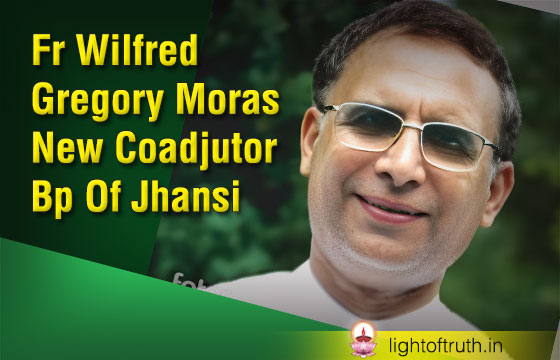
Fr Wilfred Gregory Moras New Coadjutor Bp Of Jhansi
The Holy Father Pope Francis has appointed Fr Wilfred Gregory Moras (55), of the clergy of Lucknow, as the Coadjutor Bishop of the Diocese of Jhansi, Uttar Pradesh. Currently he is the ector of the St. Joseph’s Regional Seminary, in the diocese of Allahabad. Fr Wilfred Gregory Moras was born on 13 February 1969 in Neerude, in the diocese of Mangalore and studied Philosophy and Theology at St. Joseph’s Regional Seminary in the Diocese of Allahabad. He was ordained priest on 27 April 1997 for the Diocese of Lucknow.

Christians Decline India’s Ruling Party’s Offer To Clean Church Premises
The pro-Hindu Bharatiya Janata Party, which runs the government in the Christian-majority Nagaland state, has offered to clean church premises to mark the death anniversary of a Hindu leader, but Chri-stians have declined the offer. The BJP offered to clean church compounds on May 11 as a build-up to mark the 70th death anniversary of Syama Prasad Mookerjee. A prominent Hindu leader from the colonial-era Bengal region, Mookerjee died on June 23, 1953.”We feel obligated to politely decline the kind gesture offered to clean church compounds on May 11,” said the Nagaland Baptist Church Council (NBCC), the largest denomination in Nagaland where Christians account for 87.93 percent of the state’s 1.97 million people.”We may as well direct your good office to pursue another avenue of service,” the council said in a statement on April 30.The council alleged that Christians have been facing unprecedented violence after Prime Minister Narendra Modi came to power in New Delhi, leading the BJP victory in the 2014 national elections. The council urged the party to exercise caution while issuing such directions. The BJP is sharing power in Nagaland. Mookerjee was one of the founders of Bharatiya Jana Sangh, a precursor of the BJP, and a minister in the interim government from 1947 to 1950. Its state chief, Benjamin Yepthomi, had directed party members to clean church compounds to mark Mookerjee’s death anniversary. The influential Baptist council warned against political parties championing religious subjects. The Nagaland Christian Revival Church Council (NCRCC) also issued a statement on May 1 urging parties to refrain from “politicizing sacred spaces for partisan gains.” “Let us uphold the values of tolerance, respect, and religious freedom that are fundamental to our society,” it stated. India’s seven-phased polls to elect 543 members of the Lok Sabha (lower house) started on April 19 and will conclude on June 1. The results will be declared on June 4. Nagaland, one of India’s eight northeastern states, sends one lawmaker to the Lok Sabha. In neighboring Manipur, the sectarian strife involving tribal Christians has been going on since May 3 last year. The death toll in the communal conflict has reached 220 and more than 500 places of worship have been set on fire. Earlier Reverend N. Paphino, president of the NCRCC, asked the pro-Hindu party to prioritize “protecting persecuted Christians across India instead of focusing on Nagaland for the sake of a campaign.”
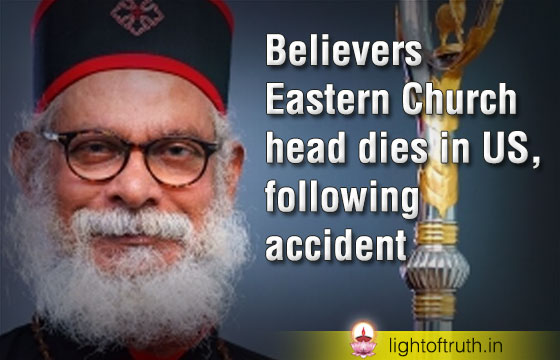
Believers Eastern Church head dies in US, following accident
Moran Mor Athanasius Yohan (formerly known as K P Yohannan), head of the Bishop of Believers Eastern Church, died on May 8 at Dallas in the US. He was 74. The Church leader was hospitalized after he sustained serious wounds in a car accident. A press statement from the Church headquarters said the death occurred due to a sudden cardiac arrest.
He was born on March 8, 1950, in a Mar Thoma Syrian Church family in Kerala, India. He was the founder and president of the Gospel for World, earlier known as Gospel for Asia, a large non-profit missions organization with a focus on India and Asia. He was also the founding Metropolitan Bishop of Believers Eastern Church (Earlier Believers Church) with the religious title and name of Moran Mor Athanasius Yohan I.
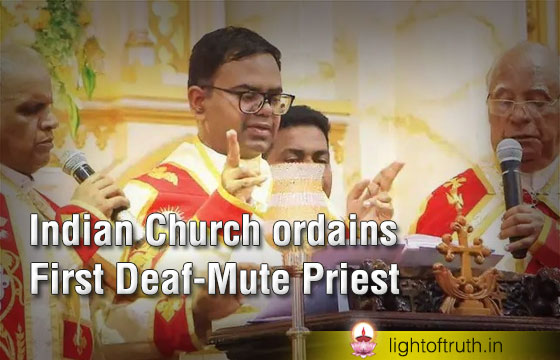
Indian Church ordains first deaf-mute priest
History was made when an archdiocese in the southern Indian state of Kerala ordained India’s first speech and hearing-impaired priest. Archbishop Andrews Thazhath of Trichur on May 2 ordained Holy Cross Deacon Joseph Thermadom at Our Lady of Dolours Basilica in Thrissur, Kerala’s cultural capital. He is the second speech and hearing-impaired priest in Asia and 26nd in the world.
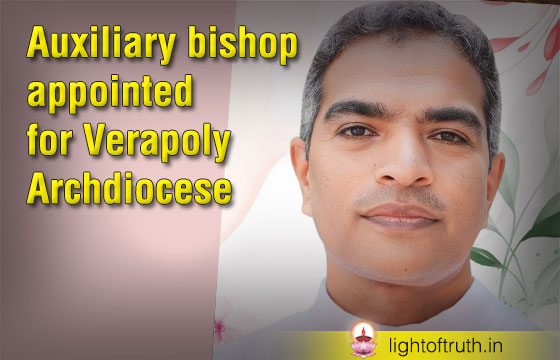
Auxiliary bishop appointed for Verapoly Archdiocese
Pope Francis has appointed Father Antony Valunkal as the auxiliary bishop of the archdiocese of Verapoly in Kerala. The 54-year-old bishop-elect is currently the rector and parish priest of the National Shrine Basilica of Our Lady of Ransom in Vallarpadam, Kochi.
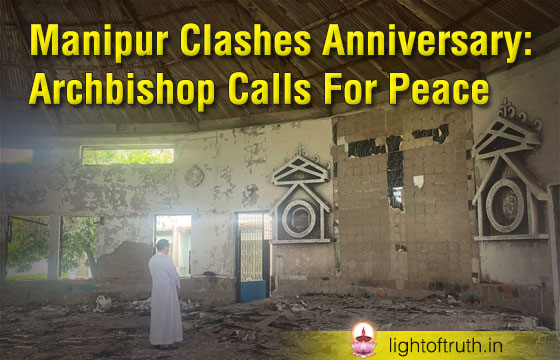
Manipur Clashes Anniversary: Archbishop Calls For Peace
Archbishop Linus Neli of Imphal has called all Catholics in the eastern Indian state of Manipur to hold intense fast and prayer for reconciliation and peace May 3-5.
“Let us persistently pray for the day when people of all ethnicities and religious commu-nities can live together peacefully in this beautiful land of Manipur,” says a statement the archdiocese issued in early May.
An ethnic clash that broke out May 3, 2023, between the Meitei and Kuki commu-nities led to the death of hundreds and the displacement of 60,000 people. The Meitei people make up 53% of Manipur’s 2.8 million, population; the Naga people make up 24%, the Chin-Kuki-Mizo people make up 16%. Hindus and Christians each make up about 41% of the population, while Muslims make up just over 8%.
The conflict was triggered by an affir-mative action controversy in which Christian Kukis protested a demand by mostly Meitei Hindus for a special status that would let them buy land in the hills populated by Kukis and other tribal groups, and get a share of government jobs. Ethnic violence has been a decades-old problem in Manipur state, where 700 people were killed in 1993 and the govern-ment took a year and a half to restore nor-malcy in the region.
The archdiocese’s statement said that while the situation may have relatively relaxed, “we know only too well the present scenario of ethnic segregation and several hundreds of our people still languishing in great distress, pain and uncertainties in relief camps and in undesirable conditions.” The archbishop recalled the most horrifying and harrowing days – particularly May 3-5, 2023 – saying, “we should fall on our knees to intensify our prayers for genuine reconciliation and peace with justice among all fellow human beings.”
“Like many responsible communities and organisations, the Catholic Church in Manipur has been in the forefront in humanitarian interventions, in peace dialogue, and in con-stant prayer for early solution,” he continued. Quoting Isaiah 57:18-19 from the Bible, Neli asserted, “it is our firm confidence that God will hear our prayers and heal our land, guide and comfort our people, and give peace to those who are far away and peace to those who are near.”
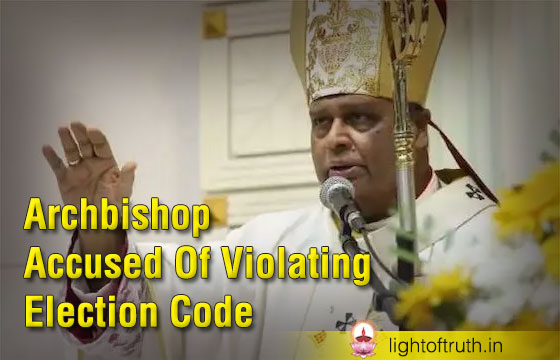
Archbishop Accused Of Violating Election Code
A pro-Hindu group has sought action against a Catholic arch-bishop, accusing him of violating the country’s poll code by trying to influence voters on religious grounds amid India’s ongoing national elections. The Legal Rights Protection Forum (LRPF), aligned with Prime Minister Narendra Modi’s ruling Bharatiya Janata Party, wants the Election Commission of India to take action against Archbishop George Anthonysamy of Madras-Mayla-pore in southern Tamil Nadu state. The forum’s April 29 complaint was about an editorial Anthonysamy wrote in the arch-diocesan fortnightly The New Leader Weekly. While highlight-ing India’s current socio-political situation, he also referred to the plight of Christians and Muslims under Modi’s rule since 2014.
The forum alleged it was an attempt “to influence voters on religious lines,” so Anthonysamy violated the election code. In his guest editorial, Anthonysamy, president of the Tamil Nadu Bishops Council, wrote that Chri-stians, who comprise 2.3% of India’s 1.4 billion people, must ensure 100% voting. “Let us all vote,” he wrote, calling the ele-ction a “significant one… an ele-ction between two contrasting ideologies.” Editor Father Antony Pancras said they stood by the guest editorial and denied the allegation it violated the poll code. “The archbishop indeed tried to inform people about the plight of the country’s people, especially the minorities,”

India’s Hindu Nationalists Seek Law To Control Population
A Hindu nationalist group in India, the world’s most populous country, has demanded a law to control population growth over perceived fears that Muslims could outnumber the majority Hindus. “Hindus generally settle down for one or two children… [but] there are people who say children are Allah’s gifts. This is a matter of deep concern,” said Shriraj Nair, spokesperson of the Vishwa Hindu Parishad (VHP or World Hindu Council). Nair said the Indian government “should immediately bring in a Population Control Bill.” He referred to the recent findings of a report by Prime Minister Narendra Modi’s Economic Advisory Council (EAC), which said the Hindu population declined by nearly 8 percent between 1950 and 2015 while Muslims grew at a record 43% in the 65 years.
“Demography decides your destiny… It’s high time Hindus awakened to this reality. Wher-ever Hindus slipped into minority, what has happened, we all know. Let’s learn from history,” Nair posted on X on May 9.
The EAC report authored by Shamika Ravi, Abraham Jose, and Apurv Kumar Mishra, said that the population of Sikhs went up by 6.58% and Christians by 5.38% in the same period.
“Migration, legal or illegal, is also responsible for change in demography in various parts of the world. But we are not talking migration or birth rate, we are talking conversion,” she added.