
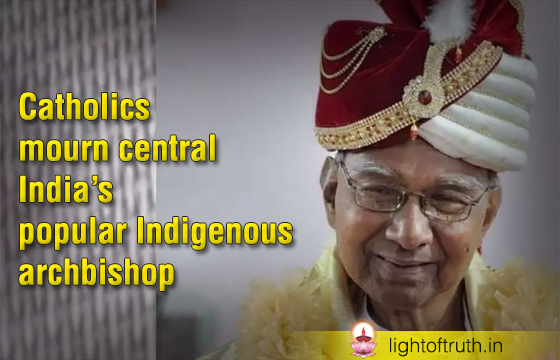
Thousands of people joined the funeral service of retired Jesuit Archbishop Pascal Topno of Bhopal in central India on April 9, hailing the indigenous Church leader’s simplicity and love for his people. Archbishop Topno died of age-related ail-ments at a Church-run hospital on April 6. He was 94. Topno led the Bhopal archdiocese, based in the Madhya Pradesh state capital, for 13 years until his retirement in 2007. A state-ment from the Conference of Catholic Bishops of India (CCBI), a body of Latin rite bishops in India, said the pre-late was known for his “sim-plicity, wisdom, and deep spiri-tual insight.” “He was regarded as a living saint by both the people and the priests in the archdiocese,” said Fr. Maria Stephan, former public relations officer of the archdiocese. “He was extremely supportive, encouraging, and collaborative with his priests,” Stephan told on April 10. “He was so humble and traveled by train in the general compartments like ordinary people, avoiding the air-conditioned coaches,” the priest said. “He never carried money. Sometimes, while traveling long distances for pastoral visits, his driver had to pay for their tea or drinking water,” the priest said.
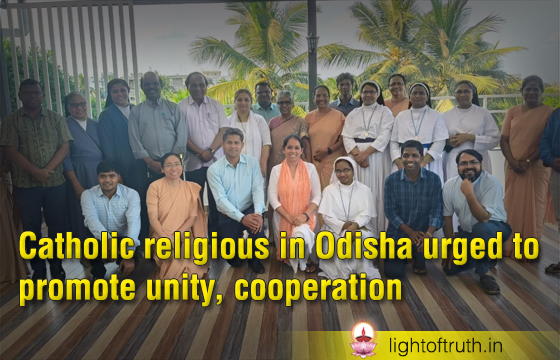
Catholic religious in Odisha urged to promote unity, cooperation
The Odisha unit of the Conference of Religious India (CRI) that met April 8 heard their national secretary stressing the importance of dialogue with lay collaborators, integrated prayer life, and formation programs that are relevant to today’s challenges. “If our preferential option for the poor remains only in our preaching and not in our practice, we risk creating a painful dichotomy between our words and our witness,” warned Presentation Sister Elsa Muttathu while addressing some 25 members of the unit at the Archbishop’s House in Bhubaneswar, the state capital. She told the gathering that the Conference of Religious India exists to promote unity and cooperation among religious congregations. “Our mission is to address shared challenges, strengthen our collective voice, and support the individual charisms of each institute.” Sister Muttathu reminded the gathering that religious life is not about institutional survival or personal security, but about responding to the needs of the present moment. “Let us not limit ourselves to routine physical tasks. Make time for reading, writing, and deep reflection,” she urged. “Our communities were not founded to build institutions or secure our comfort,” she stated. “We are called to live among the people, listen to them, and be part of their lives–just as the early religious did.” She challenged the participants to critically evaluate their ministries. “Do we visit families to truly know them and share in their lives, or simply to seek vocations for our congregations?” she asked. Under-scoring the need for authenticity, the national secretary stressed the importance of aligning action with values. Speaking on the role of women religious, Sister Muttathu encouraged them to prioritize intellectual and spiritual growth alongside daily responsibilities. She also advocated for greater involvement of women in decision-making spaces within the Church. The meeting helped the participants voice their expectations, struggles, and hopes in living out their vocation as the CRI members.
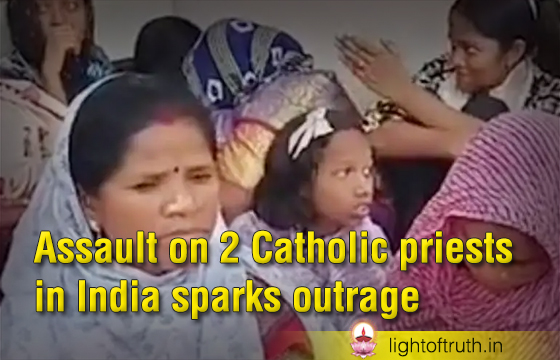
Assault on 2 Catholic priests in India sparks outrage
More than 1,000 Christians protested in front of the Jabalpur district police head-quarters in the central Indian state of Madhya Pradesh on April 1, seeking action against assailants who attacked two Catholic priests and harassed some pilgrims earlier this week. The protesters also urged the administration and police to take action against those involved in a spate of other attacks on Christians in Madhya Pradesh, known as a hotspot of hostility toward Christians. They also submitted a petition containing their demands to the highest government official in Jabalpur district – the district collector. A Christian leader said the collector had promised action against the violators. In the latest incident, a Hindu mob assaulted and attacked the priests in front of police when they arrived at the station to assist some Indigenous pilgrims on March 31. The tribal Christians had been taken to the police station, detained and accused of religious conversion activities, said Jabalpur diocesan Father George Thomas, one of the victims. About 50 pilgrims, including women and children from tribal-dominated Mandla district, were on a pilgrimage to visit several churches in Jabalpur, some 100 kilometers from their homes, as part of Lenten activities. When the pilgrims’-chartered bus arrived at a church in Ranjhi, some Hindu activists took the bus keys and drove them to a police station, accusing them of violating the state’s stringent anti-conversion law. Thomas, the procurator of Jabalpur diocese, said that he and Father Davis George, the vicar general, went to Ranjhi police station “to assist the detained Catholics and explain the situation to the police.” At the police station, “the Hindu mob surrounded us and shouted slogans against us. Some from the crowd pushed us and slapped us,” Thomas told on April 1.
Video footage of the incident that went viral on social media showed women slapping a priest and another man shouting at the Christians. Manas Dwivedi, the officer in charge at the police station, refuted the allegation of religious conversion.
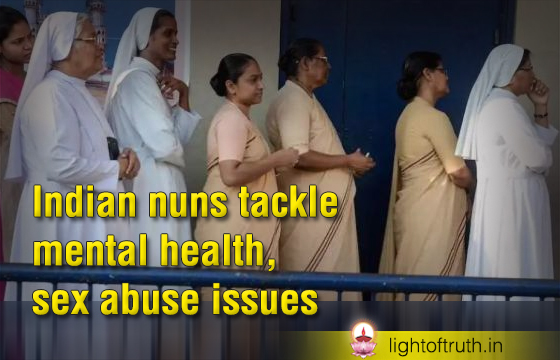
Indian nuns tackle mental health, sex abuse issues
Catholic nuns in India are conducting a series of training programs as part of enabling women religious to address cha-llenges posed by sexual abuse, poor mental health, and suicidal tendencies. The Conference of Religious Women India (CRWI) concluded its tenth training work-shop from April 1 to 5 in the western state of Goa. About 50 nuns from across India attended the program, which is conducted in collaboration with the Church-run Christ University in Banga-lore. “We have begun strengthe-ning the resilience of the religious sisters to face challenges at work and to foster community support for mental well-being,” said Sister Molly Mathew, who leads this training project. The organization represents about 103,000 nuns working in various parts of India. The CRWI assistant program coordinator, Sister Renjitha Ravi, said the workshop focused on understanding distress, assessing distress, identifying individuals in need, risk and protective fact-ors, and counseling and ethics. Matthew, a member of the Missionary Sisters of Mary Help of Christians, said they started the Training of Trainers program on Basic Counselling Skills for Mental Health and Wellness in November 2024. She added that about 350 nuns have benefited from it so far. The program was developed with the help of the Department of Psychology of Christ University. The nun noted that the department helps the conference assess the need to revise religious formation. Indian media reported several cases of rape, murder, and suicides of nuns in recent years, prompting Church to discuss the need to help nuns tackle sexual abuse and mental health issues.

Don Bosco development society celebrates 500th low-cost home for Kolkata slum dwellers
The Don Bosco Development Society (DBDOC), the social service arm of the Salesian Province of Calcutta, has reached a significant milestone, handing over the keys to its 500th low-cost house for slum dwellers in Kapali Bagan, Tengra, Kolkata. In a heart-warming ceremony held on April 5, Archbishop Thomas D’Souza of Calcutta blessed and presented the keys to a deserving family, marking the culmination of six years of dedicated effort by DBDOC. The event saw the inauguration of 40 more newly constructed homes, bringing the total number of houses built by the organization to 500. Established in 1997, DBDOC is committed to uplifting underprivileged communities by tackling poverty, ignorance, and malnutrition. This low-cost housing initiative aims to provide a dignified living space for families residing in the challenging conditions of Kapali Bagan slum. Kapali Bagan, located in the Tangra area of Kolkata, is home to numerous families living precariously along a major drainage canal.
Residents often reside under makeshift shelters of plastic sheets and bamboo poles on the canal banks. The area is also characterized by its proximity to dumping grounds, where many locals earn their livelihood by scavenging for recyclable materials. The low-cost housing scheme was initiated by Fr. Mathew George, former Assistant Professor at Salesian College Sonada and Siliguri, during his tenure as Secretary of the Kolkata Provincial.
Recognizing the dire need for safe and stable housing, the Don Bosco Development Society embarked on this mission six years ago. The provision of these low-cost houses offers them a much-needed secure and decent dwelling, a significant step towards a better quality of life.
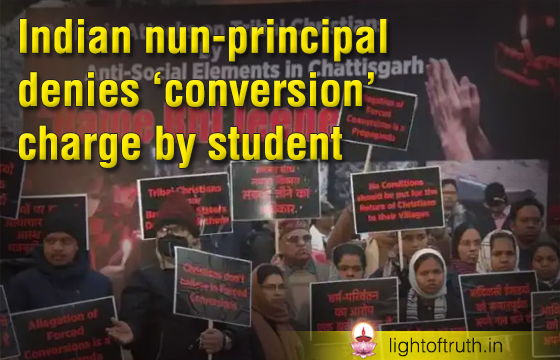
Indian nun-principal denies ‘conversion’ charge by student
A Catholic nun-principal of a nursing college in the central Indian Chhattisgarh state has denied as “false and baseless” the charges of trying to convert a female student. Police on April 6 registered a case of “attempted forced conversion” against Sister Bincy Joseph, principal of Holy Cross Nursing College at Kunkuri in the state’s Jashpur district. A police official at Kunkuri police station refused to disclose the case details. “All I can confirm is a case is registered against the nun, and the probe is on,” he told on April 8. The complainant student told the local media that she was barred from taking her final exam of the nursing course and denied entry to the campus for resisting attempts to convert her. In an April 7 statement, the nun said the “student’s allegations are a calculated attempt to defame the institution and cover up her own academic shortcomings.” Joseph, a Sisters of Mercy of Holy Cross member, said the complainant was a general nursing and midwifery student. She had completed a three-year course but skipped the practical sessions, which are mandatory to take the final exam as per the rules framed by the state’s nursing council. “The complainant’s attendance was only 32 percent in practical sessions,” while the guidelines require a student to have 80 percent attendance in theory and practical sessions.
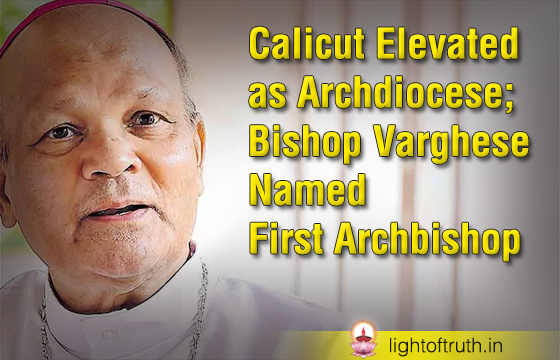
Calicut Elevated as Archdiocese; Bishop Varghese Named First Archbishop
In a historic decision, Pope Francis has elevated the Diocese of Calicut to a Metropolitan Arch-diocese on 12 April 2025, also names Bishop Varghese Chakka-lakal (72) as the first Metropolitan Archbishop of Calicut. The dio-ceses of Kannur and Sultanpet will serve as their suffragans.
The diocese of Calicut in Malabar region has a deep-rooted legacy that dates back over 500 years. Evangelization began in 1498 with the arrival of Trinita-rian missionary Pedro Covilham and others. The first church, dedicated to St. Andrew, was built on the Malabar coast in 1500. In 1878, Pope Pius IX separated territories that now include Mangalore, Kannur, and Calicut from the Vicariate Apostolic of Malabar, handing it to the Jesuits of Venice in Italy. Calicut later emerged as a separate diocese in 1923 under Pope Pius XI, formed from parts of Mangalore, Mysore, and Coimbatore. The diocese played a key role in the Church’s mission in Kerala. In 1954, the Oriental faithful were placed under the new diocese of Telli-cherry. Later, in 1998, Pope John Paul II carved out the Diocese of Kannur from Calicut. Initially under Jesuit leadership, Calicut saw bishops such as Paul Perini, Leo Proserpio, Pancratius Zano-lin, and Aldo Maria Patroni. In 1980, diocesan clergy took over with Bishop Maxwell Noronha. He was followed by Bishop Joseph Kalathiparambil in 2002, and then by Bishop Varghese Chakkalakal in 2012. Archbishop Chakkalakal brings decades of pastoral expe-rience. Born in Mala-Pallipuram in the Diocese of Kottapuram, he studied in Mala and Mangalore and was ordained a priest in 1981. He became the first bishop of Kannur in 1998.
and served there until his transfer to Calicut in 2012. Archbishop Chakkalakal served as Secretary General of the Kerala Catholic Bishops’ Council (KCBC) and the Conference of Catholic Bishops of India (CCBI) and currently leads the Kerala Regional Latin Catholic Bishops’ Council (KRLCBC) and the CCBI Commission for Vocations, Seminaries, Clergy, and Religious.
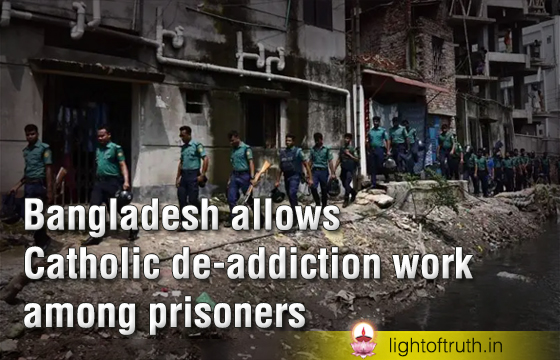
Bangladesh allows Catholic de-addiction work among prisoners
The Bangladesh government has allowed a Catholic-run de-addiction centre to use its training programs and therapy to help inmates addicted to drugs in the country’s largest prison. Holy Cross Brother Francis Nirmal Gomes, director of the Church-run Bangladesh Rehabilitation and Assistance Centre for Addicts, said the government permission came on April 7, making it an “important day” for the organization. The permission allows the centre to work in Dhaka Central Jail in Keraniganj, a suburb of Dhaka, the capital of the Muslim-majority nation. According to media reports, the facility has about 4,500 inmates, including several hundred drug addicts. Gomes said in a social media post that the permission from the Ministry of Home Affairs came “after many years of efforts.” The ministry also oversees the Department of Narcotics Control. He thanked the government and said it is an opportunity for the organization to offer professional support to drug-addicted prisoners. Gomes also thanked his Holy Cross Congregation for supporting him with financial assistance. His centre is among the first professional treatment and rehabilitation organizations for drug addicts in the country. Late American Holy Cross Brother Ronald Drahozal founded it in 1988. The centre has successfully rehabilitated more than 5,000 drug-addicted individuals. It also runs four centres for street children vulnerable to crimes and drug addiction. Over the years, the centre has won various awards.

Philippines: Church calls for discernment ahead of elections
Nearly 70 million Filipinos will head to the polls on 12 May, 2025, to vote in midterm elections, electing lawmakers and representatives for local governments with over 18,000 candidates vying for legislative, local, and regional posts. As the Philippines head for critical midterm elections in May, the Church in the country warns against hate speech and fake news. Ahead of the election the Philippine Bishops’ Conference (CBCP) has issued a Pastoral Letter urging voters to use their voices to uphold freedom and ensure the common good. In the letter entitled “Be Concerned for the well-being of others” the bishops reminded voters that the “primary responsibility of a public servant” is to improve the lives of the Filipino people “especially the poor and the vulnerable.” We need competent leaders and legislators with sincere intentions who serve the good of our parishes, cities, provinces, and the entire country,” the bishops said. The May elections will also contest 317 congressional seats and thousands of local posts.

Christians in Iraqi Kurdistan gather for ecumenical Palm Sunday procession
The Christian faithful of Ankawa, a suburb of Erbil in Kurdistan Region, Iraq, came together on Saturday, 12 April, to witness their faith and ecumenical unity during the annual Palm Sunday Procession. Organized by the Catechetical Committee of the Chaldean Catholic Archdiocese of Erbil, the event was organized under the theme: “Hosanna in the highest, blessed is He who comes in the name of the Lord.” The event drew hundreds of participants in a celebration rooted in shared faith and common witness, bringing together leaders and faithful from various Christian denominations in a shared act of worship and unity, culminating in prayer at the Shrine of Mar Elia.
The procession commenced at the Patriarchal Cathedral of St. John the Baptist of the Assyrian Church of the East and proceeded toward the historic Shrine of Mar Elia, a sacred site for the Chaldean Catholic faithful. Leading the event were high-ranking Church leaders, including His Holiness Mar Awa III, Patriarch of the Assyrian Church of the East, Abp Bashar Warda, Chaldean Catholic Archbishop of Erbil, Abp Nicodemus Daoud Sharaf of the Syriac Orthodox Church, and Archbishop Natha-nael Nizar Agam of the Syriac Catholic Church. They were join-ed by priests, deacons, catechists, and representatives from the Kurdistan Regional Government, all united in prayer and song.
The procession was marked by the active participation of children enrolled in catechetical programs, many of whom led the faithful in hymns and carried palm and olive branches—symbols of peace, hope, and the triumphant entry of Christ into Jerusalem. Syriac Orthodox Scouts and Syriac Catholic catechism students accompanied the march with chants and spiritual songs.
Upon arrival at the Shrine of Mar Elia, the faithful gathered for a concluding prayer service, offering gratitude for the gift of Christian fellowship and the enduring presence of Christ in their midst. The procession, now in its 14th consecutive year, has become a cornerstone event in the life of the Christian community in Ankawa—an annual moment of renewal, identity, and interchurch collaboration.