Gunmen kill 24 in attack on Burkina Faso church

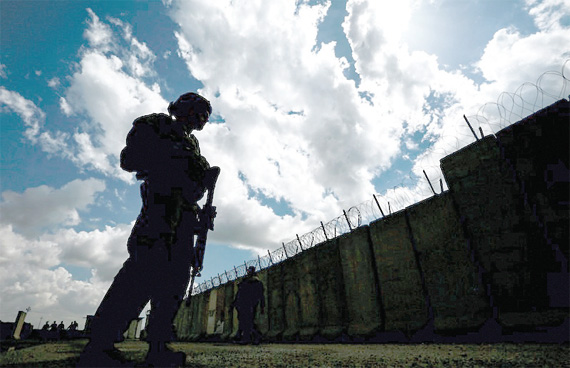
At least 24 people were killed after unidentified gunmen attacked a church in northern Burkina Faso, officials said on Feb. 17, in the latest assault against places of worship in the West African nation.

The attack took place on Feb. 16 during a weekly service at a Protestant Church in the village of Pansi in Yagha, a volatile province near the border with Niger.

A group of “armed terrorists attacked the peaceful local population after having identified them and separated them from non-residents,” Colonel Salfo Kabore, the regional governor, told AFP news agency.

“The provisional toll is 24 killed, including the pastor… 18 wounded and individuals who were kidnapped,” he added.

A resident of the nearby town of Sebba said Pansi villagers fled there for safety.

“It hurt me when I saw the people,” Sihanri Osangola Brigadie, the mayor of Boundore commune, told The Associated Press news agency after visiting victims in the hospital in Dori town, 180km (110 miles) from the attack.

The attackers looted oil and rice from shops and forced three youth they kidnapped to help transport it on their motorbikes, he said.

‘Alarming rate’ Christians and churches have become frequent targets in the north of the country.

Before fewdays, also in Yagha province, a retired pastor was killed and another pastor abducted by gunmen, according to an internal security report for aid workers.

Violence has dramatically escalated in the once-peaceful West African nation.

Analysts are concerned that attacks against civilians, including Christians, are increasing “at an alarming rate.”

More than 1,300 civilians were killed in targeted attacks last year in Burkina Faso, more than seven times the previous year, according to Armed Conflict Location and Event Data Project, which collects and analyses conflict information.

China temporarily closes places of worship in effort to contain COVID-19

The Chinese government has temporarily closed all of the country’s places of worship in an effort to contain the COVID-19 respiratory coronavirus that has now killed almost 3,000 people, with more than 80,000 around the world verified with infections.

The government also banned all group religious activities, including at the YMCA. But it also praised religious groups of all faiths for raising money in an effort to help people afflicted by the disease, people trapped in quarantine zones as well as health workers and others on the front line of the fight to contain the epidemic.

“The party committee and government have unified requirements to suspend the opening of religious venues, suspend all collective religious activities, delay the opening of religious schools, strengthen publicity and guidance for religious people, actively donate goods, and do a lot of work to win the fight against epidemic prevention and control,” said an official statement.

Government religious regulators said religious groups should adhere to the health of staff, believers and members in the first place, and make sure they have deployed and purchased disinfectants, hand sanitizers, masks, etc. They have ordered testing and disinfection of public areas.

The disease is now thought even more highly infectious than first thought by medical researchers, and it continues to spread throughout Asia, North America and in Europe. Most of the fatalities and infections remain in mainland China, which reported 508 new cases and 71 new deaths on Feb 25, bringing totals in the People’s Republic to more than 77,000 cases and more than 2,660 deaths.

Wear black on Ash Wednesday, Nigerian Catholics told

The Bishops of Nigeria have asked Catholics to wear black on Ash Wednesday as a sign of mourning and solidarity with the victims of kidnappings and terror attacks.

In a statement due to be read in all Nigerian parishes on Ash Wednesday, the president of the Catholic Bishop’s Conference of Nigeria, Arch-bishop Augustine Akubeze, asks the faithful to wear black, or a black armband, and to join a “Day of Prayer Procession” to protest the crimes of the Islamist group Boko Haram.

Archbishop Akubeze goes on to condemn the public impunity of the perpetrators of such crimes, the lack of arrests of criminals by the government, and the threats made to many communities on an ongoing basis. He also called for support from the international community in the fight for security and religious freedom in Nigeria.

Russian-backed Orthodox summit suffers boycott

Fewer than half the Orthodox world’s 14 main churches are due to attend a late February summit on Ukraine’s new independent Orthodox Church, convened in Jordan with backing from Russia’s Moscow Patriarchate. “As we have all recognised, dialogue and reconciliation between brothers is the only way forward,” the summit’s organiser, Patriarch Theophilos Giannopoulos of Jerusalem, told church leaders.

“This will not be an official Synod, but rather a fraternal meeting to inaugurate dialogue on challenges facing the Orthodox community at this critical time, as we continue to use every means of communication with the Ecumenical Patriarchate in order to reach a consensus.”

The 67-year-old patriarch sent the open letter ahead of the 25-27 February summit in Amman, called to debate ways of settling disputes over the new church.

Reformers’ ideas gain momentum in German synodal way

Annegret Kramp-Karrenbauer, Germany’s defence minister, agrees with advocates of radical change in the nation’s Roman Catholic Church.

Kramp-Karrenbauer, 57, often known as “AKK” in German media, a member of the governing Christian Democratic Union (CDU), told journalists on Feb. 3 that she wished there were many more women in church leadership, beginning with their serving as deacons.

“And I am for the abolition of celibacy. It would help to make more people enthusiastic to serve the church,” she said, adding that the decision to live without a family poses too great an obstacle for those wanting to dedicate their lives to the church.

Kramp-Karrenbauer’s fellow CDU member, Heribert Hirte, said in a telephone interview that AKK entered a political minefield when she called for an end to celibacy in the priesthood. He said the church opposes such political intervention into its internal affairs. Still, he praised Kramp-Karrenbauer for her courage in making a public statement.

Hirte, a Catholic, said that women are getting increasingly impatient as they wait for the church to give them a greater role. And an increasing number of Germans, he said, don’t care at all about religion.

How Amazon synod laid groundwork for reforms

Pope Francis was never going to fall into the trap set for him by his opponents over the Amazon Synod. His response, contrary to the initial reaction, propels the Church on a path of ongoing reform. It’s just not in the way people expected.

After bishops from the region voted overwhelmingly in favour to ordained married men as priests in the Amazon, those intent on thwarting this pontificate kicked up such a fuss that any shift Francis made risked totally distracting from the central message of the Synod: the Church’s work to protect the environment and to stand in solidarity with the Amazon’s indigenous communities.

The 83-year-old Roman Pontiff was left in a bind. Faced with a pincer movement, the Pope appeared simply to ignore the contested questions around ordination in his text – on married men, and female deacons – and upheld the status quo.

But the story does not end there. The Pope’s response has opened doors rather than closing them and has laid the groundwork for future reforms. Francis did not say “no” to married priests in the document just “not at the moment.”

In his post-synodal exhortation, Querida Amazonia, Francis made no explicit mention of the ordination of married men and only affirmed what “cannot be delegated” from the priesthood. He set the framework for discussions but did not silence any voice. All the hot-button issues remain on the table, while a wider debate about how to devolve power away from a tiny group at the top of the Church hierarchy is very much under way.

In the Synod’s final text 128 bishops voted to ordain married deacons as priests in remote regions while 137 in favour of continuing discussions on female deacons.

Coronavirus: Holy Mass suspended in northern Italy

Several Catholic dioceses in northern Italy have suspended Mass and other activities to help contain the spread of COVID-19, the respiratory disease caused by coronavirus. The northern regions of Italy saw a dramatic uptick in coronavirus cases over the weekend, prompting some regions to suspend all events or gatherings of any form, in public or private. In response to the outbreak, dioceses in the area have taken various measures, including cancelling Masses and asking Catholics to receive the Eucharist only in the hand. Italian officials have also imposed quarantine restrictions on several towns in the Lombardy and Veneto regions, where most of the infections have occurred. The number of coronavirus cases in Italy has reached 152. Three people have died in what is the highest number of cases in Europe.

Trump praised for raising issue of religious freedom in India

An organisation of Indian-American Christians has thanked US President Donald Trump for raising the issue of religious freedom and the plight of minorities during his talk with Prime Minister Narendra Modi, saying political tranquillity is fundamental to economic progress.

The Federation of Indian American Christian organisations in North America (FIACONA) said it “truly hopes” that the Indian government would respond positively to the concern expressed by the president that would be in the best interest of the country. Asked specifically about allegations that Muslims are being subjected to discrimination and there have been rising cases of hate crime in India, Trump in New Delhi on February 25 said: “We did discuss that and specifically Muslims. We also discussed Christians.”

“I had a very powerful answer from the Prime Minister. We talked about religious liberty for a long period of time in front of lot of people. I had a very very powerful answer I think,” he said.

Reacting to the remarks of Trump, president of FIACONA Koshy George said: “Although we lack any substance from their discussions, we are encouraged to see that the president took the opportunity to include the issue of religious freedom as a priority item at these important bilateral discussions with Prime Minister Modi.”

Despite the best efforts to showcase India in a positive light, the world is also watching the ongoing violence “as a result of the policies enunciated by the current BJP regime,” said John Prabhudoss, chairman of the FIACONA.

“Political tranquillity is fundamental to economic progress, and by promoting the policies that drive the country towards majoritarianism and intolerance, the Modi regime may be jeopardizing the prosperity of its ordinary citizens,” he said.

“We call upon the Prime Minister to uphold India’s constitution that guarantees freedom of conscience and religious freedom to every Indian,” Prabhudoss said.

Vatican drops ‘caste tag” of India’s new saint

As India prepares to welcome its newest saint, a controversy over his name and its relationship with the Hindu caste system has come to the fore.

A Vatican decree announced a miracle had been approved for Blessed Devasahayam, clearing the way for his canonization.

However, when Devasahayam was declared a Blessed in 2012, the name used was Devasahayam Pillai.

The discrepancy is due to protests that Devasahayam allegedly never used Pillai – which signified his caste – after his conversion from Hinduism in 1745.

After his conversion, Devasahayam suffered severe harassment and persecution – including beatings and imprisonment – until he was finally shot and killed in 1752. His body is now at Saint Francis Xavier Cathedral in the Diocese of Kottar.

American bishop amazed at India’s vibrant Catholicism

Earlier this year, Bishop J. Mark Spalding of Nashville visited India to express his thanks and gratitude to the families and religious order superiors of the 11 Indian priests living and serving in his diocese.

“Since I’ve been bishop, every priest from India has invited me to go to their home country and experience India and see their Catholic homeland,” Bishop Spalding said. “Out of respect for their good work and service in the diocese, I made the decision to go.”

“I wanted to visit with the families of the priests serving in the Diocese of Nashville and thank them for their sharing of their son, their brother, their uncle,” the bishop told the Tennessee Register, Nashville’s diocesan newspaper.

He also wanted to visit with the superiors of the religious orders of the Indian priests in Nashville. Six of the priests are members of the Carmelites of Mary Immaculate, four are members of the Missionaries of St Francis de Sales, and one is a Franciscan.

“The presence of all our foreign-born priests allows us to do a lot of things in a lot of ministries,” Bishop Spalding said, including having them in the two diocesan high schools as well as serving as chaplains for various ministries and Catholic Organizations, he said.

“Three, I wanted to see Catholic India,” Bishop Spalding said.

His visit on January 15-29 took him to the State of Kerala, which has the largest Catholic population in India and is where St Thomas the Apostle landed when he first brought Christianity to the country.

Catholics make up little less over 1 percent of India’s total population, but 22 percent of the population in Kerala, explained Father Thomas Kalam, a Carmelite of Mary Immaculate, who is associate pastor of Our Lady of the Lake Church in Hendersonville, Tennessee. He helped Bishop Spalding by arranging his itinerary for the trip and served as his guide.

Official Website

Exit mobile version