

Few, if any, vice presidential candidates have had as much exposure to the world’s religions as Kamala Harris, the 55-year-old senator from California whom Joe Biden just picked as his running mate.
Harris’ ethnic, racial and cultural biography represents a slice of the U.S. population that is becoming ascendant but that has never been represented in the nation’s second-highest office.
Here are five faith facts about Harris:
She was raised on Hinduism and Christianity.
Her mother, Shyamala Gopalan, was from Chennai, India; her father, Donald Harris, from Jamaica. The two met as graduate students at the University of California, Berkeley.
Her name, Kamala, means “lotus” in Sanskrit, and is another name for the Hindu goddess Lakshmi. She visited India multiple times as a girl and got to know her relatives there.
But because her parents divorced when she was 7, she also grew up in Oakland and Berkeley attend-ing predominantly Black churches. Her downstairs neighbor, Regina Shelton, often took Kamala and her sister, Maya, to Oakland’s 23rd Avenue Church of God in Oakland. Harris now considers herself a Black Baptist.
She is married to a Jewish man.
Harris met her husband, Los Angeles lawyer Douglas Emhoff, on a blind date in San Francisco. They married in 2014. At their wedding, the couple smashed a glass to honour Emhoff’s upbringing (a traditional Jewish wedding custom).
It was Harris’ first marriage and his second. An article in the Jewish press described her imitation of her Jewish mother-in-law, Barbara Emhoff, as “worthy of an Oscar.”
She was criticized for not proactively assisting in civil cases against Catholic clergy sex abuse during the years she served as a prosecutor.
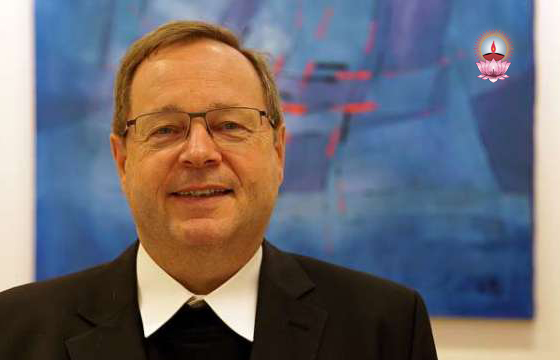
German bishops to accept Vatican offer of ‘clarifying discussion’ on parish instruction
The German Bishops’ Conference has said it will accept the Vatican’s invitation to discuss the new instruction on parishes at a meeting in Rome, suggesting that it will be accompanied by laymen representing the “Synodal Process” under way in Germany.
At the conclusion of their meeting in the Bavarian town of Würzburg on August 24, the permanent council, comprising the diocesan bishops of the 27 Catholic dioceses in Germany, announced the decision that Bishop Georg Bätzing of Limburg would “accept the offer of conversation made by the Prefect of the Congregation for the Clergy, Cardinal Beniamino Stella.”
Furthermore, as CNA Deu-tsch, CNA’s German news partner, reported, the German Bishops’ Conference announced that Bätzing “will suggest to the Congregation that the conversation be conducted with the Presidium of the Synodal Way, since bishops, priests, deacons and laity are equally addressed in the instruction.” If and when the meeting is scheduled to take place is still unclear.
Cardinal Beniamino Stella, prefect of the Congregation for the Clergy, said on July 29 that he would be happy to receive the bishops in order to “remove doubts and perplexity” voiced by German prelates.
Stella said that the meeting could take place “in due course” if the bishops wished to present their objections to the instruction, issued by his congregation on July 20. He reportedly declined to respond to specific criticisms ahead of the potential meeting.
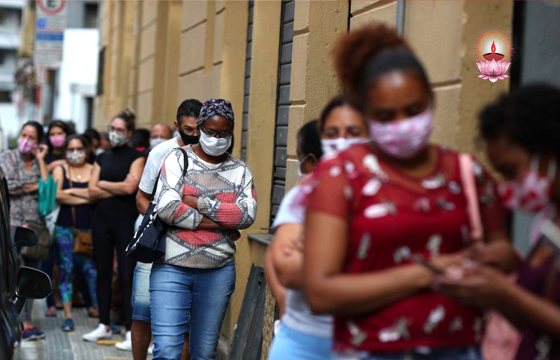
In openly criticizing Brazil’s president, 152 bishops spur anger, controversy
A letter signed by 152 Brazilian Catholic bishops harshly criticizing President Jair Bolsonaro’s administration and his unsuccessful handling of the COVID-19 pandemic has been spurring intense controversy among the country’s Catholics since its release in late July.
As various groups expressed their support or disapproval of the document, backed by about a third of the country’s bishops, some in the church began to fear that Brazil’s sharp political polarization could be affecting its episcopate.
Titled “Letter to the People of God,” a draft of the document was first leaked to the newspaper Folha de S. Paulo on July 26. The letter says Brazil is facing “an unprecedented health care crisis” and a “devastating economic collapse,” which are the results of “the Federal Government’s inability and incompetence to coordinate its actions.”
The document generated strong reactions, especially on social media, but also in the church. “There has been an outraged reaction from some bishops,” Fr Antônio Manzatto, a professor at the Pontifical Catholic University of Sao Paulo, told NCR.
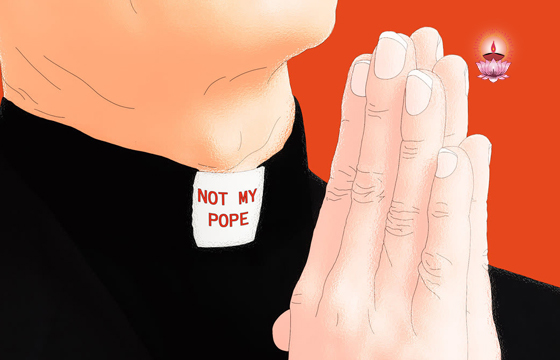
This Secret Society of Priests Still Won’t Recognize Pope Francis
Since the election upon Benedict’s retirement of Jorge Bergoglio, now Pope Francis, Leatherby has shunned the new pontiff and continued to only refer to Benedict as the church’s true leader in mass. After several warnings, he was charged with schism, defrocked and excommunicated from the Catholic Church.
“I continue to regard Benedict as retaining the Office of Peter, as mysterious as that might be,” he wrote in an open letter to the Sacramento diocese, referring to the belief that all new Popes replace the original Pope Peter. “Therefore, I do not regard Bergoglio as the Supreme Pontiff of the Roman Catholic Church.”
Leatherby’s story is somewhat complicated by allegations of a breach of his vow of celibacy through romantic affairs with at least two adult women, one of whom he publicly confessed his love to in a now rather embarrassing video that has been widely circulated. In it, he begins by addressing an unidentified woman: “Hey, Baby Doll. I love that without mascara that you are still strikingly beautiful,” the priest says into his phone camera as he drives his car at night. “I love that. I love it, like, a lot. A lot a lot. I loved it earlier when I saw you, and you didn’t have it on, and I loved it all night long.”
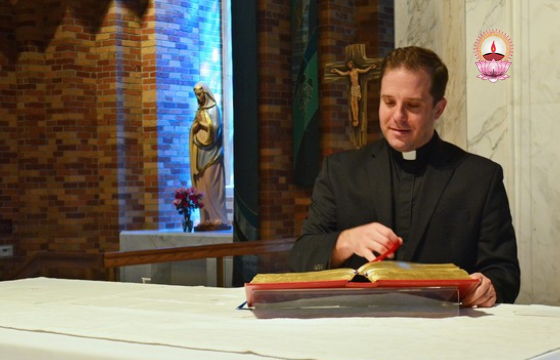
‘’Unbaptised’ US Catholic priest ordained again
Detroit archdiocese ordained a Catholic priest for a second time on Aug. 17 after learning that his infant baptism was void, making his ordination invalid.
Father Matthew Hood, ordained in 2017, has been working in the diocese for the past three years, just like any other Catholic priest. However, his priestly ordination was found invalid as his Catholic Baptism proved to be invalid, reported Catholic News Agency.
Father Hood thought he had been baptized as a baby. But this month, he read a notice issued by the Vatican Congregation for the Doctrine of the Faith on Aug. 6. It said altering the words of Baptism can render it invalid.
For example, if the minister says, “We baptize you in the name of the Father and of the Son and of the Holy Spirit,” instead of “I baptize you,” the Baptism is not valid, it said.
Father Hood remembered a video of his Baptism where the deacon said: “We baptize you….” He suddenly realized his Baptism wasn’t valid.
The Church presumes a sacrament valid unless there is proof to the contrary. Father Hood’s Baptism could have been passed as valid unless he had a video showing the opposite.
Father Hood informed this to his archdiocese. He received Baptism, Confirmation, and Eucharist again. He made a retreat and was also ordained a deacon. He was validly ordained a priest on Aug. 17. One must be ordained a Deacon before validly ordained a priest.
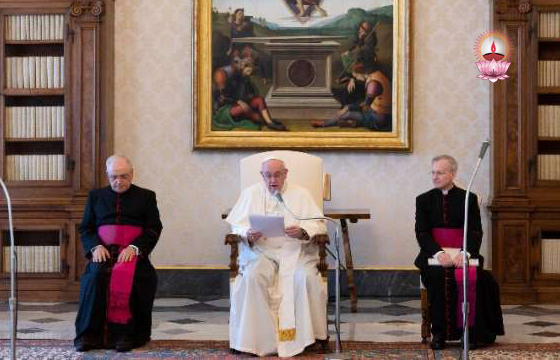
Pope Francis: Make coronavirus vaccine available to all
A potential coronavirus vaccine should be made available to all, Pope Francis said at the general audience Aug. 19.
“It would be sad if, for the vaccine for COVID-19, priority were to be given to the richest! It would be sad if this vaccine were to become the property of this nation or another, rather than universal and for all,” Pope Francis said on August 19.
The Pope’s comments followed a warning by the head of the World Health Organization that some countries may hoard vaccines. Speaking in Geneva on August 18, WHO Director-General Tedros Adhanom Ghebreyesus appealed to world leaders to avoid what he called “vaccine nationalism.”
In his address, the Pope also said it would be a “scandal” if public money were used to bail out industries “that do not contribute to the inclusion of the excluded, the promotion of the least, the common good, or the care of creation.”
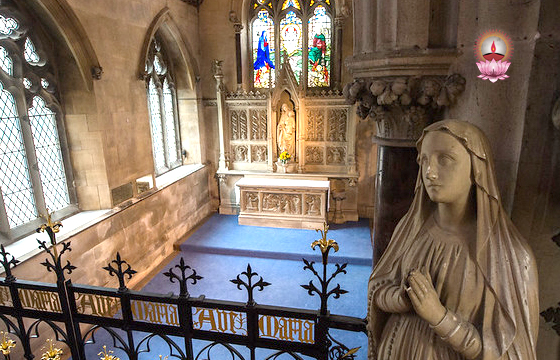
Church selling the Eucharist ‘short’ says professor
The Catholic Church is selling “the Eucharist” and people short and is making a mistake by turning Mass into a YouTube experience, according to a UK theologian. Thomas O’Loughlin, emeritus professor of Historical Theology at the University of Nottingham and Director of Studia Traditionis Theologiae, said: “There are some things Zoom and YouTube just won’t do because real experiences are whole human experiences.”
“Can you send an apple by email?” he asked.
He said he will accept doing Mass online when people give up going out to dine with others and when people dine alone at home with pre-packaged food and say it is as rich an experience as it is eating and drinking with friends.
People wanting to have Mass on their TV or computer at home and priests supplying it sounds a warning about the real nature of the community, he said.
“Eucharist makes little sense without a community.”
Challenging the meeting, O’Loughlin posed the question as to whether the Church had stopped being a real community and is being reduced to religious ideology.
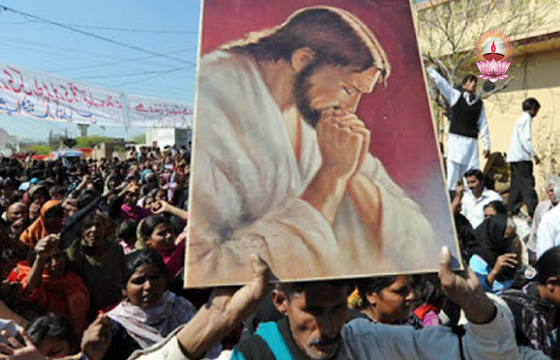
Christian man resists forced conversion, threats from young Muslims
A video posted on TikTok in July shows a Christian man being pressured to reject his faith and convert to Islam. Despite threats, he can be heard saying that “for nothing in the world” will he abandon the Christian faith. The video, posted by bilalmaher479, went viral, but also sparked a strong reaction from Christians and members of other religious minorities.
Hitherto, non-Muslims have to had to witness the forced conversions of girls and young women, compelled to marry Muslim men. The forced conversion of boys and young men is something relatively new.In the video in question, the Christian man is seen being pressured to recite the shahada, the Islamic creed, surrounded by people who are not seen. Despite everything, he refuses, saying that for nothing in the world would he recite the Muslim creed and reject the Christian faith.
His tormentors then begin to threaten him, saying that he will face serious consequences. Even then, the victim says no, stating that it is his right to keep his faith and that he is ready to suffer all the consequences, that he would not give up his religion.
In a statement, the Pakistan Telecommunication Authority (PTA) said that it has received many complaints about the immoral, obscene and vulgar contents in social media, especially TikTok and Bigo, for their negative impact, especially on young people.
After contacting the two companies, the PTA said that their response was unsatisfactory and that it blocked Bigo under the Prevention of Electronic Crimes Act.
Taskeen Khan, a Glory TV presenter and human rights activist, came to the victim’s defence, posting the video on his official page and slamming the forced conversion attempt.
“Will the Pakistani authorities find the offenders through their TikTok account and punish them according to the law?” he asked.
For his part, Rev Irfan James of Peshawar said that “Pakistani Christians suffer many challenges and [endure] persecution. They face difficult situations every day.” “It is sad that young Muslims, the majority community, constantly threaten Christians and our faith. Time and time again, they make fun of our faith, but neither the government nor law enforcement do anything about it.”
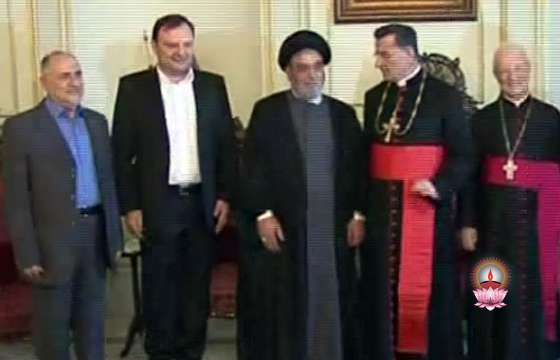
Beirut, Maronite Church and pro-Hezbollah newspaper in unprecedented clash
Following an unprecedented “paid and planned” attack on Patriarch Raï, carried in the ne-wspaper al-Akhbar, the Episco-pal Commission for Social Co-mmunications has stated that information on “hidden weapons and explosives in residential areas and among civilians” revealed in his Sunday Homily are “without any doubt.”
“Instead of abusively accusing the patriarch, whose sources of information leave no doubts of any kind, we advise this newspaper to verify and investigate the statements that reveal that weapons and explosives are being hidden and stored in residential areas and among civilians. Otherwise – affirm the bishops – in reality, the enemy is hiding, among them.”
In his homily, considered the first direct attack on Hezbollah’s military strategy, Patriarch Raï had asked the leaders to “consider the explosion at the port of Beirut as a warning signal.” The Cardi-nal called on authorities “to search all the weapons depots illegally located in the heart of residential districts, in cities and villages.” The head of the Maronite Church added that “certain Lebanese regions have become minefields, which could blow up at any moment. The presence of these hidden weapons depots represents a real threat to the life of the Lebanese, which does not belong to anyone, any party or any organization.” “It is time – concluded the cardinal – to unearth these weapons and these explosives, so that citizens can truly feel safe.”
Furthermore, the patriarch, who has been promoting and relaunching the principle of Lebanon’s ”active neutrality” for several weeks, stressed.
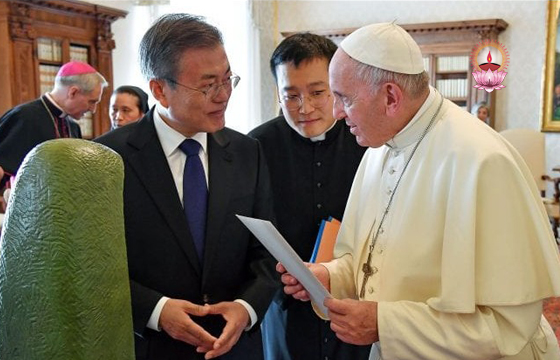
South Korean president turns to Catholic bishops to help fight coronavirus
S. Korean President Moon Jae-in, who is facing increased pressure over some of his policies, hosted a luncheon for Catholic leaders, asking for their cooperation in tackling the COVID-19 coronavirus.
“We must overcome the coronavirus (and) we will do our best to overcome the crisis quickly and minimize economic loss,” Moon said during the meeting, adding that he plans to meet with other Christian leaders in the near future.
Once seen as a model in dealing with the pandemic, South Korea has seen a spike in cases of coronavirus that has led to a fresh suspension of public Masses and could even throw the nation into a second lockdown.
In attendance at the presidential luncheon were Cardinal Andrew Yeom Soo-jung, Archbishop of Seoul; Archbishop Hyginus Kim Hee-jong of the Gwangju Diocese; Archbishop Thaddeus Cho Hwankil of Deagu; Bishop Peter Lee Ki-heon of Uijeongbu; Bishop John Chri-sostom Kwon Hyok-ju of Andong; and Bishop Lazarus You Heung-sik of Daejeon.
According to the presidential office, Moon praised the Catholic Church for its swift action in obeying government quarantine restrictions during South Korea’s first wave of COVID-19 in February.