
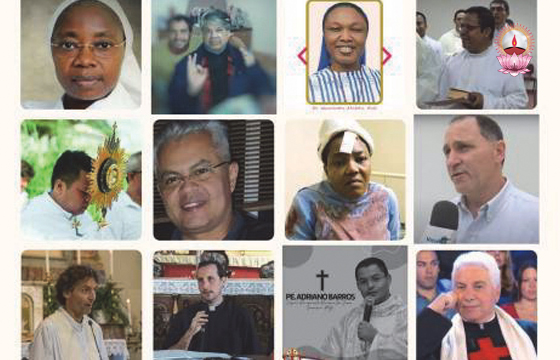
According to informa-tion gathered by Agenzia Fides, in 2020 20 missionaries were killed in the world: 8 priests, 1 religious man, 3 religious women, 2 semina-rians, 6 lay people. This 2020 year the highest number of missionaries killed returns to be registered in America, where 5 priests and 3 lay people were killed (8). Followed by Africa, where 1 priest, 3 religious women, 1 seminarian, 2 lay people were killed (7). In Asia 1 priest, 1 seminarian and 1 lay man. In Europe 1 priest and 1 religious man. In the last 20 years, from 2000 to 2020, 535 pastoral workers have been killed in the world, 5 of whom are Bishops.
Agenzia Fides continues its service to collect information regarding the missionaries killed during the year. We use the term “missionary” for all the baptized, aware that “in virtue of their Baptism, all the members of the People of God have become missionary disciples. All the baptized, whatever their position in the Church or their level of instruction in the faith, are agents of evangelization” (EG 120). As it has been for some time, the annual list of Fides does not look only to Missionaries ad gentes in the strict sense, but tries to record all the baptized engaged in the life of the Church who died in a violent way, not only “in hatred of the faith.” –Agenzia Fides
Former Vatican security chief praises pope’s financial reforms
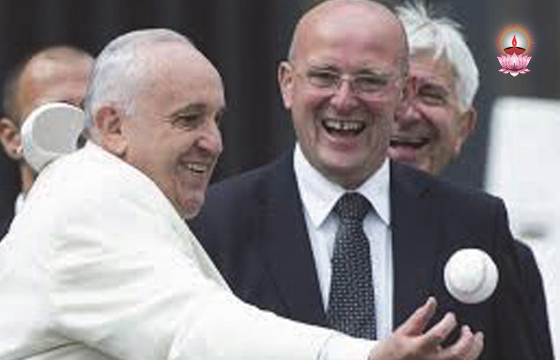
Just over a year after this exit, Domenico Giani, formerly believed to be one of the most powerful people in the Vatican, has given an interview offering details as to his current career path and his thoughts on papal reform.
In the interview, published in Avvenire, the official newspaper of the Italian bishops, on Jan. 6, the former head of the Vatican police said that when he was first asked to enter service to the Holy See, he was told that “it was not my personal service by a vocation, a call,” which also extended to his family. Speaking of his unexpected resignation last fall, Giani said the move “caused pain” for him and his family but insisted that it did not alter his experience working in the Vatican Gendarme Corps, and nor did it take away “the gratitude for the Popes we have served: St John Paul II, Benedict XVI and Francis.”
“I remain deeply attached to the Church and I am a man of institutions,” he said.

Vatican issues guidance for Ash Wednesday
The Vatican on January 12 gave guidance about how priests can distribute ashes on Ash Wednesday amid the coronavirus pandemic. The Congregation for Divine Worship and the Discipline of the Sacraments published a note directing priests to say the formula for distributing the ashes once to everyone present, rather than to each person.
The priest “addresses all those present and only once says the formula as it appears in the Roman Missal, applying it to all in general: ‘Repent, and believe in the Gospel,’ or ‘Remember that you are dust, and to dust you shall return,’” the note said.
It continued: “The priest then cleanses his hands, puts on a face mask and distributes the ashes to those who come to him or, if appropriate, he goes to those who are standing in their places. The priest takes the ashes and sprinkles them on the head of each one without saying anything.”
The note was signed by the congregation’s prefect, Cardinal Robert Sarah, and its secretary, Archbishop Arthur Roche.
Ash Wednesday falls on February 17 this year.
In 2020, the divine worship congregation put out various instructions for priests on administering the sacraments and offering Mass during the corona-virus pandemic, including for the celebration of Easter, which occurred when many countries were in lockdown and public liturgies were not permitted.
Russian Orthodox Church postpones Christmas Readings to Easter due to Covid-19 pandemic
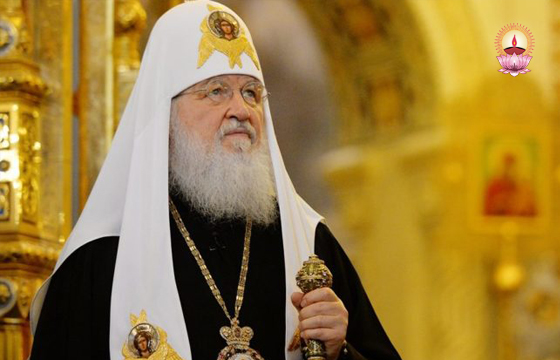
Moscow, December 30, Interfax – The Synod of the Russian Orthodox Church moved the traditional Christmas readings from January 2021 to May in order to prevent the spread of coronavirus. “The participants in the meeting decided to postpone the events of the 29th International Christmas Educational Readings for the period from May 16 to 19, 2021, renaming the forum as the 29th International Educational Readings,” the final document of the Synod, which had an online meeting, said.
Thus, the annual Christmas Readings this time will take place during the Easter period.
“It is extremely difficult to hold the plenary session and most of the sectional events of the Christmas Readings in January 2021 in person if the current level of complexity of the epidemic situation remains,” the Synod said on December 8.
The topic of the upcoming Christmas Readings is articulated as “Alexander Nevsky: the West and the East, historical memory of the people,” since the 800th anniversary of the birth of the holy noble prince will be celebrated in 2021.
Leader of Novosibirsk cell of Jehovah’s Witnesses, banned in Russia, jailed for six years
The Leninsky District Court of Novosibirsk has sentenced the leader of the local unit of Jehovah’s Witnesses, banned in Russia, to six years in a standard-security penitentiary, the Russian Investigative Committee’s regional branch said. The 66-year-old man was found guilty of organizing the extremist organization’s activities. “The court sentenced the defendant to six years in a standard-security penal colony,” it said. The court established that, between July 2017 and September 2018, the man used his apartment in the Leninsky District of Novosibirsk to hold religious meetings at which he oversaw the reading and discussion of extremist literature.
India’s minorities ‘face increasing intolerance’
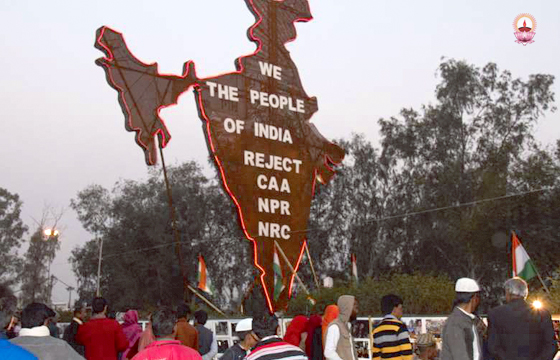
India has become increasingly intolerant towards religious minorities, especially the Muslim community, according to a new report.
The South Asia State of Minorities Report 2020 noted that the general public has come under attack from federal and state governments for criticizing the administration and institutions.
The report looks at the status of access to personal liberties, especially among minorities, in Afghanistan, Bangladesh, Bhutan, India, Nepal, Pakistan and Sri Lanka.
“It is true that we minorities are facing the onslaught of the Narendra Modi government very systematically. As a matter of fact, they have started framing laws that are against the spirit of secularism, democracy and the republic,” A.C. Michael, national coordinator of the United Christian Forum, told UCA News.
“Have you ever heard of a case anywhere in the world where two adults are stopped from getting married by the police? This is what is happening in Uttar Pradesh these days. The Uttar Pradesh police have filed almost two dozen first instance reports against interfaith marriages specifically targeting Muslims.
“Spreading hatred against minorities has become like a fashion for ruling party politicians to remain in power and acquire more. If they continue to succeed in tricking ordinary citizens and win elections, this trend of violence against minorities is going to continue.”
According to the report, “hate crimes against minorities have seen a spike — taking the form of mob lynching and vigilante violence against Muslims, Christians, and Dalits.”
The report said the pro-Hindu Bharatiya Janata Party (BJP) has “unveiled a new and now frontal attack on religious minorities. The persecution towards minorities had a chilling effect on civic space for Muslims and their organizations.”

Fr Laborde: Inspiration behind “City of Joy” dies
Father Francois Laborde, a French Jesuit who spent decades among the poor of Kolkata, was buried on December 28 in a parish in the capital city of West Bengal.
Fr Laborde was considered the inspira-tion behind French author Dominique Lapierre’s “City of Joy,” a novel on the slums of Calcutta (now Kolkata).
He died of old age illness on Christmas Day in a hospital in Midnapore, near Kolkata, He was 93.
Archbishop Thomas D’Souza of Calcutta led the funeral services on December 28 at Saint John’s Church.
“Father Laborde worked silently and with great humility among the poor for more than 55 years. Religion, caste and creed did not matter to him as he reached the poorest of the society,” said Archbishop D’Souza in his condolence message.
According to the prelate, the Jesuit priest was always just a call away. “And when praised, he would humbly say, he was just doing God’s work,” added Archbishop D Souza.
Born on February 28, 1927, François was educated up to the baccalaureate with the Jesuits. After a year of philosophy at the Sorbonne, he joined the Prado institute in order to become a priest among the excluded and the poorest.
It was in Paris, his hometown, that his proximity to the poorest was awakened. He was then 9 years old. Coming from a petty bourgeois family, he suddenly discovered that his best friend lives in an even less favoured situation.
“When I was invited to his home for the first time, I was amazed. His family lived on the sixth floor and he slept on a folding bed in a loft. A few days earlier, he had left my house crying… Since that day, I understood that it was necessary to go to the poor in order to understand them.“
In one such visit, Father Laborde met Doctor Sen, who later extended a helping hand. “I took a sick child to him and when I offered him money, he got angry. He said it was inhuman to charge money from the child and I knew I got a friend,” Laborde added. Now that Lapierre is unwell, Laborde has a message for his friend. “I have heard that Lapierre is very unwell. All I want for him is a speedy recovery,” he said.
In 1969, Lapierre came to Kolkata to research his book. Father Laborde literally walked Lapierre hand-held through the alleys of poverty and distress in Pilkhana and other slums for his groundwork for ‘City of Joy.’
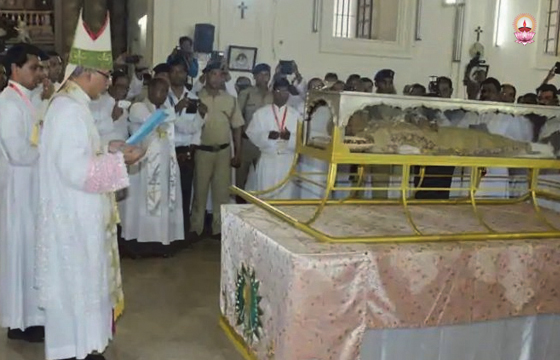
Archaeological Survey begins restoration of Xavier casket
The Archaeological Survey of India has begun the restore the four-century old silver casket that houses the relics of Saint Francis Xavier at the Basilica of Bom Jesus in Old Goa. The casket, which was last tended to in 1698, has been braving the elements within the basilica, which is part of the UNESCO declared heritage complex. Old Goa was once the capital of the Portuguese maritime empire and an important trade center. The restoration began on December 9.
Back in 2018 a team of three specialists was dispatched from “Opificio delle Pietre Dure e Laboratori di Restauro di Firenze” (A restoration laboratory in Florence, Italy), to study the artifacts from May 27 to June 3, 201. They had called for attending to the casket mas a top priority or it would fall apart within the next 10 years.
“The ASI Chemical Branch from Aurangabad, who are specialists in conservation, have taken the initiative under the mandate from ASI Dehradun to commence the work to conserve and restore the Mastrillian Casket. The negotiations began long back, ever since ASI Delhi ordered that the treatment be done by their specialists in India. The work will be done at the Basilica itself under strict security and will commence from December 10,” Father Patricio Fernandes, the Rector of the Basilica of Bom Jesus, said.
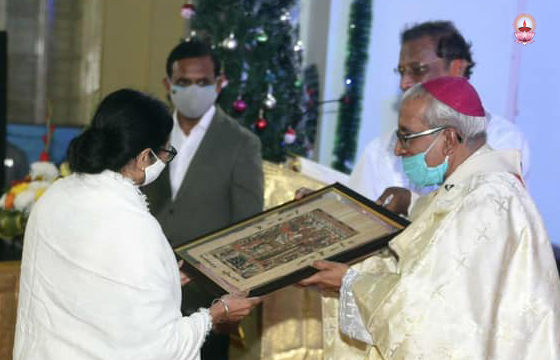
Mamata attends Christmas services at Kolkata Church
West Bengal Chief Minister Mamata Banerjee greeted the people on Christmas after attending services at a church in the city. Banerjee attended Christmas services at the Cathedral of The Most Holy Rosary in Kolkata and interacted with the people.
“The beauty of Bengal is that we celebrate all festivals, spreading peace, joy, and happiness. Christmas festivities have already started every-where in great spirit,” she said. “Merry Christmas to all of you once again,” she added.
Governor Jagdeep Dhan-khar also greeted the people of the state on Christmas. “Let’s spread message of peace and joy and illuminate lives of others,” he said.
The governor said Opposi-tion leader in state assembly Abdul Mannan and minister Firhad Hakim met him at Raj Bhavan separately to greet him on Christmas.
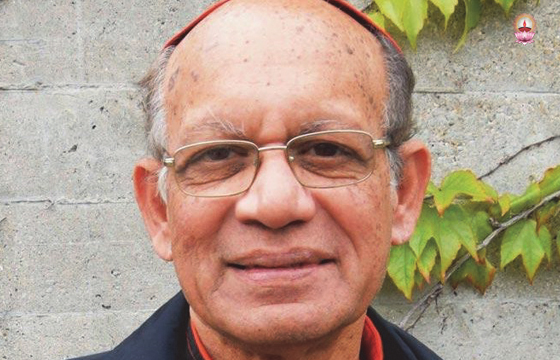
Spread Christmas joy with utmost caution : Bombay archdiocese
With Christmas just over a week away, Arch-bishop of Bombay Cardinal Oswald Gracias on Dece-mber 15 sounded a note of caution, asking churches and parishioners to follow the guidelines in place in view of the pandemic.
Issuing a slew of guidelines and Standard Operating Procedures (SOPs) for churches across the diocese for Christmas, Cardinal Gracias reminded the Council of Deans and the parishioners that Section 144 is still in effect in the city and an assembly of over 200 people is not permitted. Police have made no relaxations in this regard, he added.
“People expect a Mass on Christmas Eve. The government and police have permitted Mass inside the church, however, please stay in touch with your local police station,” wrote Card. Gracias, in a communication addressed to the Council of Deans, parish priests and priests in-charge.
He said “more than one Vigil Mass may be celebrated in our churches” to ensure guidelines on gathering are followed. “Similarly, the number of Masses on Christmas morning can be increased, and we are encouraged to have Mass on Christmas evening, too, for those who cannot come in the morning.”