

In his latest salvo to challenge Rome’s authority, the president of Germany’s bishops’ conference has said that any German Protestant who wishes to receive Holy Communion in a Catholic Church on Öku-menischen Kirchentag — a day of Christian unity in May — may do so.
“Anyone who is Protestant and attends Communion can receive Communion,” Bp Georg Bätzing told an online discussion in Frankfurt on April 22 about the May 15 event that usually brings thousands of Christians to the city for ecclesial events.
“We want to take steps towards unity,” he said, adding that “whoever believes in conscience what is celebrated in the other denomination will also be able to approach [the altar] and won’t be rejected.”
According to the German bishops’ news site Katholisch.de, the bishop of Limburg went on to say that the practice “has been maintained up and down the country” and is actually “nothing new.” Perhaps what is new is that it is being discussed, he continued, adding that he does not expect “an objection from Rome.”
He noted the existence of Vatican reservations about the Church in Germany, saying: “For many officials in Rome, the German Catholic Church has a Protestant smell.” He claimed this is “not the case at the highest level of prefects,” but with officials who have no experience with the Church in Germany.
Bishop Bätzing went on to note “fear” in Rome about the Synodal Path in Germany, and the challenge of preserving unity, but added: “You can also endanger unity by nurturing it with instruments that are unsuitable for the time and world in which we live with its cultural diversity.”
Pope Francis, he added, has repeatedly said that “the Church cannot be controlled centrally” and that decentralized decisions have to be made within the framework of Catholic doctrine and canon law. “This is the way that we’re trying,” Bishop Bätzing said.
The bishop was alluding to a passage in the Pope’s 2013 apostolic exhortation Evangelii Gaudium in which the Pope wrote that the Second Vatican Council called for a “concrete realization of the collegial spirit,” and that he regretted that this desire “has not been fully realized, since a juridical status of episcopal conferences which would see them as subjects of specific attributions, including genuine doctrinal authority, has not yet been sufficiently elaborated.”
Why Americans are abandoning the church
According to an ancient Chinese proverb, “A journey of a thousand miles begins with a single step.” Very often, we focus not on those initial small steps but on giant leaps, often undertaken by government. Think, for example, of Franklin D. Roosevelt signing Social Security into law in 1935, a giant step that changed the lives of the elderly. Or Lyndon B. Johnson’s signature on the Medicare law 30 years later that did the same. Or the big steps contained in the just-passed American Rescue Plan, which, among other things, aims to reduce childhood poverty by 50 % . Each of these big steps impacts all of our lives.
But sometimes it’s the small steps we take that change the country in profound ways. In 2008, 56% of Americans believed that gay marri-ages should not be recognized as valid. That same year, 52 % of California voters voted to ban gay marriage, even as 61 percent backed Barack Obama Four years later, Vice President Joe Biden endorsed gay marriage during a memorable appearance on “Meet the Press.” A few days later, Obama declared his position had “evolved.” Today, 67% say gay marriages should be recognized — an all-time high. Millions of first steps led to profound change.
Today another series of small steps are altering how we live and act. For the first time, the Gallup Organization reports that membership in a Christian church, synagogue or mosque has fallen from 61% in 2010 to 47%. Meanwhile, those who profess no religious preference grew from 8% to 21% over the last decade. And among those who do express a religious preference, the number of congregants has declined from 73% to 60%.
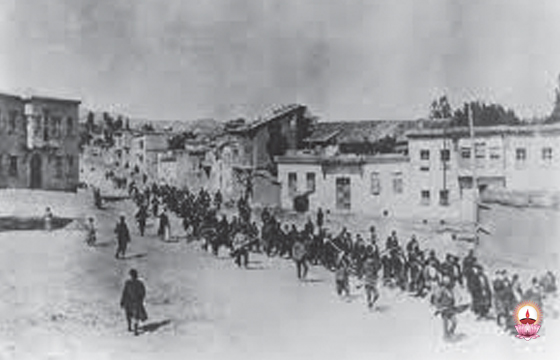
Statement from US Bishops on Armenian Genocide
In commemoration of Arme-nian Genocide Remembrance Day on April 24, Bishop David J Malloy of Rockford, chairman of the US Conference of Catholic Bishops’ (USCCB) Committee on International Justice and Peace highlighted the tragic loss of so many Armenians in what has been called the first genocide of the 20th century.
Bishop Malloy’s full state-ment follows:
“April 24 is Armenian Genocide Remembrance Day, marking the 1915 start of a campaign that resulted in the death of as many as 1.2 million Armenian Christians — victims of mass shootings, death marches to distant camps, torture, assaults, starvation, and disease. Thousands of Armenian children were torn from their families and forcibly converted. This horrific tragedy was intended to eliminate the Armenian people and their culture in what has been called the ‘first genocide of the 20th century.’
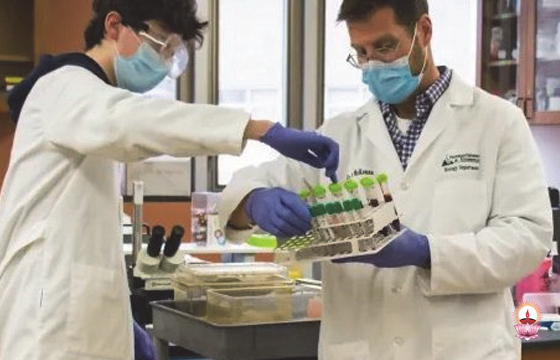
Franciscan University studying herd immunity, coronavirus
The Franciscan University of Steubenville is conducting a re-search study to better under-stand COVID-19 and herd immunity.
Through its School of Natural Applied Sciences, the university plans to evaluate 500 students and faculty by the end of April. The study is led by biology professor Dr. Kyle McKenna.
The Biology Department and the Franciscan Institute of Science and Health provided for the initial costs of the study, but it recently received a grant by the American Life League.
According to a university statement, McKenna said senior nursing majors have already drawn blood from 200 indivi-duals. The blood is then analyzed for coronavirus antibodies.
“We want to know what percentage of people on campus demonstrate an immune response to SARS-CoV-2 virus,” said McKenna.
“To achieve herd immunity which limits transmission of the virus, you need at least 60 to 70 percent of a given population to be resistant to infection, either through exposure to the virus or vaccination.”
Church Assembly in Latin America: “Listening Phase” begins
As part of a so-called “listening phase”, the Church Assembly of Latin America and the Caribbean wants to promote the exchange that “will be the leitmotif of the entire process of discernment before and during the Assembly”.
This first phase has now been officially opened and is expected to last until mid-July. In his video message for the opening event, Pope Francis emphasized that the assembly should be a sign of the “Church without exclusion” “We strive for the full and broad participation of all the pilgrim people of God in Latin America and the Caribbean”, said Mauricio López, coordinator of the events committee for the listening phase, “so that this gathering becomes a celebration of our ecclesial identity at the service of life”. “This event wants to be a true expression of a presence”, continued Lopez, “which takes into account the hopes and desires of all the people who make up the Church, the people of God, especially at this moment of deep crisis”. All men and women members of the Church will be able to participate. The goal is to listen carefully to the cries of the poor and of mother earth, affected in this period by the Covid-19 pandemic and all other pandemics of inequality and exclusion.

Croatia offers scholarships to young persecuted Christians
The Croatian government is offering college scholarships to young Christians at risk of persecution. The country’s education and foreign ministries have invited Christian students from developing countries to apply for the scholarships by May 17. “The planned funding of 1.5 million kuna ($237,000, 200,000 euros) is intended for scholar-ships for young people who are persecuted for their faith.
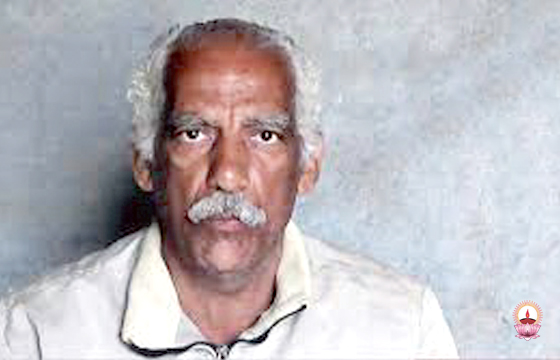
ISIS Executes Christian Businessman Kidnapped in Egypt’s Sinai
The Islamic State has claimed another Christian victim. And Egypt’s Coptic Ortho-dox Church has won another martyr.
“We are telling our kids that their grand-father is now a saint in the highest places of heaven,” stated Peter Salama of his 62-year-old father, Nabil Habashi Salama, executed by the ISIS affiliate in north Sinai.
“We are so joyful for him.”
The Salamas are known as one of the oldest Coptic families in Bir al-Abd on the Mediterranean coast of the Sinai Peninsula. Nabil was a jeweler, owning also mobile phone and clothing shops in the area.
Peter said ISIS targeted his father for his share in building the city’s St. Mary Church.
In a newly released 13-minute propaganda video entitled The Makers of Slaughter (or Epic Battles), a militant quotes the Quran to demand the humiliation of Christians and their willing payment of jizya—a tax to ensure their protection. Nabil was kidnapped five months ago in front of his home. Eyewitne-sses said during his resistance he was beaten badly before being thrown into a stolen car. It may be that these were separate kidnappers, because in the video that shows Nabil’s execution, he said he was held captive by ISIS for 3 months and 11 days.
On April 18, he was shot in the back of the head, kneeling.
Egypt police killed three suspected militants allegedly involved in the slaying of a Coptic Christian man kidnapped more than five months ago in a restive part of Sinai Peninsula, the Interior Ministry said Monday.
Security forces exchanged fire with Islamic State group militants while chasing them in the Abtal area of North Sinai province, the ministry said in a statement. Three of the militants were killed and police were chasing three others. The statement did not say when they fighting took place.
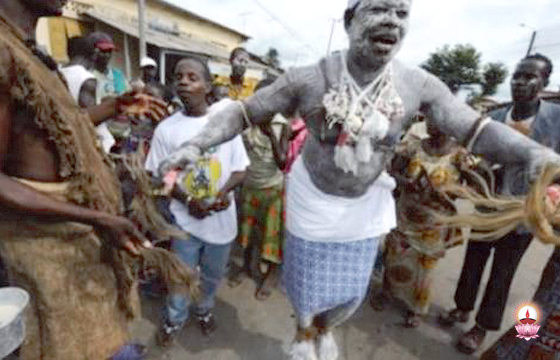
Belief in witchcraft in Africa: Symposium deals with the widespread phenomenon
“Witchcraft is a widespread reality in Africa and it under-mines our coexistence. We, as the Institute for Theological Education, are interested in considering the realities around us and reflecting on them on the basis of faith,” said Brother Paul Koukovi Zipki, Director for Research and Journalism, of the Catholic Mission Institute of Abidjan (ICMA), at the sympo-sium on “Witchcraft in Africa, Ways to Liberation”, which took place on April 16-17.
Philosophers, theologians and psychologists took part in the ICMA symposium and discussed the phenomenon under three aspects: the sociological and ana-lytical dimension, the theological dimension and finally the pastoral and social dimension. They tried to explain the problem of witch-craft and to look for ways and means to bring about an indivi-dual and collective mentality change. Wilfried Kpoda, clinical psychologist and psychopatho-logist, emphasized above all “to fight against the fear of magi-cians, which causes psychosis in people’s minds”.
“It is therefore necessary-he said-to develop awareness-rai-sing, information and education initiatives with the population on the mechanisms and strategies of witchcraft so that they no longer fear the magician but have the necessary weapons to fight this practice”.
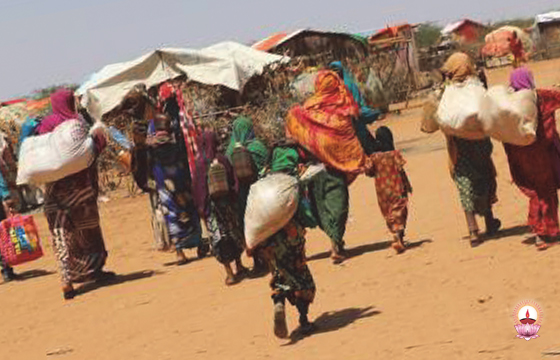
Catholic Migration Commission (ICMC): 34 million people threatened with famine
“This year there are around 270 million people in 79 countries without access to adequate food supplies. Of these, 34 million face acute food insecurity in emergency situations and are at high risk of hunger”, said a report by the International Catholic Migration Commission (ICMC). To address this emergency, the ICMC, along with over 260 civil society organizations, is calling for an additional $ 5.5 billion in funding and a global ceasefire to prevent famine and further deaths around the world.
“These numbers have risen dramatically since 2019 due to a combination of armed conflict, climate change and poverty”, the report said. “The consequences of such a complex situation have been exacerbated by the effects of the Covid-19 pandemic, which is showing how Inequality and poverty affect the access to food of a large part of the world’s population. Covid-19 has also left many countries vulnerable to economic crises that also affect food security”.
“Every day we experience the suffering but also the resilience of entire population groups in Yemen, Afghanistan, Ethiopia, South Sudan, Burkina Faso, the Democratic Republic of the Congo, Honduras, Venezuela, Nigeria, Haiti and the Central African Republic, Uganda, Zimbabwe and Sudan”, said the 260 humanitarian organizations in an open letter to world leaders.

Three-time Olympian shares her conversion story
Today, Dominique Dawes is a three-time Olympian and Olympic gold medalist. But back in 1996, she was a teenage girl feeling the weight of the world on her shoulders. “Before the 1996 Olympic games, all of us, we were known as the Magnificent Seven being the first women’s team to win gold. And I felt, and I’m sure my other six teammates felt that as well, a great deal of pressure,” Dawes said in an April 8 interview with CNA. “It was in the Georgia dome, (with) 50,000 people watching. 3.4 billion people, I’ve been told, watching worldwide,” she said. “Prior to marching out…I broke down emotionally. It was just like, ‘Oh my gosh, this is too much for me. What if I make a mistake now? I’m not ready.’ And this is something I had prepared for for my whole childhood.”
Her team captain, Amanda Borden, knelt down beside her. And together, they prayed. Dawes said that moment of prayer grounded her. It reminded her that God was on her side, even in that moment of fear.
“It was good to have that reminder that I’m not alone… because he is the one that is going to strengthen me, and he is the one that’s going to strengthen us,” Dawes said. “I remember when I stood up after that prayer with Amanda, I felt free. I felt light…And we went out, marched out together and we all made history.”
God has been a big part of Dawes’ life for as long as she can remember. She was raised in the Baptist faith. Her mother was a Sunday school teacher.
“The seed that my mom planted in me really took. She sowed a seed that has been one that has kept me grounded, (and) has given me this level of discernment, as I think the spirit has protected me quite a bit in my life and has steered me away from some people and situations that maybe weren’t the healthiest for me,” she said.