
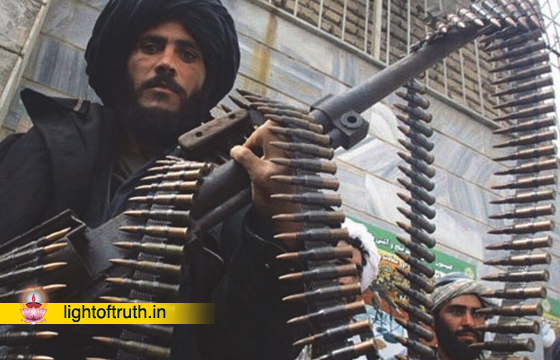
After days of increasing dis-belief, America watched on Aug. 16 as President Joe Biden officially abandoned Afghanistan. We listened to his awkward speech as he publicly dismissed a 20-year American investment in blood and treasure while putting at risk untold thousands of Afghan lives.
“America has spent $2trn in Afghanistan; more than 2,000 American lives have been lost, not to mention countless Afghan ones. And yet, even if Afghans are more prosperous now than when America invaded, Afghanistan is back to square one. The Taliban control more of the country than they did when they lost power, they are better armed, having seized the weapons America showered on the Afghan army, and they have now won the ultimate affirmation: defeating a superpower.”
But that “defeat” is not the only result of the U.S. pull-out. More than a few of us walked away from Biden’s broadcast stunned, well-aware of our country’s international disgrace. Even worse, we also knew that for many Afghanis – including a little-known community of Christian converts – the worst is yet to come.

Crowd funded TV show tells the life of Christ for millions of viewers
At the end of his weekly public audience – and after unexpectedly taking a phone call in front of the cameras and the thousands of pilgrims who’d gathered in the Paul VI Hall to listen to him – Francis had his usual meet and greet with those who had listened to him preach. Among those waiting were actor Jonathan Roumie and producer Dallas Jenkins, the face and the mind behind The Chosen, the largest crowd-funded media project of all-time, a multi-season series about the life of Christ that went live on Easter 2019 and has captured over 300 million viewers world-wide.
The show’s two seasons are freely available worldwide through a dedicated app, YouTube and the streaming service Peacock. The first eight episodes were funded through the donations of 19,000 people who helped raise the $10 million needed. The “sells” of that first season funded the second, and money is now being raised for a third. “Sales come from licenses, the pay it forward campaign, through which people can help others around the world to watch the show, DVDs, and merchandise related to The Chosen,” said Neal Harmon, the CEO of Angel Studios. “We’ve had people from every corner of the world expressing gratitude, because they somehow know about the show. It takes you by surprise: Most people don’t watch it the first time they hear about it, but once they do, they can’t stop talking about it!” he told a small group of Rome-based news outlets, including Crux.
Salesians warn Venezuelan people ‘losing hope’ for country’s future
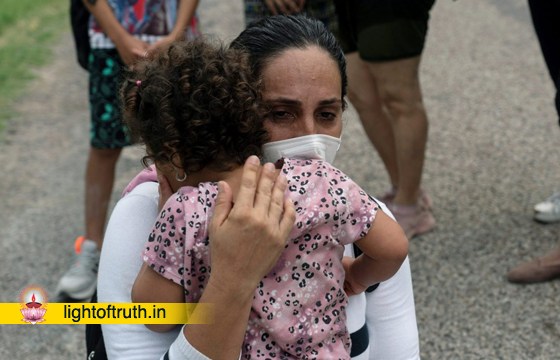
With more than 5.5 million people fleeing Venezuela in recent years because of lack of opportunities, the Salesians in the South American country are warning that the people don’t see the light at the end of the tunnel. “We do not see effective responses against the coronavirus, although the situation was already very complicated before,” warned the religious order. “Moreover, the popula-tion is losing hope. They do not see the light at the end of the tunnel.”
An estimated 87% of the population of 28.5 million is currently living in poverty, and essential goods such as food and medicine are scarce.
“People are coping. If they feel unwell, they take something and carry on, because many do not have access to medical care,” warn Salesian missionaries working in Caracas, speaking about Venezuelan’s inability to address the COVID-19 pandemic or get treatment when symptoms arise.
“The salaries paid are ridiculous,” the letter adds, noting a pensioner receives less than one dollar a month in pension.
“The poorest people cannot afford food and health care,” they add.
The Salesian missionaries in Venezuela have been working for years alongside the most vulnerable population, focusing their efforts in offering education and training to children and young people, while working hand in hand with the bishops’ conference in their efforts of dialogue and national reconciliation.
“In Venezuela, we need to dialogue, we need to find an expression of the popular will,” they wrote in a statement released this week in Spanish news outlet Religion Digital. “Those who should have the last word are the people, the citizens … It is necessary to give security to choose, to speak.”
The warning from the religious community comes after talks between the government of Nicolas Maduro and the opposition were held in Mexico to try to reach an agreement that would allow the country to leave the economic, political and social crises behind.
Venezuelans are expected to elect governors and mayors in November, but opposition forces say the electoral conditions are grossly unfair and have yet to decide whether they will participate. During the conversations held in Mexico, the biggest demand from the opposition was for Maduro to guarantee its participation in a “free and transparent” election process.
Desperate Afghan Christians turned away at airport, aid groups say
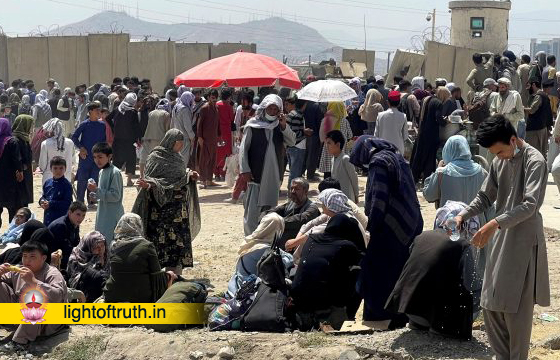
With time running out to rescue civilians fleeing the Taliban, Afghan Christians and others whose names appear on U.S. government lists of qualified evacuees are being turned away at the airport in Kabul, representatives of aid organizations and others told CNA on August 25.
“I was told by contacts from various groups working to rescue those still in danger in Afghanistan—who must remain anonymous — that the State Department at least at a certain point was not implementing the lists that they require the organizations to compile — even though they have sent them multiple times,” Faith McDonnell, director of advocacy at Katartismos Global, an Anglican non-profit ministry group based in Manassas, Virginia, told.
“It seems at present as if no one is getting any priority unless they have some sort of special connection inside the airport,” she said.
Looming over the deepening humanitarian crisis is a dead-line for civilian evacuation operations at the Kabul airport to give way to the transport of the remaining 5,400 U.S. military personnel out of the country in order to meet a target date of Aug. 31, set months ago by the Biden administration, for a full U.S. withdrawal from Afghanistan
This fall, papal travel will change with closure of pope’s favourite airline
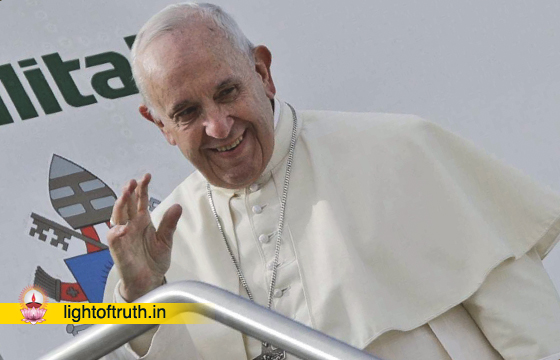
After a 57-year stretch of loyalty to the same company, papal travel is set to change this fall with the closure of Italy’s national airline Alitalia, which has taken four popes to a total of 171 countries on all continents.
Founded on Sept. 16, 1946, Alitalia is the flag carrier and largest airline in Italy, making it a natural choice for Paul VI, whose 15-year reign set the stage for the pope as a globe-trotting figure.
It was Paul VI’s predecessor, Saint John XXIII, who made history for becoming the first pope of 20th century to leave the Rome area after his election when he visited a prison during Holy Week in 1958, and he later took a train to the Holy House of Mary in Loreto, but Paul VI took papal outings to new heights when he began traveling internationally as a means of both pastoral care and carrying out Vatican diplo-macy. In total, Paul VI took nine international trips with Alitalia, which would transport three other popes to 162 locations in the subsequent years.
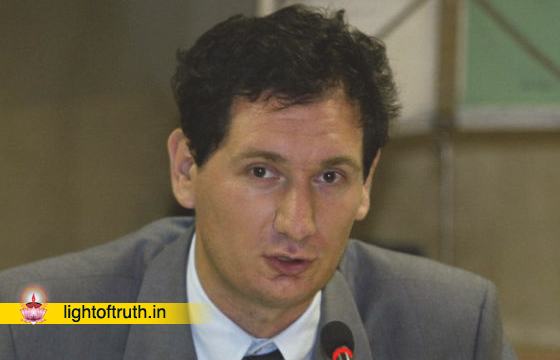
Pope names Italian journalist to head Vatican publishing house
Pope Francis has appointed Lorenzo Fazzini, an Italian journalist, author and father of four, to be managing director of the Vatican Publishing House.
The 43-year-old is the first layman to head the office, which is now operated by the Vatican Dicastery for Communication. He replaces Conventual Francis-can Father Giulio Cesareo, who had been appointed in 2017.
The Vatican made the announcement Aug. 23. Fazzini has degrees in modern literature and religious studies, has authored eight books and has written for several newspapers, including the Vatican’s L’Osservatore Romano and the Italian bishops’ conference’s daily, Avvenire. Since 2012, he has been director of EMI, a publishing house for 15 Italian missionary institutes that work all over the world.
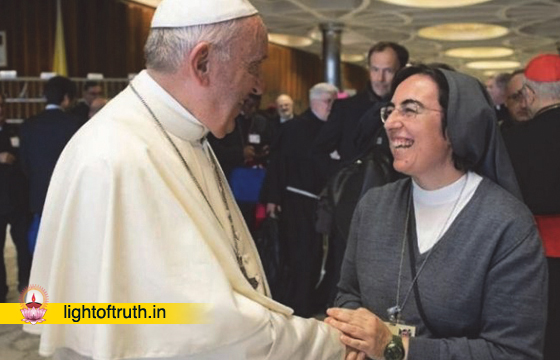
Pope names Salesian nun as dicastery secretary
Pope Francis has appointed a Salesian nun as interim secretary of the Dicastery for Promoting Integral Human Development, the Vatican announced. Sister Alessandra Smerilli replaces Monsignor Bruno Marie Duffé and Father Augusto Zampini, respectively secretary and assistant secretary of the Dicastery, both of whom have returned to their dioceses.” In an August 26 statement, the Vatican said Sister Smerilli will also be a part of the management team of the Vatican’s Covid-19 Commission together with Cardinal Peter Turkson.
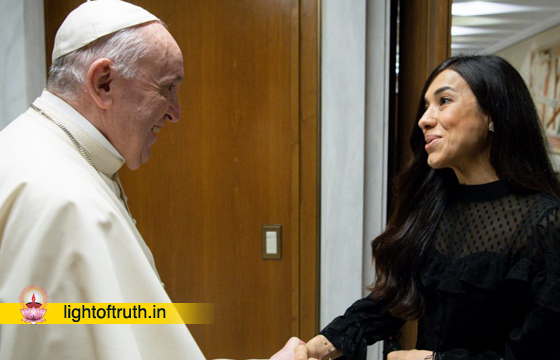
Pope Meets With Genocide Survivor Who Inspired His Iraq Trip
Pope Francis held a private audience with Nadia Murad, a Nobel Peace Prize laureate and survivor of the Islamic State-led genocide in Iraq, Aug. 26 at the Vatican.
While the Vatican did not release any details about the visit, Ms. Murad tweeted Aug. 27, “We discussed the importance of support for #Yazidis & other minority communities in Iraq. In light of the heart-wrenching events in #Afghanistan, we exchanged ideas on championing women & survivors of sexual violence.”
“I thank @Pontifex for welcoming me to the Vatican once again,” she tweeted, along with a photo of the pope looking through a book and Ms. Murad holding a copy of the document on “Human Fraternity for World Peace and Living Together,” which Pope Francis and Egyptian Sheikh Ahmad el-Tayeb, the grand imam of Al-Azhar, signed in 2019.
The pope met her previously at the Vatican at the end of a general audience in St. Peter’s Square in May 2017 and privately in December 2018, after she and Denis Mukwege were jointly awarded the Nobel Prize for “their efforts to end the use of sexual violence as a weapon of war and armed conflict.” She is the first Iraqi and Yazidi to be awarded a Nobel Prize.
She survived a genocidal campaign against the Yazidis by Islamic State militants in Iraq in 2014. The militants kidnapped her, and she escaped captivity after three months. In an Aug. 16 tweet commenting on recent events in Afghanistan, she wrote: “My heart breaks for the next generation of girls & women whose nation has been overtaken by the Taliban. Kabul fell on the same day my village fell to ISIS 7 years ago. The international community must address the repercussions before tragedy is repeated.”
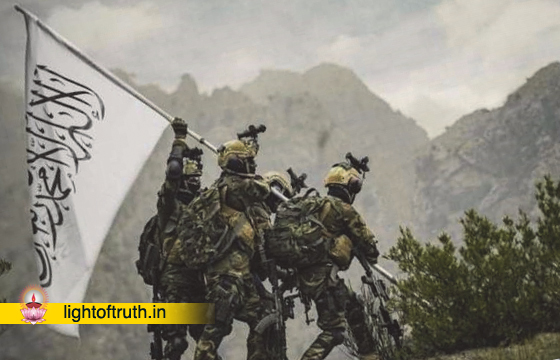
Afghan Christian vows to continue God’s work under Taliban rule
An Afghan Christian has tearfully pleaded with Christians across the globe to not forget the underground church following the Taliban takeover of his country. In a four-minute video, the man says he feels abandoned under Taliban rule but pledges to “continue God’s work” in the conflict-torn country.
Global Catalyst Ministries, a Christian group, published the footage on Aug. 19, several days after the Taliban captured Afghan capital Kabul and established control over the Central Asian country.
In the video, the face of the man is blurred and his voice changed, presumably to protect his identity. He speaks in his native language but the video has English subtitles.
Despite the tears and fears that have gripped the small Christian community, the man declares: “We are not leaving the field.”
The man begins the video with greetings — “Hello, dear sisters and brothers” — on the first day under Taliban rule in Afghanistan.
“I don’t know what the future of this country will be. We are not able to control our emotions because we’ve worked so hard for 20 years. All of our work over the past 20 years has been lost overnight,” he says
“Only God understands how much pain we have and how broken our hearts are.” As his voice chokes in emotion, he says it was not the fear but the collapse of the country that had brought tears to Christians’ eyes.
“We are crying not out of fear but because our hearts ache for our beautiful country. It has now been destroyed by this savage and extremist group. Every precious thing of value in our nation is now destroyed,” he says.
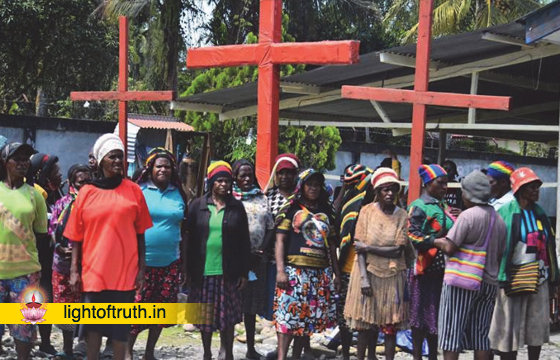
Scars of Papua conflict weigh on Indonesia’s vaccine drive
“William” is refusing to take a coronavirus vaccine because he fears Indonesia’s military will use the country’s inoculation programme to poison him and wipe out his fellow Papuans.
Decades of conflict, racism and human rights abuses are fuelling Covid conspiracy theories among his neighbours at a time when their breakaway region is facing a renewed threat from the pandemic.
“I won’t take a vaccine if it’s brought here by Indonesia,” William, who asked not to use his real name, told AFP.
He said he would gladly sign up for any dose administered directly by the World Health Organization.
“But [many people] here are worried that if the jabs come through Indonesia they will be replaced with some other chemical substance that will kill us,” he added.
There is no evidence of a genocidal plan by Indonesia, which has drafted the armed forces to help run a nationwide vaccination drive, including in Papua. But a widespread hatred of the military runs deep in the region, located on the eastern edge of the Southeast Asian archipelago nation and just north of Australia.